
Garbage Disposal Not Working? Your Dayton Troubleshooting Guide
Garbage Disposal Not Working? Your Dayton Troubleshooting Guide
A well-functioning garbage disposal is an essential part of any modern Dayton kitchen, making meal cleanup convenient and efficient. But when your unit suddenly stops working, the daily routine quickly becomes disrupted. Strange noises, slow draining, or a complete lack of power are just some of the headaches you might encounter. While some garbage disposal issues can be addressed at home with basic troubleshooting, others require professional expertise to prevent damage or more costly problems.
Need professional help with your garbage disposal in Dayton? Contact Summers Plumbing Heating & Cooling for expert drain cleaning services at just $99! Check out our specials here and take advantage of this offer today! (Terms and conditions apply).
Initial Steps for Safe Garbage Disposal Troubleshooting
Before you start working on your garbage disposal, always keep safety front and center. Disconnect the power source—either by unplugging the unit under the sink or switching it off at the circuit breaker. Never reach directly into the disposal with your hand. Instead, use pliers or tongs to check for obstructions if needed. Wearing safety goggles and protective gloves is smart, as sharp debris may be present. A bright flashlight can improve visibility, allowing you to spot stuck objects or other issues.
What to Do When Your Garbage Disposal Won’t Turn On
If your garbage disposal doesn’t respond when you flip the switch, you might worry about a major failure, but often the fix is simple. First, check that the appliance is securely plugged in under the sink. Next, locate the reset button—usually a small red or black switch on the bottom of the unit. Press it to reset the motor after waiting a few minutes to allow any overheating parts to cool. Try starting the disposal again.
If resetting the unit doesn’t work, inspect your home’s electrical panel for a tripped circuit breaker. If you find one, switch it fully off and then back on. Also, make sure the wall switch wires are properly connected and not damaged. If your garbage disposal still refuses to turn on after these steps, it may require professional evaluation and repair.
Handling Garbage Disposal Leaks
Discovering moisture or puddles beneath your kitchen sink usually means a leak somewhere in the disposal setup. The most common source is the seal between the disposal and sink flange. Try tightening the mounting bolts first. If the leak persists, you may need to remove the unit and reseal the flange with plumber’s putty.
When water escapes from the side or bottom, inspect the discharge pipe and its gasket. Tightening these screws can sometimes halt the leak, but a worn gasket might need replacement. If you notice a steady drip from the unit’s base, this often suggests a failed internal seal or even a crack in the disposal body itself. At that point, replacing the entire unit is usually the best option to avoid future water damage to your Dayton kitchen cabinetry.
Fixing a Jammed Garbage Disposal
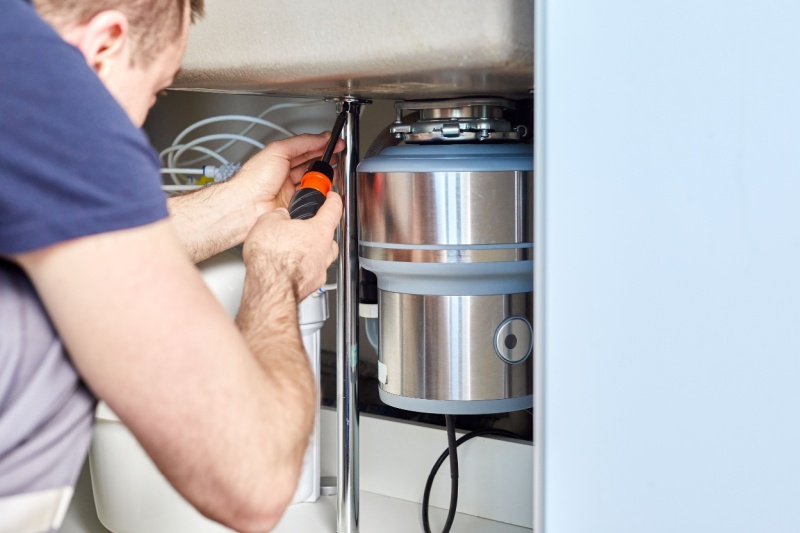
Is your disposal humming but not grinding? This symptom usually points to a jammed flywheel or internal blockage. Always turn off power and unplug the appliance before attempting any fix. Many disposals have a hexagonal hole at the bottom—insert an Allen wrench and gently rotate back and forth to dislodge whatever is stuck inside. This should free up the flywheel, restoring normal operation. Once the jam clears, press the reset button, restore power, and briefly run water as you switch the unit back on to flush out any remaining debris.
Resolving a Slow or Clogged Drain
Slow drainage is another prevalent kitchen sink woe. Often, the culprit is greasy buildup or food debris clogging the disposal or the P-trap underneath the sink. Try loosening a potential clog by filling the sink partially with water and using a plunger over the drain opening. If that fails, turn off the power and remove the P-trap to check for and remove any debris. In tougher cases, a drain snake may be necessary to reach clogs deeper in the pipe. Avoid pouring commercial chemical drain cleaners down your disposal—they can damage both the appliance and plumbing. If slow drains persist even after cleaning, it’s time to contact a professional plumber for safe, thorough cleaning.
Eliminating Foul Garbage Disposal Odors
Homeowners in the Dayton area know how quickly unpleasant odors can take over a kitchen if the disposal isn’t properly maintained. Luckily, a combination of ice cubes, baking soda, and vinegar run through the disposal can knock out most smells. Dish soap and cold water are also effective for routine cleaning. However, if persistent foul odors remain after thorough cleaning, they could signal lingering food particles in hard-to-reach areas or deep within the drain. In those cases, a professional cleaning is the best route to restore a fresh-smelling kitchen.
Prevention: Keeping Your Garbage Disposal Running Smoothly
Preventing problems before they start is the best way to extend your garbage disposal’s lifespan. As a rule of thumb, never send bones, fruit pits, coffee grounds, fibrous vegetables like celery, corn husks, or eggshells down the disposal. These materials can dull blades or cause stubborn jams. Additionally, avoid pouring grease, oils, or fats into your sink. Always operate the disposal with cold water, which helps fats solidify for easier grinding and disposal instead of clogging your pipes. Finally, consider replacing a garbage disposal that is older than ten years or shows signs of persistent malfunction to avoid ongoing repairs and unexpected breakdowns.
Why Choose Summers Plumbing Heating & Cooling for Your Garbage Disposal Needs?
Dealing with a garbage disposal that won’t cooperate can put a serious damper on your daily routine. Fortunately, Summers Plumbing Heating & Cooling is here to help homeowners throughout the Dayton area with prompt, reliable repairs and expert replacements. Our licensed professionals are trained to tackle everything from persistent clogs and mysterious leaks to electrical and mechanical failures. We also offer emergency services for problems that just can’t wait, so you’re never left in a bind.
If your kitchen is disrupted by a troublesome disposal unit or you want to upgrade your current system, our team is equipped with the latest tools and in-depth plumbing knowledge. We take pride in helping Dayton homeowners restore convenience and efficiency to their kitchens.
Summers PHC Is Here to Help
Don’t let a faulty garbage disposal ruin your kitchen routine in Dayton. Contact Summers Plumbing Heating & Cooling for reliable repair, thorough cleaning, or hassle-free replacement. Be sure to check out our local specials for even more value on your next service. Call (937) 400-3920 for fast assistance or schedule your garbage disposal service online now and experience the difference our team brings to your home.