

Why Does My Toilet Keep Running? Causes, Fixes & Tips
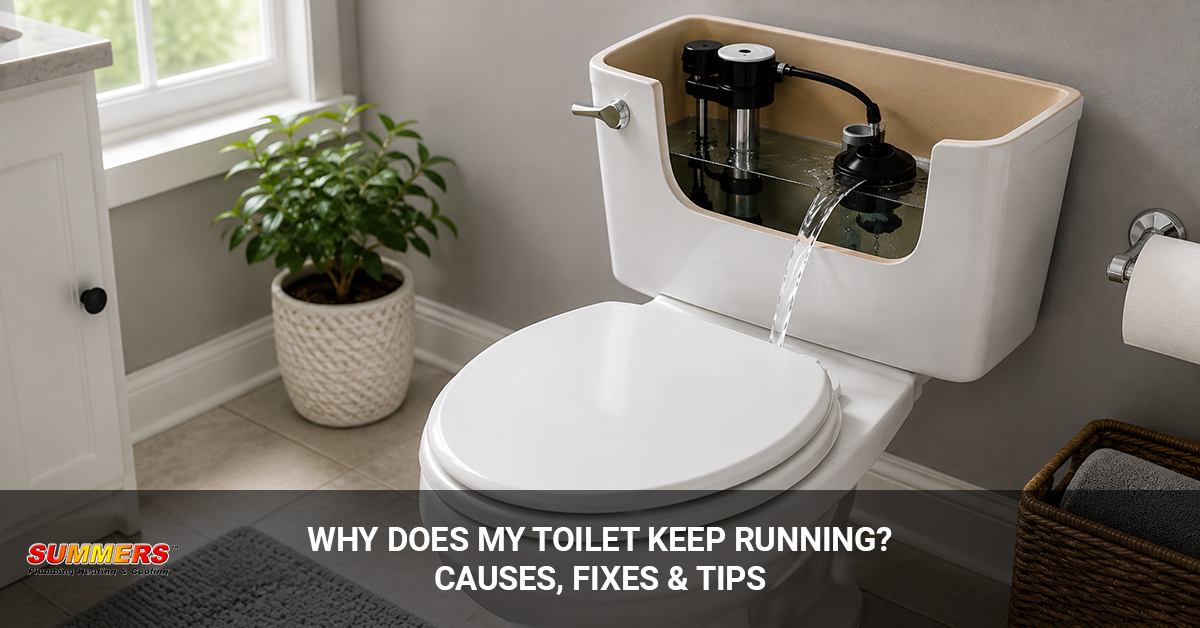
A toilet usually keeps running because water is leaking from the tank into the bowl or the fill valve is not shutting off properly. The most common causes are a worn flapper, incorrect float level, faulty fill valve, or a chain that prevents the flapper from sealing.
Most running toilets are relatively simple to diagnose. You can often find the problem by removing the tank lid and watching what happens after you flush.
Why Does My Toilet Keep Running?
The most common reason a toilet keeps running is a worn flapper that allows water to leak from the tank into the bowl. Other common causes include a faulty fill valve, float set too high, incorrect chain tension, or water flowing into the overflow tube.
Here are the problems to check first.
Worn or Damaged Flapper
A worn flapper can let water slowly leak from the toilet tank into the bowl, causing the toilet to refill repeatedly.
The flapper is the rubber seal at the bottom of the tank. It lifts when you flush and closes afterward to hold water in the tank.
Over time, the rubber can become stiff, cracked, warped, or covered with mineral buildup. When it no longer seals properly, water leaks into the bowl.
Common signs include:
- Toilet runs intermittently.
- You hear a faint hissing sound.
- The toilet refills every few minutes.
- The tank water level slowly drops.
- Food coloring placed in the tank eventually appears in the bowl.
If the flapper is damaged or no longer seals properly, replacing it is often a simple fix.
Float Is Set Too High
A float set too high can cause water to rise above the proper level and flow into the overflow tube.
The float controls when the fill valve stops adding water to the tank.
If the float is too high, the tank continues filling until excess water enters the overflow tube.
Look inside the tank after flushing. If water is flowing into the vertical overflow tube, the water level may be too high or the fill valve may not be shutting off correctly.
The correct water level varies by toilet, so follow the manufacturer’s markings or instructions when adjusting it.
Faulty Fill Valve
A faulty fill valve can keep allowing water into the tank even after the tank has reached the correct level.
The fill valve opens after you flush and closes when the tank is full.
Mineral buildup, wear, or a damaged internal component can prevent it from closing completely.
A failing fill valve may produce a constant hissing sound or allow a small stream of water to continue entering the tank. If you are also experiencing other changes in your home’s water flow, see what causes suddenly low water pressure.
If adjusting the float does not stop the water, the fill valve may need replacement.
Flush Valve Chain Is Too Tight or Loose
A chain with the wrong amount of slack can prevent the flapper from closing properly.
The chain connects the toilet handle to the flapper.
If it is too tight, the flapper may remain slightly open after you release the handle.
If it is too loose, the handle may not lift the flapper properly during a flush.
The chain should have enough slack for the flapper to sit completely closed when the handle is released.
Overflow Tube Is Causing Water to Run
If water continuously flows into the overflow tube, the tank is either filling too high or the fill valve is failing to shut off.
The overflow tube prevents the tank from overflowing onto the bathroom floor.
Look inside the tank while the toilet is running. If water is flowing into the top of the overflow tube, check the float and fill valve.
Do not simply lower the water level without finding the reason it is getting too high.
Damaged Flush Valve or Tank Seal
A damaged flush valve seal can allow water to leak from the tank into the bowl even when the flapper appears to be in place.
Depending on the toilet design, the sealing mechanism may be part of a larger flush valve assembly.
If replacing the flapper does not stop the leak, the flush valve or its seal may be damaged.
A plumber can determine whether the valve can be repaired or needs replacement.
How Do I Find Out Why My Toilet Is Running?
The easiest way to diagnose a running toilet is to remove the tank lid and watch where the water is going. If you also notice bubbling or unusual behavior when flushing, see why your toilet bubbles when flushed.
Follow these steps:
- Remove the toilet tank lid carefully.
- Flush the toilet and watch the tank refill.
- Check whether water is flowing into the overflow tube.
- Look at the flapper to make sure it closes completely.
- Check whether the chain is pulling on the flapper.
- Listen for continuous hissing from the fill valve.
- Check whether the water level continues rising after the tank appears full.
- Perform a food-coloring test if you suspect a slow leak.
For the food-coloring test, add a few drops of food coloring to the tank without flushing. Wait about 10 to 15 minutes.
If colored water appears in the bowl, water is leaking from the tank into the bowl.
That usually points to a flapper, flush valve, or seal problem.
How Do You Stop a Toilet From Running?
You can often stop a running toilet by adjusting the float, replacing a worn flapper, correcting the chain, or replacing a faulty fill valve.
Start with the simplest possible fix.
Adjust the Float
If the tank is overfilling, adjusting the float may stop water from entering the overflow tube.
The adjustment method depends on the type of float and fill valve.
Some have an adjustment screw. Others use a clip or another mechanism.
Make small adjustments and flush the toilet to see whether the water stops at the correct level.
Do not set the water level so low that the toilet cannot flush properly.
Replace the Flapper
Replacing a worn flapper can stop a toilet from running when the old flapper no longer seals the flush valve opening.
First, shut off the toilet’s water supply using the shutoff valve near the floor or wall.
Flush the toilet to empty most of the tank. Remove the old flapper and disconnect its chain.
Install a replacement flapper that is compatible with your toilet model.
Reconnect the chain with a small amount of slack, turn the water back on, and test the toilet.
Adjust the Chain
If the flapper works correctly but the chain is holding it open, adjusting the chain can solve the problem.
The chain should not be tight when the flapper is closed.
If it pulls upward on the flapper after you release the handle, give it a little more slack.
If the chain has excessive slack, the toilet handle may not lift the flapper enough during a flush.
Replace the Fill Valve
A fill valve that continues running after the tank reaches the correct water level may need replacement.
Turn off the water supply and empty the tank before removing the old valve.
Because fill valves vary by design, use a replacement that is compatible with your toilet.
If you are not comfortable working inside the tank or cannot identify the problem, a plumber can replace and adjust the valve for you.
How Much Water Does a Running Toilet Waste?
A running toilet can waste hundreds of gallons of water per day when the leak is significant.
The exact amount depends on how much water is escaping and how long the toilet continues running.
A slow leak may waste less water than a toilet that continuously sends a steady stream into the bowl. Even a small leak can add up over time.
A running toilet can therefore increase your water bill without being obvious at first.
Fixing the problem early can prevent unnecessary water waste.
How Much Does It Cost to Fix a Running Toilet?
A running toilet often costs relatively little to fix because common problems involve inexpensive tank components such as the flapper or fill valve.
A DIY flapper replacement may cost only the price of the replacement part.
A plumber will charge for service and labor in addition to any replacement parts.
The final cost depends on:
- The failed component
- Local plumbing rates
- Accessibility
- Whether additional repairs are needed
- Whether the shutoff valve works properly
A basic flapper or fill valve repair is generally much less expensive than replacing the entire toilet.
If the toilet tank is cracked, the toilet is severely damaged, or repeated repairs are needed, replacement may be worth considering.
Is a Running Toilet an Emergency?
A running toilet is usually not an emergency, but it should be fixed promptly to prevent water waste and possible damage. Addressing leaks quickly is also important for preventing water damage in your Columbus home.
A running toilet becomes more urgent when water is escaping outside the tank or bowl.
Call for plumbing help promptly if:
- Water is overflowing.
- Water is pooling on the bathroom floor.
- The toilet tank is cracked.
- The supply line is leaking.
- The shutoff valve does not work.
- The toilet cannot be stopped from running.
- You notice water damage around the toilet.
If the toilet is continuously running and you cannot repair it immediately, turn off the water supply using the shutoff valve.
This stops water from entering the toilet until the problem can be repaired.
When Should You Call a Plumber?
Call a plumber if the toilet continues running after basic adjustments or if you find a leak outside the tank or bowl. For other common toilet problems that may require professional help, see our guide to toilet repair in Columbus.
Professional help is especially appropriate when:
- A new flapper does not solve the problem.
- The fill valve continues running.
- The toilet tank is cracked.
- The shutoff valve is stuck or leaking.
- Water is leaking around the toilet base.
- The toilet repeatedly develops the same problem.
- You cannot identify where the water is going.
- The repair requires work beyond the tank components.
A plumber can determine whether the problem is limited to the toilet or connected to another plumbing issue. If the problem extends beyond the toilet, you may need professional plumbing repair in Columbus.
Frequently Asked Questions
Why does my toilet keep running after I flush?
A toilet that keeps running after a flush usually has a flapper, fill valve, float, or chain problem. Check whether water is entering the overflow tube or leaking from the tank into the bowl.
How do I stop my toilet from running?
Start by checking the flapper, float, chain, and fill valve. A worn flapper may need replacement, while a high water level may only require float adjustment.
Why does my toilet randomly run for a few seconds?
A toilet that randomly runs for a few seconds usually has a slow leak from the tank into the bowl. A worn flapper or flush valve seal is a common cause. As the tank level drops, the fill valve turns on briefly to restore the water level.
How do I know if my toilet flapper is bad?
A food-coloring test can help determine whether a flapper is leaking. Add food coloring to the tank and wait 10 to 15 minutes without flushing. If colored water appears in the bowl, the tank is leaking into the bowl.
Why does my toilet keep running but not overflow?
A toilet can keep running without overflowing when water is leaking from the tank into the bowl or when the fill valve is continuously adding water. The bowl is designed to receive water from the tank, so the excess usually flows through the toilet’s internal trap rather than onto the floor.
Can a running toilet increase my water bill?
Yes, a running toilet can increase your water bill because it continuously wastes water. The increase depends on the size of the leak and how long the toilet runs.
Should I turn off the water if my toilet keeps running?
Yes, you can turn off the toilet’s water supply if you cannot stop the running immediately. The shutoff valve is usually located on the wall or floor behind or beside the toilet. Turn it clockwise to stop water from entering the tank.
Final Thought
A toilet that keeps running usually has a problem with the flapper, fill valve, float, chain, or flush valve seal.
Start by removing the tank lid and watching what happens after you flush. Check whether water is entering the overflow tube or leaking from the tank into the bowl.
Many running toilets can be fixed with a simple float adjustment or inexpensive replacement part. If the problem continues, the tank is damaged, or water is leaking onto the floor, call a plumber.
Fixing a running toilet promptly can also prevent unnecessary water waste and keep a small plumbing problem from becoming a larger one. If the problem continues after basic adjustments or replacement of tank components, professional toilet repair in Columbus can help identify and fix the underlying issue.