
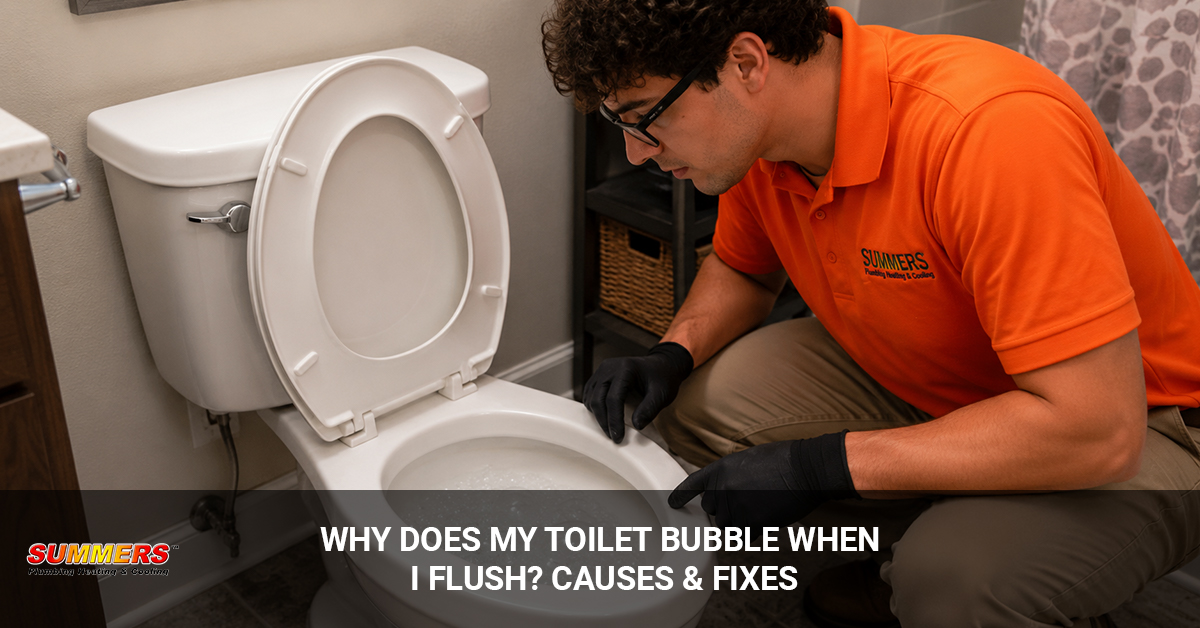
Why Does My Toilet Bubble When I Flush? Causes & Fixes
A toilet usually bubbles or gurgles when you flush because air is trapped somewhere in the plumbing system. Instead of flowing smoothly through the drain and vent pipes, wastewater encounters a blockage or restriction that forces trapped air back through the toilet bowl. In many cases, the problem is caused by a partial drain clog, a blocked plumbing vent, or a main sewer line blockage.
Although an occasional bubble may not seem serious, repeated bubbling should never be ignored. As the underlying blockage worsens, you may begin noticing slow drains, gurgling sinks, sewer odors, or even sewage backing up into your home. Identifying the cause early can help prevent more extensive plumbing damage and expensive sewer repairs.
In this guide, you’ll learn why your toilet bubbles when you flush, the most common causes, warning signs of a larger plumbing problem, safe DIY troubleshooting steps, how plumbers diagnose the issue, and when it’s time to call a licensed plumber.
Why Does My Toilet Bubble When I Flush?
A toilet bubbles when you flush because trapped air is forced back through the toilet bowl instead of moving normally through the plumbing vent system. This usually happens when wastewater can’t flow freely due to a clog, a blocked vent, or a restriction in the main sewer line. As the water pushes against the blockage, the trapped air escapes through the nearest opening in the toilet.
Sometimes the problem is limited to the toilet drain itself. In other cases, the bubbling is an early warning sign of a larger issue affecting your home’s plumbing system.
| Possible Cause | Typical Solution |
| Partial toilet drain clog | Clear the clog with a plunger or toilet auger |
| Clogged plumbing vent | Remove the vent blockage |
| Main sewer line blockage | Professional sewer cleaning |
| Tree root intrusion | Sewer camera inspection and repair |
| Septic system problem | Septic inspection and pumping |
If the toilet bubbles only once and then works normally, the cause may be minor. However, if the bubbling continues or other plumbing fixtures begin draining slowly or making gurgling sounds, the problem often extends beyond the toilet and should be inspected before it leads to a sewage backup.
Common Causes of a Bubbling Toilet
A bubbling toilet is usually caused by a blockage or restriction that prevents air and wastewater from moving normally through the plumbing system. Identifying the underlying cause is the first step toward choosing the right repair.
Partial Toilet Drain Clog
A partial clog in the toilet drain is one of the most common causes of bubbling. If plunging or using a toilet auger doesn’t solve the problem, professional toilet repair may be needed to restore proper flushing and drainage. Toilet paper, excessive waste, or a foreign object can partially block the drain, restricting water flow and forcing trapped air back into the bowl during flushing.
Clogged Plumbing Vent
A blocked plumbing vent can cause your toilet to bubble even if the drain isn’t clogged. The vent pipe allows air to enter the plumbing system so wastewater can flow smoothly. If leaves, bird nests, or other debris block the vent, air pressure builds up and escapes through the toilet.
Main Sewer Line Blockage
A clogged main sewer line can cause toilets throughout the home to bubble or gurgle. If the blockage is caused by pipe damage, tree roots, or a collapsed sewer line, professional sewer line repair may be required to restore normal wastewater flow. Because the main sewer pipe carries wastewater from every plumbing fixture, a blockage can create pressure throughout the entire system. You may also notice multiple slow drains, sewer odors, or wastewater backing up into the lowest drains.
Tree Root Intrusion
Tree roots can cause toilet bubbling by blocking the main sewer line. Roots enter older sewer pipes through cracks or loose joints, then expand inside the pipe until they restrict wastewater flow and trap air.
Septic System Problems
Homes with septic systems may experience toilet bubbling when the septic tank or drain field isn’t working properly. A full septic tank, clogged outlet pipe, or failing drain field can prevent wastewater from leaving the home, creating pressure that causes the toilet to bubble during flushing.
Because several plumbing problems can produce the same symptom, recurring toilet bubbling should be inspected promptly. Early diagnosis can prevent more serious issues such as sewage backups or sewer line damage.
Warning Signs of a Bigger Plumbing Problem
A bubbling toilet is often an early warning sign of a larger plumbing issue, especially when other fixtures begin showing problems too. If several symptoms appear at the same time, the issue may involve the main sewer line rather than the toilet itself.
Multiple Slow Drains
Several slow drains usually indicate a blockage in the main sewer line. If sinks, showers, bathtubs, and the toilet all drain slowly, wastewater is likely being restricted before it leaves your home.
Gurgling Sinks or Bathtubs
Gurgling sounds from sinks, bathtubs, or showers often occur when air is trapped inside the plumbing system. These noises usually accompany a sewer line blockage or a clogged plumbing vent.
Sewage Backups
Sewage backing up into your home is one of the clearest signs of a serious plumbing problem. Wastewater may come up through toilets, showers, bathtubs, or basement floor drains when it can’t pass through the main sewer line.
Sewer Gas Odors
Persistent sewer odors can indicate a blocked or damaged sewer line. If you notice a strong sewage smell along with toilet bubbling, the plumbing system should be inspected as soon as possible.
Water Backing Up Into Floor Drains
Water rising through a basement floor drain often points to a main sewer line blockage. Floor drains are usually the lowest plumbing fixtures in the home, making them the first place wastewater appears during a backup.
If your toilet bubbles along with any of these warning signs, don’t assume it’s a simple toilet clog. A professional inspection can identify whether the problem involves the plumbing vent, the main sewer line, or another part of the drainage system before it becomes a costly emergency.
Can You Fix a Bubbling Toilet Yourself?
You can sometimes fix a bubbling toilet yourself if the problem is caused by a minor clog, but recurring bubbling usually requires professional diagnosis. The first step is determining whether the issue is isolated to the toilet or affects other plumbing fixtures throughout the house.
You can safely try these troubleshooting methods:
- Use a plunger. A flange plunger can often clear a minor blockage in the toilet trap or drain.
- Try a toilet auger. A toilet auger reaches deeper into the toilet drain than a standard plunger and can remove stubborn clogs.
- Check nearby drains. Run water in nearby sinks, showers, or bathtubs. If they also drain slowly or gurgle, the problem may involve the main sewer line.
- Inspect for obvious issues. Look for standing water around floor drains or other signs of drainage problems elsewhere in the home.
Avoid using chemical drain cleaners to fix a bubbling toilet. These products rarely remove deep blockages and may damage older plumbing pipes or the toilet itself.
If the toilet continues bubbling after basic troubleshooting, or if multiple plumbing fixtures are affected, stop using the plumbing system and call a licensed plumber. Problems involving blocked plumbing vents, tree roots, or the main sewer line require specialized equipment to diagnose and repair safely.
How Plumbers Diagnose a Bubbling Toilet
Professional plumbers use specialized tools to determine whether the bubbling is caused by a toilet clog, a blocked plumbing vent, or a main sewer line problem. Finding the exact cause helps ensure the correct repair is performed the first time.
Drain Inspection
A drain inspection checks the toilet and nearby drain lines for localized blockages. Plumbers inspect the toilet trap and drain pipe to determine whether the bubbling is caused by a clog close to the fixture.
Sewer Camera Inspection
A sewer camera inspection helps identify problems deeper in the plumbing system. A waterproof camera is inserted into the sewer line to locate tree roots, grease buildup, pipe damage, separated joints, or other blockages that may be causing pressure to build inside the plumbing system.
Plumbing Vent Inspection
A plumbing vent inspection checks whether the roof vent is blocked. Leaves, bird nests, and other debris can restrict airflow, forcing trapped air back through the toilet instead of allowing it to vent safely outside.
Hydro Jetting
Hydro jetting removes stubborn blockages from the main sewer line using high-pressure water. Combined with professional drain cleaning, it removes grease, sludge, soap residue, and other buildup that can cause recurring toilet bubbling and slow drains. It clears grease, sludge, soap residue, and small tree roots while cleaning the inside of the pipe to restore normal wastewater flow. Plumbers typically perform a camera inspection before hydro jetting to verify the sewer line is suitable for this method.
Professional diagnosis helps eliminate recurring bubbling by addressing the actual cause rather than just treating the symptom.
When Should You Call a Plumber?
You should call a plumber if your toilet keeps bubbling, other plumbing fixtures are affected, or you notice signs of a sewer line problem. While a minor toilet clog may be easy to clear, persistent bubbling often indicates a more serious issue that requires professional attention.
Contact a licensed plumber if:
- The toilet continues bubbling after you’ve used a plunger or toilet auger. Recurring bubbling usually points to a deeper blockage.
- Multiple plumbing fixtures are affected. If sinks, showers, bathtubs, or floor drains also drain slowly or gurgle, the problem is likely in the main sewer line.
- Sewage backs up into your home. Wastewater coming up through toilets, showers, or basement floor drains is a plumbing emergency.
- You notice strong sewer odors. Persistent sewage smells may indicate a blocked or damaged sewer line.
- The toilet clogs repeatedly. Frequent toilet clogs combined with bubbling often signal a larger drainage issue.
- You suspect tree root intrusion or sewer line damage. Homes with older sewer lines or large trees nearby should be inspected if new drainage problems develop.
A licensed plumber can use sewer camera inspections, drain cleaning equipment, and plumbing vent inspections to identify the source of the problem and recommend the most effective repair. Early service can help prevent sewage backups, water damage, and more expensive plumbing repairs.
How to Prevent Toilet Bubbling
Regular plumbing maintenance and proper flushing habits are the best ways to prevent a toilet from bubbling. Keeping your drains and sewer line clear reduces the risk of blockages that trap air inside the plumbing system.
To help prevent toilet bubbling:
- Flush only toilet paper and human waste. Items such as wipes, paper towels, cotton swabs, and feminine hygiene products can clog the toilet or main sewer line.
- Avoid flushing “flushable” wipes. Even products labeled as flushable can accumulate inside sewer pipes and contribute to blockages.
- Schedule periodic sewer camera inspections. Homes with older plumbing or recurring drainage problems benefit from routine inspections that identify developing sewer line issues early.
- Remove tree roots before they spread. If tree roots begin entering your sewer line, removing them promptly can prevent major blockages and pipe damage.
- Maintain your septic system. If your home uses a septic system, follow the recommended pumping and inspection schedule to prevent backups and drainage problems.
- Address slow drains promptly. A slow sink, shower, or bathtub may be an early warning sign of a developing sewer line blockage. Repairing the problem early can help prevent toilet bubbling and more serious plumbing issues.
Preventive maintenance costs far less than repairing a damaged sewer line or cleaning up a sewage backup. A few simple habits can help keep your plumbing system operating properly for years.
Frequently Asked Questions
Why does my toilet bubble but not clog?
A toilet can bubble without clogging because trapped air is escaping through the toilet bowl. This often happens when there’s a partial drain blockage, a clogged plumbing vent, or a restriction in the main sewer line that hasn’t completely blocked wastewater flow.
Is a bubbling toilet an emergency?
A bubbling toilet isn’t always an emergency, but it should never be ignored. If the bubbling is accompanied by multiple slow drains, sewage backups, or strong sewer odors, it may indicate a main sewer line problem that requires immediate attention.
Can tree roots cause toilet bubbling?
Yes, tree roots are a common cause of toilet bubbling. Roots can enter the main sewer line through cracks or loose joints, restricting wastewater flow and forcing trapped air back through the toilet.
Can a blocked vent make a toilet bubble?
Yes. A blocked plumbing vent prevents air from moving properly through the plumbing system, causing pressure to build and escape through the toilet when you flush.
Why does my toilet bubble when the washing machine drains?
If your toilet bubbles when the washing machine drains, the plumbing system may have a partial blockage or a clogged vent. The large volume of water discharged by the washing machine can create pressure that forces trapped air through the toilet bowl.
Can I fix a bubbling toilet with a plunger?
If a minor toilet clog is causing the problem, a plunger may clear the blockage. However, if the bubbling continues or multiple fixtures are affected, the problem is likely deeper in the plumbing system and requires professional diagnosis.
How much does it cost to repair the problem?
The repair cost depends on the underlying cause. Clearing a simple toilet clog is usually much less expensive than repairing a blocked sewer line or removing tree roots. A professional inspection can determine the exact problem and provide an accurate estimate.
Final Thoughts
A bubbling toilet is your plumbing system’s way of telling you something isn’t flowing correctly. While a minor clog may be the cause, recurring bubbling often points to a blocked plumbing vent, a main sewer line clog, or another drainage problem that shouldn’t be ignored.
If your toilet continues to bubble or you notice slow drains, sewer odors, or sewage backups elsewhere in your home, contact a licensed plumber as soon as possible. Early diagnosis can prevent larger plumbing failures, protect your home from water damage, and help you avoid more expensive sewer repairs.