

Why Does My Sink Drain Slowly? Causes & Easy Fixes
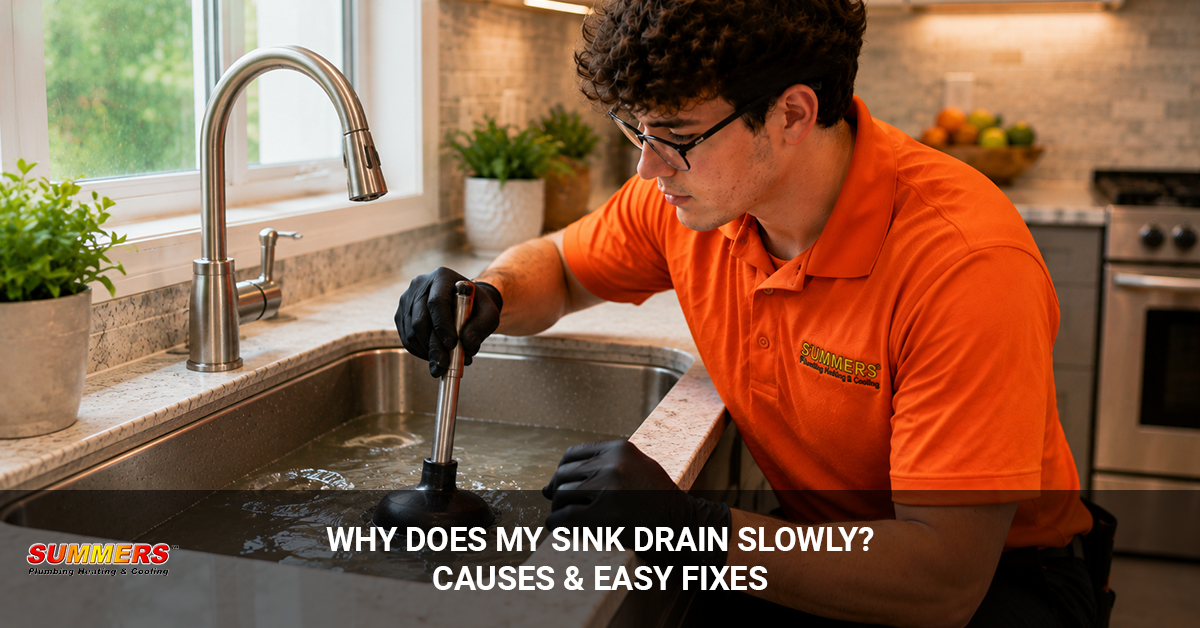
Your sink drains slowly because something is partially blocking the drainpipe and slowing the flow of water. In most homes, the blockage is caused by grease and food scraps in the kitchen or hair and soap scum in the bathroom. A slow drain can also be a sign of mineral buildup, a clogged drainpipe, or a problem with the main sewer line.
A slow-draining sink is more than just an inconvenience. If you ignore it, the blockage can continue to grow until the drain stops working completely. Taking care of the problem early can help you avoid bigger plumbing repairs and water damage.
In this guide, you’ll learn the most common reasons your sink drains slowly, how to identify the cause, simple ways to fix minor clogs, and when it’s time to call a licensed plumber.
The Most Common Reasons Your Sink Drains Slowly
Your sink usually drains slowly because something is partially blocking the drainpipe. The exact cause often depends on whether it’s a kitchen or bathroom sink. Identifying the source of the blockage can help you choose the right solution and prevent the problem from coming back.
Grease and Food Buildup (Kitchen Sink)
Grease and food debris are the most common reasons a kitchen sink drains slowly. Grease may go down the drain as a liquid, but it cools quickly inside the pipes and hardens. As it builds up, it traps food scraps and other debris, gradually reducing water flow.
Coffee grounds, rice, pasta, and other food waste can also collect inside the drain and contribute to recurring clogs. Scraping food into the trash before washing dishes can help prevent this type of buildup.
Hair and Soap Scum (Bathroom Sink)
Hair and soap scum are the leading causes of slow bathroom sink drains. Hair catches inside the drain, while soap residue sticks to the pipe walls. Over time, this buildup traps more debris and creates a clog that slows drainage.
Cleaning the drain stopper regularly and removing trapped hair can help keep your bathroom sink draining properly.
Mineral Buildup From Hard Water
Hard water can cause minerals like calcium and magnesium to build up inside your pipes. As these deposits grow, they narrow the pipe opening, making it harder for water to flow freely.
If you live in an area with hard water, mineral buildup can cause recurring slow drains and may require professional cleaning or treatment.
Clogged Drain Pipe
A clogged drainpipe can slow water flow even if you can’t see the blockage. Grease, soap, food particles, hair, and other debris often build up deeper inside the plumbing system, where they gradually restrict the flow of water.
If basic cleaning doesn’t improve the drain, the clog may be farther down the pipe.
Blocked Plumbing Vent
A blocked plumbing vent can also cause your sink to drain slowly. Vent pipes allow air to enter the plumbing system, helping wastewater flow smoothly through the pipes. If a vent becomes blocked by leaves, debris, or an animal nest, you may notice slow drainage, gurgling sounds, or unpleasant odors.
Main Sewer Line Problems
A problem with the main sewer line can cause multiple sinks and drains to empty slowly at the same time. Tree roots, pipe damage, or a large blockage can restrict the flow of wastewater, affecting your home’s entire plumbing system.
If more than one drain is slow or you notice water backing up into different fixtures, contact a licensed plumber as soon as possible. A main sewer line problem won’t go away on its own and usually requires professional diagnosis and repair.
How to Identify the Cause of a Slow Sink Drain
You can often identify the cause of a slow sink drain by paying attention to the symptoms. Where the problem occurs and how your plumbing behaves can help you determine whether it’s a simple clog or a more serious issue.
Kitchen Sink vs. Bathroom Sink
The location of the slow drain can provide an important clue. A slow kitchen sink is usually caused by grease, food scraps, or cooking oil buildup. A slow bathroom sink is more commonly caused by hair, soap scum, toothpaste, and other personal care products collecting inside the drain.
One Sink vs. Multiple Slow Drains
If only one sink is draining slowly, the clog is usually close to that fixture and may be easy to remove. If multiple sinks, tubs, or showers are draining slowly at the same time, the problem may be in the main drain or sewer line and should be inspected by a plumber.
Gurgling Sounds
Gurgling sounds often mean air is trapped in your plumbing system. This can happen when a clog restricts water flow or when a plumbing vent is blocked. If the gurgling continues, it’s a sign that the drain isn’t working properly.
Bad Odors
Bad odors coming from your sink drain are often caused by food residue, grease, or other organic material trapped inside the pipe. If you notice a strong sewer smell that doesn’t go away after cleaning the drain, it could indicate a sewer line or venting problem.
Water Backing Up
Water backing up into the sink is a clear sign of a significant blockage. If the water drains very slowly or rises instead of flowing away, the clog may be deeper inside the drainpipe or even in the main sewer line. If this happens repeatedly or affects more than one fixture, contact a licensed plumber as soon as possible.
How to Fix a Slow Sink Drain
You can often fix a slow sink drain yourself if the blockage is minor. Simple cleaning and maintenance are usually enough to remove small clogs and restore normal water flow.
Try these steps before calling a plumber:
- Remove any visible hair, food scraps, or other debris from the drain.
- Clean the sink strainer or drain stopper to remove trapped buildup.
- Flush the drain with hot water to help clear light grease or soap residue.
- Pour baking soda into the drain, followed by vinegar. Let it sit for about 15 minutes, then flush with hot water.
- Use a drain snake to remove stubborn clogs deeper inside the pipe.
- Avoid chemical drain cleaners, as repeated use can damage certain types of pipes and often doesn’t solve the underlying problem.
If your sink continues to drain slowly after trying these methods, the blockage is likely deeper in the plumbing system. Recurring slow drains, water backing up into the sink, or multiple slow drains throughout your home are signs that it’s time to call a licensed plumber.
How to Prevent a Slow Sink Drain
You can prevent most slow sink drains by following a few simple habits. Regular maintenance keeps your pipes clear, improves water flow, and helps you avoid stubborn clogs and costly plumbing repairs.
Here are some easy ways to keep your sink draining properly:
- Never pour grease or cooking oil down the drain. Let it cool and throw it in the trash instead.
- Use a drain strainer to catch food scraps, hair, and other debris before they enter the pipes.
- Clean the drain and drain stopper regularly to remove buildup that can slow water flow.
- Scrape food waste into the trash instead of rinsing it into the sink, even if you have a garbage disposal.
- Schedule routine plumbing maintenance if your home has older pipes or you’ve experienced recurring drain problems.
These simple habits only take a few minutes, but they can help prevent slow drains, extend the life of your plumbing system, and reduce the need for professional drain cleaning.
When to Call a Plumber
Call a plumber if your sink continues to drain slowly after you’ve tried basic cleaning and maintenance. While a minor clog can often be cleared at home, a slow drain that keeps coming back usually points to a deeper plumbing problem.
Contact a licensed plumber if you notice:
- The sink continues to drain slowly after cleaning.
- Multiple sinks or drains are draining slowly.
- Water backs up into the sink.
- Persistent sewer odors coming from the drain.
- Gurgling sounds that don’t go away.
- DIY methods only provide temporary relief.
- You suspect a blocked main sewer line.
A licensed plumber can inspect your plumbing system, identify the source of the blockage, and recommend professional drain cleaning or other repairs to restore proper water flow. Addressing the problem early can help prevent a complete drain blockage, water damage, and more expensive plumbing repairs.
Final Thoughts
A slow sink drain is usually a sign that something is restricting the flow of water through your pipes. If you’re dealing with recurring blockages, learn more about why your drains keep clogging and what the underlying causes may be. Grease, food scraps, hair, soap scum, and mineral buildup are some of the most common causes, and fixing these problems early can help prevent a complete blockage.
The best way to avoid a slow drain is to practice good plumbing habits. Keep grease out of the sink, use a drain strainer, clean the drain regularly, and address slow drainage as soon as you notice it. These simple steps can help keep your plumbing system working efficiently and reduce the risk of costly repairs.
If your sink continues to drain slowly after routine cleaning and maintenance, don’t ignore the problem. A licensed plumber can identify the underlying cause, clear the blockage safely, and restore proper drainage before a minor issue turns into a more expensive plumbing repair.