

What Should Never Go Down Your Kitchen Drain?
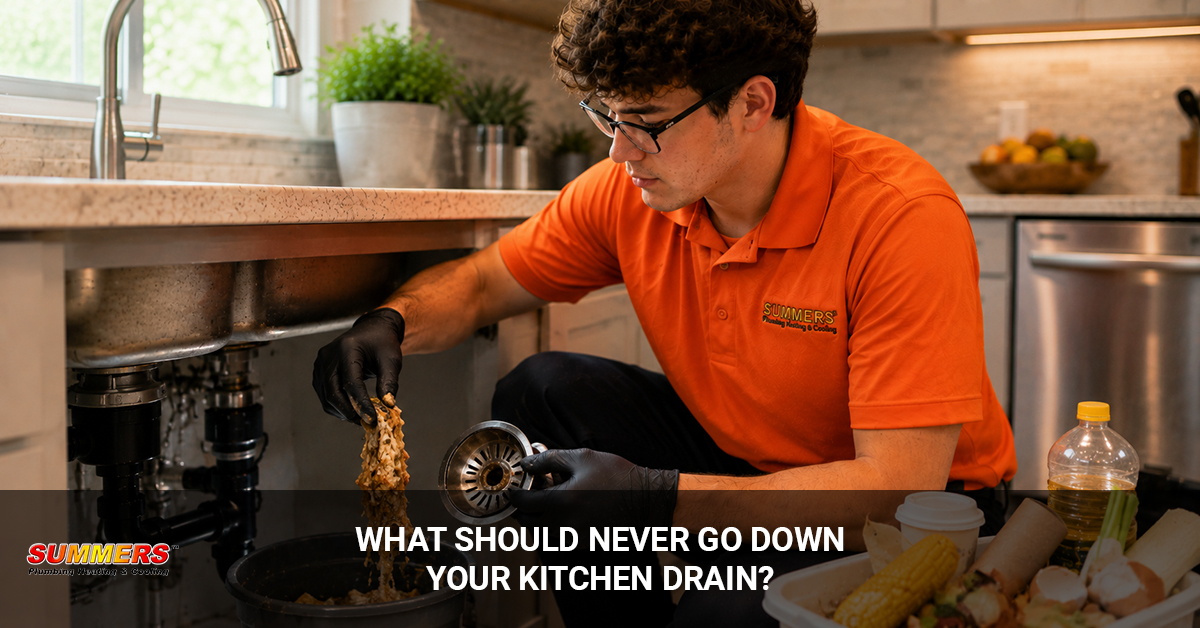
Some items should never go down your kitchen drain because they can clog your pipes, damage your garbage disposal, and lead to expensive plumbing repairs. While it may be tempting to rinse everything into the sink, many foods and household materials don’t break down properly. Instead, they stick to the inside of your pipes, absorb water, or create stubborn blockages.
The best way to keep your kitchen drain working properly is to know what belongs in the trash or compost instead of the sink. A few simple habits can help prevent slow drains, unpleasant odors, and unexpected plumbing problems.
In this guide, you’ll learn what should never go down your kitchen drain, why these items cause problems, what can safely go down the drain, and how to keep your kitchen plumbing flowing smoothly.
Why It’s Important to Protect Your Kitchen Drain
Protecting your kitchen drain helps prevent clogs, keeps your plumbing working properly, and reduces the risk of costly repairs. Every time grease, food scraps, or other unsuitable items go down the sink, they increase the chance of a blockage forming inside your pipes.
Small amounts of buildup may not cause problems right away, but they can collect over time and restrict water flow. What starts as a slow-draining sink can eventually turn into a stubborn clog that requires professional drain cleaning.
Keeping the wrong items out of your kitchen drain can help you:
- Prevent clogged pipes
- Reduce unpleasant drain odors
- Protect your garbage disposal
- Keep water flowing freely
- Extend the life of your plumbing system
- Avoid expensive plumbing repairs
A few simple habits, like disposing of food waste properly and keeping grease out of the sink, can go a long way toward protecting your kitchen plumbing and preventing future drain problems.
10 Things You Should Never Put Down Your Kitchen Drain
Many everyday kitchen items should never go down your kitchen drain because they can clog your pipes, damage your garbage disposal, or lead to expensive plumbing repairs. Even if some of these items seem harmless, they can build up inside your plumbing over time and restrict water flow.
-
Grease, Fat, and Cooking Oil
Never pour grease, fat, or cooking oil down your kitchen drain because they harden as they cool. The hardened grease sticks to the inside of your pipes and traps food particles, eventually creating stubborn clogs.
Instead, let grease cool, pour it into a disposable container, and throw it in the trash.
-
Coffee Grounds
Coffee grounds should never go down your kitchen drain because they don’t dissolve in water. They settle inside your pipes, where they can mix with grease and other debris to create dense blockages.
Dispose of used coffee grounds in the trash or add them to your compost pile.
-
Eggshells
Eggshells should stay out of your kitchen drain because they don’t break down easily. The shell fragments can collect inside your pipes, while the thin membrane inside the shell can wrap around garbage disposal components and contribute to clogs.
Throw eggshells in the trash or compost them instead.
-
Rice, Pasta, and Bread
Rice, pasta, and bread can clog your drain because they continue to absorb water after going down the sink. As they expand, they form a thick, sticky mass that can slow or completely block water flow.
Scrape leftover food into the trash before washing your dishes.
-
Flour and Dough
Flour and dough should never be washed down the drain because they turn into a sticky paste when mixed with water. This paste sticks to the inside of your pipes and catches other debris, increasing the chance of a clog.
Dispose of leftover flour and dough in the trash.
-
Fibrous Vegetables
Fibrous vegetables can jam your garbage disposal and clog your drain. Foods like celery, corn husks, asparagus, onion skins, and artichokes contain long, stringy fibers that don’t grind easily and can wrap around disposal blades.
Throw these scraps in the trash or compost bin instead.
-
Fruit Pits and Seeds
Fruit pits and large seeds are too hard for a garbage disposal to grind safely. They can damage the disposal, become lodged in the drain, or contribute to blockages.
Always dispose of fruit pits and large seeds in the trash.
-
Bones
Bones should never go into your kitchen drain or garbage disposal because they’re too hard to break apart. They can damage the disposal’s grinding components and increase the risk of clogged pipes.
Place bones in the trash instead.
-
Sticky Food Labels and Produce Stickers
Produce stickers and food labels don’t dissolve in water. They can stick to the inside of your pipes or garbage disposal, where they catch other debris and contribute to clogs.
Remove stickers from fruits and vegetables before washing them, and throw them in the trash.
-
Harsh Chemicals and Paint
Harsh chemicals, paint, paint thinner, and other solvents should never be poured down your kitchen drain. These products can damage your plumbing, harm septic systems, and contaminate the environment.
Dispose of hazardous household waste according to your local community’s disposal guidelines.
What Can Safely Go Down Your Kitchen Drain?
Only water, small amounts of liquid soap, and tiny food particles that rinse away easily should go down your kitchen drain. Even if your sink has a garbage disposal, it’s best to limit the amount of food waste you put into it.
To use your garbage disposal safely:
- Run cold water before, during, and after using it.
- Feed small amounts of food into the disposal at a time.
- Avoid putting hard, fibrous, or greasy foods into the disposal.
- Let the disposal finish grinding before turning it off.
When you’re unsure whether something belongs in the sink, it’s usually safer to throw it in the trash or compost bin. This simple habit can help prevent clogs, protect your garbage disposal, and keep your plumbing system working properly.
How to Prevent Kitchen Drain Clogs
You can prevent most kitchen drain clogs by following a few simple habits every day. Regular maintenance helps keep your pipes clear, improves water flow, and reduces the chance of expensive plumbing repairs.
Here are some easy ways to protect your kitchen drain:
- Scrape food scraps into the trash before washing dishes.
- Use a sink strainer to catch food particles.
- Wipe greasy pots and pans with a paper towel before rinsing them.
- Flush the drain with hot water regularly to help remove light grease buildup.
- Clean your garbage disposal regularly to reduce food residue and odors.
These small habits only take a few minutes, but they can help keep your kitchen plumbing flowing smoothly, extend the life of your pipes and garbage disposal, and reduce the risk of future drain clogs.
When to Call a Plumber
Call a plumber if your kitchen drain keeps clogging even after you’ve cleaned it and followed good maintenance habits. While a minor clog can often be cleared with simple tools, recurring problems usually mean there’s a blockage or plumbing issue that requires professional attention.
Contact a licensed plumber if you notice:
- Slow drains that keep coming back
- Frequent kitchen sink clogs
- Water backing up into the sink
- Bad odors that don’t go away
- A garbage disposal that frequently jams or stops working
- Multiple drains clogging at the same time
A licensed plumber can inspect your drain system, identify the root cause of the problem, and recommend professional drain cleaning or other repairs to restore proper drainage. Addressing the issue early can help prevent water damage, protect your plumbing system, and avoid more expensive repairs later.
Final Thoughts
Keeping the wrong items out of your kitchen drain is one of the simplest ways to prevent clogs and protect your plumbing system. Everyday items like grease, coffee grounds, eggshells, starchy foods, and bones can build up inside your pipes, restrict water flow, and lead to expensive repairs over time.
Good kitchen habits can make a big difference. Using a sink strainer, throwing food scraps in the trash or compost, wiping grease from cookware before washing, and cleaning your garbage disposal regularly can help keep your drain clear and your plumbing working properly.
If your kitchen sink continues to drain slowly or clog despite regular maintenance, don’t ignore the problem. Learn more about the common causes and solutions for clogged drains before the issue becomes more serious. A licensed plumber can identify the underlying cause, clear the blockage safely, and help prevent future plumbing issues before they become more costly.