
Why Do My Drains Keep Clogging? Common Causes & Fixes
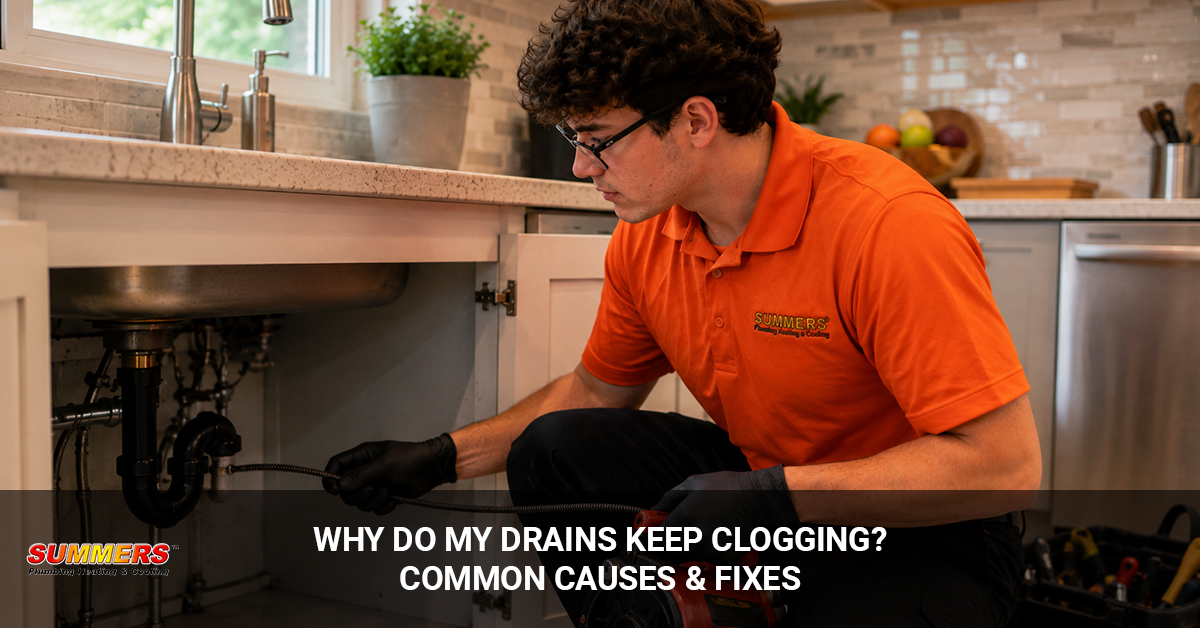
Your drains keep clogging because something is repeatedly blocking the flow of water through your pipes. In many homes, the problem is caused by everyday buildup, such as grease, hair, food scraps, or soap scum. In other cases, recurring clogs can point to a more serious issue, like mineral deposits, tree roots, or a damaged sewer line.
An occasional clog isn’t unusual, but if the same drain keeps backing up or multiple drains clog at the same time, it’s a sign that the underlying problem hasn’t been fixed.
In this guide, you’ll learn the most common reasons your drains keep clogging, how to identify the cause, what you can do to clear minor blockages, and when it’s time to call a licensed plumber.
The Most Common Reasons Your Drains Keep Clogging
Your drains keep clogging because something is repeatedly blocking the flow of water through your pipes. In most homes, the cause is everyday buildup, but recurring clogs can also be a sign of a more serious plumbing problem. Identifying the cause is the first step toward choosing the right solution and preventing future blockages.
Grease and Cooking Oil Buildup
Grease and cooking oil are among the most common causes of kitchen drain clogs. Although they go down the drain as liquids, they cool quickly inside the pipes and harden. As the grease builds up, it traps food particles and other debris, gradually restricting water flow until the drain becomes clogged.
Hair and Soap Scum
Hair and soap scum are the leading causes of bathroom drain clogs. Hair wraps around the inside of the drain, while soap residue sticks to the pipe walls. Over time, this buildup catches more debris and creates a blockage that slows or stops drainage.
Food Scraps in Kitchen Drains
Food scraps can clog your kitchen drain, especially if they’re difficult to break down. Coffee grounds, rice, pasta, eggshells, and fibrous vegetables can collect inside the pipes or garbage disposal, increasing the risk of recurring clogs. Scraping food into the trash before washing dishes can help prevent this problem.
Flushing Non-Flushable Items
Flushing items that aren’t designed for toilets can quickly block your plumbing system. Even products labeled as “flushable” may not break down properly inside your pipes. Only flush human waste and toilet paper to reduce the risk of recurring toilet clogs.
Common items that should never be flushed include:
- Flushable wipes
- Paper towels
- Cotton swabs
- Feminine hygiene products
- Dental floss
- Baby wipes
Mineral Buildup Inside Pipes
Hard water can cause minerals like calcium and magnesium to build up inside your pipes. As these deposits grow, they narrow the pipe opening, making it easier for grease, soap, and other debris to get trapped. This can lead to slow drains and frequent clogs.
Tree Root Intrusion
Tree roots can grow into small cracks or loose joints in underground sewer lines in search of water. Once inside, they continue to expand and trap waste flowing through the pipe. This often causes recurring drain backups throughout the home and usually requires professional repair.
Broken or Collapsed Sewer Lines
A damaged sewer line can cause drains to clog repeatedly because wastewater can’t flow properly. Older pipes may crack, sag, corrode, or collapse over time due to age, shifting soil, or heavy tree roots. If multiple drains in your home keep backing up, the main sewer line may be the problem and could require professional sewer line repair to restore proper drainage.
Plumbing Vent Problems
Blocked plumbing vents can also cause drains to drain slowly or make unusual noises. Vent pipes allow air to enter the plumbing system so water can flow smoothly. If a vent becomes blocked by leaves, debris, or animal nests, you may notice slow drains, gurgling sounds, or unpleasant odors coming from your plumbing fixtures.
How to Tell What’s Causing the Clog
You can often identify the cause of a clogged drain by paying attention to where the clog occurs and the symptoms you notice. Whether it’s affecting one fixture or your entire home, these signs can help you narrow down the problem.
One Drain Is Clogged
If only one sink, shower, or bathtub is draining slowly, the clog is usually close to that fixture. Hair, soap scum, grease, or food debris are the most common causes. In many cases, you can clear this type of blockage with a plunger or drain snake.
Multiple Drains Are Clogged
If several drains clog at the same time, the problem is likely deeper in your plumbing system. A blockage in the main sewer line can prevent wastewater from draining properly, causing multiple fixtures to back up at once.
Slow Drains Throughout the House
If every drain in your home empties slowly, there’s likely a partial blockage in the main drain or sewer line. This is usually more serious than a clog in a single fixture and often requires professional inspection.
Gurgling Noises
Gurgling sounds coming from your drains usually mean air is trapped in the plumbing system. This can happen when a clog restricts water flow or when a plumbing vent becomes blocked. If the noise continues, it’s a sign that the problem should be investigated.
Bad Sewer Odors
Persistent sewer odors coming from your drains may indicate a clog, a dry drain trap, or a problem with the sewer line. If the smell doesn’t go away after cleaning the drain and running water, it’s best to have your plumbing system inspected.
Water Backing Up Into Fixtures
Water backing up into sinks, bathtubs, showers, or floor drains is a strong sign of a serious blockage. This often points to a clogged main sewer line or another major plumbing issue that requires immediate attention. If you notice wastewater backing up into multiple fixtures, stop using water and contact a licensed plumber as soon as possible.
What You Can Do Before Calling a Plumber
You can often clear a minor drain clog yourself before calling a plumber. If the drain is only draining slowly or has a small blockage, a few simple steps may be enough to restore normal water flow.
Try these troubleshooting methods first:
- Remove any visible hair, food scraps, or other debris from the drain.
- Use a sink or toilet plunger to loosen the clog.
- Flush the drain with hot water to help clear light grease or soap buildup.
- Use a drain snake to remove stubborn blockages deeper inside the pipe.
- Avoid chemical drain cleaners, as repeated use can damage certain types of plumbing and may not fix the underlying problem.
If the drain continues to clog after trying these methods, the blockage is likely deeper in your plumbing system. Recurring clogs, multiple slow drains, or wastewater backing up into fixtures are signs that it’s time to call a licensed plumber for a professional inspection and repair.
Signs You Have a Serious Drain Problem
Some drain problems are signs of a larger plumbing issue and shouldn’t be ignored. If your drains keep clogging or you notice water backing up, the problem may be deeper in your plumbing system or sewer line.
Watch for these warning signs:
- The same drain clogs repeatedly.
- Multiple drains clog at the same time.
- Water backs up into sinks, tubs, or toilets.
- Sewer odors remain even after cleaning the drain.
- Standing water won’t drain.
- DIY methods only provide temporary relief.
These symptoms often point to a blocked sewer line, damaged pipe, tree root intrusion, or another plumbing issue that requires professional equipment to diagnose and repair. A licensed plumber can inspect your drain system, identify the root cause, and recommend the right solution before the problem leads to more extensive damage.
How to Prevent Drains from Clogging Again
You can prevent most drain clogs by following a few simple plumbing habits. Regular maintenance and proper drain use help keep water flowing freely and reduce the risk of recurring blockages.
Here are some of the best ways to prevent your drains from clogging:
- Never pour grease or cooking oil down the sink. Let it cool, place it in a container, and throw it in the trash.
- Use drain strainers in kitchen and bathroom sinks to catch food scraps, hair, and other debris before they enter the pipes.
- Flush kitchen drains with hot water regularly to help wash away light grease and soap buildup.
- Scrape food waste into the trash instead of rinsing it down the drain, even if you have a garbage disposal.
- Schedule routine plumbing inspections if your home has older pipes or you’ve experienced recurring drain clogs in the past.
These simple habits take only a few minutes but can help prevent costly plumbing repairs, improve drainage, and keep your plumbing system working properly for years to come.
When to Call a Plumber
Call a plumber if your drains keep clogging after you’ve tried basic maintenance. While a minor clog can often be cleared with a plunger or drain snake, recurring problems usually mean there’s a deeper issue that needs professional attention.
Contact a licensed plumber if you notice:
- The same drain keeps clogging.
- Multiple drains back up at the same time.
- Sewage backs up into sinks, tubs, or toilets.
- Persistent sewer odors coming from your drains.
- Signs of tree roots blocking the sewer line.
- Slow drains throughout the entire house.
A licensed plumber has the tools to find the source of the problem, including drain cameras and professional drain cleaning equipment to remove stubborn blockages and restore proper flow. They can identify whether the issue is caused by a clogged sewer line, damaged pipe, tree root intrusion, or another plumbing problem and recommend the right repair before it leads to more serious damage.
Final Thoughts
Recurring drain clogs are usually a sign that an underlying plumbing problem needs attention. While grease, hair, food scraps, and soap buildup are common causes, repeated clogs can also point to issues like mineral buildup, tree roots, or a damaged sewer line.
The best way to prevent future clogs is to use your drains properly and keep up with routine maintenance. Simple habits like keeping grease out of the sink, using drain strainers, and addressing slow drains early can go a long way toward keeping your plumbing system working properly.
If your drains continue to clog despite your efforts, don’t ignore the problem. A licensed plumber can identify the root cause, clear the blockage safely, and recommend the right repair to help prevent the issue from coming back.