

Indoor Air Quality Tips for Pet Owners: 8 Easy Tips
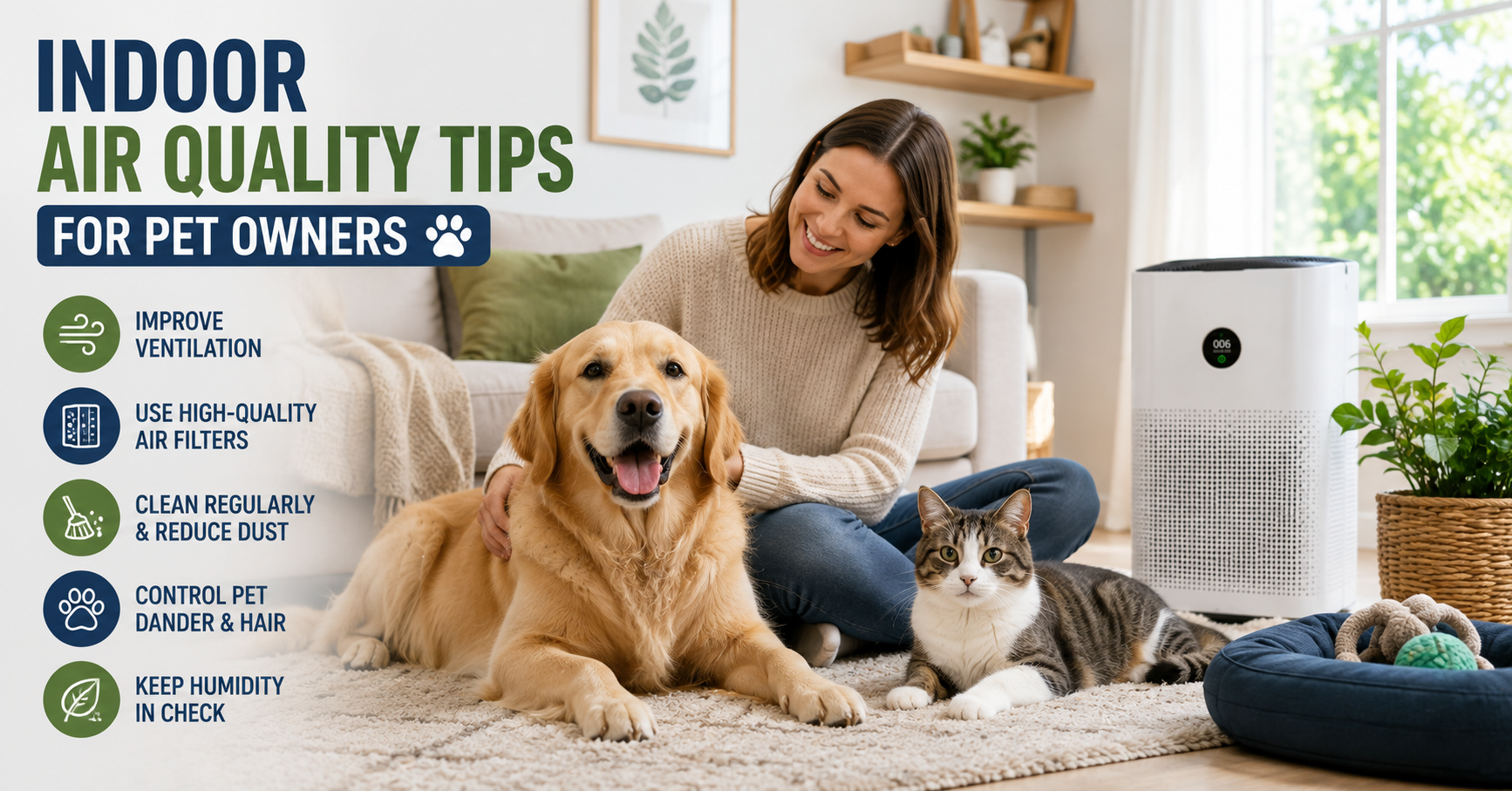
The best way to improve indoor air quality with pets is to control pet dander, hair, dust, and odors at the source and use proper filtration. Regular grooming, cleaning, HVAC filter changes, ventilation, and air purification can all help.
Pets spend a lot of time indoors, so their hair and dander can quickly build up on floors, furniture, bedding, and in the air. They can also bring dust, pollen, and other particles inside from outdoors.
You don’t need to make major changes to keep the air cleaner. A few consistent habits can make a noticeable difference. The key is to combine regular cleaning with good HVAC filtration and targeted air purification when needed.
Here are the most effective ways to improve indoor air quality if you have pets.
How Do Pets Affect Indoor Air Quality?
Pets can affect indoor air quality by adding dander, hair, dust, odors, and outdoor particles to your home. These particles can become airborne or settle on carpets, furniture, bedding, and other surfaces.
Pet dander consists of tiny flakes of skin that pets naturally shed. Because the particles are small, they can stay suspended in the air and spread through the home.
Pets can also bring pollen, dirt, and other outdoor particles inside on their paws and fur. Hair can collect dust and debris, while litter boxes, pet bedding, and feeding areas can contribute to odors.
The impact is often greater in homes with multiple pets, heavy-shedding animals, or limited ventilation.
Keeping your home clean, grooming pets regularly, changing HVAC filters, and using appropriate air filtration can help improve your home’s indoor air quality.
8 Indoor Air Quality Tips for Pet Owners
1. Change Your HVAC Filter Regularly
Changing your HVAC filter regularly helps capture airborne pet dander, dust, and other particles before they keep circulating through your home.
Pet owners may need to check their filters more often because hair and dander can build up faster, especially if you have multiple pets or heavy-shedding breeds.
Check the filter regularly instead of relying only on a fixed replacement date. Replace it when it’s visibly dirty or when the manufacturer recommends changing it.
If you’re thinking about switching to a higher-MERV filter, check your HVAC manufacturer’s recommendations first. A higher MERV rating can improve filtration, but it may also increase airflow resistance.
2. Vacuum and Dust Regularly
Regular vacuuming and dusting remove pet hair, dander, and dust before they can build up around your home.
Focus on the areas where your pets spend the most time, especially:
- Carpets and rugs
- Upholstered furniture
- Pet beds
- Floors
- Curtains
- Other fabric surfaces
Vacuum carpets and upholstery regularly, and use a vacuum with effective filtration to help limit the amount of fine dust and dander that gets released back into the air.
Don’t overlook hard surfaces. Pet dander and dust can settle on tables, shelves, baseboards, and other surfaces, so wipe them down regularly as well.
3. Groom Your Pets Regularly
Regular grooming helps reduce the amount of loose hair and dander that ends up on your floors, furniture, and in the air.
Brush your pet regularly based on its coat and grooming needs. If practical, brush your pet outdoors so loose hair doesn’t spread around the house.
Bathing can also help remove dirt and other particles from your pet’s coat, but don’t overdo it. Follow your veterinarian’s advice for how often your pet should be bathed, especially if your pet has sensitive skin.
Regular grooming won’t eliminate pet dander completely, but it can reduce the amount that builds up around your home.
4. Wash Pet Bedding Frequently
Washing pet bedding regularly removes hair, dander, dust, and odors that can otherwise build up over time.
Pets spend hours on their beds, blankets, and favorite resting spots, so these areas can collect a lot of debris.
Wash pet bedding according to the manufacturer’s instructions. Clean removable covers, blankets, and other washable fabrics your pet uses regularly.
Keeping pet bedding clean helps reduce the amount of hair, dander, and dust that gets spread back into your home.
5. Use a HEPA Air Purifier
A HEPA filter can help remove airborne pet dander and other fine particles from the room where you use it.
A portable purifier can be especially useful in rooms where your pet spends a lot of time, such as the living room, bedroom, or home office.
When choosing a unit, check its clean air delivery rate (CADR) and recommended room size. A purifier needs to move enough air for the size of the room to provide effective filtration.
Place the unit where air can move freely around it. Don’t block the intake or exhaust with furniture, curtains, or other objects.
Keep in mind that an air purifier only filters particles that pass through the unit. It won’t remove pet hair or dander that has already settled on carpets, furniture, or floors. Regular vacuuming and dusting are still important.
6. Keep Pet Areas Clean
Keeping your pet’s living areas clean helps control hair, dander, dust, and odors at the source.
Pay extra attention to areas such as:
- Litter boxes
- Crates
- Pet beds
- Feeding areas
- Pet toys
- Favorite sleeping spots
Clean litter boxes regularly and wash food and water bowls as needed. Wash crates, mats, and other pet items according to their care instructions.
The cleaner these areas stay, the less hair, dust, and odor can build up and spread throughout your home.
7. Improve Ventilation
Good ventilation can help remove pet odors and other indoor pollutants when outdoor air quality is good.
Open windows and doors when weather and outdoor air conditions allow. You can also use kitchen and bathroom exhaust fans to remove odors, moisture, and stale air.
However, don’t bring outdoor air inside when air quality is poor because of smoke, heavy pollution, or other contaminants. Keep windows closed and rely on your HVAC filtration or air purifier during those conditions.
The goal is to exchange stale indoor air without introducing more pollutants from outside.
8. Keep Pets Away From HVAC Components
Keeping pet hair and bedding away from HVAC vents and equipment helps protect airflow and prevents debris from accumulating around the system.
Don’t place pet beds, blankets, toys, or other items over return vents or supply registers. Blocked vents can interfere with airflow and make it harder for your HVAC system to distribute air properly.
Also keep the area around your indoor HVAC equipment clean and free of loose pet hair and dust.
Good airflow is important for both HVAC performance and filtration, so keep vents clear and clean the area around the system regularly.
What Is the Best HVAC Filter for Pet Owners?
MERV 8 to MERV 11 is a practical range for many homes with pets, while MERV 13 can provide stronger particle filtration if the HVAC system is designed to handle it.
Pet hair and dander can add more particles to the air and load an HVAC filter faster. A filter with the right MERV rating can help capture those particles before they continue circulating through your home.
| MERV Rating | Filtration Level | Best Fit for Pet Owners |
| MERV 8 | Basic to moderate | Good starting point for many homes |
| MERV 11 | Higher | Better filtration of smaller particles |
| MERV 13 | High | Stronger particle filtration when the system supports it |
Don’t choose the highest MERV rating simply because it offers more filtration. Higher-efficiency filters can create more airflow resistance, depending on their design and thickness.
Before moving from MERV 8 to MERV 11 or MERV 13, check your HVAC manufacturer’s recommendations. Your system needs to maintain proper airflow through the filter. If you’re comparing different filtration options, see HEPA vs. standard HVAC filters to understand the differences before upgrading.
For most pet owners, the best filter is the highest MERV rating their HVAC system can handle properly while meeting their filtration needs. If you’re unsure which filtration option is appropriate for your HVAC system, indoor air services can help evaluate your home’s air-quality needs.
Is a HEPA Air Purifier Good for Homes With Pets?
Yes, a HEPA air purifier can help capture airborne pet dander and other fine particles in the room where it operates. It can be especially useful in rooms where your pets spend a lot of time.
HEPA filters are designed to capture very small airborne particles, making them useful for reducing some of the fine particles that pets can add to indoor air.
When choosing a HEPA air purifier for a home with pets, look at these factors:
- CADR: Choose a unit with a CADR appropriate for the room size.
- Room coverage: A portable purifier is designed for a specific area, so one small unit won’t effectively clean an entire large home.
- Filter replacement: Replace the filter according to the manufacturer’s instructions or when it becomes loaded.
- Placement: Keep the air intake and exhaust clear so the purifier can circulate air properly.
A HEPA purifier works best as part of a broader cleaning routine. It can filter airborne particles, but it won’t remove pet hair and dander that have already settled on carpets, furniture, and floors.
For the best results, combine air purification with regular vacuuming, pet grooming, clean bedding, and proper HVAC filtration.
How to Reduce Pet Odors in the House
The most effective way to reduce pet odors is to clean the source regularly instead of trying to cover the smell with an air freshener.
Start with the places where pet odors are most likely to build up:
- Wash pet bedding regularly: Bedding can hold hair, dander, dirt, and odors.
- Clean litter boxes frequently: Remove waste regularly and clean the box according to the litter manufacturer’s instructions.
- Vacuum carpets and upholstery: Pet hair and dander can trap odors in soft surfaces.
- Groom your pets regularly: Grooming helps reduce loose hair, dirt, and other material around the home.
- Clean feeding areas: Wash food and water bowls and clean the surrounding floor.
- Improve ventilation: Open windows or use exhaust fans when outdoor air conditions allow.
- Replace dirty HVAC filters: A loaded filter can collect pet hair and other particles.
- Use an air purifier: A properly sized purifier can help filter airborne particles and, depending on its filtration technology, some odors.
If a strong pet odor keeps coming back, find and clean the source rather than masking it. Persistent odors may come from carpets, upholstery, bedding, litter areas, or other surfaces where pet-related material has accumulated.
How Often Should Pet Owners Change HVAC Filters?
Pet owners may need to change HVAC filters more often because pet hair and dander can build up on the filter faster. There isn’t one replacement schedule that works for every home.
Check your filter regularly rather than waiting for a specific date. Replace it when it becomes visibly dirty or when the manufacturer’s recommended interval has been reached.
How often you need to replace it depends on:
- Number of pets: More pets can mean more hair and dander.
- Shedding: Heavy-shedding pets can load filters faster.
- Filter type and thickness: Different filters have different capacities.
- HVAC usage: A system that runs frequently moves more air through the filter.
- Home size: Larger homes may have different airflow and filtration needs.
- Indoor dust levels: Higher dust levels can make a filter dirty faster.
If the filter is heavily covered with dust, hair, or debris, replace it rather than waiting for the usual schedule.
A clean filter helps your HVAC system maintain proper airflow and allows it to capture airborne particles more effectively.
Where Should You Place an Air Purifier With Pets?
Place a portable air purifier in a room where your pet spends the most time, and keep enough space around it for air to flow freely.
Good locations include:
- Living room: Useful if your pet spends most of the day there.
- Bedroom: A good option if your pet sleeps in the room.
- Home office: Helpful if your pet regularly stays with you while you work.
- Near a pet’s sleeping area: Places the purifier close to a common source of hair and dander.
Don’t hide the purifier behind furniture or curtains. Blocked air intakes or exhaust vents can reduce the unit’s airflow and effectiveness.
Keep the purifier away from areas where it could be knocked over or exposed to excessive moisture.
Also check the purifier’s CADR and recommended room size before buying. A unit that’s too small for the room may not move enough air to provide effective filtration.
For the best results, place the purifier in the room your pet uses most, size it correctly for that space, and keep its airflow unobstructed.
Common Indoor Air Quality Mistakes Pet Owners Make
The most common mistakes are neglecting HVAC filters, relying only on air purifiers, and failing to control pet hair, dander, and odors at the source.
Waiting Too Long to Change the HVAC Filter
A dirty HVAC filter can collect pet hair, dander, and dust and become more restrictive over time.
Check the filter regularly and replace it when it’s visibly dirty or according to the manufacturer’s recommendations.
Relying Only on an Air Purifier
An air purifier only filters particles that pass through the unit, so it can’t replace regular cleaning.
It won’t remove pet hair, dander, and dust that have already settled on carpets, furniture, and other surfaces. Vacuuming and dusting are still important.
Ignoring Pet Bedding
Pet bedding can collect significant amounts of hair, dander, dust, and odors.
Wash bedding, blankets, and removable covers regularly according to their care instructions.
Not Vacuuming Upholstery and Rugs
Carpets, rugs, and upholstered furniture can trap pet hair and dander.
Vacuum these areas regularly, especially where your pet spends most of its time. Don’t forget pet beds and other fabric surfaces.
Using an Undersized Air Purifier
A purifier that’s too small for the room may not move enough air to provide effective filtration.
Check the manufacturer’s recommended room size and CADR before buying a unit. Choose one that’s appropriate for the space you want to treat.
Ignoring the Source of Pet Odors
An air purifier shouldn’t be used to mask the source of a persistent pet odor.
Check litter boxes, bedding, carpets, upholstery, feeding areas, and other places where odors can build up. Clean the source first, then use ventilation or air purification to help control what’s left in the air.
Frequently Asked Questions
Do pets make indoor air quality worse?
Pets can affect indoor air quality by adding dander, hair, dust, odors, and outdoor particles to the home. Regular grooming, cleaning, ventilation, and proper filtration can help control these pollutants.
What is the best air filter for a home with pets?
MERV 8 to MERV 11 can work well for many homes with pets, while MERV 13 can provide stronger particle filtration if the HVAC system supports it. Always check your HVAC manufacturer’s recommendations before choosing a higher-MERV filter.
Is MERV 13 good for pets?
MERV 13 can provide stronger filtration of smaller airborne particles from pets, but your HVAC system must be able to handle the filter. Check the manufacturer’s specifications before upgrading.
Does a HEPA filter remove pet dander?
Yes, a HEPA filter can capture airborne pet dander and other fine particles that pass through the filter. It won’t remove dander that has already settled on floors, furniture, carpets, or other surfaces.
How often should I change my HVAC filter if I have pets?
Check your HVAC filter regularly and replace it when it becomes dirty or according to the manufacturer’s recommendations. Homes with multiple pets or heavy-shedding animals may need more frequent filter changes.
Where should I put an air purifier with pets?
Place the air purifier in a room where your pet spends the most time, such as a living room or bedroom. Keep the air intake and exhaust unobstructed, and choose a unit with a CADR appropriate for the room size.
How do I get rid of pet odors in my house?
Clean the source of the odor first, then use ventilation and filtration to help control what remains in the air. Regularly clean pet bedding, litter boxes, carpets, floors, and other areas where odors can build up.
Can an air purifier remove pet hair?
An air purifier can capture some airborne particles from pets, but it won’t remove most pet hair that has already settled on surfaces. Regular vacuuming, dusting, and grooming are still necessary.
Final Takeaway
The best way to improve indoor air quality with pets is to combine regular cleaning, pet grooming, HVAC filtration, and targeted air purification.
Start with the basics: check and replace your HVAC filter when needed, vacuum carpets and furniture regularly, wash pet bedding, clean litter boxes and pet areas, and groom your pets.
If you want additional particle filtration, a properly sized HEPA air purifier can help reduce airborne pet dander and other fine particles in rooms where your pets spend the most time.
You don’t need to rely on one solution. Control pet-related pollutants at the source, keep your home clean, and maintain proper HVAC filtration to help keep your indoor air cleaner.