

Signs Your Water Heater Expansion Tank Has Failed
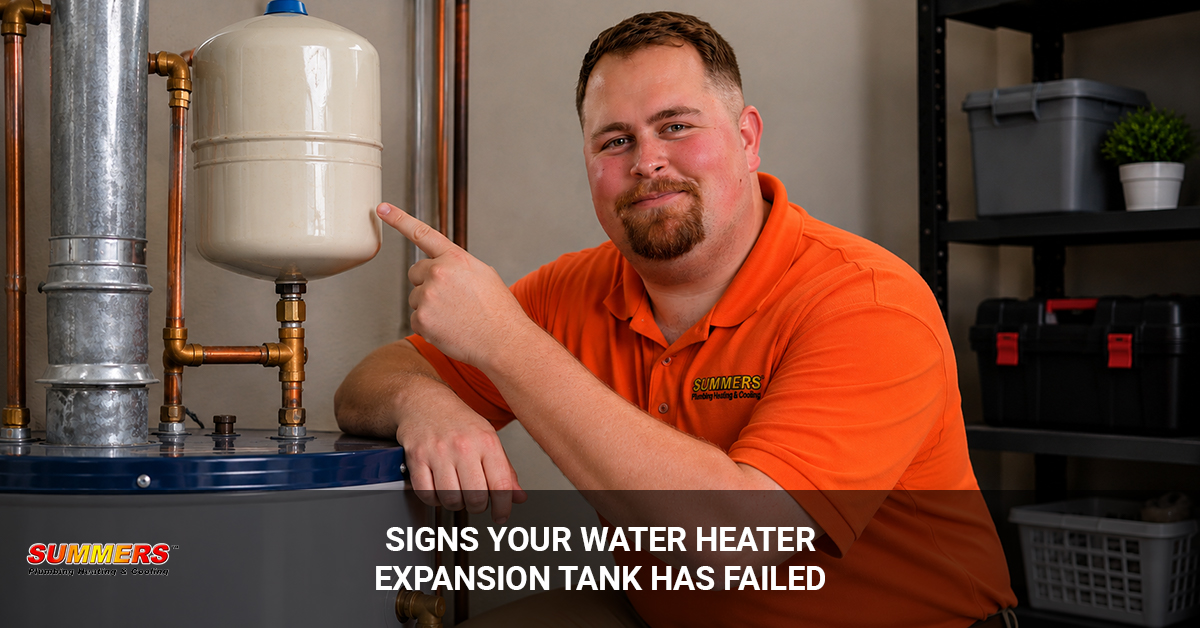
A failed water heater expansion tank can cause high water pressure, leaks, and unnecessary strain on your plumbing system. If the tank is no longer absorbing the extra pressure created when water heats up, that pressure has to go somewhere, and it can eventually damage your water heater, pipes, valves, and plumbing fixtures.
Many homeowners don’t realize there’s a problem until they notice water leaking from the expansion tank, inconsistent water pressure, or the temperature and pressure (T&P) relief valve dripping. While these issues may seem minor at first, they’re often early warning signs that the expansion tank isn’t working as it should.
The good news is that most expansion tank problems are easy to spot once you know the symptoms. In this guide, we’ll explain the most common signs of a failed water heater expansion tank, show you how to test it, and help you determine whether it needs to be repaired or replaced.
What Are the Signs Your Water Heater Expansion Tank Has Failed?
A failed water heater expansion tank typically causes water leaks, fluctuating water pressure, repeated temperature and pressure (T&P) relief valve discharge, rust or corrosion, unusual pipe noises, or a waterlogged tank. These warning signs indicate that the tank can no longer absorb the extra pressure created as water expands during the heating process.
When an expansion tank stops working, pressure builds inside your plumbing system instead of being safely absorbed. Over time, this excess pressure can put added strain on your water heater, pipes, valves, and plumbing fixtures, increasing the risk of leaks, premature wear, and costly repairs.
Recognizing these symptoms early can help you address the problem before it causes more serious damage. Below, we’ll explain each warning sign in detail and what it could mean for your water heater and plumbing system.
What Is a Water Heater Expansion Tank?
A water heater expansion tank is a small tank that absorbs excess water pressure created when your water heater heats water. It’s usually installed on the cold water supply line above or near the water heater and helps protect your plumbing system from pressure buildup.
As water heats up, it naturally expands. In a closed plumbing system, where a backflow preventer or pressure-reducing valve prevents water from flowing back into the main water supply, that extra water has nowhere to go. Without an expansion tank, pressure builds inside the water heater and pipes every time the unit heats water.
Inside the expansion tank is a rubber diaphragm (or bladder) that separates the tank into two chambers. One chamber contains compressed air, while the other receives the expanding water. As the heated water expands, it pushes against the air cushion, helping keep water pressure at a safe level throughout your plumbing system.
If the diaphragm fails or the tank loses its air pressure, the expansion tank can no longer absorb thermal expansion. As a result, pressure increases inside your plumbing system, which can lead to leaks, repeated T&P relief valve discharge, damaged plumbing fixtures, and added stress on your water heater.
8 Signs Your Water Heater Expansion Tank Has Failed
1. Water Is Leaking From the Expansion Tank
Water leaking from the expansion tank is one of the most obvious signs that it has failed. While a small amount of condensation can form on the tank in humid conditions, a steady drip or visible leak usually means something is wrong.
Leaks can occur when the internal rubber bladder ruptures, the tank corrodes from the inside, or the threaded connections become loose over time. In many cases, what starts as a minor leak gradually worsens as pressure continues to build inside the tank.
Signs to look for
- Water dripping from the bottom of the expansion tank.
- Moisture around threaded fittings or pipe connections.
- Rust or corrosion on the outside of the tank.
- Water pooling beneath the water heater.
- Damp insulation or nearby water stains.
If water is leaking directly from the body of the expansion tank, not from a pipe connection, the tank has likely failed internally and should be replaced.
What to do
First, identify where the leak is coming from. If it’s a loose threaded fitting, tightening the connection or replacing the fitting may stop the leak. However, if the tank itself is leaking, repairs are rarely possible. Replacing the expansion tank is the safest and most effective way to restore proper pressure control and protect your plumbing system from further damage.
2. Water Pressure Changes Throughout Your Home
Fluctuating water pressure is a common sign that your water heater expansion tank isn’t working properly. When the tank can’t absorb the extra pressure created as water heats, that pressure builds up inside your plumbing system instead of being safely released.
You might notice that your shower pressure suddenly increases or a faucet sprays harder than usual, especially after the water heater has been running. These pressure spikes may seem minor at first, but over time they can put extra stress on your pipes, fixtures, and water-using appliances.
Signs to look for
- Water pressure suddenly increases while using a faucet.
- Shower pressure changes without adjusting the handle.
- Faucets spray harder after the water heater finishes a heating cycle.
- Toilets, faucets, or appliance valves wear out more quickly.
- Pressure changes occur throughout the day.
Although pressure fluctuations can have several causes, a failed expansion tank is one of the most common reasons in homes with a closed plumbing system.
What to do
If you’re noticing frequent pressure changes, check your home’s water pressure with a pressure gauge or have a plumber perform the test. They can determine whether the expansion tank has lost its air charge, become waterlogged, or if another plumbing issue is causing the pressure spikes.
3. The Temperature and Pressure (T&P) Relief Valve Keeps Releasing Water
A temperature and pressure (T&P) relief valve that repeatedly releases water is often a sign that your expansion tank has failed. If the expansion tank can’t absorb thermal expansion, excess pressure builds inside the water heater, forcing the relief valve to open.
The T&P relief valve is an important safety feature designed to protect your water heater from dangerously high pressure or temperature. While an occasional discharge may happen under unusual conditions, frequent dripping or leaking should never be ignored.
When the expansion tank stops working, the relief valve often becomes the only way for the system to relieve excess pressure.
Signs to look for
- Water dripping from the T&P relief valve discharge pipe.
- Puddles of water around the water heater.
- The relief valve opens even though the thermostat is set correctly.
- The valve continues leaking after it has been replaced.
If replacing the relief valve doesn’t solve the problem, the expansion tank may be the real cause.
What to do
Don’t assume the relief valve is defective. In many cases, it’s doing exactly what it’s designed to do: protecting your water heater from excessive pressure. Have a licensed plumber inspect both the T&P relief valve and the expansion tank to determine which component is causing the problem and make the necessary repairs.
4. The Expansion Tank Feels Heavy or Waterlogged
A heavy or waterlogged expansion tank usually means the internal bladder has failed. When the bladder tears or loses its seal, water fills the air chamber, leaving no room to absorb the pressure created as water heats.
A properly working expansion tank should contain both water and compressed air, so it shouldn’t feel completely full of water. Once it becomes waterlogged, it can no longer regulate pressure, increasing the risk of leaks and plumbing damage.
Signs to look for
- The expansion tank feels unusually heavy.
- It makes a dull, solid sound when tapped.
- Water comes out of the Schrader (air) valve.
- Water pressure fluctuates throughout the home.
- The T&P relief valve releases water more often.
What to do
A simple tap test can help you check the tank. A healthy expansion tank usually sounds hollow on the air side and solid on the water side. If the entire tank sounds dull or feels unusually heavy, it may be waterlogged.
You can also briefly press the Schrader valve using a small tool. If air comes out, the bladder is likely still intact. If water comes out instead, the bladder has failed, and the expansion tank should be replaced.
5. Rust or Corrosion Is Visible on the Expansion Tank
Rust or corrosion on an expansion tank is often a sign that it’s reaching the end of its lifespan. While minor surface rust isn’t always a serious problem, heavy corrosion can weaken the tank and eventually cause leaks or failure.
Corrosion usually develops over time due to moisture, condensation, or normal wear and tear. In some cases, it may indicate the tank is rusting from the inside, which is a strong sign that replacement is needed.
Signs to look for
- Rust spots on the expansion tank.
- Corrosion around threaded fittings or pipe connections.
- Peeling paint or bubbling on the tank’s surface.
- Rust-colored streaks or water stains.
- Visible pitting or deterioration of the metal.
What to do
Inspect the tank carefully to determine where the corrosion is located. If it’s limited to a threaded connection, replacing the fitting or tightening the connection may solve the problem. However, if the tank itself is heavily rusted or corroded, replacement is the safest option. A corroded expansion tank is more likely to leak or fail under pressure, so it’s best not to delay repairs.
6. You Hear Banging or Knocking Noises in the Pipes
Banging or knocking pipes can be a sign that your water heater expansion tank is no longer absorbing pressure the way it should.
When water heats up, it expands. A working expansion tank absorbs that extra pressure before it reaches your plumbing system. If the tank has lost its air cushion or the internal bladder has failed, pressure can build up and create water hammer. That’s when water suddenly changes direction, causing pipes to bang or shake.
While a failing expansion tank is one possible cause, loose pipes, worn water hammer arresters, or other plumbing issues can create similar noises.
Common signs include:
- Loud banging when you shut off a faucet.
- Knocking sounds after using hot water.
- Pipes that vibrate or shake.
- Noises that become louder after the water heater finishes heating.
What to do
If these noises have started recently or are getting worse, have your plumbing system inspected. A plumber can determine whether the expansion tank has failed or if another issue is causing the problem. Replacing a faulty expansion tank often restores normal pressure and helps eliminate pressure-related pipe noise.
7. The Expansion Tank Is Bulging or Physically Damaged
A bulging, dented, cracked, or damaged expansion tank should be replaced immediately.
An expansion tank is built to handle normal water pressure. Over time, excessive pressure, internal corrosion, or simple wear can weaken the metal shell. Physical damage from an impact can also reduce the tank’s strength and increase the risk of failure.
Even if the tank isn’t leaking yet, visible damage usually means it’s no longer safe to rely on.
Look for these warning signs:
- A swollen or bulging tank.
- Large dents or deep scratches.
- Cracks in the tank or threaded fittings.
- Loose, bent, or damaged mounting brackets.
What to do
Don’t try to repair a damaged expansion tank. If you notice any visible deformation or structural damage, schedule a replacement as soon as possible. Replacing the tank before it fails can help prevent leaks, water damage, and unnecessary stress on your plumbing system.
8. The Expansion Tank Is More Than 5 to 10 Years Old
An expansion tank that’s more than 5 to 10 years old is more likely to fail, even if it isn’t showing obvious symptoms yet.
Most residential expansion tanks last between 5 and 10 years, depending on water quality, water pressure, and how well the plumbing system is maintained. As the tank ages, the internal rubber bladder naturally wears out. It can lose air pressure, crack, or eventually rupture, reducing the tank’s ability to control thermal expansion.
An older tank doesn’t always need immediate replacement, but if it’s nearing the end of its expected lifespan and you’re also experiencing pressure problems, leaks, or unusual noises, replacement is usually the better long-term solution.
Signs an aging tank may be wearing out include:
- The tank is more than five years old and has never been inspected.
- Water pressure fluctuations are becoming more common.
- Minor rust, corrosion, or small leaks are visible.
- The tank repeatedly loses its air pressure.
What to do
Include the expansion tank in your annual water heater maintenance. A plumber can test its air pressure and check the condition of the internal bladder. Replacing an aging expansion tank before it fails is usually far less expensive than repairing plumbing damage caused by excessive water pressure.
How to Test a Water Heater Expansion Tank
You can test a water heater expansion tank by performing a few simple checks to see if it’s working properly. These tests can help you identify a waterlogged tank, low air pressure, or a failed internal bladder. Before you begin, turn off the water heater and allow the system to cool.
Perform a Tap Test
A tap test helps you quickly identify whether the expansion tank is waterlogged.
Lightly tap the upper and lower sections of the expansion tank using your knuckles or the handle of a screwdriver.
- A healthy expansion tank usually sounds hollow on the air side and more solid on the water side.
- A waterlogged tank typically sounds dull and solid across the entire tank because it has filled with water.
This test provides a quick indication, but it’s best to combine it with the following checks for a more accurate diagnosis.
Check the Air Pressure
Checking the air pressure confirms whether the expansion tank is properly charged.
Use a standard tire pressure gauge to measure the pressure at the Schrader valve.
- The air pressure should match your home’s incoming water pressure, which is typically 40 to 60 PSI.
- If the pressure is significantly lower, the tank may simply need to be recharged with air.
- If there is no air pressure, the internal bladder may have failed, and the tank will likely need to be replaced.
Inspect the Schrader Valve
Inspecting the Schrader valve is the easiest way to determine if the internal bladder has ruptured.
Briefly press the center pin inside the Schrader valve.
- If air comes out, the bladder is likely still intact.
- If water comes out, the internal bladder has ruptured, and the expansion tank needs to be replaced.
If you’re unsure about the results or don’t have the proper tools, it’s best to have a licensed plumber inspect the system.
Can You Use a Water Heater With a Failed Expansion Tank?
Yes, you can use a water heater with a failed expansion tank for a short period, but you shouldn’t ignore the problem. A failed expansion tank can no longer absorb the extra pressure created when water heats up. As a result, pressure builds inside your plumbing system, which can lead to leaks, damaged fixtures, and even shorten the life of your water heater.
Over time, excessive water pressure can damage:
- The temperature and pressure (T&P) relief valve.
- Water supply pipes and pipe fittings.
- Faucets, shower valves, and other plumbing fixtures.
- Appliances that use water, such as washing machines and dishwashers.
- The water heater tank itself, increasing the risk of costly repairs or premature replacement.
Replacing a failed expansion tank as soon as possible is the best solution. It’s a relatively inexpensive repair that helps protect your water heater, plumbing system, and household appliances from pressure-related damage.
When Should You Replace a Water Heater Expansion Tank?
You should replace a water heater expansion tank when it can no longer absorb the extra pressure created during the water heating process or shows clear signs of failure. A faulty expansion tank can’t protect your plumbing system, which can lead to higher water pressure and costly damage over time.
Replacement is usually the best option if:
- The tank is leaking.
- The internal bladder has failed.
- Water comes out of the Schrader valve instead of air.
- The tank is heavily rusted or corroded.
- The tank is bulging, dented, or physically damaged.
- It repeatedly loses air pressure after being recharged.
- It’s approaching the end of its expected lifespan and showing signs of wear.
Expansion tanks are not designed to be repaired. In most cases, if you’re experiencing leaks, pressure problems, or repeated T&P valve discharge, scheduling professional water heater repair can help prevent further damage to your plumbing system.
Frequently Asked Questions
How long does a water heater expansion tank last?
Most residential water heater expansion tanks last 5 to 10 years. Their lifespan depends on factors such as water quality, water pressure, how often the water heater runs, and whether the tank is properly maintained. Regular inspections can help catch problems before the tank fails.
Can an expansion tank become waterlogged?
Yes, an expansion tank can become waterlogged if the internal rubber bladder fails. When this happens, water fills the air chamber, leaving no space to absorb thermal expansion. A waterlogged tank becomes much heavier and can no longer protect your plumbing system from excess pressure.
Is a leaking expansion tank dangerous?
Yes, a leaking expansion tank should be replaced as soon as possible. Even a small leak usually means the tank has failed or is beginning to fail. Ignoring it can lead to water damage, higher plumbing pressure, and additional stress on your water heater and other plumbing components.
Can I replace a water heater expansion tank myself?
Yes, you can replace an expansion tank yourself if you have plumbing experience and the right tools. However, because the job involves working with your home’s pressurized water system, many homeowners hire a licensed plumber to ensure the tank is properly sized, installed, and pressurized.
Does every water heater need an expansion tank?
No, not every water heater needs an expansion tank. Expansion tanks are typically required on closed plumbing systems, where heated water cannot flow back into the main water supply. Local plumbing codes usually determine whether an expansion tank is required, so it’s a good idea to check your local regulations or ask a licensed plumber.
Final Thoughts
A failed water heater expansion tank can cause excessive pressure throughout your plumbing system, but the good news is that the warning signs are usually easy to recognize. Common symptoms include water leaks, fluctuating water pressure, frequent discharge from the temperature and pressure (T&P) relief valve, rust or corrosion, unusual noises, and a waterlogged expansion tank. Catching these issues early can help you avoid more serious plumbing problems.
Don’t ignore the signs of a failing expansion tank. Replacing it promptly is a simple and relatively inexpensive repair that can prevent damage to your water heater, pipes, plumbing fixtures, and water-using appliances.
Regular inspections and water heater maintenance are the best ways to keep your system running safely and efficiently, and help identify expansion tank problems before they become expensive repairs. If you’re unsure whether your expansion tank is still working properly, have it inspected by a licensed plumber. A quick inspection today can help prevent costly repairs and extend the life of your water heater and plumbing system.