

Can One Mini Split Heat an Entire House?
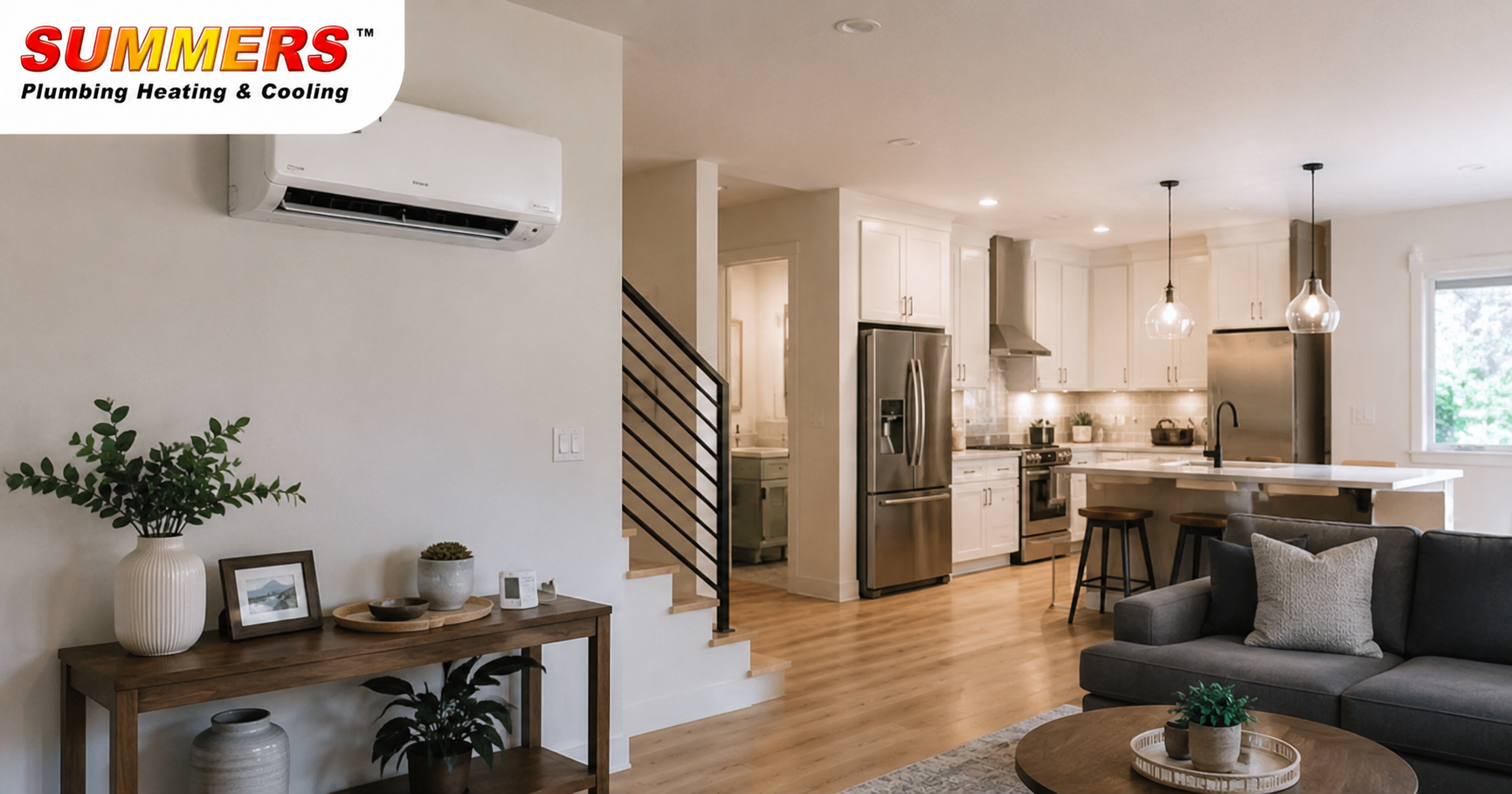
Yes, one mini split can heat an entire house, but it depends on the home’s size, layout, insulation, climate, and heating needs. A single unit works best in a small, well-insulated home with an open floor plan.
A mini split can heat the room where you install it very effectively. The challenge comes when you need that heat to reach separate bedrooms, distant rooms, or another floor. Walls, closed doors, hallways, and poor airflow can keep some areas colder.
A properly sized mini split may have enough heating capacity but still struggle to heat every room evenly. That’s why you need to consider both the home’s heating load and how warm air will move through the house.
For many small, open homes, one mini split may provide whole-house heating. Larger homes with multiple rooms or floors may need a multi-zone mini split system for more consistent temperatures.
Can One Mini Split Really Heat an Entire House?
Yes, one mini split can heat an entire house when the home has an open layout, adequate insulation, the right system capacity, and a good path for warm air to travel. A single unit works best when most living areas connect without many walls or closed doors.
A mini split works as a ductless heat pump. The outdoor unit pulls heat from the outside air and transfers it indoors through refrigerant lines. The indoor unit then releases that heat into the room.
With only one indoor unit, that room gets the most direct heat. The rest of the house depends on air movement from that space. Open doorways and connected rooms make heat distribution easier. Separate bedrooms, long hallways, closed doors, and multiple floors make it harder.
When One Mini Split May Be Enough
One mini split may heat the whole house when the home has an open floor plan, good insulation, and few barriers that block airflow. These conditions help warm air move from the indoor unit into nearby living spaces.
One unit may work well in a home with:
- A small or moderate floor area
- An open floor plan
- Good insulation and air sealing
- A single-story layout
- Few interior walls
- Connected living, dining, and kitchen areas
- A relatively mild winter climate
- An indoor unit placed to reach the main living areas
For example, a small open-concept home can often distribute heat more easily than a house of the same size with several separate bedrooms.
The indoor unit’s location also matters. A central position with a clear airflow path can help spread warm air into more of the home.
When One Mini Split Usually Isn’t Enough
One mini split usually won’t heat every room evenly when the house has multiple floors, several closed rooms, poor insulation, or limited airflow between spaces.
Common challenges include:
- Several separate bedrooms
- Multiple floors
- Long hallways
- Closed-off rooms
- Poor insulation
- Significant air leaks
- High ceilings
- Large spaces far from the indoor unit
- Very cold outdoor temperatures
In these situations, heat distribution often creates a bigger problem than heating capacity.
For example, a properly sized mini split might keep the living room at the desired temperature while a bedroom at the end of a hallway stays cold. Increasing the thermostat setting may make the living room too warm without solving the bedroom’s airflow problem.
If several rooms consistently stay colder than the room with the mini split, consider a professional evaluation of the system size, indoor-unit location, insulation, and airflow. A multi-zone mini split may provide better room-to-room comfort when one indoor unit cannot distribute heat effectively.
How Many Square Feet Can One Mini Split Heat?
One mini split can heat anywhere from a small room to much of a house, but square footage alone cannot determine the right heating capacity. Your home’s insulation, layout, climate, windows, ceiling height, and heat loss all affect how much heating capacity you need.
You may find mini split sizing charts that match BTU capacity to a certain number of square feet. These charts can give you a rough starting point, but they cannot account for the conditions inside your specific home.
For a more accurate result, an HVAC professional can perform a Manual J load calculation. This calculation estimates how much heat your home loses and how much heating capacity the system needs to maintain your target indoor temperature.
Two homes with the same floor area can need very different amounts of heat.
For example, compare these two 1,200-square-foot homes:
| Home | Layout and Condition | Heating Challenge |
| House A | One story, open floor plan, good insulation, newer windows | Lower heat loss and easier heat distribution |
| House B | Two stories, several bedrooms, older windows, poor insulation | Higher heat loss and harder heat distribution |
The same mini split capacity may work well in House A but struggle to keep House B comfortable.
Why BTU Size Matters More Than Square Footage Alone
BTU capacity matters because the mini split must replace the heat your home loses during cold weather. A system that cannot keep up with that heat loss will struggle to maintain your desired temperature.
Several factors affect your home’s heating load:
- Outdoor temperature
- Local climate
- Insulation levels
- Window size and efficiency
- Air leakage
- Ceiling height
- Number of exterior walls
- Home orientation
- Floor area
- Desired indoor temperature
Don’t assume that a larger mini split will always work better. An oversized system can create comfort and efficiency problems, while an undersized system may struggle during colder weather.
For whole-house heating, focus on the home’s actual heating load rather than choosing a mini split based only on square footage. A proper load calculation also helps determine whether one indoor unit can distribute heat effectively throughout the house.
What Determines Whether One Mini Split Can Heat Your Whole House?
Your home’s layout, insulation, climate, ceiling height, and indoor-unit location all determine how well one mini split can heat the entire house. These factors affect both the amount of heat your home needs and how effectively that heat can reach each room.
1. Home Layout
An open floor plan makes it much easier for one mini split to heat multiple areas because warm air can move freely between connected rooms.
A mini split installed in an open living room can send warm air toward an attached kitchen or dining area. A bedroom at the end of a hallway presents a different challenge, especially when you keep the bedroom door closed.
Walls and doors limit airflow. Multiple floors create another barrier.
That’s why two homes with the same square footage can perform very differently with the same mini split.
2. Insulation and Air Sealing
Good insulation and air sealing help a mini split maintain comfortable temperatures because they reduce the amount of heat your home loses.
Insulation slows heat transfer through areas such as:
- Attics and ceilings
- Exterior walls
- Floors above unheated spaces
Air sealing addresses unwanted gaps around windows, doors, penetrations, and other areas where outdoor air can enter.
A properly sized mini split has an easier time heating a well-insulated, tightly sealed home than a drafty one.
If your home loses a lot of heat through the building envelope, improving insulation and sealing air leaks may improve comfort more effectively than simply installing a larger mini split.
3. Climate and Outdoor Temperature
Your winter climate affects mini split performance because an air-source heat pump must extract heat from outdoor air to heat your home.
The colder the outdoor air becomes, the more demanding the heating job becomes. However, cold-climate mini splits can maintain useful heating performance at low outdoor temperatures.
ENERGY STAR’s cold-climate heat pump criteria include performance testing at 5°F (-15°C), along with requirements for heating capacity and efficiency at low temperatures.
That does not mean every mini split can handle severe cold.
If your area regularly experiences freezing or sub-freezing temperatures, check the manufacturer’s published heating capacity and operating range. Choose equipment that can meet your home’s heating needs at the outdoor temperatures you actually experience.
4. Ceiling Height
High ceilings can make heating more difficult because warm air rises and can collect above the occupied part of the room.
A mini split can still heat a room with high ceilings, but you may need better air circulation to keep temperatures comfortable where people spend time.
Proper airflow direction and fan settings can help mix the air instead of allowing warm air to remain near the ceiling.
5. Indoor Unit Location
The indoor unit should sit where its airflow can reach as much of the home’s connected living space as possible.
A centrally positioned unit in an open living area can often serve more space than a unit installed in a small room at one end of the house.
Before choosing a location, consider:
- Airflow direction
- Doorways
- Hallways
- Interior walls
- Room separation
- Ceiling height
- Distance to other living areas
- Furniture or other airflow obstructions
Don’t choose the location based only on available wall space. The placement should support the way warm air needs to move through the house.
If you want one mini split to provide whole-house heating, have an HVAC professional evaluate both the heating load and the airflow path before installation. A good system design should address both needs.
Can Heat From One Mini Split Reach Other Rooms?
Yes, heat from one mini split can reach other rooms, but airflow, room layout, distance, and closed doors determine how much heat actually reaches them.
A mini split releases most of its heat into the room where you install the indoor unit. Warm air can then move through open doorways into nearby, connected spaces.
The farther a room sits from the indoor unit, the harder it becomes to maintain the same temperature. Walls and narrow hallways can slow airflow, while closed doors can stop most of the warm air from entering a room.
For example, a mini split in an open living room may heat an attached dining area fairly well. A bedroom down the hall may stay cooler, especially when you keep the bedroom door closed.
A single indoor unit cannot deliver heat directly into a closed room the way a dedicated indoor unit or ducted system can.
Can a Fan Help Move Heat From a Mini Split?
Yes, a fan can improve air circulation and help move warm air toward cooler connected areas, but it cannot replace proper HVAC zoning.
A circulation fan can help mix air between rooms when the layout already allows some airflow. A ceiling fan can also help redistribute warm air within a room by mixing warmer air near the ceiling with cooler air below.
For better circulation:
- Keep interior doors open when practical.
- Avoid blocking the mini split’s airflow.
- Use a circulation fan to help move air toward cooler connected areas.
- Run ceiling fans at a low speed when appropriate to mix room air.
- Keep furniture and other obstacles away from important airflow paths.
Fans have limits, though. They cannot overcome major barriers such as closed doors, several walls, or a poorly connected floor plan.
If some rooms remain cold even after you improve airflow, the home may need additional heating zones rather than stronger air circulation. A multi-zone mini split can place an indoor unit directly in rooms that need more heating.
Can One Mini Split Heat a Two-Story House?
Yes, one mini split can heat a two-story house, but maintaining an even temperature on both floors can be difficult. The home’s layout, insulation, stairway design, indoor-unit location, and airflow all affect how well the system works.
Warm air rises, so the upper floor may become warmer than the lower floor. A mini split installed downstairs may struggle to move enough warm air upstairs, especially when walls and closed doors block the airflow.
A single unit has a better chance of heating a small two-story home with an open layout. An open stairway can give warm air a path between floors, and fewer interior walls make air movement easier.
However, a two-story home with several bedrooms and closed rooms creates a much bigger challenge. The mini split may keep the room where you installed it comfortable while leaving distant rooms colder.
When One Mini Split May Work in a Two-Story Home
One unit may work when both floors have an open layout and provide a clear path for warm air to move between them.
You may have better results when:
- The home has a relatively small floor area.
- The main living spaces connect openly.
- The stairway remains open.
- Both floors have good insulation.
- Few doors block airflow.
- The indoor unit has a strong path toward the stairway and other living areas.
Even in these conditions, check the temperature on both floors rather than assuming the entire house receives the same amount of heat.
When a Two-Story Home Needs More Than One Indoor Unit
Multiple indoor units usually make more sense when each floor contains separate rooms or when temperatures vary significantly between floors.
A multi-zone mini split lets you place an indoor unit where each floor or major living area needs direct heating. You can then control those areas independently instead of relying on warm air to travel from one floor to another.
If your upstairs and downstairs temperatures differ by several degrees, have an HVAC professional check the system’s capacity, airflow, insulation, and placement before adding equipment. The problem may come from heat distribution rather than the mini split itself.
Can One Mini Split Heat a House in Cold Weather?
Yes, one mini split can heat a house in cold weather if you choose a system rated for your local temperatures and heating needs. However, not every mini split performs the same way in freezing weather, and problems such as a heat pump not heating can have several possible causes.
Cold-climate mini splits can maintain useful heating performance at lower outdoor temperatures. ENERGY STAR recommends cold-climate heat pumps for areas where winter temperatures regularly fall below freezing.
The important point is not to choose a mini split based only on its maximum BTU rating. Heating capacity can decrease as outdoor temperatures drop.
Check the manufacturer’s heating capacity at your area’s design outdoor temperature. This gives you a better idea of whether the system can keep your home warm during the coldest conditions.
Your choice should also consider:
- Local winter temperatures
- Home insulation and air sealing
- Total heating load
- Mini split’s low-temperature operating range
- Heating capacity at low outdoor temperatures
- Need for backup heat during extreme cold
Some cold-climate mini splits can operate at temperatures well below 0°F. Performance varies by model, though, so always check the manufacturer’s specifications. If you’re comparing options for cold-weather performance, our guide to the best heat pumps for Indiana weather can help you understand what to look for.
If you live in a cold climate, have an HVAC professional compare your home’s heating load with the mini split’s low-temperature heating capacity. This helps ensure the system can provide enough heat when outdoor temperatures drop.
One Mini Split vs. Multiple Mini Splits for Whole-House Heating
One mini split works best for smaller, open homes, while multiple indoor units usually provide better heating in larger homes with separate rooms or multiple floors. Your home’s layout, heating load, and comfort needs should guide the choice.
| Factor | One Mini Split | Multiple Indoor Units |
| Initial equipment cost | Usually lower | Usually higher |
| Installation | Simpler | More complex |
| Room-by-room control | Limited | Better |
| Open floor plan | Often a good fit | May not be necessary |
| Multiple bedrooms | Can be challenging | Better suited |
| Multiple floors | More difficult | Easier to zone |
| Temperature consistency | Can vary | Usually better |
| Zoning | Limited | Excellent |
A multi-zone mini split connects multiple indoor units to one outdoor unit. Each indoor unit can heat a specific area of the home.
This setup works well when different rooms need different amounts of heating. It also reduces the need to rely on warm air traveling from one room to another.
When One Unit Makes More Sense
One mini split makes more sense when the home has an open layout and most living areas connect directly.
Consider one unit when:
- The house is relatively small.
- The floor plan is open.
- Most rooms connect to the main living area.
- The home has good insulation.
- You want a simpler installation.
- You mainly need heat in one central living area.
An open-concept home gives the warm air more room to circulate. That can make one indoor unit a practical choice.
When a Multi-Zone System Is Better
A multi-zone system works better when the home has several separate rooms, multiple floors, or different heating needs.
Consider multiple indoor units when:
- The house has several bedrooms.
- Rooms have doors that stay closed.
- The home has multiple floors.
- Different rooms need different temperatures.
- Some areas stay colder than others.
- You want better room-to-room temperature control.
The main advantage is direct heating where you need it. Instead of relying on warm air to travel from one room to another, each indoor unit can heat its own zone.
For a larger or divided home, this approach can provide more consistent comfort than trying to heat the entire house with one indoor unit.
Signs One Mini Split Isn’t Enough for Your House
Cold rooms, uneven temperatures, and a mini split that cannot maintain the set temperature can indicate that one indoor unit isn’t enough for your home. These signs can also point to insulation, airflow, sizing, or equipment problems, so don’t assume you need another unit right away.
Some Rooms Stay Cold
Rooms that stay cold while the room with the mini split feels comfortable can indicate a heat distribution problem.
Warm air may not travel effectively through hallways, doorways, or separate rooms. Check whether furniture, closed doors, or other obstacles restrict airflow.
If distant rooms remain cold even with clear airflow paths, have the system and home layout evaluated.
The Unit Runs Constantly but Can’t Maintain Temperature
A mini split can run for long periods during cold weather, but it should still maintain the desired temperature when the system matches the home’s heating load.
Continuous operation doesn’t automatically mean something is wrong. Heat pumps often run longer cycles during cold weather.
However, if the unit runs continuously and the house still feels cold, possible causes include:
- An undersized system
- Poor insulation
- Excessive air leakage
- Very cold outdoor temperatures
- Equipment problems
- Poor heat distribution
Have an HVAC professional identify the cause before replacing or adding equipment.
Bedrooms Are Cold With the Doors Closed
Cold bedrooms with closed doors can show that one indoor unit cannot distribute enough warm air to those rooms.
A closed door blocks much of the airflow from the main living area. The mini split heats the room where you installed it, but it cannot directly deliver warm air into a closed bedroom.
If bedrooms regularly stay cold, a multi-zone system may provide better room-to-room heating.
Upstairs and Downstairs Have Different Temperatures
A large temperature difference between floors can indicate that one mini split cannot distribute heat effectively throughout the house.
Warm air tends to rise, and stairways don’t always provide enough airflow between floors.
Check the temperature on both levels during cold weather. If one floor stays consistently colder, the home’s layout may need more than one heating zone.
The Indoor Unit Heats One Room Too Much
If the room with the mini split becomes too warm while distant rooms stay cold, the system may have a heat distribution problem.
Increasing the thermostat setting can make the main room even warmer without solving the problem in other areas.
Before choosing a larger unit, check the home’s airflow, insulation, system sizing, and indoor-unit location. More heating capacity won’t necessarily fix poor heat distribution.
How to Improve Whole-House Heating With One Mini Split
You can often improve whole-house heating from one mini split by reducing heat loss, improving airflow, and keeping the system clear and properly maintained. These steps won’t fix every layout problem, but they can help your existing system work more effectively.
Improve Insulation
Better insulation can help your mini split maintain indoor temperatures by reducing heat loss.
Check areas that commonly lose heat, including:
- Attic
- Exterior walls
- Floors above unheated spaces
- Exterior doors
- Windows
If your home has poor insulation, improving it can reduce the amount of heat your mini split needs to replace.
Seal Air Leaks
Sealing air leaks can help your home retain the heat produced by the mini split.
Check for drafts around:
- Doors
- Windows
- Wall penetrations
- Utility openings
- Other gaps in the building envelope
Even small air leaks can contribute to heat loss during cold weather.
Keep Airflow Paths Open
Keeping interior airflow paths open can help warm air reach nearby rooms.
When practical, leave interior doors open between connected living areas. This gives warm air a clearer path from the room with the mini split to adjacent spaces.
This approach works best in homes with an open or semi-open layout. It won’t overcome major barriers such as several closed rooms or multiple floors.
Use Fans for Air Circulation
Fans can help circulate warm air and reduce temperature differences between connected rooms.
A circulation fan can help move warm air toward cooler areas. A ceiling fan can also mix warm air that collects near the ceiling with cooler air below.
Use fans to improve existing airflow. Don’t rely on them to replace proper HVAC zoning when the home has significant heat distribution problems.
Keep the Indoor Unit Unobstructed
Keeping the indoor unit clear helps it move heated air into the room.
Keep furniture, curtains, shelving, and other objects from blocking the unit’s airflow.
Also keep the area around the indoor unit clean. Restricted airflow can reduce comfort and affect system performance.
Check the System’s Operating Settings
Using the correct heating settings and keeping the filter clean can help your mini split operate properly.
Make sure the system runs in HEAT mode when you need heating. Check the filter regularly and clean or replace it according to the manufacturer’s instructions.
ENERGY STAR recommends maintaining clean heat-pump filters and avoiding unnecessary switching between heating and cooling modes.
If some rooms still stay cold after you improve insulation and airflow, the problem may involve system sizing or the home’s layout. At that point, an HVAC professional can determine whether one indoor unit can realistically heat the entire house.
Is One Mini Split Cheaper Than a Central Heating System?
One mini split can cost less to install than a central heating system, especially when the home doesn’t have existing ductwork, but the total cost depends on the system and the home.
A single mini split usually requires less installation work than a new ducted system. You don’t need to install a network of supply and return ducts throughout the house.
However, the cost advantage can shrink when you need several indoor units to heat a larger home.
Your long-term heating costs also depend on factors such as:
- Electricity rates
- Outdoor temperature
- System efficiency
- Home heating demand
- Insulation and air sealing
- Desired indoor temperature
- How much of the home you heat
Don’t compare systems based only on the purchase and installation price. Consider how well each system can heat your home and how much it may cost to operate over time.
When Should You Choose a Multi-Zone Mini Split?
A multi-zone mini split makes sense when you need more consistent heating across separate rooms or multiple floors.
Consider a multi-zone system if your home has:
- Multiple bedrooms
- Separate living areas
- Two or more floors
- A closed-off floor plan
- Rooms that you use at different times
- Different temperature preferences
- Persistent hot and cold spots
A multi-zone system connects multiple indoor units to one outdoor unit. Each indoor unit can heat a specific area directly.
This setup can work especially well when one indoor unit cannot move enough warm air throughout the home. Instead of relying on airflow from one room, you can place heating capacity closer to the rooms that need it.
Frequently Asked Questions
Can a 12,000 BTU mini split heat a whole house?
A 12,000 BTU mini split can heat a whole house only when its heating capacity matches the home’s heating load and the layout allows good heat distribution.
The 12,000 BTU rating alone doesn’t determine whether the system will work. Consider the home’s size, insulation, climate, floor plan, and the unit’s heating capacity at low outdoor temperatures.
Can one mini split heat a 1,000-square-foot house?
Yes, one mini split can heat a 1,000-square-foot house when the home has the right layout, insulation, climate, and system size.
A well-insulated, single-story home with an open floor plan may work well with one properly sized unit.
A 1,000-square-foot house with several bedrooms, poor insulation, and separate rooms may need multiple heating zones.
Can one mini split heat a 2,000-square-foot house?
One mini split can heat a 2,000-square-foot house in some situations, but the home’s heating load and layout become especially important.
A large open floor plan may allow better heat distribution than a 2,000-square-foot home with several separate rooms.
Don’t assume that installing a larger BTU unit will automatically heat every room. The system also needs a practical way to distribute warm air throughout the house.
Can one mini split heat multiple bedrooms?
One mini split can heat multiple bedrooms when warm air can move freely between the rooms, but closed bedroom doors can make whole-house heating difficult.
A single indoor unit heats the room where you install it most directly. Warm air must then travel through doorways and connected spaces to reach other bedrooms.
If bedrooms regularly stay cold, a multi-zone system may provide more consistent heating by placing an indoor unit closer to those rooms.
Is it better to have one large mini split or multiple smaller units?
Neither option works best for every home; the right choice depends on the heating load, layout, climate, and how you want to control temperatures.
One properly sized unit can work well in a small, open home.
Multiple indoor units often work better in larger or divided homes because they provide direct heating and better zoning.
Don’t choose a larger unit simply to compensate for poor heat distribution. More capacity won’t necessarily make warm air reach rooms that the system cannot serve effectively.
Where should a mini split be placed to heat the whole house?
Place the indoor unit where its airflow can reach the largest amount of connected living space without major obstructions.
Consider:
- Open living areas
- Doorways
- Hallways
- Interior walls
- Ceiling height
- Furniture and other obstructions
- Distance to rooms that need heating
A central location often makes sense in an open floor plan, but every home has different airflow needs. For more guidance, see our guide to the best places to install a mini-split and how placement can affect airflow and comfort.
For whole-house heating, have an HVAC professional evaluate the floor plan, heating load, and indoor-unit placement before installation. Good placement can make a significant difference in how evenly one mini-split heats the home.
Final Thought
Yes, one mini split can heat an entire house, but the home’s size, layout, insulation, climate, and airflow determine how well it will work.
A single unit can work well in a small, well-insulated, open-concept home where warm air can move easily between connected living areas.
It becomes less practical when the home has multiple floors, separate bedrooms, closed doors, long hallways, poor insulation, or high heating demands.
Remember that heating capacity and heat distribution are two different things. A mini split may have enough BTUs for the home’s heating load but still leave distant rooms cold if warm air cannot reach them.
If you’re considering a mini split for whole-house heating, have an HVAC professional calculate the home’s heating load and evaluate the floor plan before choosing the system. Professional mini split installation can help ensure the system is properly sized and positioned for your home’s needs. A Manual J load calculation can help determine the home’s heating and cooling requirements.
For homes with multiple rooms or floors, a properly designed multi-zone mini-split system may provide more consistent comfort than relying on one indoor unit to heat the entire house.