
Do HEPA Filters and Air Cleaners Help in a Closed-Up Indiana Winter House?
From November to March, most Peru and Miami County homes are shut tight. The windows stay closed, the furnace runs all day, and whatever is in the air, dust, pet dander, cooking smoke, wood stove ash, just keeps circulating. That’s when people start asking us whether a HEPA filter or an air cleaner would help. Sometimes it does a lot. Sometimes a better furnace filter does most of the job for a lot less money. Here’s how to tell the difference.
Why the air gets worse in winter
In summer, a house trades air with the outside all day through open windows and doors. In winter it doesn’t. Older farmhouses and the older homes near downtown Peru leak some air on their own, but newer, tighter houses can hold onto dust and odors for days. Add a dog or two, a wood stove or fireplace, someone who smokes, or a basement that stays damp, and the air can get stuffy fast.
Signs your air could use help: dust settling on furniture a day or two after you clean, allergies or a stuffy nose that get worse when the heat comes on, a smell that lingers long after cooking, or a furnace filter that’s gray within a few weeks.
Start with the furnace filter
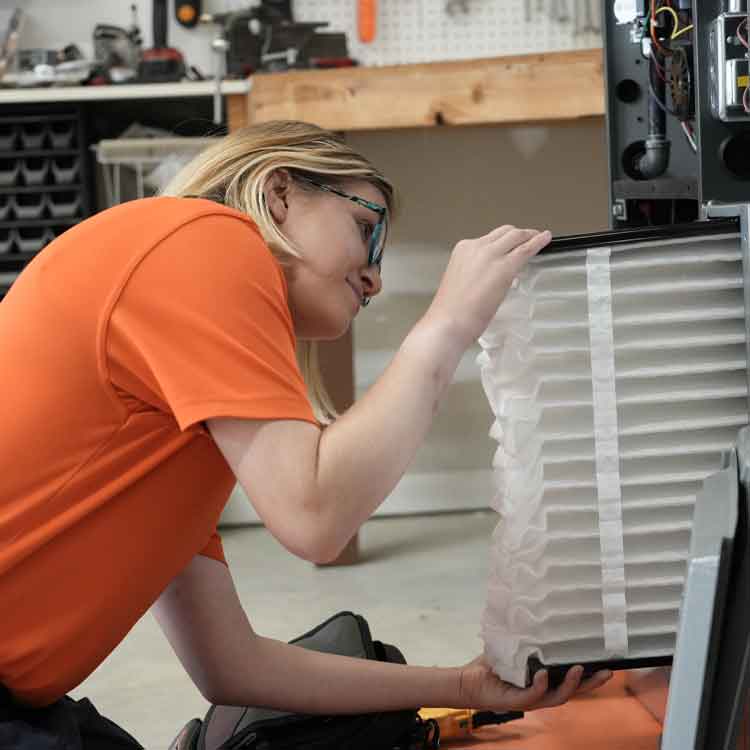
Your furnace already moves all the air in your house through one filter, several times an hour when it’s running. The filter you put in that slot matters more than anything else you can buy.
- Cheap fiberglass filters (the blue see-through ones) protect the furnace and do almost nothing for your air.
- Pleated MERV 8 filters catch dust and pollen and are a good minimum for most homes.
- MERV 11 to 13 filters catch much finer particles, including a good share of smoke and pet dander. The EPA suggests MERV 13 or as high as your system can handle.
The catch: a thicker, finer filter can choke an older furnace that wasn’t built for it. If the filter slot only takes a 1-inch filter, a high-MERV 1-inch filter can restrict airflow. A 4- or 5-inch media filter cabinet added to the furnace lets you use a high-MERV filter without that problem. Change 1-inch filters every 1 to 3 months in winter, and media filters every 6 to 12 months.
What HEPA actually means
A true HEPA filter captures at least 99.97% of particles 0.3 microns in size, the size that’s hardest to catch. That’s a big step up from even a MERV 13 filter. But HEPA media is dense, and almost no home furnace can push air through it directly. That leaves two ways to get HEPA filtration in a house:
- A whole-home HEPA unit tied into the ductwork on a bypass. It pulls part of the air out of the return duct, runs it through a HEPA filter with its own fan, and sends it back. It cleans the whole house without straining the furnace.
- Portable HEPA air cleaners for a single room. They’re good for a bedroom, a nursery or the room where the dog sleeps. Size it to the room. Look for the clean air delivery rate (CADR) on the box.
Where other air cleaners fit
UV lights mounted in the furnace or air handler keep mold and bacteria from growing on the coil and in the drain pan. They don’t filter dust. They’re most useful in homes with a central air coil that stays damp in summer. Electronic and other air purifiers vary a lot, and some produce ozone, which you don’t want. Ask what a unit does and what it gives off before buying.
Don’t forget humidity
Dry winter air makes dust feel worse and irritates sinuses. Keeping indoor humidity around 30 to 40% in winter helps a lot of people more than any filter. If your windows sweat and you smell must in the basement, the problem is the opposite: too much moisture, which feeds mold. In that case fix the moisture first.
So what should you buy?
- Most homes: a good pleated filter, changed on time, and a yearly furnace tune-up so the blower and coil are clean.
- Allergies, pets or a wood stove: a media filter cabinet with a MERV 11 to 13 filter, or a whole-home HEPA filter on a bypass.
- Someone with asthma or a lung condition: whole-home HEPA, plus a portable HEPA unit in the bedroom.
- Dusty house even with a good filter: leaky return ducts in the basement or crawl space may be pulling in dirt. Duct cleaning and sealing can help.
Frequently asked questions
Can I put a HEPA filter in my furnace?
Not directly in most homes. HEPA media is so dense that a typical furnace blower can’t push enough air through it. Whole-home HEPA systems use a bypass with their own fan, tied into the ductwork, so the furnace keeps its normal airflow.
What MERV rating should I use in my furnace?
MERV 8 is a good minimum. MERV 11 to 13 catches much finer particles and is better for allergies, pets and smoke. If your furnace only takes a 1-inch filter, check with us before going above MERV 11, since it can restrict airflow.
How often should I change my furnace filter in winter?
Every 1 to 3 months for a 1-inch pleated filter, more often with pets or a wood stove. A 4- or 5-inch media filter usually lasts 6 to 12 months.
Do portable HEPA air cleaners work?
Yes, for the room they’re in. Pick one sized for the room using its clean air delivery rate (CADR), and run it with the door closed. It won’t clean the rest of the house.
Do air purifiers make ozone?
Some electronic air cleaners and ionizers do. HEPA filters and standard furnace filters don’t. Check the product’s specifications before you buy.
Breathe a little easier this winter
Summers Plumbing Heating & Cooling has been serving Peru since 1969 from our shop at 2589 S Business 31, with service across Miami County and nearby towns like Bunker Hill, Denver and Logansport. We can look at your furnace, filter setup and ductwork and tell you what will actually make a difference. See our air purification and indoor air quality services. Call (765) 460-2660 any time, day or night, or book online.