

Replacing a Furnace or Adding a Heat Pump in Peru, IN: 2026 Options and Indiana Energy Saver Discounts for Miami County
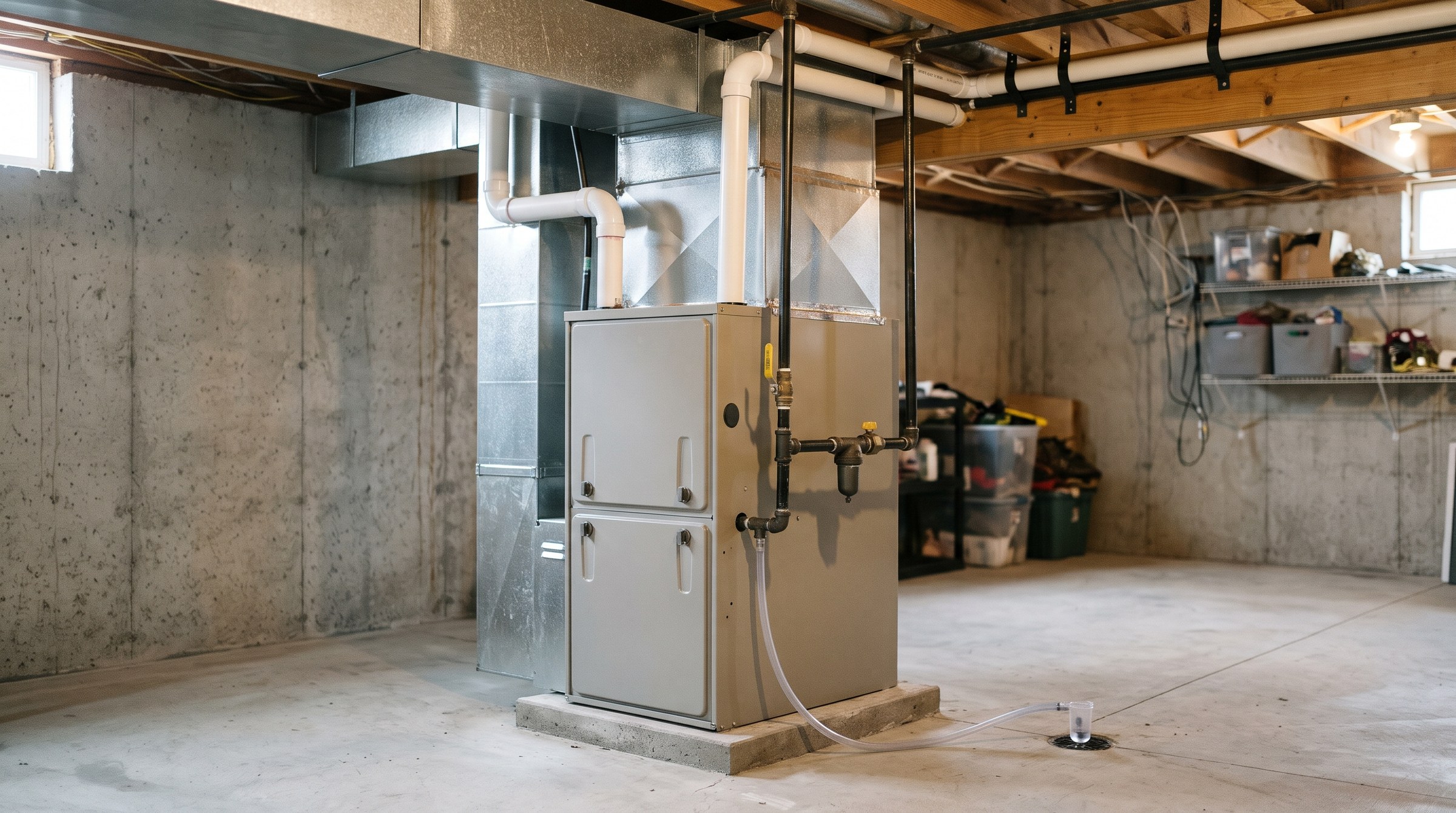
Furnaces rarely give you a convenient time to replace them. More often it’s the first cold snap of the year, the house is at 58 degrees, and someone is telling you the heat exchanger is cracked. If your furnace in Peru is getting up there in years, it pays to think through your options before that call happens. This guide covers repair versus replacement, gas furnace versus heat pump, and the state program that can take a real bite out of the cost for some Miami County households.
Repair or replace?
There’s no single age at which a furnace has to go, but a few signs tell you it’s time to start planning:
- It’s needed repairs more than once in the last couple of winters.
- Some rooms never get warm, or the furnace runs long cycles to keep up.
- Your heating bills keep creeping up even though your usage hasn’t changed.
- A technician has found a cracked heat exchanger or a carbon monoxide concern. That one isn’t a “plan for it” item. Stop using the furnace until it’s fixed.
- Parts for your model are getting hard to find.
If the furnace is fairly young and the repair is minor, fixing it usually makes sense. Our furnace repair page covers the common problems. If it’s older and the repair is major, put that money toward a new system instead. Either way, a yearly furnace tune-up is the best way to catch problems before they leave you without heat.
Your replacement options
A new gas furnace
If your home already has gas service and decent ductwork, a high-efficiency furnace is the most direct swap. Modern condensing furnaces vent through PVC pipe, so if you’re replacing an older unit that vented into a chimney, plan on some venting changes. A new furnace only handles heat, so if your air conditioner is also old, factor that into the decision. See furnace replacement for what’s involved.
A heat pump, alone or with a furnace
A heat pump heats and cools with one outdoor unit by moving heat instead of making it. Cold-climate models work at much lower outdoor temperatures than older heat pumps did. A common approach is to pair one with a gas furnace so the heat pump runs most of the year and the furnace takes over in the deepest cold. That setup is called dual fuel or a hybrid system, and it’s a good fit if your AC is due for replacement at the same time as your furnace.
Ductless mini-splits
Some older homes in Peru have rooms the ductwork never reached well, like a converted porch, an addition or an upstairs bedroom. A ductless mini-split heat pump can heat and cool those spaces without adding ducts. Learn more on our mini-split installation page.
Help with the cost: the Indiana Energy Saver Program
Peru Utilities, the city-owned utility, points customers to a free Home Energy Calculator and energy-saving tips on its website, but it doesn’t list an HVAC rebate there. The bigger opportunity right now is at the state level.
Indiana’s Office of Energy Development launched the Indiana Energy Saver Program in May 2025 with about $182 million in federal funding. It has two parts:
Home Appliance Rebates (HEAR)
HEAR is for low- and moderate-income households earning less than 150% of the area median income. The discount depends on your county’s median income and how many people live in your home. You can run the numbers for Miami County on the program’s HEAR discount calculator. Maximum discounts listed by the program include:
- ENERGY STAR heat pump for heating and cooling: up to $8,000
- ENERGY STAR heat pump water heater: up to $1,750
- Electrical panel upgrade: up to $4,000
- Electric wiring: up to $2,500
- Insulation, air sealing and ventilation: up to $1,600
- Total maximum across all measures: $14,000
Notice that the big HEAR discount is for heat pumps, not gas furnaces. If you qualify, it can make a heat pump or dual-fuel system much more affordable than it looks on a regular quote.
Home Efficiency Rebates (HOMES)
HOMES is for whole-home upgrades, like insulation, air sealing and efficient HVAC together, that are predicted to cut energy use by at least 20%. Eligibility and amounts are set by the program, so check the details on the program site.
How to apply, and what to watch for
- You apply only through IndianaEnergySaver.com.
- Discounts are applied by a qualified contractor, so ask whether your contractor is qualified with the Indiana Energy Saver Program before you get too far.
- The state warns that program contractors do not go door-to-door. Treat anyone who shows up unannounced claiming to be from the program with suspicion.
What about federal tax credits?
For years, homeowners could claim a federal tax credit for efficient furnaces, heat pumps and geothermal systems. Federal law passed in July 2025 ended them: the IRS says the home improvement credit isn’t allowed for property placed in service after December 31, 2025, and the clean energy credit (which covered geothermal) isn’t allowed for expenditures after that date. The IRS has a FAQ on the changes. If a 2026 quote shows a federal credit lowering your price, ask for an explanation, and check with your tax preparer.
Getting a quote you can compare
Whatever direction you lean, a good quote should spell out:
- The exact equipment model numbers and efficiency ratings.
- How the system was sized for your house, not just matched to the old unit.
- Any ductwork, venting, electrical or gas line changes.
- Thermostat, permits and haul-away of the old equipment.
- Warranty terms for parts and labor.
- Any discounts applied, and which program they come from.
Ask for two options side by side, such as a gas furnace and a dual-fuel system, so you can see the real difference.
Frequently Asked Questions
Should I repair or replace my furnace?
If the furnace is fairly young and the repair is minor, fixing it usually makes sense. Start planning a replacement if it has needed repairs more than once in recent winters, some rooms never get warm, bills keep climbing, or parts are hard to find. If a technician finds a cracked heat exchanger or a carbon monoxide concern, stop using the furnace until it’s fixed.
Does Peru Utilities offer a rebate on a new furnace or heat pump?
Peru Utilities’ energy efficiency page points customers to a free Home Energy Calculator and energy-saving tips, but it doesn’t list an HVAC rebate there. Check with the utility for anything current. Right now the larger opportunity for Peru and Miami County homeowners is the state’s Indiana Energy Saver Program.
How much can the Indiana Energy Saver Program take off a heat pump?
Its HEAR rebates list maximums of $8,000 for an ENERGY STAR heat pump, $1,750 for a heat pump water heater, $4,000 for an electrical panel, $2,500 for wiring and $1,600 for insulation and air sealing, up to $14,000 total. HEAR is for households under 150% of the area median income, and your discount depends on Miami County income levels and household size.
Does the state program cover a new gas furnace?
The big HEAR discounts are for heat pumps and electrical upgrades, not gas furnaces. The separate HOMES rebate covers whole-home upgrades, which can include efficient HVAC equipment, when the project is predicted to cut energy use by at least 20%. Check the program site for current eligibility before you plan around it.
Can I still claim a federal tax credit for a new furnace or heat pump?
Not for equipment installed now. The IRS says the energy efficient home improvement credit isn’t allowed for property placed in service after December 31, 2025. If a 2026 quote shows a federal credit lowering the price, ask for an explanation and check with your tax preparer.
How do I apply for Indiana Energy Saver discounts?
Apply only through IndianaEnergySaver.com. Discounts are applied by a qualified contractor, so ask whether your contractor is qualified with the Indiana Energy Saver Program before you get too far into quotes. The state also warns that program contractors don’t go door-to-door, so be wary of anyone who shows up unannounced claiming to represent it.
Talk to Summers of Peru
From Peru to Bunker Hill, Mexico and the rest of the area, Summers of Peru can look at your current furnace, tell you honestly whether it’s worth repairing, and quote replacement options. We have been serving Peru since 1969. Call (765) 460-2660 to set up a visit.