

How Long Do Sump Pumps Last? Signs Yours Needs Replacing
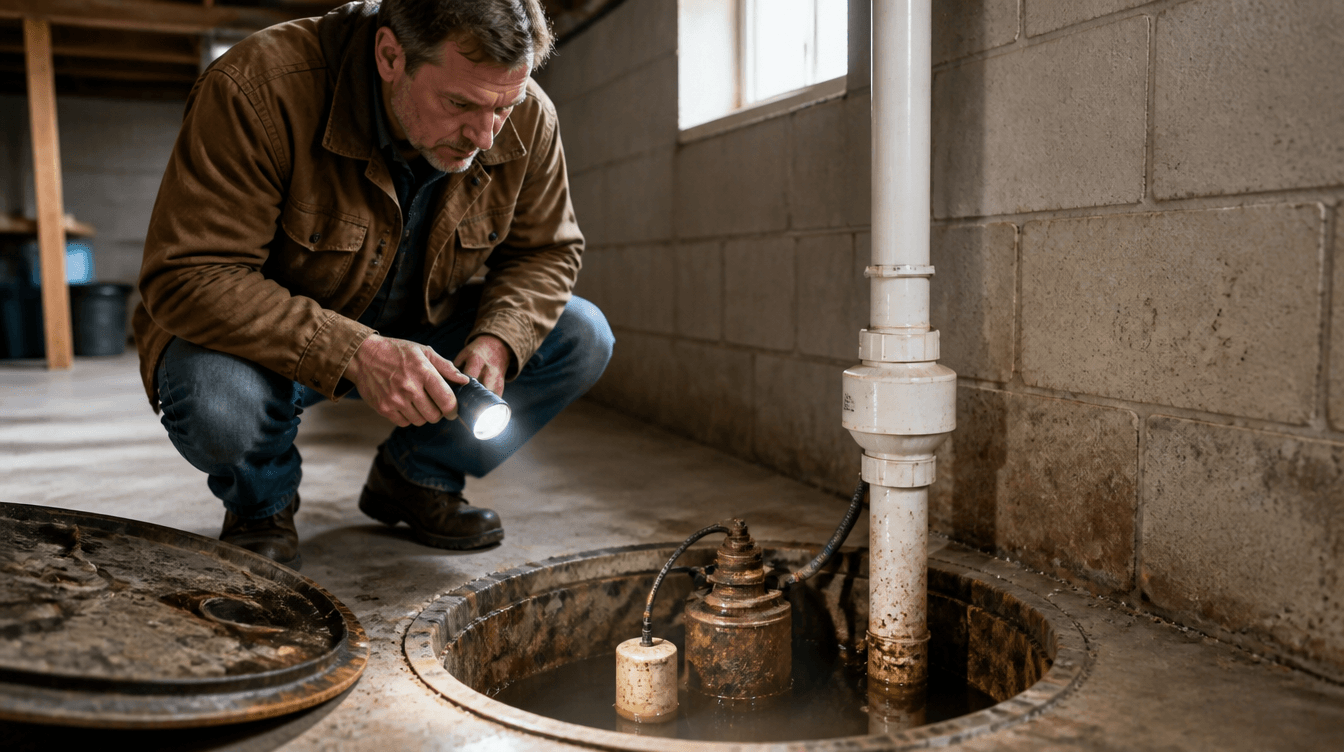
If you own a home in Peru, you don’t need anyone to explain why a sump pump matters. Between the Wabash and Mississinewa rivers, a high water table, and spring storms that can drop inches of rain overnight, the pump in your basement pit is the only thing standing between a dry floor and a very expensive cleanup.
The problem is that sump pumps fail quietly. They sit in the pit for years, run a few times a week, and give almost no warning before they quit — usually during the storm you needed them most. So how long do sump pumps last, and how do you know when yours is due? Here’s what Miami County homeowners should know.
How Long Does a Sump Pump Last?
The average sump pump lasts about 10 years. The realistic range is 7 to 15, and where yours falls depends on the type of pump, how hard it works, and the quality of the installation.
- Submersible pumps: 7 to 10 years on average. They sit in the water, run quieter, and handle debris better, but the motor works harder and the seals eventually wear.
- Pedestal pumps: 10 to 15 years. The motor sits above the pit, out of the water, so it lasts longer — but these are louder and move less water.
- Battery backup pumps: The pump itself lasts 7 to 10 years; the battery needs replacing every 3 to 5 years regardless.
Location makes a difference too. A pump in a Peru home near the river that cycles dozens of times a day during spring melt will wear out years sooner than one in a home on higher ground that only runs after heavy rain. If your pump runs constantly in wet months, plan on the shorter end of the range.
How Does a Sump Pump Work?
A quick refresher helps make sense of the warning signs. Groundwater collects in a pit (the sump basin) at the lowest point of the basement or crawl space. As the water rises, it lifts a float switch. The float turns the pump on, the pump pushes water up through a discharge pipe and out away from the foundation, and a check valve keeps that water from flowing back down into the pit when the pump shuts off.
Every one of those parts — float, motor, check valve, discharge line — is a place where the system can fail. Most sump pump problems come down to one of them.
7 Signs Your Sump Pump Needs Replacing
- It’s 7 to 10 years old or older. If you don’t know the age, and it was there when you bought the house, assume it’s due. A new pump is far cheaper than a flooded basement.
- It runs constantly or cycles on and off rapidly. Constant running can mean a stuck float, a failed check valve letting water back into the pit, or a pump that can no longer keep up. Rapid cycling usually means the pit is too small or the float switch is set wrong.
- Strange noises. A healthy pump makes a low hum. Grinding, rattling, or gurgling points to a damaged impeller, a worn motor, or a failing check valve.
- Visible rust or corrosion. Brown, rust-colored residue on the pump or in the pit is often iron bacteria from the groundwater. It clogs impellers and discharge lines over time.
- It hums but doesn’t pump. The motor is getting power but the impeller isn’t moving water — a jammed impeller or a failing motor. Either way, it isn’t protecting you.
- Frequent power outages in your area. A pump without battery backup is worthless when the power goes out — which is exactly when the worst storms hit. If yours doesn’t have a backup, that’s reason enough to upgrade.
- Water in the basement after a storm. The clearest sign of all. Even a small puddle near the pit means the pump couldn’t keep up or failed outright.
How to Test Your Sump Pump
Test the pump every spring before the rains, and again in the fall. It takes five minutes.
- Check the power. Make sure the pump is plugged in and the outlet works. If it’s on a GFCI outlet, press reset — GFCIs trip during storms and quietly take the pump down with them.
- Clear the pit. Remove any gravel, debris, or sediment around the float so it can move freely.
- Pour in water. Slowly pour about five gallons into the pit. The float should rise, the pump should turn on, the water should drain quickly, and the pump should shut off on its own.
- Check the discharge. Go outside and confirm water is coming out of the discharge line and flowing away from the foundation — not pooling next to it.
- Test the backup. If you have a battery backup, unplug the primary pump and repeat the water test. The backup should take over.
If the pump hesitates, hums without pumping, runs after the water is gone, or doesn’t turn on at all, it’s time to call a plumber.
How Much Does a Sump Pump Cost?
A replacement sump pump installed by a plumber typically costs $500 to $1,500, depending on the pump’s horsepower and whether the check valve or discharge line needs updating. Adding a battery backup system usually adds $600 to $1,500. A brand-new installation in a home without an existing pit — which involves cutting the slab and installing a basin and drainage — runs $2,500 to $5,000 or more.
That’s a real investment, but it’s a fraction of what a flooded basement costs: water damage restoration alone often runs $3,000 to $10,000, before replacing flooring, drywall, or anything stored down there.
To make it easier to protect your home before the next storm, Summers Plumbing Heating & Cooling offers $0 down and 0% interest financing on sump pump installation in Peru — including battery backup systems.
Make Your Sump Pump Last Longer
- Test it twice a year using the steps above.
- Clean the pit annually. Remove sediment and debris that can jam the float or clog the intake.
- Check the discharge line every fall. A frozen or crushed line will burn out the pump. Make sure it drains well away from the house and has a freeze-relief fitting.
- Install a battery backup if you don’t have one. It’s the single best protection against a storm-related power outage.
- Add a water alarm. A $20 alarm in the pit warns you the moment water rises past the pump — before it reaches the floor.
- Replace the backup battery every 3 to 5 years. Write the date on the battery when it goes in.
Sump Pump Installation and Replacement in Peru, Indiana
Summers Plumbing Heating & Cooling has helped Peru, Miami County, and neighboring communities like Logansport and Wabash keep their basements dry since 1969. Our licensed plumbers replace failing sump pumps, install battery backup systems, correct discharge line problems, and install complete sump systems in homes that don’t have one.
Ask about $0 down and 0% interest financing on your sump pump installation, backed by our Worry-Free Guarantee. Our phones are answered 24/7 and after-hours emergency service is available. Call 765-460-2660 or book online for a free sump pump estimate in Peru.
$0 down and 0% interest on sump pump installation in Peru. Schedule Your Free Sump Pump Estimate | Call 765-460-2660
Financing subject to credit approval. Ask your technician for current terms.
Frequently Asked Questions About Sump Pump Lifespan and Replacement
How long do sump pumps last?
Most sump pumps last about 10 years, with a realistic range of 7 to 15. Submersible pumps average 7 to 10 years; pedestal pumps can last 10 to 15. Pumps that run constantly in high-water-table areas wear out sooner.
How do I know if my sump pump is going bad?
Common signs include a pump that runs constantly or cycles rapidly, grinding or rattling noises, visible rust, a motor that hums without pumping, and water in the basement after storms. Age over 7 years is also a reason to have it checked.
How often should I test my sump pump?
Test it at least twice a year — every spring before the rainy season and every fall before the ground freezes. Pour about five gallons of water into the pit and confirm the pump turns on, drains the water, and shuts off.
How much does it cost to replace a sump pump?
A replacement sump pump installed by a plumber typically costs $500 to $1,500. A battery backup system adds $600 to $1,500. Summers Plumbing Heating & Cooling offers $0 down and 0% interest financing on sump pump installation for Peru homeowners.
Do I need a battery backup sump pump?
If your home is in a flood-prone area or loses power during storms, yes. The heaviest rain often arrives with power outages, and a primary pump without backup stops working the moment the power goes out.
Does Summers Plumbing Heating & Cooling install sump pumps in Peru?
Yes. Summers Plumbing Heating & Cooling installs and replaces sump pumps and battery backup systems in Peru, Miami County, and surrounding communities, with $0 down and 0% interest financing available subject to credit approval. Call 765-460-2660.