
What Size Air Conditioner Does My Home Need? Guide
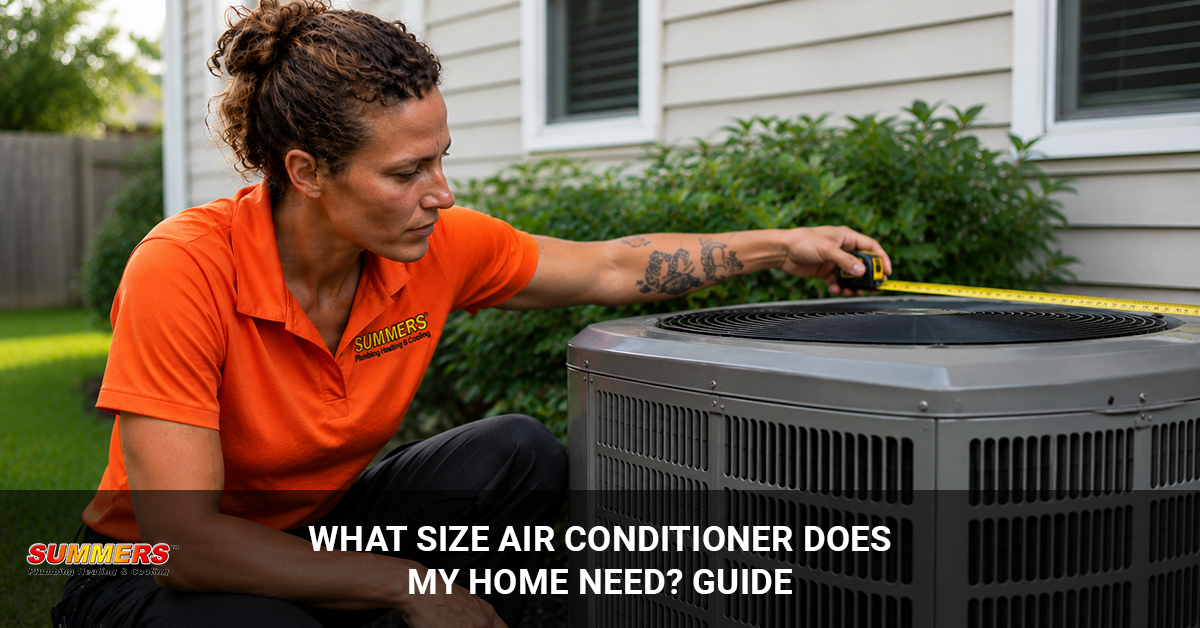
The right air conditioner size depends on your home’s cooling load, not just its square footage. Factors such as insulation, ceiling height, climate, windows, sun exposure, ductwork, and the number of people living in the home all affect how much cooling capacity your air conditioner needs to keep your home comfortable and energy efficient.
Choosing the wrong size can create problems that affect both comfort and operating costs. An air conditioner that’s too small may run almost continuously without reaching the thermostat setting, while an oversized unit can cool the home too quickly, causing short cycling, poor humidity control, and unnecessary wear on the compressor and other components. In either case, your system may use more electricity than necessary while providing less consistent comfort.
Proper AC sizing is about finding the right balance between cooling performance, energy efficiency, humidity control, and long-term reliability. A correctly sized system runs long enough to remove heat and moisture from your home without operating longer than necessary. This improves indoor comfort, reduces strain on the equipment, and can help lower monthly utility bills over the life of the system.
While square footage is often used as a starting point, it doesn’t provide the complete picture. Two homes with the same floor area can require different air conditioner sizes because of differences in insulation, window placement, home orientation, local climate, and construction quality. That’s why experienced HVAC contractors use a Manual J load calculation to determine the correct cooling capacity instead of relying only on general sizing charts.
In this guide, you’ll learn how air conditioner size is measured, how to estimate the right size for your home, what factors influence cooling requirements, why bigger isn’t always better, and how a professional load calculation helps ensure you choose the right air conditioner the first time.
How Is Air Conditioner Size Measured?
Air conditioner size is measured by its cooling capacity, not by the physical size or weight of the unit. In residential HVAC systems, cooling capacity is expressed in British Thermal Units (BTUs) and tons, which indicate how much heat the system can remove from your home each hour.
A BTU is a unit of heat measurement. In air conditioning, it represents the amount of heat an AC can remove from your indoor air in one hour. The higher the BTU rating, the greater the cooling capacity. Homes with larger cooling loads generally require systems with higher BTU ratings, but more isn’t always better. The goal is to match the cooling capacity to your home’s actual needs.
HVAC contractors often describe air conditioners by tons rather than BTUs. Despite the name, tonnage has nothing to do with the unit’s weight. Instead, it refers to cooling output.
One ton of air conditioning provides 12,000 BTUs of cooling per hour. For example, a 3-ton air conditioner delivers approximately 36,000 BTUs of cooling each hour.
The table below shows the cooling capacity of the most common residential air conditioner sizes.
| AC Size | Cooling Capacity |
| 1 Ton | 12,000 BTUs |
| 1.5 Ton | 18,000 BTUs |
| 2 Ton | 24,000 BTUs |
| 2.5 Ton | 30,000 BTUs |
| 3 Ton | 36,000 BTUs |
| 3.5 Ton | 42,000 BTUs |
| 4 Ton | 48,000 BTUs |
| 5 Ton | 60,000 BTUs |
Understanding BTUs and tonnage helps you compare different air conditioners, but these numbers alone don’t determine the right size for your home. A 2,000-square-foot house in a hot, humid climate may need a larger system than a similar-sized home in a cooler region. Ceiling height, insulation, window efficiency, ductwork, air leakage, occupancy, and sun exposure all influence your home’s cooling load.
For that reason, HVAC professionals use BTU ratings and tonnage as part of a larger evaluation rather than relying on them alone. The most accurate way to choose the correct air conditioner is with a Manual J load calculation, which considers your home’s unique characteristics instead of using square footage as the only sizing factor.
What Size Air Conditioner Do You Need Based on Square Footage?
Square footage is a good starting point for estimating the size of an air conditioner, but it isn’t enough to determine the right system for your home. HVAC contractors often use square footage to provide an initial recommendation, then verify the final size with a professional load calculation that considers your home’s unique characteristics.
The chart below shows typical AC size recommendations based on home size.
| Home Size | Typical AC Size |
| 600–900 sq. ft. | 1.5 Ton |
| 900–1,200 sq. ft. | 2 Ton |
| 1,200–1,500 sq. ft. | 2.5 Ton |
| 1,500–1,800 sq. ft. | 3 Ton |
| 1,800–2,100 sq. ft. | 3.5 Ton |
| 2,100–2,400 sq. ft. | 4 Ton |
| 2,400–3,000 sq. ft. | 5 Ton |
These recommendations are general guidelines rather than exact sizing rules. They assume average ceiling heights, typical insulation levels, standard windows, and normal occupancy. If your home differs significantly from those assumptions, the recommended air conditioner size may also change.
For example, two homes that are both 2,000 square feet can have very different cooling requirements. A home with vaulted ceilings, large west-facing windows, minimal attic insulation, and full afternoon sun will usually need more cooling capacity than a similar-sized home with energy-efficient windows, excellent insulation, mature shade trees, and well-sealed ductwork.
Climate also plays an important role. A home in a hot, humid region generally requires more cooling than the same home in a cooler climate because the air conditioner must remove both heat and moisture from the indoor air.
That’s why reputable HVAC contractors don’t choose an air conditioner based only on square footage. Instead, they use these estimates as a starting point before performing a Manual J load calculation, which evaluates factors such as insulation, ceiling height, window efficiency, ductwork, sun exposure, air leakage, occupancy, and local climate.
Important: Never buy a new air conditioner based solely on your home’s square footage or the size of your existing unit. If the previous system was oversized or undersized or if you’ve added insulation, replaced windows, remodeled your home, or finished a basement your cooling needs may have changed. A professional load calculation is the most reliable way to choose the correct AC size and avoid expensive sizing mistakes.
Why Square Footage Alone Isn’t Enough
Square footage alone isn’t enough to determine the correct air conditioner size because every home has a different cooling load. Two houses with the same floor area can require different AC sizes depending on how they’re built, where they’re located, and how much heat enters the home throughout the day.
That’s why experienced HVAC contractors don’t size an air conditioner using square footage alone. Instead, they evaluate several factors that affect how much cooling your home actually needs.
Climate
Your local climate has one of the biggest impacts on AC sizing.
Homes in hot, humid regions typically require more cooling capacity than similar-sized homes in cooler climates because the air conditioner must remove both heat and humidity from the indoor air. Homes in areas with long cooling seasons also place more demand on HVAC systems than those in regions with milder summers.
Ceiling Height
Higher ceilings increase the amount of air your air conditioner must cool.
Most square-footage sizing charts assume standard 8-foot ceilings. Homes with vaulted, cathedral, or two-story ceilings contain significantly more air volume, which often requires additional cooling capacity to maintain comfortable indoor temperatures.
Insulation Quality
Good insulation helps your air conditioner work more efficiently.
Attic, wall, and floor insulation slow the transfer of outdoor heat into your home, reducing the cooling load. Newer, energy-efficient homes generally require less cooling than older homes with inadequate insulation or poor air sealing.
Windows and Sun Exposure
Windows can significantly increase your home’s cooling requirements.
Large windows, especially those facing south or west allow more solar heat to enter during the hottest part of the day. Features such as low-E glass, window coverings, exterior shade, and mature trees can reduce heat gain and lower the amount of cooling your home needs.
Number of Occupants
The number of people living in your home also affects AC sizing.
People naturally generate body heat, so larger households create a higher indoor cooling load than smaller ones. For example, a home occupied by six people generally requires more cooling than a similar home occupied by only two.
Heat-Producing Appliances
Everyday appliances add heat that your air conditioner must remove.
Kitchen appliances, ovens, clothes dryers, computers, televisions, lighting, and other electronics all generate heat while operating. Homes with large kitchens, home offices, or extensive electronic equipment may require more cooling capacity than similar-sized homes with fewer heat-producing appliances.
Air Leaks
Air leaks increase cooling costs and reduce system efficiency.
Warm outdoor air entering through gaps around windows, doors, attic openings, and poorly sealed ductwork forces the air conditioner to run longer to maintain the desired temperature. Sealing these leaks improves comfort, lowers energy bills, and reduces unnecessary strain on the HVAC system.
Ductwork Condition
The condition of your ductwork has a direct impact on cooling performance.
Leaky, undersized, or poorly insulated ducts can lose a significant amount of conditioned air before it reaches your living spaces. Even a properly sized air conditioner may struggle to cool your home if the duct system isn’t delivering air efficiently.
Home Orientation
The direction your home faces influences how much heat it absorbs throughout the day.
Homes with large west-facing windows or walls often experience greater afternoon heat gain than homes with more shade or different orientations. Roof color, nearby buildings, landscaping, and tree coverage can also affect indoor temperatures and overall cooling demand.
Every one of these factors contributes to your home’s cooling load, which is the amount of heat your air conditioner must remove to maintain a comfortable indoor temperature. That’s why two homes with identical square footage can require completely different AC sizes.
While square-footage charts and online calculators are helpful for estimating capacity, they can’t account for all of these variables. The most accurate way to size an air conditioner is with a Manual J load calculation, which evaluates your home’s construction, insulation, windows, ductwork, climate, occupancy, and other factors to recommend the right cooling capacity. Choosing an air conditioner based on cooling load rather than square footage alone helps improve comfort, control humidity, reduce energy costs, and extend the lifespan of your HVAC system.
What Happens If Your AC Is Too Small?
An air conditioner that’s too small won’t have enough cooling capacity to keep your home comfortable. Instead of reaching the thermostat setting and shutting off normally, it may run for long periods or even continuously while still struggling to maintain the desired temperature.
It’s normal for an air conditioner to run longer during extremely hot weather. However, if your system operates almost nonstop on typical summer days, it may be undersized or have another problem that’s limiting its performance.
Common signs that your air conditioner may be too small include:
- The system runs almost continuously.
- Your home never reaches the thermostat setting.
- Some rooms stay warmer than others.
- Energy bills continue to increase.
- Cooling performance drops during the hottest part of the day.
- Indoor humidity remains higher than normal.
An undersized air conditioner affects more than just comfort. Because it rarely gets a chance to rest, the compressor, blower motor, and condenser fan motor experience more operating hours and greater wear. Over time, this can shorten the lifespan of the system, increase maintenance costs, and raise your monthly energy bills.
Running continuously also doesn’t guarantee better cooling. If the system can’t remove heat as quickly as it enters your home, indoor temperatures may continue to rise during periods of extreme heat, leaving your home uncomfortable despite the AC operating at full capacity.
Before concluding that your air conditioner is too small, have the system inspected by a qualified HVAC technician. Many issues can produce the same symptoms, including:
- Dirty or clogged air filters
- Refrigerant leaks or low refrigerant
- Dirty evaporator or condenser coils
- Leaking or restricted ductwork
- Blocked supply or return vents
- A malfunctioning thermostat
- Poor attic insulation or air leaks
In many cases, correcting one of these problems restores normal cooling without replacing the air conditioner.
If your system is properly maintained and all other issues have been ruled out, an HVAC contractor can perform a Manual J load calculation to determine whether the air conditioner is correctly sized for your home. Installing the right-sized system improves comfort, lowers energy costs, reduces equipment wear, and helps your air conditioner operate more efficiently throughout its lifespan.
What Happens If Your AC Is Too Large?
An air conditioner that’s too large can cool your home too quickly, reducing comfort, increasing humidity, and placing unnecessary wear on the system. While it may seem like a bigger unit would perform better, an oversized AC often creates more problems than it solves.
Air conditioners are designed to run long enough to remove both heat and moisture from your home. When an oversized system has more cooling capacity than the home requires, it reaches the thermostat setting too quickly and shuts off before completing a full cooling cycle. This frequent starting and stopping is known as short cycling.
Short cycling can lead to several problems, including:
- Uneven indoor temperatures
- Poor humidity control
- A cool but damp or sticky feeling indoors
- Increased wear on the compressor and electrical components
- Reduced energy efficiency
- More frequent repairs
- A shorter equipment lifespan
Humidity is one of the biggest concerns with an oversized air conditioner. Moisture removal happens gradually during a cooling cycle. If the system shuts off after only a few minutes, it doesn’t run long enough to remove enough humidity from the air. As a result, your home may reach the desired temperature while still feeling uncomfortable, especially during humid summer weather.
An oversized system can also increase operating costs. Every time the air conditioner starts, it draws a surge of electricity. Frequent short cycles create more startup cycles throughout the day, placing additional strain on the compressor, capacitor, contactor, and other electrical components.
The table below compares the common problems associated with undersized and oversized air conditioners.
| AC Too Small | AC Too Large |
| Runs almost continuously | Short cycles frequently |
| Struggles to cool the home | Cools too quickly |
| Higher energy bills | Poor humidity control |
| Uneven temperatures | Uneven temperatures |
| Increased equipment wear | Increased equipment wear |
Many homeowners assume it’s safer to buy a larger air conditioner “just in case.” In reality, an oversized system rarely improves comfort and often reduces efficiency. The best-performing air conditioner isn’t the largest one available it’s the one that’s correctly sized for your home’s cooling load.
If you suspect your current system is oversized, don’t replace it based on guesswork alone. A qualified HVAC contractor can perform a Manual J load calculation to determine whether the system matches your home’s actual cooling requirements and recommend the most appropriate solution.
Why HVAC Contractors Perform a Manual J Load Calculation
A Manual J load calculation is the most accurate way to determine the right size air conditioner for your home. Instead of relying only on square footage, it calculates your home’s actual cooling load by measuring how much heat enters the home under normal operating conditions.
Developed by the Air Conditioning Contractors of America (ACCA), Manual J is the industry standard for sizing residential HVAC systems. It helps contractors recommend an air conditioner that delivers consistent comfort, controls humidity effectively, and operates efficiently without being oversized or undersized.
During a Manual J load calculation, an HVAC contractor evaluates factors such as:
- Total square footage
- Ceiling height
- Insulation levels
- Window size, type, and location
- Number of windows and exterior doors
- Sun exposure
- Local climate
- Number of occupants
- Heat generated by appliances and lighting
- Air leakage and home tightness
- Ductwork design, size, and condition
Each of these factors affects your home’s cooling requirements. For example, a well-insulated home with energy-efficient windows may need a smaller air conditioner than a similar-sized home with poor insulation and large west-facing windows. Looking at square footage alone wouldn’t reveal these important differences.
A Manual J calculation also helps prevent two of the most common HVAC installation mistakes: installing an oversized system or an undersized one. An oversized air conditioner may short cycle, waste energy, and leave your home feeling humid, while an undersized system can struggle to cool the house, run continuously, and wear out faster.
Although performing a Manual J calculation requires more time than using a simple sizing chart or online calculator, it’s one of the most valuable steps in the replacement process. Proper sizing can improve indoor comfort, lower monthly energy bills, reduce equipment wear, and help your air conditioner reach its expected lifespan.
If an HVAC contractor recommends a new air conditioner based only on your home’s square footage or by matching the size of your existing unit, it’s worth asking whether a Manual J load calculation will be performed. Taking the time to size the system correctly helps ensure you’re investing in equipment that matches your home’s actual cooling needs rather than relying on estimates or assumptions.
Can You Use an Online AC Size Calculator?
Yes, an online AC size calculator can provide a helpful estimate, but it shouldn’t be used as the final basis for choosing a new air conditioner. These calculators are useful for getting a general idea of the cooling capacity your home may need, but they can’t accurately account for every factor that affects your home’s cooling load.
Most online AC sizing calculators estimate system capacity using your home’s square footage along with a few basic questions, such as your location, ceiling height, or insulation level. They’re a useful research tool if you’re planning an AC replacement, comparing HVAC quotes, or trying to understand the approximate size of the system your home may require.
However, online calculators have important limitations because they can’t fully evaluate your home’s unique characteristics. Many don’t account for factors such as:
- Ceiling height
- Duct leakage and airflow
- Window size, efficiency, and placement
- Home orientation
- Air infiltration
- Insulation quality
- Local microclimate
- Number of occupants
- Heat generated by appliances and lighting
Even small differences in these factors can significantly change your home’s cooling requirements. For example, two homes with identical square footage may need different air conditioner sizes if one has poor attic insulation, large west-facing windows, and leaky ductwork, while the other is well insulated and shaded by mature trees.
Online calculators also can’t identify existing HVAC issues that may affect system sizing, such as undersized ductwork, restricted airflow, or previous installation mistakes. As a result, relying solely on an online estimate could lead to purchasing an air conditioner that’s either too large or too small.
The best way to use an online AC size calculator is as a starting point not a final recommendation. It can help you understand the general range of system sizes and prepare questions when meeting with HVAC contractors.
Before purchasing a new air conditioner, ask your contractor to perform a Manual J load calculation. This professional assessment considers your home’s actual construction, insulation, windows, ductwork, climate, and cooling load to recommend the correct system size. Spending a little extra time on proper sizing can improve comfort, reduce energy costs, extend equipment life, and help you avoid expensive sizing mistakes.
Should You Replace Your AC With the Same Size?
Not always. The right size for your replacement air conditioner may be different from the one you have now because your home’s cooling needs can change over time, and the original system may not have been sized correctly.
Many homeowners assume that replacing a 3-ton air conditioner with another 3-ton unit is the safest choice. However, HVAC systems are sometimes oversized or undersized when they’re first installed. If the original equipment wasn’t properly sized, installing the same capacity again could repeat the same comfort and efficiency problems for another 10 to 15 years.
Your home’s cooling load may have changed since the previous air conditioner was installed because of improvements such as:
- New attic or wall insulation
- Energy-efficient windows or doors
- Air sealing to reduce drafts
- Roof replacement with reflective materials
- Home additions or renovations
- Finished basements or attics
- Ductwork repairs or upgrades
- New shade trees or changes to landscaping
Any of these improvements can reduce or in some cases increase the amount of cooling your home requires. Even changes in how the home is used, such as adding more occupants or converting a spare bedroom into a home office, can affect cooling demand.
It’s also worth remembering that HVAC sizing standards have improved over the years. Older systems were sometimes selected using simple square-footage rules or by matching a neighbor’s equipment rather than performing a detailed load calculation. Modern HVAC best practices rely on a Manual J load calculation, which provides a much more accurate assessment of your home’s cooling requirements.
Replacing your existing air conditioner with the same size without verifying the cooling load can lead to ongoing problems such as short cycling, uneven temperatures, poor humidity control, higher energy bills, or excessive equipment wear.
Before choosing a replacement system, ask your HVAC contractor to perform a new Manual J load calculation. If you’re replacing an aging system, our guide on when to replace your air conditioner explains what to consider before installing a new unit.
This ensures your new air conditioner is sized for your home’s current condition not the way it was years ago. A properly sized system delivers more consistent comfort, better humidity control, lower operating costs, and improved long-term reliability, helping you get the most value from your investment.
How to Choose the Right Air Conditioner
Choosing the right air conditioner involves more than selecting the correct size. The best system should match your home’s cooling load, budget, energy-efficiency goals, climate, and comfort expectations. If you’re planning to install a new system, learn what affects the cost of a new AC system so you can budget for the right size and efficiency level.
A properly sized, professionally installed air conditioner will usually provide better performance, lower operating costs, and a longer lifespan than a larger or smaller system that’s not matched to your home.
Once an HVAC contractor has completed a Manual J load calculation and determined the correct cooling capacity, the next step is choosing the type of air conditioner that best fits your needs.
Single-Stage Air Conditioners
Single-stage air conditioners are the most affordable option and work well for many homes.
These systems operate at full capacity whenever they’re running, meaning they’re either completely on or completely off. Their simple design makes them reliable and less expensive to purchase, but they typically cycle more frequently than higher-end systems.
For homeowners who want dependable cooling with a lower upfront cost, a single-stage air conditioner is often a practical choice. However, because it always runs at maximum output, indoor temperatures and humidity levels may fluctuate more than they do with advanced systems.
Two-Stage Air Conditioners
Two-stage air conditioners provide better comfort, humidity control, and energy efficiency than single-stage systems.
Instead of operating at full capacity all the time, these units run at a lower speed during most cooling cycles and automatically switch to full capacity only when outdoor temperatures or indoor cooling demand increase.
The longer run times at lower speeds help maintain more consistent indoor temperatures, remove more humidity from the air, and reduce wear caused by frequent starting and stopping. Although two-stage systems usually cost more upfront, many homeowners find the improved comfort and lower operating costs worthwhile.
Variable-Speed Air Conditioners
Variable-speed air conditioners offer the highest level of comfort and energy efficiency available for most residential homes.
Rather than operating at fixed speeds, these systems continuously adjust their output to match your home’s cooling needs. They often run at lower speeds for extended periods, providing steady temperatures, excellent humidity control, quieter operation, and lower electricity consumption.
Variable-speed systems generally have the highest purchase price, but they can deliver significant long-term benefits through improved efficiency, enhanced comfort, and reduced wear on system components.
Don’t Focus on Size Alone
The best air conditioner isn’t simply the biggest, the most expensive, or the one with the highest efficiency rating, it’s the one that’s properly matched to your home’s cooling requirements.
Before making your final decision, consider factors such as:
- Cooling capacity based on a Manual J load calculation
- Energy efficiency (SEER2 rating)
- Local climate and humidity levels
- Installation quality
- Your budget and long-term operating costs
- Manufacturer’s warranty coverage
- Available rebates or energy-efficiency incentives
- The reputation and experience of the HVAC contractor
Remember that even the highest-quality air conditioner won’t perform as expected if it’s installed incorrectly or sized improperly. Proper installation, correct refrigerant charging, balanced airflow, and well-designed ductwork are just as important as choosing the right equipment.
If you’re ready to replace your current system, our AC installation experts can perform a Manual J load calculation and recommend the right-sized air conditioner for your home’s comfort and energy-efficiency needs.
Taking the time to compare your options and work with a qualified HVAC contractor can help you choose an air conditioner that delivers reliable cooling, lower energy bills, better humidity control, and dependable performance for many years to come.
Frequently Asked Questions
Is a bigger AC better?
No. A bigger air conditioner isn’t necessarily better. An oversized system cools your home too quickly, causing short cycling, poor humidity control, uneven temperatures, and unnecessary wear on the compressor and other components. A properly sized air conditioner runs longer, removes humidity more effectively, and provides better comfort while using energy more efficiently.
What size AC do I need for a 2,000-square-foot house?
Most 2,000-square-foot homes require approximately a 3.5-ton air conditioner, but the correct size depends on much more than square footage. Insulation, ceiling height, window size, sun exposure, local climate, ductwork, and air leakage all affect your home’s cooling load. A Manual J load calculation is the most accurate way to determine the right system size.
Is square footage enough to size an AC?
No. Square footage is only a starting point and shouldn’t be used as the sole basis for choosing an air conditioner. Two homes with the same floor area can have completely different cooling requirements because of differences in insulation, windows, ceiling height, occupancy, home orientation, ductwork, and climate. Professional HVAC contractors consider all of these factors before recommending a new system.
Can an oversized AC increase humidity?
Yes. An oversized air conditioner often short cycles, meaning it reaches the thermostat setting and shuts off before removing enough moisture from the air. As a result, your home may feel cool but still damp or sticky. A properly sized system runs long enough to control both temperature and indoor humidity.
Can I calculate AC size myself?
You can estimate your AC size using online calculators or square-footage charts, but these tools provide only rough estimates. They don’t account for important factors such as insulation quality, window efficiency, duct leakage, ceiling height, or local climate. Before purchasing a new system, have an HVAC contractor perform a Manual J load calculation to verify the correct cooling capacity.
What’s the difference between BTUs and tons?
Both BTUs and tons measure an air conditioner’s cooling capacity. A British Thermal Unit (BTU) measures the amount of heat an air conditioner can remove in one hour, while one ton of air conditioning equals 12,000 BTUs of cooling per hour. The term “ton” refers to cooling output, not the physical weight of the equipment.
How much does a Manual J calculation cost?
The cost of a Manual J calculation varies depending on the HVAC company, your location, and the size and complexity of your home. Some contractors include it as part of a free replacement estimate, while others charge a separate fee. Because proper sizing affects comfort, energy efficiency, and the lifespan of your HVAC system, it’s generally a worthwhile investment before installing a new air conditioner.
Should I replace my ductwork when replacing my AC?
Not necessarily. If your ductwork is properly sized, well sealed, and in good condition, it may continue to perform well with your new air conditioner. However, damaged, leaking, undersized, or poorly designed ducts can reduce airflow, decrease efficiency, and limit the performance of even the highest-quality HVAC system. A professional duct inspection can determine whether repairs, sealing, or replacement are needed before installing new equipment.
Final Thoughts
The right air conditioner size is based on your home’s cooling load, not just its square footage. While sizing charts and online calculators are useful for estimating capacity, they can’t account for factors such as insulation, ceiling height, window efficiency, sun exposure, ductwork, local climate, and air leakage all of which have a significant impact on how much cooling your home actually needs.
Choosing the wrong size can affect your comfort and increase long-term costs. An undersized air conditioner may run almost continuously without keeping your home cool, while an oversized system can short cycle, struggle to remove humidity, waste energy, and place unnecessary wear on major components. Proper sizing helps your air conditioner operate efficiently, maintain consistent indoor temperatures, control humidity, and last longer.
If you’re replacing an existing air conditioner, don’t assume the current system is the right size. Your home’s cooling requirements may have changed because of renovations, added insulation, new windows, ductwork improvements, or previous sizing mistakes. Even if your old system performed reasonably well, it may not have been the ideal size for your home.
Before investing in a new air conditioner, ask your HVAC contractor to perform a Manual J load calculation. This professional assessment provides the most accurate way to determine the cooling capacity your home needs and helps prevent costly sizing mistakes.
Choosing the right air conditioner isn’t about buying the biggest unit, it’s about selecting the one that’s correctly matched to your home. A properly sized and professionally installed system will provide better comfort, lower energy bills, improved humidity control, fewer repairs, and reliable performance for many years, making it one of the smartest investments you can make in your home’s comfort and efficiency.