
Furnace Ignitor Problems Explained: Causes, Signs, and Solutions
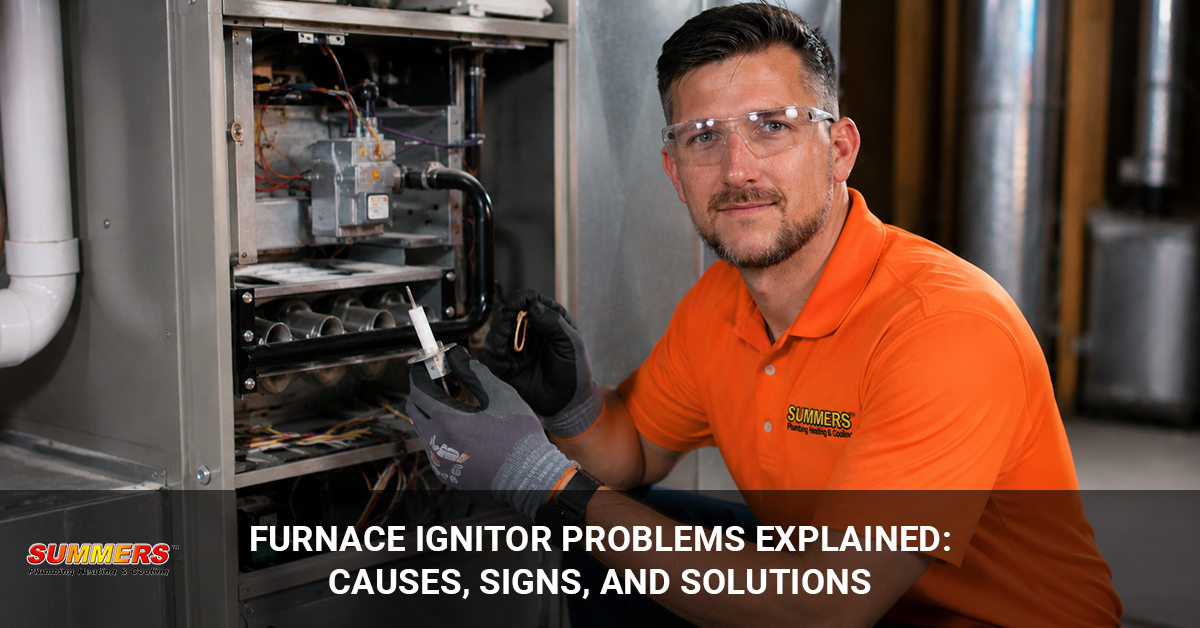
A faulty furnace ignitor is one of the most common reasons a gas furnace won’t heat your home. If your furnace won’t ignite, blows cold air, or keeps trying to start without producing heat, the ignitor or another part of the ignition system may be failing. Identifying the problem early can help you avoid an unexpected breakdown and more expensive repairs.
Modern gas furnaces use an electronic ignitor instead of a standing pilot light to light the burners. Every time your thermostat calls for heat, the ignitor starts the ignition process that allows your furnace to produce warm air. Like any mechanical component, however, an ignitor wears out over time and can eventually fail.
In this guide, you’ll learn how a furnace ignitor works, the most common signs of ignitor problems, what causes them, how they’re repaired, and when it’s time to call an HVAC professional.
What Is a Furnace Ignitor?
A furnace ignitor is the component that lights the gas burners so your furnace can produce heat. Every time your thermostat calls for heat, the ignitor starts the ignition process that allows your heating system to warm your home. If the ignitor fails, the burners won’t light, and your furnace won’t produce warm air.
Older gas furnaces relied on a standing pilot light that burned continuously. Today, most modern furnaces use electronic ignition systems because they’re safer, more energy-efficient, and more reliable.
There are two main types of furnace ignitors used in residential gas furnaces.
Hot Surface Ignitor (HSI)
A hot surface ignitor (HSI) is the most common type of furnace ignitor found in modern heating systems. When your thermostat calls for heat, the ignitor heats to an extremely high temperature until it glows bright orange. Once it’s hot enough, the gas valve opens, and the burners ignite.
Hot surface ignitors are highly efficient, but they’re also fragile. They’re typically made from materials like silicon carbide or silicon nitride, which can crack from normal wear, repeated heating cycles, or improper handling.
Most hot surface ignitors last 3 to 7 years, depending on how often your furnace runs and how well it’s maintained.
Intermittent Pilot Ignitor
An intermittent pilot ignitor uses an electrical spark to light the burners instead of a heated ceramic element. When the furnace starts, the spark ignites a small pilot flame, which then lights the main gas burners.
Although intermittent pilot systems are generally reliable, they can still develop ignition problems caused by dirty components, worn electrodes, or electrical faults. Regular furnace maintenance helps keep the ignition system working safely and efficiently.
How Does a Furnace Ignitor Work?
A furnace ignitor works by lighting the gas burners after your furnace completes a series of safety checks. Every step in the ignition sequence must happen in the correct order before your furnace can safely produce warm air.
Here’s how the process works:
1. The Thermostat Calls for Heat
When the temperature in your home drops below the thermostat setting, the thermostat signals the furnace to begin a heating cycle.
2. The Inducer Motor Starts
The inducer motor turns on first to remove combustion gases from the heat exchanger. This creates the proper airflow needed for safe operation.
3. The Pressure Switch Confirms Safe Airflow
The pressure switch checks that the inducer motor is working correctly. If it doesn’t detect proper airflow, the furnace stops the ignition process to prevent unsafe operation.
4. The Ignitor Activates
Once the safety checks are complete, the ignitor turns on.
Depending on your furnace, it will either:
- Heat until it glows bright orange (hot surface ignitor), or
- Produce an electrical spark (intermittent pilot ignitor).
5. The Gas Valve Opens
After the ignitor reaches the correct temperature or creates a spark, the control board opens the gas valve, allowing natural gas to flow to the burners.
6. The Burners Ignite
The ignitor lights the gas, creating stable flames that heat the furnace’s heat exchanger.
7. The Flame Sensor Verifies the Flame
The flame sensor confirms that the burners have ignited successfully. If it doesn’t detect a flame, the furnace immediately shuts off the gas supply as a safety precaution.
8. The Blower Motor Circulates Warm Air
Once the heat exchanger reaches the proper temperature, the blower motor starts and pushes warm air through your ductwork and into your home.
If any part of this ignition sequence fails, your furnace may not produce heat or may shut down automatically to protect your home and the heating system.
1. Furnace Won’t Ignite
A furnace that won’t ignite usually means there’s a problem with the ignition system. If your thermostat is calling for heat but the burners never light, your furnace won’t be able to produce warm air.
You may notice one or more of these symptoms:
- The blower runs, but only cold air comes from the vents.
- The furnace tries to start several times.
- The burners never ignite.
- The system shuts down after repeated startup attempts.
Several issues can prevent your furnace from igniting, including:
- A failed hot surface ignitor
- A damaged intermittent pilot ignitor
- A faulty gas valve
- No gas supply
- Electrical or ignition control problems
Because multiple components work together during the ignition process, it’s often difficult to determine the exact cause without professional testing. If your furnace repeatedly fails to ignite, schedule an inspection before the problem leads to a complete heating failure.
A failed ignitor is only one of several issues that can prevent your heating system from working. Learn about other common furnace problems that homeowners experience during the heating season.
2. The Ignitor Doesn’t Glow
A furnace ignitor that doesn’t glow can’t light the gas burners, preventing your furnace from producing heat. A hot surface ignitor should glow bright orange just before ignition. If it stays dark, the ignitor or another part of the ignition system may have failed.
Common causes include:
- A burned-out ignitor
- Loose or damaged electrical connections
- Faulty wiring
- Insufficient voltage reaching the ignitor
- An ignition control problem
Some furnaces have an inspection window that allows you to see whether the ignitor glows during startup. If it never glows, avoid working on electrical components yourself. Turn off the furnace and have a licensed HVAC technician inspect the ignition system to identify the cause safely.
3. A Cracked or Broken Hot Surface Ignitor
A cracked or broken hot surface ignitor must be replaced because it can no longer generate enough heat to ignite the gas burners. Even a small crack can prevent your furnace from starting properly.
Hot surface ignitors are made from fragile ceramic materials, so they can become damaged due to:
- Normal wear and aging
- Improper handling during maintenance
- Dirt or oil left on the ignitor surface
- Repeated heating and cooling cycles
If you notice visible cracks, chips, or broken pieces on the ignitor, it has reached the end of its service life and should be replaced.
Because replacement ignitors are delicate and must match your furnace’s specifications, it’s best to have a licensed HVAC technician install the correct manufacturer-approved part.
4. The Ignitor Glows but the Burners Don’t Light
If the ignitor glows but the burners don’t light, the ignitor is probably working, and the problem is likely elsewhere in the ignition system. In many cases, the furnace isn’t receiving enough gas, or another component is preventing the burners from igniting.
Possible causes include:
- A faulty gas valve
- A closed gas supply valve
- Dirty or clogged burners
- Low gas pressure
- An ignition control problem
Because this issue may involve both the gas supply and electrical components, professional testing is usually required to identify the exact cause safely.
If your ignitor glows but the burners fail to ignite after several attempts, avoid repeatedly resetting the furnace. Multiple failed ignition attempts can put extra strain on the ignition system and may eventually cause the furnace to enter safety lockout mode.
5. The Furnace Starts but Shuts Off Quickly
If your furnace starts but shuts off after a few minutes, it’s usually experiencing an ignition or flame detection problem. As a safety measure, the furnace stops operating when it can’t confirm that the burners are working correctly.
Common signs include:
- The burners ignite briefly and then go out.
- The blower runs for a short time before stopping.
- The furnace repeatedly tries to restart.
- Your home never reaches the thermostat setting.
Several issues can cause this problem, including:
- A dirty or faulty flame sensor
- A weak or failing ignitor
- Poor burner flame
- Gas supply problems
- An ignition control problem
A dirty flame sensor is one of the most common causes of this issue. Since several components can produce similar symptoms, a professional inspection is the best way to identify the exact problem and restore reliable heating.
6. You Hear a Loud “Whoosh” When the Furnace Starts
A loud “whoosh,” bang, or popping sound when your furnace starts is usually caused by delayed ignition. Instead of igniting immediately, gas builds up inside the burner compartment before lighting all at once, creating a loud ignition noise.
Delayed ignition can be caused by:
- Dirty or clogged burners
- A weak hot surface ignitor
- Improper gas pressure
- A delayed gas valve opening
- Misaligned burners
This problem should never be ignored. Repeated delayed ignition can damage the heat exchanger and place extra stress on other furnace components.
If your furnace makes a loud ignition noise every time it starts, turn the system off and schedule a professional inspection as soon as possible to prevent further damage and ensure safe operation.
7. The Furnace Keeps Trying to Ignite
If your furnace keeps trying to ignite but never produces heat, the ignition system isn’t completing the startup process. The furnace will make several ignition attempts before shutting down as a safety precaution.
Common signs include:
- Clicking sounds every few seconds
- The ignitor is glowing repeatedly
- The burners are lighting briefly or not staying lit
- The furnace restarted several times before shutting down
Several problems can cause repeated ignition attempts, including:
- A failing ignitor
- Dirty or clogged burners
- Gas supply problems
- A dirty flame sensor
- An ignition control problem
Repeated failed ignition attempts put extra strain on the ignitor and other ignition components. If the problem isn’t repaired, your furnace may eventually enter safety lockout mode and stop trying to ignite altogether.
8. You Notice a Burning Smell Near the Furnace
A burning smell coming from your furnace should never be ignored, especially if it’s strong or doesn’t go away after a few minutes. While some odors are harmless, others can indicate a serious electrical or mechanical problem.
A light burning smell during the first heating cycle of the season is usually normal. It’s often caused by dust burning off the heat exchanger after the furnace has been unused for several months.
However, a strong or persistent burning odor may be caused by:
- Overheated electrical wiring
- A failing blower motor
- A damaged capacitor
- Melting plastic components
- An electrical short
If the burning smell continues, becomes stronger, or is accompanied by smoke, turn off your furnace immediately and contact a licensed HVAC technician. Prompt service can help prevent equipment damage and reduce potential safety risks.
9. The Ignitor Has Visible Damage
Visible damage to a furnace ignitor usually means it needs to be replaced. A hot surface ignitor must be in good condition to generate enough heat to ignite the gas burners, and even minor damage can prevent your furnace from starting.
Look for signs such as:
- Cracks
- Chips
- Burn marks
- White or gray discoloration
- Broken ceramic material
Even a hairline crack can keep the ignitor from reaching the temperature needed to light the burners. Because hot surface ignitors are made from fragile ceramic materials, they can become damaged through normal wear, repeated heating cycles, or improper handling.
If you notice any visible damage, avoid touching the ignitor or attempting to repair it yourself. A licensed HVAC technician can replace it with the correct manufacturer-approved part and inspect the rest of the ignition system for related issues.
10. The Furnace Goes Into Lockout Mode
A furnace enters lockout mode after repeated failed ignition attempts to protect your home and the heating system. This built-in safety feature temporarily stops the furnace from trying to ignite until the problem is corrected or the system is reset.
Common signs of lockout mode include:
- The furnace doesn’t respond to the thermostat.
- Flashing diagnostic or error codes.
- No ignition attempts.
- No heat even though the furnace has power.
Lockout mode is usually triggered by another problem within the ignition system, such as:
- A failed ignitor
- A dirty flame sensor
- Gas supply problems
- A faulty pressure switch
- An ignition control problem
Avoid repeatedly resetting your furnace if it continues entering lockout mode. The underlying issue won’t go away on its own, and repeated reset attempts may place additional stress on the ignition system. A professional inspection can identify the root cause and restore safe, reliable operation.
What Causes Furnace Ignitor Problems?
Furnace ignitor problems are most often caused by normal wear, electrical issues, poor maintenance, or other faults within the ignition system. Identifying the underlying cause helps prevent repeated breakdowns and ensures the right repair is made the first time.
Normal Wear and Age
Normal wear is the most common reason a furnace ignitor fails. Every heating cycle exposes the ignitor to extremely high temperatures, causing the material to weaken over time.
Most hot surface ignitors last 3 to 7 years, although their lifespan depends on how often your furnace runs and how well it’s maintained.
Dirt and Dust Buildup
Dust and dirt can interfere with the ignition process by covering the ignitor or clogging the burners. This can make it harder for the furnace to ignite properly and reduce overall heating performance.
Regular furnace maintenance helps keep these components clean and working efficiently.
Power Surges
Power surges can damage the sensitive electronic components that control your furnace’s ignition system.
A surge may affect:
- The hot surface ignitor
- The control board
- The ignition module
If your home experiences frequent electrical surges, installing a whole-home surge protector may help protect your HVAC equipment.
Loose or Damaged Wiring
Loose or damaged wiring can interrupt the electrical power needed for the ignitor to operate correctly. Even a small wiring problem can prevent your furnace from completing the ignition sequence.
Common signs include:
- Intermittent heating
- Random ignition failures
- The furnace shutting off unexpectedly
Electrical repairs should always be handled by a licensed HVAC technician.
Moisture Inside the Furnace
Moisture inside the furnace can damage the ignitor and other electrical components. Water from condensation, plumbing leaks, or a whole-home humidifier can corrode electrical connections and shorten the life of the ignition system.
If you notice signs of water inside your furnace, have the source of the moisture repaired as soon as possible.
Improper Voltage
A hot surface ignitor needs the correct voltage to operate safely and reliably. Low voltage may prevent the ignitor from heating enough to light the burners, while excessive voltage can shorten its lifespan.
A technician can test the electrical supply and determine whether a voltage problem is affecting your furnace.
Dirty Burners
Dirty or clogged burners can prevent the gas from igniting evenly. This may cause delayed ignition, poor burner performance, or repeated ignition failures.
Keeping the burners clean during annual maintenance helps your furnace ignite smoothly and reduces unnecessary strain on the ignition system.
Flame Sensor Problems
A dirty or faulty flame sensor can cause your furnace to shut off shortly after the burners ignite. If the flame sensor can’t detect the burner flame, the furnace automatically closes the gas valve as a safety precaution.
Cleaning the flame sensor is a routine maintenance task that can often prevent unnecessary ignition problems.
Control Board Failure
The control board manages the entire ignition sequence, including when the ignitor heats up and when the gas valve opens. If the control board fails, the furnace may not ignite or may shut down unexpectedly.
Because control board problems require specialized testing, diagnosis and replacement should be performed by a qualified HVAC technician.
Lack of Routine Maintenance
Skipping annual furnace maintenance increases the risk of ignitor problems and other heating system failures. Regular inspections help identify worn or damaged parts before they lead to a breakdown.
During a typical furnace tune-up, an HVAC technician will:
- Inspect the ignitor
- Clean the burners
- Test the flame sensor
- Check electrical connections
- Verify safe furnace operation
Routine maintenance improves reliability, extends the life of your furnace, and helps reduce the chances of unexpected heating problems during the winter.
Can You Test a Furnace Ignitor Yourself?
Yes, you can perform a few basic checks yourself, but testing or replacing a furnace ignitor is best left to a licensed HVAC technician. Most ignition problems involve electrical components or the gas supply, which require specialized tools and training to diagnose safely.
Safe DIY Checks
Before scheduling a repair, try these simple troubleshooting steps:
- Make sure the thermostat is set to Heat, and the temperature is higher than the current room temperature.
- Check that the furnace power switch is turned on.
- Verify the circuit breaker hasn’t tripped.
- Replace a dirty furnace air filter.
- Look for flashing error codes on the furnace’s control board and check your owner’s manual for their meaning.
- If your furnace has an inspection window, see whether the hot surface ignitor glows during startup. Do not remove access panels or touch internal components while the furnace is operating.
These checks can help rule out simple problems, but they won’t confirm whether the ignitor has failed.
Don’t Attempt These Repairs Yourself
Repairs involving electricity, natural gas, or furnace controls should always be handled by a qualified HVAC technician.
Call a professional for:
- Furnace ignitor replacement
- Electrical troubleshooting
- Gas valve repairs
- Flame sensor testing or replacement
- Control board diagnostics
- Wiring repairs
Attempting these repairs without the proper tools or experience can damage your furnace, void the manufacturer’s warranty, and create serious safety hazards. A licensed HVAC technician can accurately diagnose the problem and ensure your furnace is repaired safely and operates reliably.
How Much Does a Furnace Ignitor Replacement Cost?
Replacing a furnace ignitor typically costs $150 to $350, making it one of the more affordable furnace repairs. The total price depends on your furnace model, the type of ignitor, labor costs, and whether additional repairs are needed.
| Service | Typical Cost |
| Diagnostic service call | $80–$200 |
| Furnace ignitor replacement | $150–$350 |
| Emergency or after-hours repair | Higher than standard rates |
| Additional ignition system repairs | Varies by the failed component |
If your furnace is older and continues requiring repairs, comparing whether to repair or replace your furnace can help you make the most cost-effective long-term decision.
Several factors can affect the final cost, including:
- The brand and model of your furnace
- The type of ignitor your system uses
- Local labor rates
- Whether the repair is covered by a warranty
- If other ignition system components also need replacement
Replacing a failing ignitor as soon as the problem is identified is usually much less expensive than waiting for additional components to fail. Prompt repairs can also help restore reliable heating and reduce the risk of a complete furnace breakdown.
Can You Replace a Furnace Ignitor Yourself?
Replacing a furnace ignitor is possible, but it’s not recommended unless you have experience working on gas furnaces. Hot surface ignitors are extremely fragile, and even a minor installation mistake can damage the new part or prevent your furnace from operating safely.
Some of the risks of replacing a furnace ignitor yourself include:
- Cracking the new ignitor during installation
- Installing the wrong replacement part
- Damaging electrical connections
- Creating unsafe furnace operation
- Voiding the manufacturer’s warranty
If your furnace ignitor has failed, hiring a licensed HVAC technician is usually the safest and most reliable option. A technician can install the correct manufacturer-approved ignitor, inspect the rest of the ignition system, and verify that your furnace is operating safely before restoring heat to your home.
How to Prevent Furnace Ignitor Problems
Regular furnace maintenance is the best way to prevent furnace ignitor problems and reduce the risk of unexpected heating repairs. While no ignitor lasts forever, proper care can extend its lifespan and help your furnace operate safely and efficiently.
Replace the Air Filter Regularly
A clean air filter allows air to flow freely through your furnace, reducing strain on the ignition system and other components. Replace disposable filters or clean reusable ones according to the manufacturer’s recommendations, typically every 1–3 months during the heating season.
Schedule Annual Furnace Maintenance
Have your furnace professionally inspected and tuned up every year before cold weather arrives. Annual maintenance helps identify worn parts early and keeps the ignition system working properly.
During a typical furnace tune-up, an HVAC technician will:
- Inspect the furnace ignitor
- Clean the burners
- Test the flame sensor
- Check electrical connections
- Inspect the heat exchanger
- Verify safe furnace operation
Routine maintenance can reduce the likelihood of unexpected breakdowns and improve your furnace’s efficiency.
Keep the Furnace Clean
Dust, dirt, and debris can interfere with the ignition process and reduce your furnace’s performance. Keep the area around your furnace clean and avoid storing boxes, chemicals, or other items that could block airflow or create safety hazards.
Don’t Ignore Ignition Problems
Small ignition problems often become larger and more expensive repairs if they’re ignored. If your furnace struggles to ignite, makes unusual noises, or repeatedly shuts off, schedule service as soon as possible.
Address Electrical Problems Promptly
Loose wiring, voltage fluctuations, and failing electrical components can shorten the life of your furnace ignitor. Having electrical problems repaired early can help protect the ignition system and prevent additional damage.
With regular maintenance and prompt repairs, you can improve your furnace’s reliability, extend the life of the ignitor, and reduce the chances of losing heat during the winter.
When Should You Call an HVAC Professional?
You should call an HVAC professional if your furnace won’t produce heat or continues having ignition problems after basic troubleshooting. Many furnace ignition issues involve electrical components, gas controls, or safety systems that require specialized tools and training to diagnose and repair safely.
Schedule professional service if:
- The ignitor doesn’t glow during startup.
- Your furnace won’t ignite.
- The burners light but quickly shut off.
- You hear loud banging, popping, or delayed ignition.
- The furnace repeatedly enters lockout mode.
- You smell natural gas or a strong burning odor.
- Your furnace blows cold air instead of warm air.
- Diagnostic or error codes continue to appear.
- The ignitor is visibly cracked or damaged.
Ignoring these warning signs can lead to more expensive repairs, lower heating efficiency, and even a complete furnace breakdown. If you’re unsure what’s causing the problem, it’s always safer to have your furnace inspected early. Prompt repairs can restore reliable heat, improve your system’s performance, and help prevent unexpected heating failures during the coldest months of the year.