
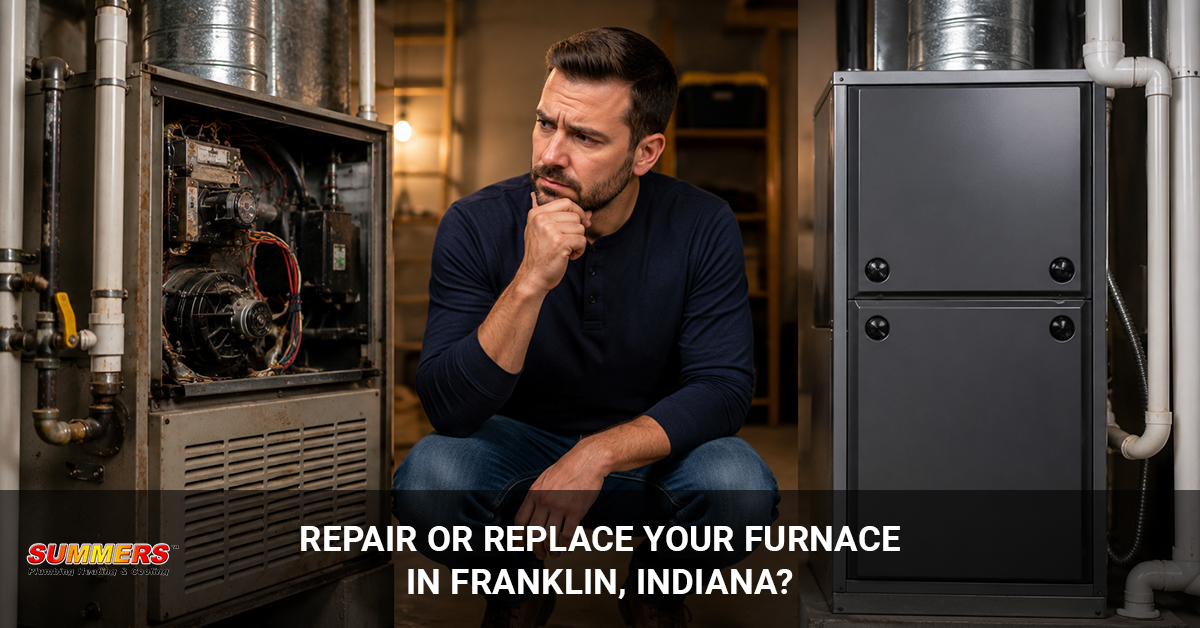
Repair or Replace Your Furnace in Franklin, Indiana?
The best choice depends on your furnace’s age, condition, repair costs, and overall performance. In most cases, repairing a newer furnace makes sense, while replacing an older furnace is often the smarter long-term investment.
If your furnace stops working or starts having problems during a Franklin winter, one of the first questions you’ll face is whether to repair it or replace it. The answer isn’t always simple. While repairs usually cost less upfront, continuing to invest in an aging system can become expensive over time.
A furnace that is only a few years old may need a simple repair to get back to normal. However, if your furnace is more than 15 years old, breaking down frequently, or causing higher energy bills, replacement may provide better value and fewer headaches in the future.
The goal is to look beyond the immediate repair bill and consider the bigger picture. Factors such as the age of the system, energy efficiency, repair history, and the cost of major components can all help determine the right decision.
In this guide, you’ll learn when repairing a furnace makes sense, when replacement is the better option, how much each option typically costs, and the key warning signs that homeowners in Franklin should never ignore.
Should You Repair or Replace Your Furnace?
You should repair your furnace if the system is relatively new, the repair is affordable, and it has been dependable over the years. You should consider replacing your furnace if it’s older, less efficient, and starting to need frequent repairs.
There isn’t a one-size-fits-all answer. The right choice depends on the condition of your furnace and how much money you’re likely to spend on it moving forward. While a repair may solve the immediate problem, it may not always be the most cost-effective solution if the system is nearing the end of its lifespan.
Before deciding whether to repair or replace your furnace, consider these key factors:
- The age of the furnace
- The cost of the repair
- How often the system breaks down
- Current energy efficiency
- Overall system condition
For example, if your furnace is only eight years old and needs a minor repair, fixing it is usually the best option. However, if it’s 18 years old, has required multiple repairs in recent years, and struggles to heat your home efficiently, replacement may provide better long-term value.
It’s also important to compare the repair cost to the cost of a new furnace. Spending a large amount on an aging system may not make sense if another major component could fail soon after.
In general:
- Repair your furnace if it’s under 10 years old, has a good maintenance history, and the repair cost is reasonable.
- Replace your furnace if it’s over 15 years old, frequently breaks down, or requires a costly major repair.
A professional HVAC inspection can help you understand the condition of your system and determine which option makes the most financial sense for your Franklin home.
When Does Furnace Repair Make Sense?
Furnace repair makes sense when the system is relatively new, the problem is minor, and the furnace has been operating reliably. In these situations, repairing the unit is usually the most cost-effective option and can help you get many more years of service from your heating system.
Replacing a furnace is a major investment, so it’s important not to assume replacement is necessary every time a problem occurs. Many common furnace issues can be repaired quickly and affordably, especially when the system is still in good overall condition.
Your Furnace Is Less Than 10 Years Old
If your furnace is less than 10 years old, repairing it is usually the better choice. Most modern furnaces are built to last between 15 and 20 years, which means a well-maintained system still has plenty of useful life remaining.
A newer furnace is more likely to:
- Operate efficiently
- Have readily available replacement parts
- Be covered by a manufacturer warranty
- Provide reliable performance after repairs
Unless the repair is unusually expensive, fixing a newer furnace is often the smartest financial decision.
The Repair Is Minor
Minor repairs are usually much less expensive than replacing the entire furnace. If the issue involves a small component and the rest of the system is in good condition, repair is typically the best option.
Common furnace repairs include:
- Ignitor replacement
- Flame sensor cleaning or replacement
- Thermostat replacement
- Electrical repairs
- Minor blower motor repairs
- Capacitor replacement
These repairs can often restore normal operation without requiring a major investment.
Your Furnace Has Been Reliable
If your furnace has a strong track record and rarely needs repairs, fixing a single issue usually makes sense. A dependable system that has provided years of trouble-free service is often worth repairing when a minor problem develops.
Ask yourself:
- Has the furnace been reliable until now?
- Is this the first major repair?
- Has the system been maintained regularly?
If the answer is yes, a repair is often the most practical solution.
The System Is Still Under Warranty
If your furnace is still covered by a manufacturer warranty, repair costs may be significantly lower. Many warranties cover replacement parts, leaving homeowners responsible only for labor and service fees.
Warranty coverage can make repairs much more affordable, especially for newer systems.
Before approving a repair, check:
- Whether the warranty is still active
- Which parts are covered
- Whether registration requirements were completed
- Any labor warranty provided by the installer
Repairing Can Save Money When the Conditions Are Right
In many cases, repairing a furnace can extend its lifespan and delay the need for a costly replacement. If your furnace is relatively new, the repair is minor, and the system has been reliable, repair is often the most economical choice.
A qualified HVAC technician can inspect the furnace, identify the problem, and help you determine whether a repair is the best investment for your Franklin home.
Signs It’s Time to Replace Your Furnace
It’s usually time to replace your furnace when repairs are becoming more frequent, energy bills keep rising, and the system can no longer heat your home efficiently. While most furnaces can be repaired at some point, there comes a time when replacement offers better value and reliability.
An older furnace often becomes more expensive to own as parts wear out and efficiency declines. If you’re spending more money on repairs and heating costs every year, investing in a new system may save you money in the long run.
Your Furnace Is More Than 15 Years Old
If your furnace is over 15 years old, replacement may be worth considering, especially if it’s experiencing performance issues. Most furnaces have an average lifespan of 15 to 20 years, and breakdowns become more common as they age.
Older furnaces often:
- Use more energy
- Require more repairs
- Heat less efficiently
- Struggle to maintain consistent temperatures
Even if the furnace is still operating, age alone can make replacement a smart long-term investment.
Repairs Are Becoming More Frequent
If you’re calling for furnace repairs every heating season, your system may be reaching the end of its useful life. Frequent repairs not only add up financially but also indicate that multiple components are beginning to wear out.
Common signs include:
- Multiple service calls each year
- Repeated repairs for different components
- Unexpected breakdowns during winter
- Increasing repair costs
At some point, continuing to repair an aging furnace may cost more than replacing it.
Energy Bills Continue to Increase
A steady increase in heating costs is often a sign that your furnace is losing efficiency. As internal components wear out, the system must work harder and run longer to produce the same amount of heat.
You may notice:
- Higher monthly utility bills
- Longer heating cycles
- Reduced comfort despite increased energy use
A new high-efficiency furnace can often reduce energy consumption and lower heating costs.
Major Components Have Failed
When a major furnace component fails, replacement may be more practical than repair, especially if the furnace is older.
Examples of costly repairs include:
- Heat exchanger replacement
- Control board replacement
- Draft inducer motor replacement
- Blower motor replacement
These repairs can cost hundreds or even thousands of dollars. If the furnace is nearing the end of its lifespan, investing that money in a new system may provide better long-term value.
Your Home Has Uneven Heating
If some rooms are too warm while others stay cold, your furnace may no longer be able to distribute heat effectively. Uneven heating is a common problem with older systems and often becomes worse over time.
You may notice:
- Hot and cold spots throughout the home
- Rooms that never reach the desired temperature
- Weak airflow from vents
- Longer heating cycles
A newer furnace can provide more consistent temperatures, improved airflow, and better overall comfort.
Replacement Can Save Money Over Time
Although replacing a furnace requires a larger upfront investment, it can often reduce long-term expenses. New systems are more energy-efficient, require fewer repairs, and provide more reliable heating during Franklin’s cold winter months.
If your furnace is showing several of these warning signs, a professional HVAC evaluation can help you determine whether replacement is the best option for your home.
How Old Is Too Old for a Furnace?
A furnace is generally considered old once it reaches 15 to 20 years of age. While some systems can continue operating beyond that point, older furnaces often become less efficient, less reliable, and more expensive to maintain.
Age alone doesn’t automatically mean you need a new furnace. However, if an older system starts experiencing frequent repairs, higher energy bills, or performance issues, replacement may be the more cost-effective option.
When evaluating an aging furnace, it’s important to consider both its age and its overall condition.
Average Furnace Lifespan
Most furnaces are designed to provide many years of reliable service when properly maintained.
Typical furnace lifespans include:
| Furnace Type | Average Lifespan |
| Gas Furnace | 15–20 Years |
| Electric Furnace | 20–30 Years |
| High-Efficiency Furnace | 15–20 Years |
These are general estimates. Some furnaces may last longer, while others may require replacement sooner depending on maintenance and usage.
Factors That Affect Furnace Longevity
Several factors can influence how long your furnace lasts. A well-maintained furnace often outlasts a neglected one by several years.
Key factors include:
- Maintenance history
- Quality of installation
- Frequency of use
- Air filter replacement schedule
- Indoor air quality
- Climate conditions
- Repair history
Regular tune-ups and routine maintenance can help maximize the lifespan of your heating system.
Warning Signs of an Aging Furnace
As furnaces get older, they typically become less efficient and more prone to breakdowns. Many homeowners notice changes in performance long before the system completely fails.
Common warning signs include:
- Frequent repairs
- Strange noises during operation
- Weak airflow from vents
- Rising heating bills
- Uneven or inconsistent heating
- Longer heating cycles
- Difficulty maintaining thermostat settings
If your furnace is showing several of these symptoms, it may be approaching the end of its useful life.
Age Plus Repair Costs Should Guide Your Decision
The age of the furnace should always be considered alongside the cost of repairs. Spending a few hundred dollars on a repair may make sense for a 10-year-old furnace. Spending thousands on a major repair for a 20-year-old system often does not.
As a general rule:
- Under 10 years old: Repair is usually the better option.
- 10–15 years old: Compare repair costs, efficiency, and overall condition.
- Over 15 years old: Carefully evaluate whether replacement offers better long-term value.
If you’re unsure whether your furnace is too old to justify repairs, a professional HVAC inspection can help you understand the condition of the system and make an informed decision for your Franklin home.
The 50% Rule for Furnace Repairs
The 50% rule suggests that you should seriously consider replacing your furnace when a repair costs 50% or more of the price of a new system. While it’s not a strict rule, it can be a helpful guideline when deciding whether it’s worth investing more money into an aging furnace.
For example, if a new furnace installation costs around $8,000 and the repair estimate is $4,000 or more, replacement may offer better long-term value than repairing the existing system.
The reason is simple: spending a large amount on an older furnace doesn’t guarantee that another component won’t fail in the near future.
Why the 50% Rule Matters
The 50% rule helps homeowners make a practical financial decision instead of focusing only on the immediate repair cost. A major repair may get the furnace running again, but it doesn’t reset the age of the system or improve its efficiency.
This rule can help you avoid:
- Investing heavily in an aging furnace
- Paying for multiple expensive repairs over a short period
- Continuing to operate an inefficient system
- Facing another breakdown soon after a major repair
When a furnace is already nearing the end of its lifespan, replacement often provides more value for the money spent.
When Replacement Becomes More Cost-Effective
In many situations, replacing the furnace can save money over time by reducing repair costs and lowering energy bills.
Replacement often makes more sense when:
- Major components have failed
- Repair costs continue to increase
- The furnace is 15 years old or older
- Energy efficiency has declined significantly
- The system struggles to heat the home evenly
- Frequent breakdowns are becoming common
For example, replacing a heat exchanger, blower motor, or control board on an older furnace can be expensive. If additional repairs are likely in the future, investing that money toward a new furnace may be the smarter choice.
Don’t Use the 50% Rule by Itself
The 50% rule is a useful starting point, but it shouldn’t be the only factor in your decision. You should also consider:
- The age of the furnace
- Its repair history
- Current energy costs
- Warranty coverage
- Overall system condition
A 16-year-old furnace with a $3,500 repair estimate may be a strong candidate for replacement. A 7-year-old furnace with the same repair cost may still be worth fixing if it’s otherwise in good condition.
Think About Long-Term Value
The goal isn’t simply to spend the least amount of money today. The goal is to make the decision that provides the best value over the next several years.
A new furnace can offer:
- Lower heating bills
- Improved comfort
- Better energy efficiency
- Fewer repair costs
- Greater reliability
If your repair estimate is approaching 50% of the replacement cost, it’s a good idea to compare both options carefully before making a final decision. A qualified HVAC professional can help you evaluate the numbers and determine which choice makes the most sense for your Franklin home.
Common Furnace Repairs and Their Costs
Most furnace repairs cost between $75 and $2,000+, depending on the component that needs to be repaired or replaced. Understanding typical repair costs can help you determine whether repairing your furnace makes sense or if replacement may be the better investment.
Some repairs involve inexpensive parts and minimal labor, while others require major components that can significantly increase the final bill. The age of the furnace, availability of parts, and labor rates can also affect repair costs.
Below are the most common furnace repairs homeowners encounter.
| Repair Type | Typical Cost |
| Flame Sensor Cleaning or Replacement | $75–$250 |
| Ignitor Replacement | $150–$300 |
| Thermostat Replacement | $150–$500 |
| Control Board Replacement | $275–$770 |
| Blower Motor Repair | $300–$900 |
| Draft Inducer Motor Replacement | $725–$1,500 |
| Heat Exchanger Replacement | $500–$2,000+ |
Flame Sensor Cleaning or Replacement
The flame sensor is a safety device that confirms the burners have ignited properly. When it becomes dirty or fails, the furnace may shut down shortly after starting.
This is usually one of the least expensive furnace repairs and can often be resolved with a simple cleaning.
Ignitor Replacement
Modern gas furnaces use an electronic ignitor to light the burners. If the ignitor fails, the furnace won’t be able to produce heat.
Common symptoms include:
- Furnace won’t start
- No heat production
- Repeated startup failures
Ignitor replacement is typically considered a minor repair.
Thermostat Replacement
Sometimes the problem isn’t the furnace itself but the thermostat controlling it. A faulty thermostat can cause uneven temperatures, short cycling, or a complete loss of heat.
Costs vary depending on the type of thermostat being installed. Smart thermostats generally cost more than standard models.
Control Board Replacement
The control board acts as the brain of the furnace. It manages communication between the thermostat, ignition system, blower motor, and other components.
When the control board fails, you may experience:
- Intermittent operation
- Error codes
- Startup problems
- Complete system shutdown
Control board repairs are more expensive than many common furnace repairs.
Blower Motor Repair
The blower motor is responsible for moving heated air throughout your home. When it begins to fail, comfort and efficiency can suffer.
Common signs include:
- Weak airflow
- Strange noises
- Uneven heating
- Longer heating cycles
Depending on the severity of the issue, repair or replacement costs can vary significantly.
Draft Inducer Motor Replacement
The draft inducer helps remove combustion gases safely from the furnace. Because this repair often involves both parts and labor, costs can be relatively high.
A failing draft inducer may cause:
- Unusual noises
- Ignition problems
- System shutdowns
Heat Exchanger Replacement
The heat exchanger is one of the most important and expensive furnace components. Cracks or failures can create serious safety concerns and often require immediate attention.
In many cases, homeowners choose to replace the furnace instead of replacing the heat exchanger, especially if the system is older.
When Repair Costs Start Adding Up
One repair alone doesn’t necessarily mean you need a new furnace. However, if multiple components are failing at the same time, repair costs can quickly approach the cost of replacement.
You should consider replacement if:
- Multiple major repairs are needed
- Repair costs continue increasing each year
- The furnace is more than 15 years old
- Energy efficiency has declined significantly
A professional HVAC technician can help you compare repair costs with replacement costs and determine which option offers the best long-term value for your Franklin home.
How Much Does Furnace Replacement Cost in Franklin, Indiana?
Most homeowners in Franklin, Indiana, can expect to pay between $4,500 and $12,000+ for a new furnace installation. Understanding current furnace replacement costs in Franklin can help homeowners compare repair expenses against the investment in a new heating system.
The final cost depends on the type of furnace, efficiency rating, installation requirements, and any upgrades needed during the project.
While replacing a furnace requires a larger upfront investment than a repair, a new system can provide lower energy bills, improved comfort, and fewer repair expenses over the long term.
Average Furnace Replacement Cost
The price of a furnace replacement can vary significantly based on the equipment and installation complexity.
Here’s a general cost breakdown:
| Furnace Type | Typical Installed Cost |
| Basic Gas Furnace | $4,500–$7,000 |
| Mid-Efficiency Gas Furnace | $6,000–$9,000 |
| High-Efficiency Gas Furnace | $8,000–$12,000+ |
| Electric Furnace | $4,000–$8,000 |
These estimates typically include the furnace, labor, and standard installation materials.
Factors That Affect Installation Costs
Several factors influence the total cost of replacing a furnace. Some homes require a simple equipment swap, while others need additional modifications that increase the project cost.
Replacement costs often depend on:
- Furnace size and heating capacity
- Efficiency rating (AFUE)
- Furnace brand
- Labor costs
- Existing ductwork condition
- Venting requirements
- Installation complexity
- Permit and inspection requirements
Larger homes generally require larger furnaces, which increases equipment costs.
Furnace Cost by Efficiency Level
Higher-efficiency furnaces usually cost more upfront but can reduce monthly heating expenses. For many homeowners, the long-term energy savings help offset the higher installation cost.
Common efficiency ranges include:
| Efficiency Rating | Typical AFUE |
| Standard Efficiency | 80% AFUE |
| Mid-Efficiency | 90%–95% AFUE |
| High-Efficiency | 96%–98%+ AFUE |
A higher AFUE rating means more of the fuel consumed is converted into usable heat for your home.
Additional Installation Considerations
The furnace itself is only part of the total project cost. Depending on the condition of your existing HVAC system, additional upgrades may be recommended during installation.
Additional costs may include:
- Smart thermostat upgrades
- Ventilation improvements
- Ductwork repairs or modifications
- Air filtration systems
- Humidifiers
- Air purification accessories
- Gas line modifications
While these upgrades can increase the initial investment, they may improve comfort, efficiency, and indoor air quality.
Is Furnace Replacement Worth the Cost?
For many homeowners, replacing an older furnace is a worthwhile investment. A new system can provide:
- Lower heating bills
- Improved energy efficiency
- More reliable performance
- Better airflow and comfort
- Reduced repair costs
- Quieter operation
If your current furnace is more than 15 years old, requires frequent repairs, or struggles to heat your home efficiently, replacement may provide better value than continuing to invest in an aging system.
The best way to determine your replacement cost is to schedule a professional evaluation. An HVAC contractor can assess your home’s heating needs, recommend the right furnace size, and provide an accurate installation estimate.
Repair vs Replace: Cost Comparison
Repairing a furnace usually costs less upfront, but replacing an older furnace can often save more money over time. The right choice depends on the age of your system, the cost of the repair, and how much you’re currently spending on energy and maintenance.
Many homeowners focus on the immediate repair bill, but it’s important to look at the long-term cost of owning and operating the furnace. A repair may solve today’s problem, while a replacement may eliminate years of future repair expenses and reduce monthly heating costs.
Short-Term Costs
Repairs almost always cost less than a full furnace replacement in the short term. Depending on the issue, many common repairs can be completed for a few hundred dollars.
Typical repair costs may include:
- Ignitor replacement: $150–$300
- Flame sensor repair: $75–$250
- Thermostat replacement: $150–$500
- Blower motor repair: $300–$900
By comparison, a new furnace installation typically costs between $4,500 and $12,000+.
If your furnace is relatively new and the repair is minor, repairing the system is usually the most economical option.
Long-Term Savings
While replacement costs more upfront, it can significantly reduce future expenses. Older furnaces often require more frequent repairs and use more energy to heat the home.
A new furnace can help lower long-term costs by providing:
- Lower monthly energy bills
- Fewer repair expenses
- Improved system performance
- Reduced risk of emergency breakdowns
- Longer equipment lifespan
For homeowners planning to stay in their home for several years, these savings can add up over time.
Energy Efficiency Benefits
Modern furnaces are much more energy-efficient than older models. As furnaces age, they often lose efficiency and consume more fuel to produce the same amount of heat.
New high-efficiency furnaces can offer:
- Better fuel utilization
- Reduced energy waste
- Lower heating costs
- More consistent indoor temperatures
If your current furnace is more than 15 years old, upgrading to a newer model may significantly improve efficiency and reduce winter utility bills.
Reliability and Peace of Mind
One of the biggest advantages of replacing an aging furnace is reliability. Frequent repairs can be frustrating, especially when breakdowns occur during the coldest days of winter.
A new furnace provides:
- More dependable heating
- Fewer unexpected repairs
- Improved comfort
- Manufacturer warranty protection
- Greater confidence during cold weather
Many homeowners find that the peace of mind alone is worth the investment.
Which Option Offers the Best Value?
In general:
- Repairing is often the best choice for newer furnaces with minor problems.
- Replacing is usually the better investment for older furnaces with frequent breakdowns, high repair costs, or declining efficiency.
If you’re unsure which option makes the most sense, compare the repair estimate, the age of the furnace, and your expected future costs. A professional HVAC inspection can help you determine whether a repair will provide lasting value or if replacement is the smarter long-term decision for your Franklin home.
Benefits of Replacing an Old Furnace
Replacing an old furnace can lower energy costs, improve comfort, reduce repairs, and provide more reliable heating. While a new furnace requires an upfront investment, many homeowners find that the long-term benefits make replacement worthwhile.
Older furnaces often become less efficient over time. They may struggle to maintain comfortable temperatures, require frequent repairs, and consume more energy than newer models. Upgrading to a modern furnace can solve many of these problems while improving overall home comfort.
Lower Energy Bills
One of the biggest benefits of replacing an aging furnace is improved energy efficiency. Homeowners looking to reduce utility expenses can also explore additional ways to lower heating bills in Franklin throughout the winter season.
Modern furnaces are designed to convert more fuel into usable heat, which helps reduce energy waste.
A new furnace can help:
- Lower monthly heating costs
- Reduce energy consumption
- Improve overall efficiency
- Maintain temperatures more effectively
For many homeowners, the energy savings can help offset part of the installation cost over time.
Improved Comfort
A new furnace can make your home feel noticeably more comfortable. Older systems often struggle to maintain consistent temperatures, especially during periods of extreme cold.
Modern furnaces provide:
- More even heating throughout the home
- Better temperature control
- Stronger airflow
- Faster heating cycles
The result is a more comfortable living environment during the winter months.
Better Indoor Air Quality
Many newer heating systems offer improved airflow and compatibility with advanced filtration products. This can help reduce dust, allergens, and airborne particles inside your home.
Benefits may include:
- Cleaner indoor air
- Improved airflow
- Better humidity control
- Reduced dust accumulation
When paired with high-quality air filters, a new furnace can contribute to a healthier indoor environment.
Fewer Repairs
As furnaces age, repairs tend to become more frequent and more expensive. Replacing an older system can eliminate many of the recurring repair issues that homeowners face.
A new furnace typically offers:
- Greater reliability
- Fewer service calls
- Lower maintenance expenses
- Reduced risk of unexpected breakdowns
This can provide significant savings and reduce stress during the heating season.
Increased Home Value
An updated HVAC system can be an attractive feature for potential homebuyers. Many buyers appreciate knowing that they won’t need to replace a major home system shortly after moving in.
A newer furnace can add value by:
- Improving energy efficiency
- Increasing buyer confidence
- Enhancing home comfort
- Reducing future maintenance concerns
While a furnace replacement may not fully pay for itself in resale value, it can make your home more appealing in a competitive market.
Long-Term Benefits Often Outweigh the Initial Cost
Although replacing a furnace requires a larger investment than a repair, the long-term advantages can be substantial. Lower energy bills, improved comfort, fewer repairs, and better reliability often make replacement the smarter financial decision for homeowners with older heating systems.
If your furnace is more than 15 years old and showing signs of decline, upgrading to a new system may provide the comfort, efficiency, and peace of mind you’re looking for.
Warning Signs You Shouldn’t Ignore
Certain furnace problems should never be ignored because they can lead to higher repair costs, reduced efficiency, or a complete system breakdown. If you notice any of these warning signs, it’s a good idea to schedule a professional inspection as soon as possible.
Many furnace failures don’t happen suddenly. Many of these issues begin as common furnace problems that gradually worsen if they aren’t addressed early. The system often shows signs of trouble weeks or even months before it stops working completely. Recognizing these symptoms early can help you avoid emergency repairs and make informed decisions about whether to repair or replace your furnace.
Strange Noises
Unusual noises are often one of the first signs that something isn’t working properly inside the furnace. While some operational noise is normal, loud or sudden sounds usually indicate a mechanical issue.
Common sounds include:
- Banging
- Grinding
- Squealing
- Rattling
- Scraping
These noises may be caused by worn components, loose parts, blower motor issues, or ignition problems. If the sounds become more frequent or louder over time, professional service is recommended.
Weak Airflow
Weak airflow from your vents often means the furnace is struggling to move heated air throughout your home. This can reduce comfort and force the system to work harder than necessary.
Possible causes include:
- Dirty air filters
- Blower motor problems
- Blocked vents
- Leaky ductwork
- Airflow restrictions
If replacing the air filter doesn’t improve airflow, the system should be inspected.
Short Cycling
A furnace that turns on and off repeatedly without completing a normal heating cycle is known as short cycling. This issue can increase wear on components and shorten the lifespan of the system.
Short cycling may be caused by:
- Thermostat malfunctions
- Overheating
- Restricted airflow
- Improper furnace sizing
- Electrical issues
Ignoring short cycling can lead to larger and more expensive repairs.
Rising Utility Bills
A sudden increase in heating costs is often a sign that your furnace is losing efficiency. As components wear out, the system has to use more energy to maintain comfortable temperatures.
Higher utility bills may indicate:
- Dirty burners
- Airflow problems
- Aging components
- Reduced system efficiency
- Longer heating cycles
If your energy usage habits haven’t changed but your bills keep increasing, your furnace may need professional attention.
Frequent Breakdowns
If your furnace needs repairs every heating season, it may be nearing the end of its useful life. Frequent service calls often indicate that multiple components are wearing out.
Warning signs include:
- Repeated repair bills
- Multiple component failures
- Unexpected winter breakdowns
- Increasing maintenance costs
At some point, replacement may become more cost-effective than continuing to repair the system.
Yellow Pilot Light
A healthy gas furnace flame should burn blue. If the pilot light or burner flame appears yellow, orange, or flickers excessively, it may indicate a combustion or ventilation problem.
Potential causes include:
- Dirty burners
- Ventilation issues
- Improper combustion
- Airflow restrictions
Because combustion-related problems can affect both efficiency and safety, a yellow flame should be inspected promptly by a qualified HVAC professional.
Don’t Wait for a Complete Breakdown
The longer furnace problems are ignored, the more likely they are to become expensive repairs. Addressing warning signs early can help improve efficiency, extend equipment life, and reduce the risk of losing heat during Franklin’s cold winter months.
If your furnace is showing one or more of these symptoms, a professional inspection can identify the cause and help you determine the best course of action.
What Type of Furnace Is Best for Indiana Homes?
For most Indiana homeowners, a high-efficiency gas furnace is the best choice because it delivers reliable heating, lower operating costs, and strong performance during cold winters. However, the right furnace for your home depends on your budget, energy goals, and the type of fuel available in your area.
Indiana winters can bring freezing temperatures, so choosing the right heating system is important for both comfort and energy efficiency. While gas furnaces are the most popular option, electric and high-efficiency models can also be good choices in certain situations.
Gas Furnaces
Gas furnaces are the most common heating systems in Franklin and throughout Indiana. They provide powerful heating performance and are generally less expensive to operate than electric furnaces in colder climates.
Benefits of gas furnaces include:
- Fast and effective heating
- Lower operating costs
- Reliable winter performance
- Wide availability of replacement parts
- Long service life
Because natural gas is commonly available in many Indiana communities, gas furnaces remain the preferred option for most homeowners.
Electric Furnaces
Electric furnaces can be a practical solution for homes without access to natural gas. They typically cost less to purchase and install than gas systems, but they often have higher monthly operating costs.
Advantages of electric furnaces include:
- Lower installation costs
- Simpler design
- Fewer combustion-related components
- Quiet operation
However, because electricity is usually more expensive than natural gas for heating, electric furnaces can cost more to operate during Indiana’s colder months.
High-Efficiency Furnaces
High-efficiency furnaces are designed to maximize heat output while minimizing energy consumption. These systems typically have an Annual Fuel Utilization Efficiency (AFUE) rating of 90% or higher.
Benefits of high-efficiency furnaces include:
- Lower energy bills
- Reduced fuel consumption
- More consistent temperatures
- Improved comfort
- Better long-term savings
Although they cost more upfront, many homeowners find that the energy savings help offset the higher purchase price over time.
Factors to Consider Before Upgrading
The best furnace for your home depends on more than just the equipment itself. Before making a decision, consider your home’s specific heating needs and long-term goals.
Important factors include:
- Home size and layout
- Energy efficiency goals
- Available budget
- Access to natural gas or other fuel sources
- Long-term operating costs
- Local climate conditions
- Expected length of homeownership
Choosing the right furnace size is especially important. A system that’s too large or too small can reduce efficiency and lead to comfort issues.
Which Furnace Is Right for Your Home?
For most Franklin homeowners, a high-efficiency gas furnace offers the best combination of performance, efficiency, and long-term value. However, every home is different.
A professional HVAC contractor can evaluate your home’s heating requirements, discuss your budget and efficiency goals, and recommend the furnace that will provide the best comfort and value for years to come.
How to Extend the Life of Your Furnace
The best way to extend the life of your furnace is through regular maintenance, timely repairs, and proper airflow management. A well-maintained furnace can last 15 to 20 years or more, while neglected systems often experience more breakdowns and shorter lifespans.
Many furnace problems develop gradually over time. Taking care of small maintenance tasks and addressing issues early can help improve efficiency, reduce wear and tear, and delay the need for a costly replacement.
Change Air Filters Regularly
Replacing your air filter is one of the easiest and most important ways to protect your furnace. A dirty filter restricts airflow, forcing the system to work harder to heat your home.
Most homeowners should replace their furnace filter every 1 to 3 months during the heating season.
Benefits of regular filter replacement include:
- Improved airflow
- Better energy efficiency
- Reduced strain on components
- Cleaner indoor air
- Lower risk of overheating
Checking your filter monthly can help ensure it doesn’t become excessively clogged.
Schedule Annual Maintenance
Professional furnace maintenance helps identify small problems before they become major repairs. During a tune-up, an HVAC technician can inspect, clean, and test critical components to ensure the system is operating safely and efficiently.
Annual maintenance can help:
- Improve furnace performance
- Increase energy efficiency
- Prevent unexpected breakdowns
- Extend equipment lifespan
- Reduce repair costs
Most HVAC professionals recommend scheduling maintenance once a year, ideally before winter begins. Taking steps to prepare your heater for the holidays can also help reduce the likelihood of unexpected heating issues during peak winter demand.
Address Repairs Early
Small furnace issues rarely improve on their own. In many cases, delaying repairs allows minor problems to become larger and more expensive.
If you notice warning signs such as:
- Strange noises
- Weak airflow
- Frequent cycling
- Uneven heating
- Rising energy bills
it’s best to have the system inspected as soon as possible.
Early repairs are often simpler, less expensive, and less disruptive than emergency breakdowns.
Keep Airflow Unrestricted
Proper airflow is essential for furnace efficiency and longevity. Restricted airflow can cause the system to overheat, work harder, and experience unnecessary wear.
To maintain healthy airflow:
- Keep supply vents open
- Avoid blocking vents with furniture
- Keep return air vents clear
- Replace dirty filters promptly
- Ensure ductwork remains in good condition
Good airflow helps your furnace operate efficiently and reduces strain on critical components.
Consistent Maintenance Pays Off
A furnace is a major investment, and regular maintenance is the best way to protect it. Simple habits such as changing filters, scheduling annual tune-ups, and addressing repairs quickly can significantly extend the life of your heating system.
By taking proactive care of your furnace, you can improve reliability, lower operating costs, and keep your Franklin home comfortable for many years to come.
Frequently Asked Questions
Is It Worth Repairing a 15-Year-Old Furnace?
It can be worth repairing a 15-year-old furnace if the repair is minor and the system has been reliable. However, if the repair is expensive or the furnace has a history of breakdowns, replacement may be the better long-term investment.
When making the decision, consider:
- The cost of the repair
- The age of the furnace
- Energy efficiency
- Recent repair history
- Overall system condition
A professional inspection can help determine whether repair or replacement makes the most financial sense.
How Often Should a Furnace Need Repairs?
A well-maintained furnace should not require frequent repairs. While occasional repairs are normal, repeated service calls often indicate that the system is aging or experiencing ongoing problems.
If your furnace needs repairs every year or multiple times during the heating season, it may be nearing the end of its useful life.
When Should I Replace Instead of Repair?
You should consider replacing your furnace when repair costs become too high or when the system is no longer operating efficiently.
Replacement is often the better option when:
- Repair costs approach 50% of replacement costs
- Major components have failed
- The furnace is over 15 years old
- Energy bills continue rising
- Frequent repairs are becoming common
In many cases, replacing an aging furnace can save money over the long term.
How Long Does a Furnace Typically Last?
Most furnaces last between 15 and 20 years with proper maintenance. Some systems may last longer, but efficiency and reliability usually decline as the furnace ages.
Several factors affect lifespan, including:
- Maintenance history
- Installation quality
- Usage patterns
- Air filter maintenance
- Indoor air quality
Annual tune-ups and regular filter changes can help maximize furnace life.
What Is the Most Expensive Furnace Repair?
Heat exchanger replacement is often one of the most expensive furnace repairs. Depending on the furnace model and labor requirements, costs can range from several hundred dollars to more than $2,000.
Other costly repairs may include:
- Blower motor replacement
- Draft inducer motor replacement
- Control board replacement
When major components fail on an older furnace, replacement is often worth considering.
How Much Does Furnace Replacement Cost in Franklin, Indiana?
Most homeowners in Franklin spend between $4,500 and $12,000+ for a new furnace installation. The final cost depends on factors such as furnace size, efficiency rating, brand, labor requirements, and any additional upgrades needed during installation.
A professional estimate is the best way to determine the actual cost for your home.
What Is the 50% Rule for Furnace Replacement?
The 50% rule suggests considering replacement when a repair costs 50% or more of the cost of a new furnace.
For example:
- New furnace cost: $8,000
- Repair estimate: $4,000+
In this situation, replacement may provide better long-term value than investing heavily in an aging system.
Can a New Furnace Lower My Energy Bills?
Yes. A new furnace can significantly reduce heating costs if your current system is old or inefficient.
Modern furnaces offer:
- Higher efficiency ratings
- Better heat output
- Reduced energy waste
- More consistent performance
Many homeowners notice lower utility bills after upgrading to a high-efficiency furnace.
How Do I Know If My Furnace Is Near the End of Its Lifespan?
Common signs include:
- Frequent repairs
- Rising energy bills
- Uneven heating
- Weak airflow
- Strange noises
- Short cycling
- Difficulty maintaining temperature
If your furnace is more than 15 years old and showing several of these warning signs, it may be time to start considering a replacement.
Final Thoughts
Whether you should repair or replace your furnace comes down to one simple question: which option provides the best long-term value for your home? The answer depends on your furnace’s age, condition, repair history, and the cost of keeping it running.
For newer furnaces with minor issues, a repair is often the most practical and affordable solution. However, if your furnace is more than 15 years old, needs frequent repairs, or has become increasingly inefficient, replacement may save you money and frustration in the years ahead.
A new furnace can offer several important benefits, including:
- Lower monthly energy bills
- More reliable heating performance
- Improved indoor comfort
- Better energy efficiency
- Fewer repair costs
- Greater peace of mind during winter
On the other hand, replacing a furnace too early may not always be necessary. That’s why it’s important to evaluate the entire system rather than focusing only on the immediate repair cost.
If you’re unsure which option is right for your Franklin home, the best next step is to schedule a professional furnace inspection. An experienced HVAC technician can assess the condition of your system, compare repair and replacement costs, and provide recommendations based on your home’s specific needs.
Making the right decision today can help you avoid unnecessary expenses, improve comfort, and ensure your home stays warm and comfortable throughout Indiana’s coldest months.