
Best HVAC Air Filters for Franklin, Indiana Homes
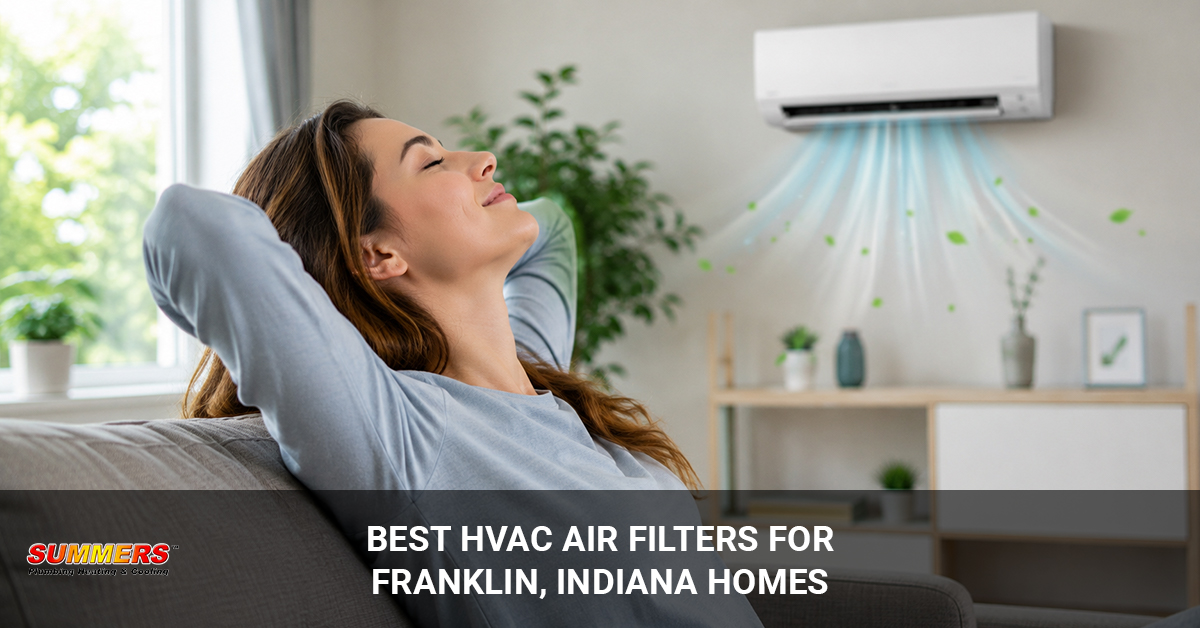
The best HVAC air filter for most Franklin homes is a pleated MERV 8 or MERV 11 filter. These filters provide a good balance between air filtration and airflow, helping improve indoor air quality while protecting your heating and cooling system.
Many homeowners assume all air filters are the same, but choosing the right filter can make a big difference. The right HVAC filter can help reduce dust, improve air quality, lower strain on your system, and even reduce energy costs. The wrong filter can restrict airflow, decrease efficiency, and contribute to HVAC problems.
In Franklin, Indiana, homeowners often deal with seasonal pollen, pet dander, dust, and changing weather conditions that can affect indoor air quality throughout the year. That’s why selecting the right air filter is an important part of maintaining a healthy and efficient home.
In this guide, you’ll learn which HVAC air filters work best for most homes, how MERV ratings affect filtration, how often filters should be replaced, and how to choose the right filter for your family’s needs.
What Is the Best HVAC Air Filter for Your Home?
The best HVAC air filter for your home depends on your indoor air quality needs, your HVAC system’s requirements, and whether you have pets, allergies, or respiratory concerns. For most Franklin homeowners, a pleated MERV 8 or MERV 11 filter offers the best balance between filtration performance and airflow.
Many people assume that the highest-rated filter is always the best choice. In reality, a filter that is too restrictive can reduce airflow and make your HVAC system work harder. That’s why choosing the right filter is more important than simply choosing the highest MERV rating.
Quick Answer for Most Homeowners
For the majority of homes in Franklin, Indiana:
- MERV 8 filters are ideal for everyday use.
- MERV 11 filters work well for homes with pets or mild allergies.
- MERV 13 filters may benefit allergy sufferers if the HVAC system can handle the increased airflow resistance.
Most HVAC professionals recommend avoiding extremely restrictive filters unless your system is specifically designed for them.
Why There Is No One-Size-Fits-All Filter
Every home has different air quality needs. A family with pets, allergy sufferers, or multiple occupants may need a different filter than a household without those concerns.
Factors that affect filter selection include:
- Number of pets in the home
- Allergy or asthma concerns
- Local pollen levels
- Indoor dust levels
- HVAC system specifications
- Frequency of filter replacement
Choosing the right filter means balancing filtration performance with proper airflow.
Factors That Determine the Best Choice
Several factors should be considered before purchasing a new HVAC filter.
Indoor Air Quality Goals
If your primary goal is reducing dust and protecting your HVAC equipment, a MERV 8 filter is usually sufficient. If you’re trying to capture smaller particles such as pet dander, pollen, or mold spores, a higher MERV rating may be beneficial.
HVAC System Compatibility
Not all HVAC systems are designed to handle high-efficiency filters. A filter with a very high MERV rating can restrict airflow if the system isn’t designed for it.
Before upgrading to a higher-rated filter, consult your HVAC manufacturer’s recommendations or speak with an HVAC professional.
Pets and Allergies
Homes with pets often benefit from better filtration because pet hair and dander can accumulate quickly.
Homeowners with allergies may also benefit from filters that capture:
- Pollen
- Dust mites
- Mold spores
- Pet dander
- Other airborne allergens
Maintenance Requirements
Higher-efficiency filters often need more frequent monitoring because they can become clogged faster as they capture more particles.
Regardless of the filter you choose, replacing it on schedule is essential for maintaining good airflow and system performance.
Why HVAC Air Filters Matter
HVAC air filters do much more than trap dust. They help protect your heating and cooling equipment, improve indoor air quality, and support overall system efficiency.
A clean, properly selected air filter can make a noticeable difference in both comfort and HVAC performance throughout the year. Air filtration is also an important part of maintaining healthy indoor air quality throughout your home.
Improve Indoor Air Quality
Air filters help remove airborne particles before they circulate throughout your home. This can lead to cleaner air and a healthier indoor environment.
Common particles captured by HVAC filters include:
- Dust
- Pollen
- Pet dander
- Mold spores
- Lint
- Other airborne debris
Better filtration can be especially beneficial during allergy seasons in Franklin.
Protect Your HVAC System
One of the primary jobs of an air filter is to protect HVAC components from dirt and debris. Without a properly functioning filter, dust can accumulate inside the system and reduce performance.
Air filters help protect:
- Blower motors
- Evaporator coils
- Heat exchangers
- Ductwork
- Other internal components
A clean system generally experiences fewer repairs and lasts longer.
Increase Energy Efficiency
When airflow remains unrestricted, your HVAC system can operate more efficiently. A clean filter allows the system to move air more easily, reducing strain on components.
Benefits include:
- Lower energy consumption
- Reduced system workload
- Improved heating and cooling performance
- Lower utility bills
Reduce Dust and Allergens
Many homeowners notice a reduction in household dust after upgrading to a quality pleated filter and replacing it regularly.
Better filtration can help reduce:
- Dust buildup on furniture
- Airborne allergens
- Pet-related particles
- Seasonal pollen entering the home
For many families, this leads to a cleaner and more comfortable living environment.
Understanding MERV Ratings
MERV ratings measure how effectively an air filter captures airborne particles. The higher the MERV rating, the smaller the particles the filter can trap.
When shopping for HVAC air filters, you’ll quickly notice MERV numbers on the packaging. MERV stands for Minimum Efficiency Reporting Value, and it’s the industry standard used to compare filter performance.
Understanding MERV ratings can help you choose a filter that improves indoor air quality without restricting airflow in your HVAC system.
What Is a MERV Rating?
A MERV rating tells you how well an air filter captures particles such as dust, pollen, pet dander, and other airborne contaminants.
In general:
- Lower MERV ratings capture larger particles.
- Higher MERV ratings capture smaller particles.
- Extremely high MERV ratings may restrict airflow in some residential HVAC systems.
For most homes, the goal is to find the right balance between filtration and airflow.
MERV 1–4 Filters
MERV 1–4 filters provide basic filtration and are typically the least expensive option. These filters capture large particles but allow many smaller contaminants to pass through.
They are generally designed to protect HVAC equipment rather than improve indoor air quality.
MERV 1–4 filters capture:
- Carpet fibers
- Dust mites
- Large dust particles
- Lint
Most homeowners today choose higher-rated filters for better performance.
MERV 5–8 Filters
MERV 5–8 filters are among the most popular choices for residential HVAC systems. They provide good filtration while maintaining strong airflow.
These filters can capture:
- Household dust
- Pollen
- Mold spores
- Pet hair
- Lint
For many Franklin homeowners, a MERV 8 filter offers the best balance of affordability, filtration, and HVAC performance.
MERV 9–12 Filters
MERV 9–12 filters provide enhanced filtration and are often recommended for homes with pets, allergies, or higher indoor air quality needs.
These filters can capture:
- Fine dust particles
- Pet dander
- Mold spores
- Some bacteria
- Vehicle emissions that enter the home
Many HVAC professionals recommend MERV 11 filters for homeowners who want better filtration without creating excessive airflow restrictions.
MERV 13+ Filters
MERV 13 and higher filters offer advanced filtration and can capture very small airborne particles.
These filters are capable of trapping:
- Smoke particles
- Fine allergens
- Certain bacteria
- Smaller airborne contaminants
While MERV 13 filters can improve air quality, not every residential HVAC system is designed to handle them. Before installing a MERV 13 filter, it’s important to verify that your system can maintain proper airflow.
Which MERV Rating Is Best for Most Franklin Homes?
For most homes in Franklin, Indiana, a MERV 8 or MERV 11 filter is the best choice.
Here’s a simple guideline:
| Home Type | Recommended MERV Rating |
| Average Household | MERV 8 |
| Homes with Pets | MERV 11 |
| Allergy Sufferers | MERV 11–13 |
| Indoor Air Quality Focused Homes | MERV 13* |
*Only if the HVAC system is designed to support higher-efficiency filtration.
Choosing the highest MERV rating isn’t always the best solution. The ideal filter should improve air quality while allowing your HVAC system to maintain proper airflow and efficiency.
Best HVAC Air Filters for Most Franklin Homes
For most Franklin homeowners, pleated MERV 8 and MERV 11 filters provide the best combination of filtration performance, airflow, and HVAC protection. These filters can capture common indoor pollutants without placing excessive strain on the heating and cooling system.
The best filter for your home depends on your air quality needs, household size, and whether you have pets or allergies.
MERV 8 Filters
MERV 8 filters are the best all-around choice for most homes. They offer effective filtration while maintaining strong airflow.
Benefits include:
- Excellent HVAC protection
- Good airflow performance
- Affordable replacement cost
- Effective dust and pollen control
For the average household, a MERV 8 filter is often the ideal solution.
MERV 11 Filters
MERV 11 filters provide enhanced filtration and are a great option for homes with pets or mild allergy concerns.
They can capture:
- Pet dander
- Fine dust
- Mold spores
- Additional airborne particles
Many homeowners notice cleaner air and less dust accumulation after upgrading to a MERV 11 filter.
MERV 13 Filters
MERV 13 filters offer the highest level of filtration commonly used in residential HVAC systems.
These filters can help reduce:
- Fine allergens
- Smoke particles
- Smaller airborne contaminants
However, because they are more restrictive, they should only be used if your HVAC system can handle the reduced airflow.
For homeowners with significant allergy concerns, MERV 13 filters may provide noticeable indoor air quality improvements when properly matched to the HVAC system.
Best Air Filters for Homes with Pets
Homes with pets typically benefit from MERV 11 air filters because they do a better job of capturing pet dander, pet hair, and other airborne particles. Pet owners often deal with more indoor air contaminants, making proper filtration especially important.
Dogs and cats continuously shed hair, skin flakes, and allergens that circulate through the home’s air. Without the right air filter, these particles can accumulate inside the HVAC system and throughout the house.
Why Pet Owners Need Better Filtration
Pets can significantly increase the amount of airborne debris inside a home. While standard filters may capture larger particles, higher-quality filters are often better at trapping smaller contaminants.
Pet-related pollutants commonly include:
- Pet dander
- Pet hair
- Dust
- Outdoor allergens carried inside
- Fine airborne particles
A better air filter can help improve indoor air quality and reduce the amount of debris circulating through your HVAC system.
Recommended MERV Ratings for Pet Owners
For most homes with pets, HVAC professionals recommend:
| Household Type | Recommended Filter |
| One Pet | MERV 8–11 |
| Multiple Pets | MERV 11 |
| Pets + Allergies | MERV 11–13 |
MERV 11 filters are often the sweet spot because they provide stronger filtration without creating excessive airflow restrictions in most residential systems.
How Often Should Pet Owners Replace Filters?
Pet owners usually need to replace HVAC filters more frequently than households without pets.
A general guideline is:
- One pet: Every 60–90 days
- Multiple pets: Every 30–60 days
- Pets with allergy sufferers: Every 30–45 days
Checking the filter monthly can help determine whether it needs replacement sooner.
Additional Tips for Pet Owners
Air filters work best when combined with other indoor air quality practices.
Consider:
- Vacuuming regularly
- Grooming pets frequently
- Cleaning vents and registers
- Scheduling annual HVAC maintenance
- Using high-quality pleated filters
These steps can help reduce pet-related particles and keep your HVAC system operating efficiently.
Best Air Filters for Allergy and Asthma Sufferers
For allergy and asthma sufferers, MERV 11 or MERV 13 filters typically provide the best filtration. These filters can capture smaller airborne particles that often trigger allergy symptoms and respiratory irritation.
Indoor air quality becomes especially important during spring and fall in Franklin, when pollen levels can increase significantly.
Filters That Capture Common Allergens
Higher-efficiency filters are designed to capture many of the particles that contribute to allergy symptoms.
These include:
- Pollen
- Pet dander
- Dust mites
- Mold spores
- Fine dust particles
Reducing these airborne contaminants can help improve indoor comfort and air quality.
Recommended MERV Ratings
Most allergy sufferers benefit from:
- MERV 11 filters for moderate filtration
- MERV 13 filters for enhanced filtration
The best choice depends on the HVAC system’s airflow capabilities and the severity of allergy symptoms.
Before installing a MERV 13 filter, it’s a good idea to confirm that your HVAC system can support it without restricting airflow.
Additional Indoor Air Quality Solutions
Air filters are important, but they are only one part of a healthy indoor environment.
Additional solutions may include:
- Whole-home air purifiers
- UV air purification systems
- Humidity control systems
- Duct cleaning when needed
- Regular HVAC maintenance
Combining quality filtration with proper HVAC maintenance can help create a cleaner and healthier indoor environment for allergy sufferers.
When to Consider Professional Indoor Air Quality Testing
If allergy symptoms persist despite using quality air filters, professional indoor air quality testing may help identify additional concerns.
Testing can reveal:
- Excess dust levels
- Mold contamination
- Humidity problems
- Airflow issues
- Ventilation concerns
Understanding the source of indoor air quality problems can help homeowners choose the most effective solutions for their specific needs.
Fiberglass vs Pleated Air Filters
Pleated air filters are the better choice for most Franklin homeowners because they capture more airborne particles while providing better overall HVAC system protection. Although fiberglass filters cost less upfront, they generally provide lower filtration performance.
When choosing an HVAC filter, many homeowners find themselves comparing these two common options. Understanding the differences can help you make the best choice for your home’s air quality and HVAC system.
Fiberglass Filters
Fiberglass filters are the most basic type of HVAC filter available. They are designed primarily to protect the HVAC system from large debris rather than improve indoor air quality.
Benefits of fiberglass filters include:
- Lower purchase price
- Minimal airflow resistance
- Widely available
However, fiberglass filters are less effective at capturing smaller airborne particles.
They typically allow:
- Fine dust
- Pollen
- Pet dander
- Mold spores
to pass through the filter more easily.
Because of their limited filtration ability, fiberglass filters are generally not the best option for homeowners concerned about indoor air quality.
Pleated Filters
Pleated filters use folded filter media that provides a larger surface area for capturing airborne contaminants. This design allows them to trap more particles while maintaining effective airflow.
Benefits of pleated filters include:
- Better dust removal
- Improved allergen control
- Enhanced HVAC protection
- Longer service life
- Better indoor air quality
Pleated filters are available in a wide range of MERV ratings, making them suitable for most residential HVAC systems.
Side-by-Side Comparison
| Feature | Fiberglass Filter | Pleated Filter |
| Cost | Lower | Moderate |
| Filtration Quality | Basic | Better |
| Dust Control | Limited | Excellent |
| Allergen Removal | Limited | Good to Excellent |
| HVAC Protection | Basic | Better |
| Lifespan | Shorter | Longer |
| Recommended for Most Homes | No | Yes |
Which Option Is Better for Most Homes?
For most households, a pleated filter is the better investment. The slightly higher cost is usually outweighed by improved air quality, better HVAC protection, and reduced dust throughout the home.
A pleated MERV 8 or MERV 11 filter is often the best choice for:
- Families with children
- Pet owners
- Allergy sufferers
- Homeowners focused on HVAC efficiency
- Homes with higher indoor dust levels
When Fiberglass Filters May Still Work
Fiberglass filters may still be suitable in certain situations, such as:
- Vacant properties
- Temporary installations
- Homes with minimal air quality concerns
- Systems specifically designed for low-resistance filters
However, most HVAC professionals recommend upgrading to a quality pleated filter whenever possible.
How Often Should You Change Your HVAC Air Filter?
Most HVAC air filters should be replaced every 1 to 3 months, depending on the filter type, household conditions, and HVAC usage. Regular filter replacement is one of the easiest ways to maintain indoor air quality and keep your HVAC system operating efficiently.
A dirty filter restricts airflow and forces the system to work harder, which can increase energy costs and shorten equipment lifespan.
Typical Replacement Schedule
The ideal replacement schedule depends on the type of filter and your home’s specific needs.
General recommendations include:
| Household Type | Replacement Frequency |
| Standard Household | Every 60–90 Days |
| One Pet | Every 60 Days |
| Multiple Pets | Every 30–60 Days |
| Allergy Sufferers | Every 30–45 Days |
| Heavy HVAC Usage | Every 30–60 Days |
Checking the filter monthly is the best way to determine whether replacement is needed sooner.
Signs Your Filter Needs Replacement
Even if you follow a schedule, it’s important to watch for signs that your filter is becoming clogged.
Common indicators include:
- Visible dirt buildup
- Increased dust in the home
- Weak airflow from vents
- Rising energy bills
- Longer heating or cooling cycles
- Allergy symptoms worsening indoors
If the filter appears dirty, replacing it promptly can help restore airflow and efficiency.
Factors That Affect Filter Lifespan
Several factors can cause filters to become dirty faster than expected.
These include:
- Pets
- Smoking indoors
- Home renovations
- High pollen seasons
- Dusty environments
- Number of occupants
Homes with multiple pets or allergy sufferers often need more frequent filter replacements than average households.
Why Regular Filter Changes Matter
Replacing your air filter on time provides several benefits:
- Better indoor air quality
- Improved HVAC efficiency
- Lower energy costs
- Reduced strain on equipment
- Longer system lifespan
- Fewer repair issues
A simple filter replacement can often prevent many common HVAC performance problems and help keep your system running smoothly year-round.
Signs You’re Using the Wrong Air Filter
The wrong HVAC air filter can reduce airflow, increase energy costs, and make your heating and cooling system work harder than necessary. If you’ve noticed comfort issues or declining HVAC performance, your air filter could be part of the problem.
Many homeowners assume that any filter will work as long as it fits. In reality, using the wrong filter type, size, or MERV rating can negatively affect both indoor air quality and HVAC efficiency.
Here are some of the most common signs that your current filter may not be the right choice.
Weak Airflow
Weak airflow is one of the most noticeable signs of a filter problem. If a filter is too restrictive or heavily clogged, it can prevent air from moving through the system properly.
You may notice:
- Less air coming from vents
- Rooms taking longer to heat or cool
- Uneven temperatures throughout the home
In some cases, a filter with a very high MERV rating may restrict airflow if the HVAC system isn’t designed for it.
Higher Energy Bills
A sudden increase in utility bills can indicate that your HVAC system is working harder than necessary. When airflow becomes restricted, the system must run longer to maintain the desired temperature.
This often results in:
- Increased energy consumption
- Longer operating cycles
- Reduced efficiency
- Higher monthly utility costs
Replacing an incorrect or clogged filter can often improve efficiency quickly.
Increased Dust in the Home
If you’re constantly dusting furniture and surfaces, your air filter may not be capturing enough airborne particles.
Signs include:
- Dust accumulating shortly after cleaning
- More visible airborne particles
- Dust buildup around vents
- Poor indoor air quality
This can happen when using low-efficiency filters that allow fine particles to circulate throughout the home.
Uneven Heating and Cooling
Restricted airflow can affect how evenly conditioned air is distributed throughout the house.
You may notice:
- Hot and cold spots
- Certain rooms feeling uncomfortable
- Inconsistent temperatures
- Difficulty maintaining thermostat settings
While several HVAC issues can cause uneven temperatures, an incorrect air filter is one of the simplest problems to check.
Frequent HVAC Repairs
Using the wrong filter for an extended period can place extra strain on HVAC components.
This can contribute to:
- Blower motor wear
- Reduced system efficiency
- Overheating issues
- Increased maintenance needs
A properly selected filter helps protect critical HVAC components and supports long-term system reliability.
Excessive Allergy Symptoms
If family members continue experiencing allergy symptoms indoors despite regular cleaning, your filter may not be capturing enough airborne allergens.
Common symptoms include:
- Sneezing
- Congestion
- Itchy eyes
- Respiratory irritation
Upgrading to a higher-quality pleated filter may help improve indoor air quality and reduce allergen exposure.
The Filter Doesn’t Match Manufacturer Recommendations
Every HVAC system is designed to operate within specific airflow requirements. Installing a filter that exceeds the manufacturer’s recommendations can create performance problems.
Before purchasing a filter, verify:
- Correct dimensions
- Recommended MERV range
- Filter thickness requirements
- HVAC manufacturer guidelines
Following these recommendations helps ensure proper system performance.
Common Air Filter Mistakes Homeowners Make
Many HVAC problems can be traced back to simple air filter mistakes. Avoiding these common errors can improve efficiency, extend equipment life, and help maintain healthy indoor air quality.
Choosing a Filter with Too High a MERV Rating
Many homeowners assume a higher MERV rating is always better. While higher-rated filters capture smaller particles, they can also restrict airflow if the HVAC system isn’t designed for them.
Always choose a filter that balances filtration with proper airflow.
Forgetting to Replace Filters
Even the best air filter won’t work effectively if it’s left in place for too long.
Failing to replace filters regularly can lead to:
- Reduced airflow
- Higher energy bills
- Increased HVAC wear
- Poor indoor air quality
Setting a reminder can help ensure timely replacements.
Installing the Filter Backward
Most air filters include an airflow direction arrow. Installing the filter backward can reduce filtration effectiveness and affect system performance.
Always verify that the airflow arrow points toward the HVAC unit.
Buying the Wrong Size
A filter that doesn’t fit correctly can allow unfiltered air to bypass the filter media.
Before purchasing a replacement, confirm:
- Length
- Width
- Thickness
Using the correct size ensures maximum filtration and system protection.
Waiting Until Problems Develop
Many homeowners only think about their air filter after they experience airflow issues or higher energy bills.
Regular inspections and proactive filter replacement can help prevent many common HVAC problems before they occur.
Should You Use HEPA Filters in a Home HVAC System?
Most residential HVAC systems are not designed to use true HEPA filters. While HEPA filters provide exceptional air filtration, they are often too restrictive for standard home heating and cooling systems.
Many homeowners assume HEPA filters are the best option because they capture extremely small airborne particles. However, HVAC systems need proper airflow to operate efficiently. A filter that restricts airflow too much can reduce system performance and potentially cause equipment problems.
What Is a HEPA Filter?
HEPA stands for High-Efficiency Particulate Air. These filters are designed to capture at least 99.97% of particles as small as 0.3 microns.
HEPA filters can trap:
- Dust
- Pollen
- Mold spores
- Pet dander
- Smoke particles
- Some bacteria
Because of their filtration capabilities, HEPA filters are commonly used in hospitals, laboratories, and specialized air purification systems.
Why Most Residential HVAC Systems Cannot Use HEPA Filters
The main challenge with HEPA filters is airflow resistance. Most residential HVAC systems are not designed to push air through such dense filtration media.
Using a HEPA filter in an incompatible system may lead to:
- Reduced airflow
- Lower heating and cooling performance
- Increased energy consumption
- Blower motor strain
- Premature HVAC wear
This is why HVAC manufacturers often recommend lower MERV-rated filters instead.
Better Alternatives for Most Homes
For most Franklin homeowners, a high-quality MERV 11 or MERV 13 pleated filter provides excellent filtration without creating excessive airflow restrictions.
These filters can effectively capture:
- Dust
- Pollen
- Pet dander
- Mold spores
- Many common allergens
while still allowing the HVAC system to operate efficiently.
When HEPA Filtration May Make Sense
If indoor air quality is a major concern, there are ways to incorporate HEPA-level filtration without modifying the HVAC system.
Options may include:
- Standalone HEPA air purifiers
- Whole-home air purification systems
- Dedicated filtration systems
- Indoor air quality upgrades
An HVAC professional can help determine the best solution based on your home’s needs.
Professional HVAC Maintenance and Air Filter Performance
Even the best air filter cannot perform properly if the HVAC system isn’t maintained. Regular professional maintenance helps ensure that your heating and cooling equipment operates efficiently and that air filters can do their job effectively.
Many homeowners focus only on replacing the filter but overlook the condition of the system itself.
Why Annual HVAC Maintenance Matters
Annual maintenance helps identify small issues before they become larger problems. It also ensures that airflow, filtration, and system performance remain at optimal levels.
Professional maintenance can help:
- Improve efficiency
- Reduce energy costs
- Extend equipment lifespan
- Improve indoor air quality
- Prevent unexpected breakdowns
Regular tune-ups are one of the best investments homeowners can make in their HVAC system.
How Dirty HVAC Components Affect Air Quality
Even if you’re using a quality air filter, dirty HVAC components can still affect indoor air quality.
Common issues include:
- Dust buildup on coils
- Dirty blower components
- Contaminated ductwork
- Restricted airflow
- Reduced filtration effectiveness
Keeping the entire system clean helps maximize the benefits of your air filter.
Air Filters and HVAC Efficiency Work Together
Air filters and HVAC performance are closely connected. A clean filter allows the system to move air efficiently, while a properly maintained system helps filters work more effectively.
Together, they help:
- Reduce strain on equipment
- Improve airflow
- Lower utility costs
- Maintain consistent temperatures
- Improve indoor comfort
Ignoring either one can reduce overall system performance.
When to Schedule Professional Service
Most HVAC systems should be inspected and serviced once per year.
You should also schedule service if you notice:
- Weak airflow
- Higher energy bills
- Excessive dust
- Uneven heating or cooling
- Frequent filter clogging
- Strange noises from the HVAC system
These symptoms may indicate problems that go beyond the air filter itself.
A Complete Approach Delivers the Best Results
The best indoor air quality results come from combining:
- Proper filter selection
- Regular filter replacement
- Professional HVAC maintenance
- Good airflow management
- Indoor air quality upgrades when needed
When these elements work together, homeowners can enjoy cleaner air, improved comfort, and a more efficient HVAC system year-round.
Frequently Asked Questions
What MERV Rating Is Best for a Home?
For most homes, a MERV 8 or MERV 11 filter provides the best balance between filtration and airflow. MERV 8 filters work well for average households, while MERV 11 filters are often recommended for homes with pets or allergy concerns.
Choosing a filter that is too restrictive can reduce HVAC efficiency, so it’s important to follow your system manufacturer’s recommendations.
How Often Should I Replace My HVAC Air Filter?
Most homeowners should replace their HVAC air filter every 1 to 3 months.
A general replacement schedule includes:
- Standard households: Every 60–90 days
- Homes with pets: Every 30–60 days
- Allergy sufferers: Every 30–45 days
- Heavy HVAC use: Every 30–60 days
Checking the filter monthly is the best way to determine whether it needs replacement sooner.
Is MERV 13 Too Restrictive for Residential HVAC Systems?
MERV 13 filters can be too restrictive for some HVAC systems. While they provide excellent filtration, not every system is designed to handle the increased airflow resistance.
Before installing a MERV 13 filter, consult your HVAC manufacturer or speak with a qualified HVAC technician.
Are Expensive Air Filters Worth It?
Higher-quality pleated filters are often worth the investment because they capture more airborne particles and provide better protection for HVAC equipment.
However, the most expensive filter isn’t always the best choice. The ideal filter is one that matches your home’s indoor air quality needs and your HVAC system’s airflow requirements.
Can a Dirty Air Filter Increase Energy Bills?
Yes. A dirty air filter can significantly increase energy costs.
When a filter becomes clogged, airflow decreases, and the HVAC system must work harder to heat or cool the home. This extra workload often results in:
- Higher utility bills
- Longer operating cycles
- Reduced efficiency
- Increased equipment wear
Replacing filters regularly is one of the simplest ways to maintain efficiency.
What Air Filter Is Best for Pet Owners?
For most pet owners, a MERV 11 pleated air filter is the best choice.
These filters can help capture:
- Pet dander
- Pet hair
- Dust
- Pollen
- Other airborne particles
Homes with multiple pets may benefit from more frequent filter replacements to maintain proper airflow.
Should I Use Fiberglass or Pleated Air Filters?
Pleated filters are generally the better option for most homeowners. They provide better filtration, improve indoor air quality, and offer greater protection for HVAC equipment.
Fiberglass filters are less expensive, but they are typically less effective at capturing smaller airborne particles.
What Happens If I Use the Wrong Air Filter?
Using the wrong filter can create several problems, including:
- Weak airflow
- Higher energy bills
- Increased dust
- Uneven heating and cooling
- Additional strain on HVAC components
Choosing the correct size and MERV rating helps ensure optimal system performance.
Can Air Filters Help With Allergies?
Yes. High-quality air filters can help reduce airborne allergens inside the home.
Filters with MERV ratings between 11 and 13 can capture many common allergy triggers, including:
- Pollen
- Pet dander
- Dust mites
- Mold spores
For homeowners with severe allergies, additional indoor air quality solutions may also be beneficial. Many homeowners also consider installing UV lights in their HVAC system to help address airborne contaminants and improve indoor air quality.
Final Thoughts
The best HVAC air filter for most Franklin, Indiana, homes is a pleated MERV 8 or MERV 11 filter. These filters provide effective filtration, protect HVAC equipment, and maintain the airflow needed for efficient heating and cooling.
While it may be tempting to choose the highest-rated filter available, the best option is one that balances indoor air quality with proper system performance. A filter that is too restrictive can create airflow problems, while a filter with too little filtration may allow dust, allergens, and other particles to circulate throughout the home.
To get the most from your HVAC system:
- Choose the correct filter size
- Select an appropriate MERV rating
- Replace filters regularly
- Schedule annual HVAC maintenance
- Address airflow issues promptly
These simple steps can help improve indoor air quality, reduce energy costs, extend equipment life, and keep your heating and cooling system operating efficiently year-round.
If you’re unsure which air filter is right for your home, a professional HVAC technician can evaluate your system and recommend the best filtration solution for your specific needs. The right filter, combined with regular maintenance, can make a noticeable difference in both comfort and HVAC performance.