
Toilet Keeps Clogging for No Reason? Common Causes & Fixes
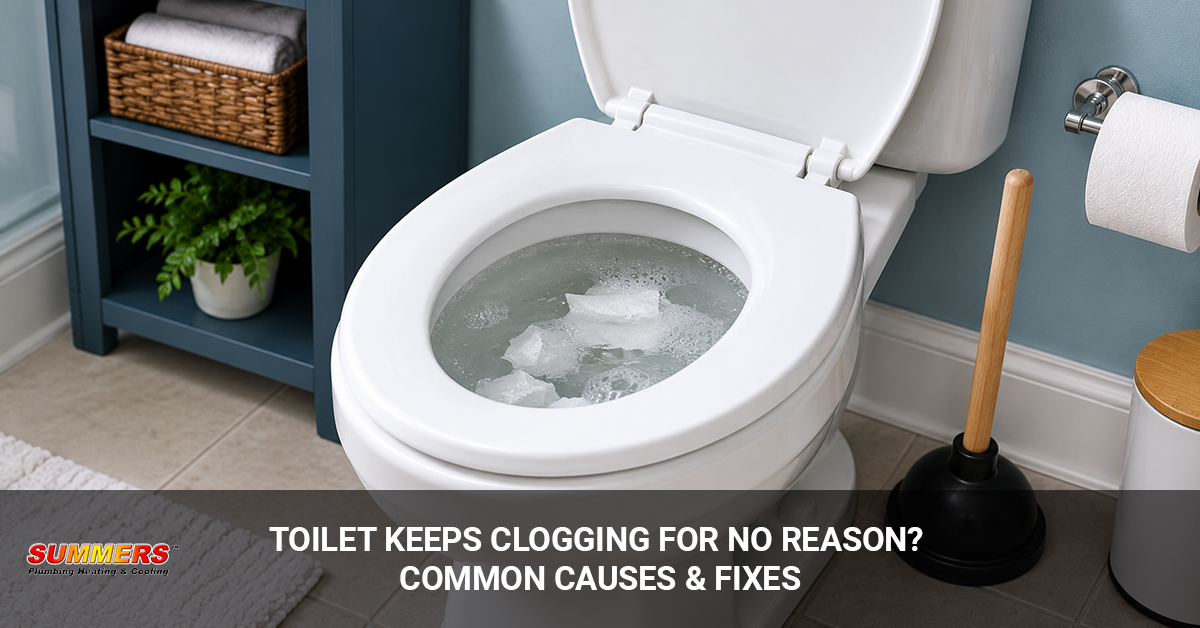
A toilet that keeps clogging usually has a partial blockage, weak flushing power, an object stuck in the trap, or a problem farther down the drain line. What seems like a clog “for no reason” often means the underlying problem was never completely removed.
If plunging fixes the toilet temporarily but the clog keeps coming back, don’t keep treating each clog as a separate problem. Look for the reason it keeps happening.
Why Does My Toilet Keep Clogging for No Reason?
A toilet usually keeps clogging because something is restricting the flow, the toilet does not flush strongly enough, or a deeper drain or sewer problem is developing.
Common causes include:
- Partial clog inside the toilet
- Too much toilet paper
- Flushed wipes or other unsuitable items
- Weak toilet flush
- Object stuck in the toilet trap
- Blocked plumbing vent
- Partial blockage farther down the drain
- Main sewer line blockage
- Older toilet with poor flushing performance
The symptoms can help you figure out which problem is most likely.
Common Reasons Your Toilet Keeps Clogging
There Is Still a Partial Clog in the Toilet
A partial clog can allow some water to pass while repeatedly catching waste and toilet paper.
The toilet may appear to work normally after plunging, but the blockage can remain inside the trap or drain. Recurring clogs can also be related to broader drainage problems. See our guide to common clogged drain causes and fixes in Columbus.
Signs of a partial clog include:
- Water rises higher than normal during a flush.
- The bowl drains slowly.
- The toilet gurgles.
- Waste remains in the bowl.
- The problem returns after a few days or weeks.
If plunging only provides temporary relief, the blockage may not have been fully removed.
Too Much Toilet Paper Is Being Flushed
Flushing large amounts of toilet paper at once can cause recurring clogs, especially in toilets with weaker flushing performance.
Toilet paper is designed to break down in water, but a large amount can still collect inside the toilet trap or drain.
If your toilet regularly struggles after heavy toilet-paper use, try using less at a time and flushing more than once when necessary.
Do not keep flushing repeatedly if the water is already rising in the bowl.
“Flushable” Wipes or Other Items Are Being Flushed
Wipes, paper towels, feminine hygiene products, and other non-toilet-paper items can cause recurring clogs even when they are labeled flushable or disposable.
Toilet plumbing is designed primarily for human waste and toilet paper.
Items that do not break apart like toilet paper can collect inside the toilet trap or farther down the drain.
Keep these items out of the toilet:
- Baby wipes
- Cleaning wipes
- Paper towels
- Cotton swabs
- Feminine hygiene products
- Dental floss
- Tissues
- Small household objects
A recurring clog can sometimes be traced back to an item that was flushed weeks or months earlier.
The Toilet Has a Weak Flush
A weak flush may not move waste completely through the toilet trap and drain, making repeated clogs more likely.
Several problems can weaken a toilet’s flush:
- Low water level in the tank
- Faulty flapper
- Incorrect flapper
- Weak flush valve
- Clogged rim holes
- Mineral buildup
- Poor toilet design
If the toilet has always flushed weakly, its design may be part of the problem.
If flushing performance recently became weaker, there may be a component or blockage that needs attention.
Something Is Stuck in the Toilet Trap
A small object stuck inside the toilet trap can partially block the passage and cause repeated clogs.
This can happen when something accidentally gets flushed.
Possible objects include:
- Small toys
- Air freshener parts
- Bathroom items
- Plastic objects
- Other small household items
A plunger may move the object temporarily without removing it.
If the toilet repeatedly clogs and you suspect a solid object is trapped inside, a toilet auger or professional inspection may be necessary.
The Plumbing Vent Is Blocked
A blocked plumbing vent can interfere with drainage and contribute to poor flushing and recurring toilet problems.
Plumbing vents allow air into the drainage system. Proper venting helps wastewater move through the pipes. One warning sign to watch for is bubbling or unusual toilet behavior when you flush. See why a toilet bubbles when flushed.
A blocked vent can cause:
- Gurgling toilets
- Slow drains
- Weak flushing
- Bubbling in nearby fixtures
- Sewer odors
If you notice these symptoms along with recurring toilet clogs, the problem may not be inside the toilet itself.
The Toilet Drain Line Has a Deeper Blockage
A partial blockage farther down the toilet drain can cause repeated clogs even after the toilet appears to be cleared.
The blockage may allow water to pass slowly but restrict the movement of waste.
Plunging may temporarily create an opening without removing the buildup or obstruction completely.
If the same toilet keeps clogging despite proper plunging or augering, the drain line may need professional cleaning or inspection.
The Main Sewer Line Is Clogged
A main sewer line blockage can cause repeated toilet clogs, especially when other plumbing fixtures are also affected.
This is more serious than a clog limited to one toilet.
Watch for:
- Multiple toilets clogging
- Slow sinks or showers
- Water backing up into a bathtub
- Gurgling drains
- Sewage odors
- Wastewater backing up when another fixture is used
If several fixtures develop problems at the same time, avoid repeatedly flushing the toilet. The blockage may be farther down the home’s main drainage system.
The Toilet Is Old or Has Poor Flushing Performance
An older toilet with poor flushing performance may clog repeatedly even when the drain is clear.
Some older toilets simply do not move waste as effectively as newer designs.
If the toilet has always required multiple flushes or frequently clogs despite having no drainage problem, replacing it may be more practical than repeatedly repairing the same issue.
However, make sure the drain is functioning properly before replacing the toilet. A new toilet will not solve a blocked drain line.
How Do I Find Out Why My Toilet Keeps Clogging?
Start by checking whether only one toilet is affected, how quickly the bowl drains, and whether other plumbing fixtures have similar problems.
Use this simple troubleshooting process:
1. Check Whether Only One Toilet Is Clogging
If only one toilet is affected, the problem is more likely to be inside that toilet or its individual drain line.
Check the other toilets and drains in the home.
If everything else works normally, a main sewer blockage is less likely.
2. Watch What Happens During a Flush
A toilet that rises high before draining often has a partial blockage.
Pay attention to the bowl.
If the water rises unusually high and then slowly falls, the drain may be restricted.
If the water level stays normal but the toilet simply does not remove waste well, the problem may be weak flushing power.
3. Check the Tank Water Level
A low tank water level can reduce flushing power and make recurring clogs more likely.
Remove the tank lid and check the water level.
If it is significantly below the manufacturer’s recommended level, the fill valve or float may need adjustment.
4. Listen for Gurgling
Gurgling can indicate a drainage or venting problem, especially when it happens along with slow drains or recurring clogs.
A single unusual sound does not prove there is a vent or sewer problem.
But repeated gurgling from the toilet or nearby drains deserves attention.
5. Check Nearby Fixtures
Slow drains or backups in nearby sinks, showers, tubs, or toilets can point to a larger plumbing blockage.
This is one of the most useful ways to distinguish a toilet-specific problem from a drain or sewer-line issue.
6. Consider What Has Been Flushed
If the toilet started clogging after an object, wipe, or excessive amount of paper was flushed, that item may be contributing to the problem.
Think about what has gone down the toilet recently.
A solid object may remain trapped even when water continues to drain.
Why Does My Toilet Keep Clogging Even After I Plunge It?
If plunging only fixes the problem temporarily, the blockage may still be inside the toilet or farther down the drain.
A plunger creates pressure that can move a blockage.
But it does not always remove the material causing the problem.
For example, a partial buildup may shift enough to let water pass. The toilet appears fixed, but waste and paper eventually collect against the remaining obstruction.
A solid object can cause the same problem.
If the toilet repeatedly clogs after plunging, stop treating it as a series of isolated clogs. The underlying obstruction needs to be found.
How Do You Fix a Toilet That Keeps Clogging?
The correct fix depends on whether the problem is a simple toilet blockage, weak flushing, a trapped object, or a deeper drain problem.
Use a Flange Plunger
A flange plunger is the first tool to try for a typical toilet clog.
Make sure there is enough water in the bowl to cover the plunger.
Place the flange firmly over the drain opening and plunge several times while maintaining a good seal.
Test the toilet carefully afterward.
If the water rises close to the rim, stop flushing.
Use a Toilet Auger for a Deeper Toilet Clog
A toilet auger can reach deeper into the toilet trap than a standard plunger and may help remove stubborn blockages.
A toilet auger is designed specifically for toilets and is less likely to damage the porcelain when used correctly.
It can be useful when:
- Plunging does not work.
- The clog keeps returning.
- You suspect an object is stuck.
- The blockage is deeper in the toilet trap.
If the auger does not solve the problem, the blockage may be farther down the drain.
Correct Weak Flushing Problems
If the toilet itself has weak flushing power, correcting the tank water level, flapper, or flush mechanism can reduce recurring clogs.
Check:
- Tank water level
- Flapper operation
- Flush chain
- Flush valve
- Rim holes
- Siphon jet
If the toilet has significant mineral buildup or a damaged flush valve, professional repair may be needed.
Stop Flushing Problem Items
The simplest way to prevent many recurring toilet clogs is to flush only human waste and toilet paper.
Do not flush wipes, paper towels, feminine hygiene products, cotton products, or household objects.
Even products marketed as flushable can cause problems in some plumbing systems.
Have the Drain or Sewer Line Inspected
Recurring clogs that do not respond to normal toilet clearing may require professional drain cleaning or a camera inspection.
A plumber can determine whether the problem is inside the toilet, in the branch drain, or farther down the sewer line.
A camera inspection can be particularly useful when a blockage keeps returning, and its location is unclear.
Is a Toilet That Keeps Clogging a Sign of a Sewer Line Problem?
Recurring toilet clogs can indicate a sewer line problem when multiple plumbing fixtures are affected.
A toilet-specific problem is more likely when:
- Only one toilet clogs.
- Other drains work normally.
- The toilet has a weak flush.
- The problem happens after heavy toilet-paper use.
- Plunging solves the issue for a long time.
A drain or sewer problem becomes more likely when:
- Multiple toilets clog.
- Showers or tubs drain slowly.
- Several sinks drain slowly.
- Water backs up into another fixture.
- Multiple fixtures gurgle.
- Sewage odors appear.
If several fixtures are affected, do not keep using plungers as the only solution. The blockage may be farther down the plumbing system. If the blockage is confirmed in the sewer line, see our guide to sewer line repair in Columbus.
How Much Does It Cost to Fix a Toilet That Keeps Clogging?
The cost can range from a simple DIY fix to several hundred dollars for professional plumbing work, depending on where the blockage is located.
A simple toilet clog may only require a plunger or toilet auger.
Professional costs can increase when the plumber needs to:
- Remove a stubborn toilet blockage
- Clear a deeper drain
- Perform a camera inspection
- Clean a sewer line
- Remove a trapped object
- Repair a damaged drain
The most important factor is the location and cause of the recurring clog.
A low-cost toilet repair will not solve a main sewer blockage, so proper diagnosis matters.
When Should You Call a Plumber for a Toilet That Keeps Clogging?
Call a plumber when the same toilet repeatedly clogs after plunging or when other drains and fixtures begin showing similar symptoms. If the toilet continues clogging despite basic troubleshooting, professional toilet repair in Columbus can help identify the underlying cause.
Professional help is especially important when:
- The clog keeps coming back.
- A plunger only provides temporary relief.
- A toilet auger does not solve the problem.
- Water rises close to the rim.
- The toilet frequently gurgles.
- Multiple fixtures are slow.
- Another fixture backs up when the toilet flushes.
- Sewage odors appear.
- You suspect an object is stuck.
- More than one toilet is clogging.
A recurring clog is a warning that something may still be blocking the plumbing.
Frequently Asked Questions
Why does my toilet clog every time I poop?
A toilet that clogs every time you use it may have a partial blockage, weak flushing power, a narrow trap, or a drainage problem. Check the tank water level and flushing performance. If the toilet has always clogged easily, its design may also be contributing to the problem.
Why does my toilet keep clogging but nothing is in it?
A toilet can keep clogging even when nothing obvious is visible because a partial blockage, trapped object, weak flush, blocked vent, or deeper drain restriction may be present. If plunging only provides temporary relief, the blockage may still be there.
Why does my toilet keep clogging even after plunging?
Plunging may move a blockage without completely removing it, which allows the toilet to work temporarily before clogging again. A recurring clog may require a toilet auger, drain cleaning, or professional inspection.
Can a blocked plumbing vent cause a toilet to clog?
Yes, a blocked plumbing vent can interfere with drainage and contribute to poor toilet performance. Gurgling sounds, slow drains, and problems with multiple fixtures make a vent or drainage issue more likely.
How do I know if my toilet clog is in the sewer line?
A sewer-line blockage is more likely when multiple toilets or drains are slow, gurgling, or backing up. If only one toilet is affected and the rest of the plumbing works normally, the problem is more likely limited to that toilet or its individual drain.
Can too much toilet paper cause repeated clogs?
Yes, flushing large amounts of toilet paper can cause repeated clogs, especially if the toilet has weak flushing power or a partial blockage. Use a reasonable amount and flush again when necessary instead of overloading one flush.
Should I replace a toilet that keeps clogging?
Replace a toilet only after ruling out a drain problem and determining that the toilet itself has poor flushing performance. If the toilet is old, damaged, or consistently weak despite repairs, replacement may make more sense than repeated repairs.
Final Thought
A toilet that keeps clogging for “no reason” usually has an underlying cause. The most common ones are a partial blockage, weak flushing power, excessive toilet paper, flushed wipes or objects, a blocked vent, or a deeper drain or sewer-line problem.
Start by checking whether the toilet drains slowly, whether the tank has enough water, and whether other plumbing fixtures are affected.
If plunging only fixes the problem temporarily, don’t keep repeating the same fix. A toilet auger or professional inspection may be needed to find the obstruction.
And if multiple fixtures are clogging or backing up, call a plumber promptly. The problem may be in the main drain or sewer line rather than the toilet itself.