

Low Water Pressure From One Faucet: Causes & Fixes
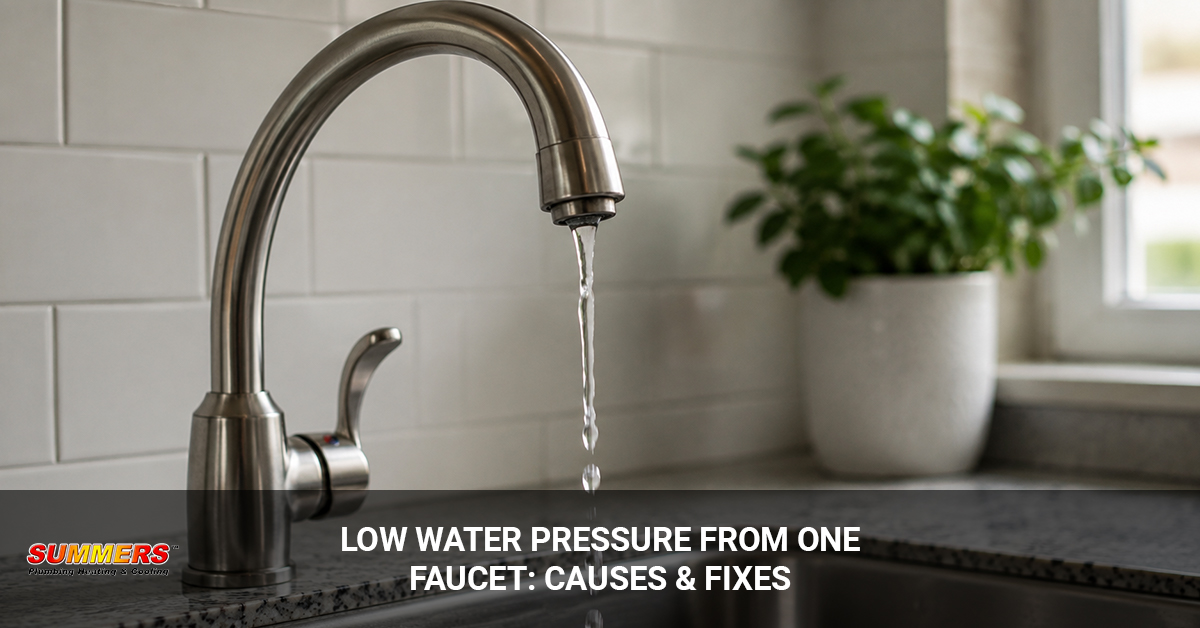
Low water pressure from one faucet usually means the problem is isolated to that faucet, with a clogged aerator, partially closed shutoff valve, blocked cartridge, mineral buildup, or restricted supply line being the most common causes.
If every other faucet in your home has normal water flow, you probably don’t have a whole-house water pressure problem. Start with the affected faucet itself.
In many cases, the fix is simple. Cleaning the aerator or fully opening the shutoff valve may restore normal flow in just a few minutes.
Why Is the Water Pressure Low in Only One Faucet?
Low water pressure from one faucet is usually caused by a clogged aerator, partially closed shutoff valve, clogged cartridge, mineral buildup, or a restriction in the supply line.
Common causes include:
- Clogged faucet aerator
- Partially closed shutoff valve
- Clogged or failing cartridge
- Mineral buildup
- Blocked supply line
- Kinked flexible hose
- Corroded faucet components
- Damaged faucet
The first thing to determine is whether the problem affects the entire faucet or only one side. If you’re also noticing pressure changes at other fixtures, see our guide on water pressure suddenly low to help determine whether the issue is broader than one faucet.
For example, if both hot and cold water have weak flow, the aerator or faucet itself may be the problem. If only hot water has weak flow, the hot-water valve, supply line, or cartridge may be restricting flow.
Clogged Faucet Aerator
A clogged faucet aerator is one of the most common reasons a single faucet has weak water flow.
The aerator is the small screen at the end of the faucet spout. It helps control the flow and mixes air into the water.
Mineral deposits, sediment, and debris can collect inside the screen and restrict water flow.
This is especially common with hard water or after plumbing work that disturbs sediment in the pipes.
Removing and cleaning the aerator is one of the easiest things to try first.
Partially Closed Shutoff Valve
A partially closed shutoff valve can restrict water flow to one faucet and make the water pressure seem unusually low.
Look underneath the sink for the hot- and cold-water shutoff valves.
Make sure they’re fully open.
Turn them carefully. If an old valve is stuck, don’t force it. An aging shutoff valve can leak or break when excessive pressure is applied.
Clogged or Failing Faucet Cartridge
A clogged or damaged faucet cartridge can restrict water flow from one faucet even when the home’s water pressure is normal.
Cartridge faucets are common in single-handle fixtures.
Mineral deposits can build up inside the cartridge and restrict the passageways. A worn cartridge can also affect how the faucet controls water flow.
A cartridge may need cleaning or replacement if the aerator and shutoff valves aren’t causing the problem.
Mineral Buildup Inside the Faucet
Mineral buildup can restrict water flow inside the faucet and reduce the amount of water coming from the spout.
Hard-water deposits can accumulate around:
- Aerators
- Cartridges
- Valves
- Internal passages
- Supply connections
A faucet with heavy buildup may gradually lose flow rather than suddenly stop working.
Cleaning can help when the deposits are accessible. Severe buildup may require replacement of the affected component.
Blocked or Kinked Supply Line
A blocked, damaged, or kinked supply line can restrict water reaching a single faucet.
Look underneath the sink and check both supply lines.
Make sure they aren’t:
- Kinked
- Crushed
- Bent sharply
- Corroded
- Leaking
If a flexible supply line is damaged or restricted, replacing it may restore normal flow.
Damaged Faucet
An old, damaged, or heavily corroded faucet can develop internal restrictions that reduce water flow.
If you’ve already cleaned the aerator, checked the shutoff valves, and inspected the supply lines, the faucet itself may be the problem.
Replacement can make more sense than repair when the faucet is badly corroded or multiple internal components are failing.
How to Fix Low Water Pressure From One Faucet
Start by checking the other faucets, then inspect the affected faucet’s aerator, shutoff valves, supply lines, and cartridge.
You don’t need to take the faucet apart immediately.
Work from the simplest possible cause to the more complicated ones.
Step 1: Check the Other Faucets
If other faucets have normal water flow, the problem is probably isolated to the affected faucet.
Turn on nearby faucets and compare their flow.
Also test the affected faucet’s hot and cold sides separately.
This helps determine whether the problem affects:
- The entire faucet
- Only hot water
- Only cold water
If several faucets throughout the home suddenly have weak flow, the problem may be related to the home’s water supply rather than one faucet.
Step 2: Check the Shutoff Valves
Make sure both shutoff valves underneath the sink are fully open.
Check the hot and cold valves.
If one is partially closed, it can restrict flow to that side of the faucet.
Open the valve carefully.
If it won’t move or starts leaking, stop and have the valve inspected rather than forcing it.
Step 3: Remove and Clean the Aerator
Cleaning a clogged faucet aerator can quickly restore water flow when mineral deposits or debris are blocking the screen.
Unscrew the aerator from the end of the faucet.
Depending on the faucet, you may be able to remove it by hand. If it’s stuck, use a wrench carefully and protect the faucet finish.
Inspect the screen for:
- White mineral deposits
- Sand
- Rust
- Dirt
- Other debris
Clean the screen thoroughly, rinse it, and reinstall it.
Then turn on the faucet and check the flow.
Step 4: Check the Supply Lines
Inspect the hot- and cold-water supply lines for kinks, damage, or visible restrictions.
Look underneath the sink while the faucet is running.
A sharply bent flexible line can restrict water flow.
If a line is damaged, corroded, or leaking, replacement is usually safer than trying to repair it.
Step 5: Inspect or Replace the Cartridge
If cleaning the aerator and checking the valves don’t restore normal flow, the faucet cartridge may need cleaning or replacement.
Shut off the water before removing the cartridge.
Follow the faucet manufacturer’s instructions because cartridge removal varies between models.
Inspect the cartridge for mineral buildup, damage, or worn seals.
If it’s damaged or heavily clogged, replace it with the correct cartridge for the faucet.
How to Clean a Clogged Faucet Aerator
To clean a clogged faucet aerator, remove it from the spout, rinse away debris, remove mineral deposits, and reinstall it.
Start by unscrewing the aerator.
Take note of how the small components are arranged before separating them.
Rinse the screen under clean water.
If mineral deposits are stuck to the screen, soak the removable parts in an appropriate descaling solution, then rinse them thoroughly before reinstalling them.
Don’t damage the fine screen while cleaning it.
After reinstalling the aerator, turn on the faucet and check whether the flow has improved.
What If the Aerator Won’t Come Off?
If the aerator won’t come off, it may be stuck because of mineral buildup or corrosion, so avoid using excessive force.
Try carefully gripping it with an appropriate wrench while protecting the faucet finish.
If the aerator is badly corroded, replacing it may be easier.
If removing it risks damaging the faucet, a plumber can remove it safely.
Why Is My Hot or Cold Water Pressure Low From Only One Faucet?
If only the hot or cold side has low flow, the restriction is usually somewhere on that side of the faucet’s water supply.
Test both sides separately.
This can help narrow down the problem.
Low Hot Water Pressure Only
Low hot-water flow from one faucet can be caused by a partially closed hot-water shutoff valve, restricted hot-water supply line, or problem inside the faucet cartridge.
Check the hot-water shutoff valve first.
Then inspect the hot-water supply line for kinks or damage.
If those are fine, the cartridge may be restricting the hot-water passage.
Low Cold Water Pressure Only
Low cold-water flow from one faucet can be caused by a partially closed cold-water valve, restricted supply line, or clogged faucet cartridge.
Check the cold-water shutoff valve and supply line.
If only the cold side is affected while other fixtures have normal cold-water flow, the restriction is likely local to that faucet.
What If Cleaning the Aerator Doesn’t Fix the Low Water Pressure?
If cleaning the aerator doesn’t restore water flow, check the shutoff valves, supply lines, cartridge, and faucet for another restriction.
With the aerator removed, briefly test the faucet.
If water flow is still weak with the aerator removed, the aerator isn’t the cause.
Next, check the shutoff valves and supply lines.
If those look normal, the cartridge or another internal faucet component may be restricting flow.
Can a Clogged Faucet Cause Low Water Pressure?
Yes, a clogged faucet can restrict water flow and make it seem like the faucet has low water pressure even when the home’s water pressure is normal.
The most common restrictions occur in the aerator and cartridge.
This is why a single faucet can have weak flow while other fixtures work normally.
Technically, the issue may be a flow restriction rather than low household water pressure. That distinction helps point you toward the right repair.
How Much Does It Cost to Fix Low Water Pressure in One Faucet?
Fixing low water pressure at one faucet can cost about $75 to $300 or more, depending on whether the problem is an aerator, cartridge, shutoff valve, supply line, or faucet.
Typical repair ranges can include:
| Repair | Typical Cost |
| Aerator cleaning/replacement | 75–150 |
| Shutoff valve repair/replacement | 100–250 |
| Cartridge replacement | 150–300 |
| Supply line replacement | 100–200 |
| Faucet replacement | 200–600+ |
These are general estimates. Actual prices vary based on local labor rates, faucet type, parts, and accessibility.
If the problem is simply a clogged aerator, you may be able to fix it yourself for little or no cost.
Can I Fix Low Water Pressure From One Faucet Myself?
Yes, many single-faucet flow problems can be fixed by cleaning the aerator, checking the shutoff valves, or replacing a damaged supply line.
Start with the easiest checks.
You may only need:
- Adjustable wrench
- Screwdriver
- Cloth
- Replacement aerator or supply line, if necessary
Shut off the water before removing faucet components.
If you need to remove a cartridge, follow the manufacturer’s instructions and don’t force a stuck component.
When Should You Call a Plumber?
Call a plumber for faucet repair when cleaning the aerator and checking the shutoff valves don’t restore normal flow, especially if the faucet or supply line may be damaged or blocked. Especially if the faucet or supply line may be damaged or blocked.
Professional help is a good idea if:
- The faucet still has weak flow after cleaning.
- A shutoff valve is stuck.
- The cartridge is seized.
- A supply line is damaged.
- The faucet is badly corroded.
- Water flow suddenly drops without an obvious cause.
- You suspect a blockage inside the plumbing.
- Multiple fixtures also have low water pressure.
If several faucets suddenly lose pressure, don’t assume the affected faucet is the problem. A plumbing repair may be needed if the restriction is somewhere in the home’s plumbing system. There may be a larger plumbing or water-supply issue.
Low Water Pressure From One Faucet FAQs
Why is my water pressure low in only one faucet?
Low water pressure from one faucet is usually caused by a clogged aerator, partially closed shutoff valve, restricted supply line, or clogged faucet cartridge. If other faucets have normal flow, the problem is likely local to that fixture.
Can a clogged aerator cause low water pressure?
Yes, a clogged aerator can severely restrict water flow and make one faucet appear to have low water pressure. Removing and cleaning the aerator is one of the easiest troubleshooting steps.
How do I fix low water pressure in one faucet?
Start by checking the shutoff valves and cleaning the aerator, then inspect the supply lines and cartridge if the problem continues.
Why is my kitchen faucet pressure low but everywhere else normal?
A kitchen faucet with low flow while other fixtures work normally usually has a local restriction such as a clogged aerator, shutoff valve, cartridge, or supply line.
Why is only the hot water pressure low?
Low hot-water flow from one faucet can indicate a partially closed hot-water valve, restricted supply line, or problem with the faucet cartridge. Test another faucet to determine whether the issue is local or affects the hot-water system more broadly.
Why is only the cold water pressure low?
Low cold-water flow from one faucet can be caused by a restricted cold-water valve, supply line, or faucet cartridge. If other faucets have normal cold-water flow, focus on the affected fixture.
Should I replace my faucet cartridge if water pressure is low?
Replace the faucet cartridge when the aerator, shutoff valves, and supply lines are clear, but the faucet still has restricted flow and the cartridge shows signs of buildup or damage.
How do I clean a clogged faucet aerator?
Remove the aerator, rinse away debris, clean mineral deposits from the screen, rinse the parts again, and reinstall the aerator. Test the faucet afterward to see whether flow has improved.
How much does it cost to fix low water pressure in one faucet?
Repairing low flow from one faucet can cost about $75 to $300 or more, depending on the cause and the repair required. A simple aerator problem may cost much less than a cartridge or faucet replacement.
When should I call a plumber for low water pressure?
Call a plumber when basic troubleshooting doesn’t restore flow, a valve or cartridge is stuck, the faucet is badly corroded, or multiple fixtures have low pressure.
Final Takeaway
When only one faucet has low water pressure, the problem is usually inside or immediately around that faucet rather than the home’s entire water supply.
Start with the simplest checks. Clean the aerator, make sure the shutoff valves are fully open, and inspect the supply lines.
If the flow is still weak, the faucet cartridge or another internal component may be restricting the water.
And if several fixtures suddenly have low pressure, or the problem continues after basic troubleshooting, it’s time to have a plumber inspect the plumbing system.