

Signs It’s Time to Replace Your Faucet: 7 Warning Signs
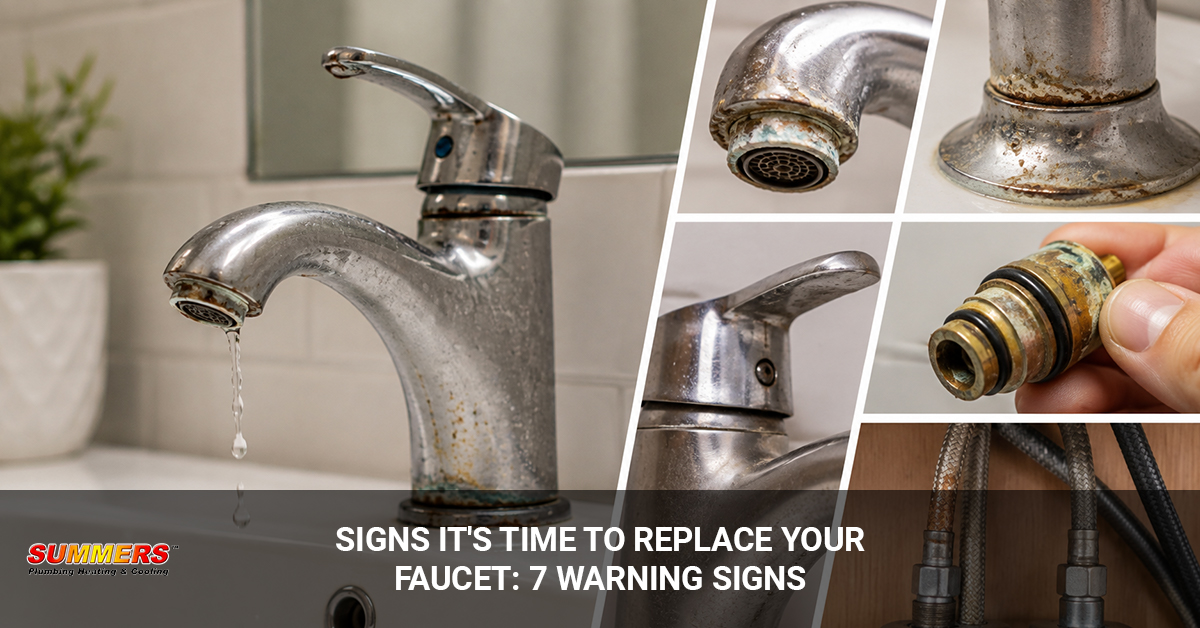
You should replace a faucet when it has repeated leaks, severe corrosion, poor water flow, physical damage, or requires frequent repairs. A single problem, such as a worn cartridge or clogged aerator, usually doesn’t mean you need a new faucet.
If the faucet body is still in good condition, repairing the failed part is often the better choice. But when several problems start appearing, replacement can save you from repeated repairs and leaks.
How Do You Know When to Replace a Faucet?
A faucet is usually ready for replacement when it keeps leaking, has severe corrosion, has poor water flow, or needs repairs over and over again.
Watch for these signs:
- Repeated leaks
- Heavy corrosion
- Weak water flow
- Cracked or damaged faucet body
- Loose or difficult-to-use handle
- Frequent part replacements
- Hard-to-find replacement parts
- Poor overall condition
Don’t replace a faucet simply because it’s old. An older faucet that works properly and has no significant damage may still be worth keeping.
7 Signs It’s Time to Replace Your Faucet
1. The Faucet Keeps Leaking After Repairs
A faucet that continues leaking after replacing washers, cartridges, or seals may be better replaced than repaired again.
One worn component isn’t unusual. Faucet parts wear out over time.
The problem is when leaks keep returning.
For example, you might replace the cartridge and later discover another leak around the handle or base. If several components are failing, the faucet itself may be reaching the end of its useful life.
Before replacing it, make sure the leak isn’t coming from the supply connection or plumbing underneath. If the leak continues after replacing worn components, professional faucet repair can help identify the underlying problem.
2. The Faucet Is Heavily Corroded
Severe corrosion is a strong reason to replace a faucet because corroded parts can make repairs difficult and unreliable.
Look for:
- Rust around connections
- Corrosion around the spout
- Green or white deposits
- Corroded valves
- Seized handles
- Damaged threads
Minor surface buildup may be cleaned.
Heavy corrosion is different. It can make internal parts difficult to remove and increase the chance of additional leaks.
3. Water Flow Has Become Weak
A faucet with consistently weak water flow may need replacement when cleaning the aerator, checking the shutoff valves, and servicing the cartridge don’t solve the problem.
Start with the simple causes.
A clogged aerator is one of the most common reasons for weak flow from a single faucet. If you’re dealing with weak flow from only one fixture, see our guide to low water pressure from one faucet before replacing the faucet. Remove and clean it before deciding the faucet needs replacement.
Also check the shutoff valves underneath the sink.
If the aerator is clean, the valves are fully open, and the supply lines are clear but flow remains poor, the faucet may have internal buildup or damage.
4. The Faucet Body Is Cracked or Damaged
A cracked or physically damaged faucet should generally be replaced because repairing individual internal parts won’t fix a damaged faucet body.
Check the:
- Faucet body
- Spout
- Handle
- Base
- Connection points
A visible crack can allow water to escape and may become worse over time.
Don’t rely on a temporary patch as a long-term solution for a structural crack.
5. The Handle Is Loose, Broken, or Difficult to Operate
A loose, broken, or difficult-to-operate handle may indicate worn internal components, but replacement isn’t always necessary.
A loose handle may simply need tightening.
A stiff handle may be caused by mineral buildup or a worn cartridge.
If replacing the cartridge or handle solves the problem and the faucet body is in good condition, there’s no need to replace the entire fixture.
Replacement becomes more reasonable when the handle problem is combined with corrosion, leaks, and other recurring issues.
6. You’re Constantly Replacing Faucet Parts
If you’re repeatedly replacing cartridges, washers, O-rings, or other faucet components, replacing the entire faucet may be more practical.
Keep track of how often you’ve had to repair the faucet.
For example, replacing one cartridge after several years is normal.
Replacing several internal components within a short period is a different situation.
Add up the cost of parts and labor and compare it with the cost of a new faucet.
7. Replacement Parts Are Difficult to Find
A faucet may be worth replacing when its cartridges, valves, or other replacement parts are discontinued or difficult to find.
Some older faucets use proprietary components.
If the manufacturer no longer makes the necessary cartridge or valve, future repairs can become difficult.
Replacing the faucet with a model that has readily available parts can make future maintenance easier.
Should I Repair or Replace My Faucet?
Repair the faucet when its body is in good condition and only one replaceable component has failed, but replace it when the faucet has recurring or structural problems.
Repair Usually Makes Sense When:
- The faucet body is intact.
- The faucet isn’t badly corroded.
- A washer needs replacement.
- The cartridge has failed.
- An O-ring is worn.
- The aerator is clogged.
- Replacement parts are readily available.
These are generally isolated problems.
Replacement Usually Makes Sense When:
- The faucet body is cracked.
- Corrosion is severe.
- Multiple components keep failing.
- Leaks return after repairs.
- Replacement parts are discontinued.
- Water flow remains poor after troubleshooting.
- Repair costs are approaching the cost of a new faucet.
The goal isn’t to replace a faucet at the first sign of trouble. It’s to avoid repeatedly spending money on a fixture that’s becoming unreliable.
How Long Does a Faucet Last?
A faucet can last for many years, but its practical lifespan depends on its quality, water conditions, usage, maintenance, and internal component wear.
There isn’t one exact age when every faucet should be replaced.
A faucet in a home with hard water may develop mineral buildup faster than one in an area with softer water.
Likewise, a heavily used kitchen faucet may experience more wear than a guest-bathroom faucet.
Instead of focusing only on age, consider:
- How often it needs repairs
- Whether it leaks
- How well it operates
- Its overall condition
- Whether replacement parts are available
- Whether corrosion is present
Is It Worth Replacing an Old Faucet?
Replacing an old faucet is usually worthwhile when it has frequent leaks, poor performance, significant corrosion, or repeated repair needs.
An old faucet that still works properly doesn’t necessarily need replacement.
However, replacement becomes more attractive when you’re already paying for repairs and the faucet continues developing new problems.
You can also use the opportunity to choose a faucet with features that better suit your needs, such as a pull-down sprayer or a different handle configuration.
How Much Does It Cost to Replace a Faucet?
Professional faucet replacement commonly costs about $150 to $600 or more, depending on the faucet, labor, installation location, and plumbing condition.
Typical installed costs can vary by faucet type:
| Faucet Type | Typical Installed Cost |
| Bathroom faucet | 150–400 |
| Kitchen faucet | 200–600 |
| Higher-end faucet | 400–1,000+ |
These are general ranges rather than fixed prices.
The final cost can increase if the plumber needs to replace shutoff valves, supply lines, or corroded connections.
A difficult-to-access faucet can also take longer to remove and install.
What Should You Check Before Buying a Replacement Faucet?
Before buying a replacement faucet, check the mounting configuration, sink or countertop holes, faucet dimensions, water connections, and available space. It’s also important to understand the differences between a kitchen faucet vs bathroom faucet before choosing the right replacement.
Choosing the wrong faucet can turn a simple replacement into an installation problem.
Check the Number of Mounting Holes
Check how many mounting holes your sink or countertop has before choosing a new faucet.
Common configurations include:
- Single-hole
- Three-hole
- Widespread
Some faucets include a deck plate that can cover unused holes.
Check the manufacturer’s specifications to make sure the new faucet will fit.
Measure the Faucet and Sink
Check the faucet’s height, spout reach, and available clearance before purchasing a replacement.
This is particularly important for kitchen faucets.
Make sure the spout can reach the appropriate area of the sink without hitting the backsplash, cabinet, or other obstruction.
Check the Water Connections
Check the existing water supply connections and shutoff valves before installing a new faucet.
Old or corroded valves can make faucet replacement more difficult.
If a shutoff valve is already leaking or won’t close properly, it may need to be replaced before installing the new faucet.
Consider Faucet Features
Choose faucet features based on how you use the fixture rather than adding features you don’t need.
Depending on the application, you might consider:
- Single or double handle
- Pull-down sprayer
- Pull-out sprayer
- Touchless operation
- High-arc spout
- Water-saving design
Focus first on compatibility and installation requirements.
Can I Replace a Faucet Myself?
Many homeowners can replace a faucet themselves if the shutoff valves work properly and the plumbing connections are easy to access. If the connections are corroded or difficult to access, professional faucet installation can help ensure the new fixture is installed correctly.
A basic replacement usually involves:
- Turning off the water.
- Disconnecting the supply lines.
- Removing the old faucet.
- Cleaning the mounting surface.
- Installing the new faucet.
- Connecting the water lines.
- Turning the water back on.
- Checking for leaks.
The hardest part of some faucet replacements isn’t installing the new faucet. It’s removing an old faucet with corroded connections.
Don’t force a stuck connection if you risk damaging the plumbing underneath the sink.
When Should You Call a Plumber?
Call a plumber when the shutoff valves are stuck, plumbing connections are badly corroded, water is leaking below the sink or inside the wall, or the faucet can’t be safely removed.
Professional help is especially useful when:
- A shutoff valve won’t close.
- The supply connection is badly corroded.
- A fitting starts leaking when you loosen it.
- The faucet is stuck in place.
- You find damaged plumbing.
- Water is leaking inside the wall.
- The new faucet doesn’t fit the existing connections.
- The faucet continues leaking after installation.
A plumber can also replace damaged shutoff valves or supply lines while installing the new faucet.
Faucet Replacement FAQs
How do I know if my faucet needs to be replaced?
You should consider replacing a faucet when it has repeated leaks, severe corrosion, physical damage, poor water flow, or frequent repair needs. A simple worn cartridge or aerator usually doesn’t require full replacement.
Is it cheaper to repair or replace a faucet?
Repair is usually cheaper when only one component has failed, while replacement may be more cost-effective when the faucet has multiple problems or severe corrosion.
How long should a faucet last?
A faucet can last for many years, but its useful life depends on its quality, usage, water conditions, and maintenance. Replace it based on its condition and performance rather than age alone.
Should I replace a faucet that keeps dripping?
Consider replacing a faucet that keeps dripping when a new washer, cartridge, or seal doesn’t solve the problem or when other components are also failing.
Can a corroded faucet be repaired?
A mildly corroded faucet may be repairable, but severe corrosion often makes replacement the more practical option. Corroded components can be difficult to remove and may continue causing leaks.
How much does it cost to replace a faucet?
Professional faucet replacement commonly costs about $150 to $600 or more, depending on the faucet, labor, location, and condition of the plumbing connections.
Can I replace a faucet myself?
Yes, many homeowners can replace a faucet themselves if they can safely shut off the water and the existing connections are accessible and in good condition.
Should I replace my faucet if the water pressure is low?
Not necessarily, because low flow can often be caused by a clogged aerator, partially closed shutoff valve, supply-line restriction, or cartridge problem. Check those causes before replacing the faucet.
Do I need a plumber to replace a faucet?
You don’t always need a plumber to replace a faucet, but professional help is recommended when valves or connections are stuck, corroded, damaged, or difficult to access.
What should I check before buying a new faucet?
Check the sink’s mounting holes, faucet dimensions, spout reach, water connections, and available clearance before buying a replacement faucet.
Final Takeaway
The strongest signs that it’s time to replace a faucet are repeated leaks, severe corrosion, physical damage, persistent poor flow, and frequent repairs.
A clogged aerator, worn washer, or failed cartridge doesn’t automatically mean you need a new faucet. Those problems can often be repaired at a much lower cost.
But when the faucet keeps developing new problems, replacement parts are difficult to find, or repair costs continue to add up, a new faucet may be the better long-term choice.
Before installing one, check the shutoff valves, supply connections, mounting holes, and available space. That helps prevent installation problems and ensures the replacement faucet fits properly.