
What Happens If Snow Blocks Your Furnace Exhaust Vent?
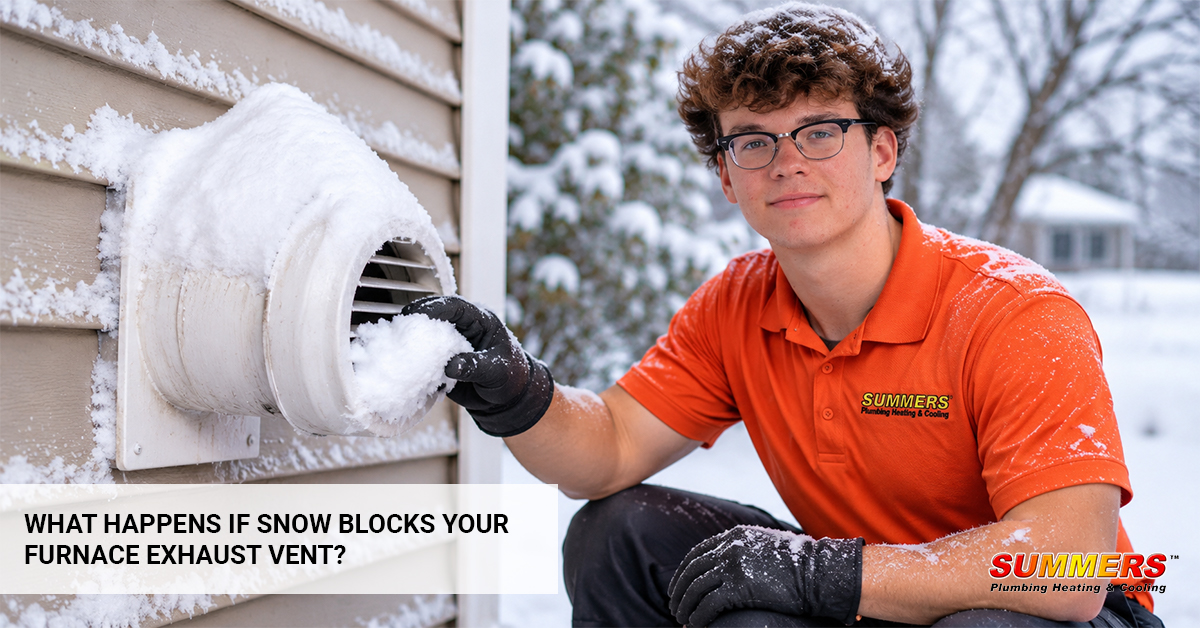
Snow blocking your furnace exhaust vent can stop your furnace from working and prevent harmful combustion gases from escaping properly. When snow covers the vent, your furnace may shut down as a safety measure. You may also notice that your home stops heating, the furnace repeatedly tries to start, or an error code appears on the display.
This problem often happens after heavy snowfall or when strong winds push snow against your home’s exterior walls. High-efficiency gas furnaces can also experience problems when snow blocks the combustion air intake pipe.
If you notice snow covering either opening, don’t ignore it. Keep both pipes clear, but never damage the vent or bypass the furnace’s safety controls. If you suspect carbon monoxide exposure or your CO alarm sounds, leave the house immediately and call emergency services.
In this guide, we’ll explain what happens when snow blocks your furnace vent, how to recognize the warning signs, and what you can do to prevent the problem.
What Happens If Snow Blocks Your Furnace Exhaust Vent?
When snow blocks your furnace exhaust vent, your furnace may stop working because it can’t release combustion gases properly. Most modern high-efficiency gas furnaces have safety controls that detect venting problems and shut down the system to prevent unsafe operation.
You may notice several problems when snow covers the exhaust opening:
- Your furnace stops heating: The furnace may shut down because it can’t vent exhaust gases properly.
- The furnace keeps trying to start: It may begin its startup process but stop before producing heat.
- A pressure switch error appears: Restricted airflow can prevent the pressure switch from detecting the conditions needed for safe operation.
- Carbon monoxide risks increase: A blocked or damaged vent can interfere with exhaust removal and create a risk of carbon monoxide entering your home.
- Your home gets colder: Without a working furnace, indoor temperatures can drop quickly during freezing weather.
- Water pipes may freeze: If your home stays cold for too long, exposed plumbing can freeze and potentially burst.
The problem can become more serious during a snowstorm when temperatures remain below freezing. That’s why you should check your outdoor furnace vents after heavy snowfall.
If you find snow covering the exhaust or intake opening, carefully remove loose snow if you can reach it safely. Don’t chip away at ice with sharp tools or try to force the furnace to run. If it still won’t start, contact an HVAC technician to inspect the venting system.
Safety note: If your carbon monoxide detector sounds, leave your home immediately and call emergency services from outside. Never assume that clearing the snow alone makes the home safe.
For additional safety guidance, see the U.S. Consumer Product Safety Commission’s carbon monoxide safety guidance.
6 Signs Snow Is Blocking Your Furnace Exhaust Vent
A blocked furnace exhaust vent can cause several problems that affect how your heating system works. You may notice that your furnace stops heating, repeatedly tries to start, or displays an error code. These signs are especially important to watch for after heavy snowfall.
Here are six common signs that snow may be blocking your furnace exhaust vent.
1. Your Furnace Suddenly Stops Producing Heat
If your furnace suddenly stops producing heat after heavy snowfall, snow blocking the exhaust or intake pipe could be the reason. The blockage can restrict airflow and trigger the furnace’s safety controls, preventing the burners from operating. If your furnace still isn’t producing heat after checking the outdoor vents, see our guide to common reasons your furnace is not heating and what you can do about them.
You may notice a few things:
- Your furnace runs but doesn’t produce warm air.
- The thermostat still calls for heat.
- The furnace displays an error code or flashing light.
- Your home’s indoor temperature starts dropping.
For example, your furnace may work normally during the morning but stop heating after a heavy snowstorm. If this happens, check the outdoor exhaust and intake openings for snow or ice buildup.
Only inspect areas you can reach safely. If the openings are clear but your furnace still won’t produce heat, an HVAC technician can check for other venting or furnace problems.
2. Your Furnace Keeps Turning On and Off
If your furnace keeps turning on and off after heavy snowfall, a blocked exhaust or intake pipe could be the cause. Snow can restrict airflow and prevent the furnace from completing its normal heating cycle. When this happens, the safety controls may shut down the burners. If your furnace continues shutting down even after you clear the snow, read our guide on why your furnace keeps turning off to learn about other possible causes.
You may notice that your furnace:
- Starts normally but shuts off after a short time.
- Tries to ignite several times without producing heat.
- Runs for a few minutes before shutting down.
- Struggles to keep your home at the thermostat’s set temperature.
This problem is sometimes called furnace short cycling. However, snow blockage isn’t the only possible cause. A dirty air filter, overheating, a faulty thermostat, or an ignition problem can also cause repeated shutdowns.
If the problem starts after a snowstorm, check both outdoor furnace vent openings for snow and ice. If they’re clear but your furnace keeps shutting down, have an HVAC technician inspect the system to find the actual cause.
3. The Furnace Blower Runs but No Warm Air Comes Out
If your furnace blower runs but doesn’t produce warm air, a blocked exhaust or intake pipe could be preventing the burners from starting. When snow restricts airflow, the furnace’s safety controls may stop the ignition process to prevent unsafe operation. If your furnace continues blowing cool air after the vent blockage is cleared, read our guide on why your furnace is blowing cold air.
You may notice:
- Cool air coming through your heating vents.
- The blower running without producing warm air.
- The furnace trying to ignite but failing.
- The thermostat calling for heat without warming your home.
For example, your furnace may turn on after you adjust the thermostat, but the burners never ignite. The blower may continue running for a while even though the furnace isn’t heating your home.
If this happens after heavy snowfall, check both outdoor vent openings for snow or ice. If they’re clear but the furnace still blows cool air, contact an HVAC technician. The problem could involve the pressure switch, inducer motor, ignition system, or another furnace component.
4. You Notice a Pressure Switch Error Code
A pressure switch error code can mean your furnace isn’t getting the airflow it needs to operate safely. If snow blocks the exhaust or intake pipe, the furnace may not create the proper air pressure to activate the switch.
The pressure switch is a safety device that checks whether the furnace’s inducer motor is moving air through the venting system. If it doesn’t detect the required pressure, the furnace control board may stop the ignition process.
You may notice:
- A pressure switch error code on the furnace display.
- A blinking diagnostic light.
- The furnace trying to start but failing to ignite.
- The system shutting down and entering safety lockout.
Keep in mind that a pressure switch error doesn’t always mean the switch is faulty. Snow-blocked vents, damaged pressure tubing, a failing inducer motor, or other airflow problems can trigger the same warning.
Check your furnace owner’s manual to understand the error code. If the vent openings are clear but the warning remains, contact an HVAC technician. They can test the pressure switch and inspect the venting system to find the actual cause.
5. Ice or Snow Has Built Up Around the Vent Pipe
Snow or ice building up around your furnace vent pipe can restrict airflow and affect how your furnace operates. This often happens after heavy snowfall, strong winds, or several days of freezing temperatures.
You may notice ice or snow around the vent opening because of:
- Heavy snowfall covering the outdoor pipes.
- Strong winds pushing snow against your home’s exterior walls.
- Snowdrifts building up around the vent.
- Moisture from furnace exhaust freezing near the pipe opening.
- Repeated freezing and thawing during winter.
High-efficiency furnaces produce moisture during normal operation. When warm exhaust gases meet cold outdoor air, some moisture can condense and freeze around the vent opening.
Over time, ice can build up and restrict the flow of exhaust gases. This may cause the furnace to shut down or display an error code.
Check both the exhaust and intake pipes for snow and ice. Clearing only the exhaust pipe may not solve the problem if snow is also blocking the intake.
If ice keeps coming back or has formed inside the pipe, contact an HVAC technician. They can inspect the vent system and find out why the ice is building up.
6. Your Home Temperature Starts Dropping
If a blocked furnace vent causes your heating system to shut down, your home’s indoor temperature will gradually drop. The problem can become more serious during freezing weather, especially if your home has poor insulation.
You may notice:
- Your rooms becoming colder than usual.
- The thermostat showing a lower temperature than your set point.
- Cold air coming through the heating vents.
- Water pipes in unheated areas getting colder or starting to freeze.
If your furnace stays off for too long, exposed water pipes in basements, crawl spaces, garages, or exterior walls may freeze. Frozen pipes can crack or burst, leading to water leaks when they thaw.
If your home gets too cold and you’re concerned about frozen plumbing, read our guide to frozen pipes in Columbus, IN for additional prevention advice.
For example, if your furnace stops working overnight during a snowstorm, the temperature inside your home may drop enough to put plumbing at risk.
Don’t wait for your home to become extremely cold before addressing the problem. Check for visible snow around the furnace intake and exhaust openings if you can do so safely. If the furnace doesn’t start working again, contact an HVAC technician to inspect the system and restore your heat.
Why Does Snow Block a Furnace Exhaust Vent?
Snow can block a furnace exhaust vent when heavy snowfall covers the outdoor pipe, strong winds create snowdrifts around it, or moisture freezes near the opening. These blockages can restrict airflow and prevent your furnace from venting combustion gases properly.
The problem often occurs during winter storms, especially when the vent sits close to the ground or near an area where snow collects.
Here are the most common reasons snow blocks furnace exhaust vents.
Heavy Snowfall Covers the Outdoor Vent Opening
Heavy snowfall can bury your furnace exhaust vent if the outdoor pipe sits too close to the ground. When snow piles up around the opening, it can block the path that allows exhaust gases to escape.
For example, your furnace may have a sidewall vent near your driveway or walkway. After a heavy snowstorm, accumulated snow can cover the opening and stop the furnace from venting properly.
This problem is more likely when:
- The vent sits close to ground level.
- Snow accumulates around the exterior wall.
- You regularly pile driveway snow near the vent.
- Heavy snowfall covers the outdoor pipe.
- The vent is located in an area where snow naturally collects.
If snow covers the vent, your furnace may shut down or fail to start because of restricted airflow.
To prevent this problem, keep the area around your furnace vent clear after heavy snowfall. If the vent repeatedly gets buried, ask an HVAC professional to check its height and location.
The correct vent clearance depends on the furnace manufacturer’s installation instructions and local building codes. Never raise or extend the vent pipe without professional guidance.
Wind Creates Snowdrifts Around the Vent Pipe
Strong winds can push snow against your home’s exterior walls and cover furnace vent openings, even when snowfall is light. These piles of wind-blown snow are called snowdrifts.
Snowdrifts often form near:
- Exterior wall corners.
- Fences and nearby structures.
- Decks and raised platforms.
- Driveways and walkways.
- Areas where wind changes direction.
For example, your furnace vent may stay clear during a snowfall but become covered later when strong winds push snow against the wall. This can block the exhaust or intake opening and prevent your furnace from working properly.
After a windy snowstorm, check the area around both outdoor vent pipes. Clear loose snow if you can reach the openings safely. If snowdrifts repeatedly cover the pipes, ask an HVAC technician to check whether the vent location meets the manufacturer’s installation requirements.
Exhaust Moisture Freezes Around the Pipe Opening
Moisture from your furnace exhaust can freeze around the outdoor vent opening during very cold weather. Over time, this ice can build up and restrict the flow of exhaust gases, making it harder for your furnace to operate properly.
High-efficiency gas furnaces produce water vapor during normal operation. When warm exhaust gases leave the pipe and meet freezing outdoor air, some of that moisture can turn into condensation. If temperatures stay below freezing, the condensation can freeze around the vent opening.
Ice buildup is more likely when:
- Outdoor temperatures remain below freezing for several days.
- Moisture repeatedly freezes around the exhaust opening.
- Strong winds cause exhaust moisture to freeze near the pipe.
- The vent pipe has an incorrect slope or installation problem.
- Condensate drainage does not work properly.
For example, you may notice a layer of ice forming around the exhaust pipe after several days of freezing weather. As the ice grows, it can partially or completely block the opening and trigger a furnace shutdown.
If ice keeps forming around your furnace vent, don’t try to break it off with sharp tools or force it out of the pipe. Contact an HVAC technician to inspect the vent termination, pipe slope, and condensate drainage system. They can identify why the ice keeps forming and recommend a safe fix.
The Furnace Intake Pipe Is Also Blocked by Snow
Snow can block your furnace’s combustion air intake pipe, not just the exhaust pipe. When this happens, your furnace may not get enough fresh air to burn gas properly, causing its safety controls to stop the system.
Many high-efficiency gas furnaces have two separate outdoor pipes:
- Exhaust pipe: Carries combustion gases from the furnace to the outside.
- Combustion air intake pipe: Brings fresh outdoor air into the furnace to support combustion.
Both pipes need to stay clear for the furnace to work properly.
If snow covers the intake pipe, the furnace may struggle to get the air it needs for combustion. If snow blocks the exhaust pipe, combustion gases may not escape properly. Either problem can interrupt the heating cycle and cause the furnace to shut down.
After heavy snowfall, check both outdoor openings for snow and ice buildup. Don’t assume the exhaust pipe is the only one that needs attention.
If both openings are clear but your furnace still won’t start, contact an HVAC technician to inspect the venting system and identify the problem.
Can a Snow-Blocked Furnace Exhaust Vent Cause Carbon Monoxide?
Yes. A blocked or damaged furnace exhaust vent can create a carbon monoxide (CO) hazard if combustion gases cannot escape safely. If these gases enter your home, they can cause serious health problems or even become life-threatening.
Carbon monoxide is a gas you cannot see, smell, or taste. It forms when fuels such as natural gas don’t burn completely. Your furnace normally sends combustion gases outside through its exhaust pipe. But when snow or ice blocks the vent, the exhaust system may not work as intended.
A blocked vent doesn’t automatically mean carbon monoxide is entering your home. However, it creates a potentially dangerous condition that you should address right away.
Common Symptoms of Carbon Monoxide Exposure
Carbon monoxide exposure can cause headaches, dizziness, nausea, weakness, and confusion. The symptoms may start mildly and become worse as exposure continues.
Watch for these common warning signs:
- Headache: You may experience a dull or persistent headache.
- Dizziness: You may feel lightheaded or have trouble keeping your balance.
- Nausea: You may feel sick or experience vomiting.
- Weakness: You may feel unusually tired or weak.
- Confusion: You may have trouble thinking clearly or concentrating.
- Shortness of breath: You may have difficulty breathing.
- Loss of consciousness: Severe exposure can cause unconsciousness and can be fatal.
These symptoms can resemble the flu, so don’t assume they are caused by a common illness, especially if your furnace has a venting problem.
What Should You Do If Your Carbon Monoxide Alarm Sounds?
If your carbon monoxide alarm sounds, leave your home immediately and call emergency services from outside. Don’t stay inside to inspect the furnace or look for the source of the gas.
Follow these safety steps:
- Get everyone outside: Move all people and pets into fresh air immediately.
- Call emergency services: Report the alarm and possible carbon monoxide exposure.
- Stay outside: Don’t go back inside until emergency responders confirm it’s safe.
- Get medical help: Seek immediate medical attention if anyone has symptoms of carbon monoxide poisoning.
Never assume that opening windows, turning off the furnace, or clearing snow from the vent makes your home safe after a CO alarm.
Install carbon monoxide detectors according to the manufacturer’s instructions and local safety requirements. Test them regularly and replace them when they reach the end of their service life.
For additional safety information, read the CDC’s carbon monoxide safety guidance and the U.S. Consumer Product Safety Commission’s CO safety recommendations.
What Should You Do If Snow Blocks Your Furnace Exhaust Vent?
If snow blocks your furnace exhaust vent, stop using the furnace until the obstruction is safely cleared and the venting system can operate properly. Snow or ice can restrict exhaust airflow and cause the furnace to shut down. In some cases, improper venting can also create a carbon monoxide hazard.
You can check for visible snow around the outdoor vent openings, but don’t try to force the furnace to run. Here are the steps you should follow to deal with the problem safely.
1. Turn Off the Furnace if the Vent Is Obstructed
If you can see snow or ice blocking your furnace exhaust vent, don’t keep running the system. A blocked vent can prevent combustion gases from escaping properly and may cause the furnace’s safety controls to shut it down.
Before doing anything else:
- Follow the furnace manufacturer’s shutdown instructions.
- Avoid repeatedly restarting the furnace.
- Never bypass the pressure switch or other safety controls.
- Don’t attempt to operate the furnace while the vent remains blocked.
If your carbon monoxide alarm sounds or anyone experiences possible CO poisoning symptoms, leave the house immediately and call emergency services from outside.
Once the situation is safe, you can inspect the outdoor vent openings for visible snow or ice. If you’re unsure how to clear the blockage or the furnace continues to shut down, contact an HVAC technician.
2. Locate the Outdoor Exhaust and Intake Pipes
Find your furnace’s outdoor vent openings and check whether snow or ice is blocking them. Most high-efficiency gas furnaces have two separate PVC pipes that extend through an exterior wall.
These pipes serve different purposes:
- Exhaust pipe: Carries combustion gases from the furnace to the outside.
- Intake pipe: Brings fresh outdoor air into the furnace for combustion.
Some furnaces use different venting designs, so check your owner’s manual if you’re unsure which pipes belong to your system.
Once you locate the openings, look for:
- Snow covering the pipe openings.
- Ice forming around the exhaust outlet.
- Snowdrifts blocking either pipe.
- Cracked, loose, or damaged vent connections.
Make sure you check both pipes, not just the exhaust opening. Snow covering either one can affect furnace operation.
Only inspect areas you can reach safely from the ground. Don’t climb onto an icy roof or use a ladder in snowy conditions. If you can’t safely reach the vent, ask an HVAC technician to inspect it.
3. Carefully Remove Snow Around the Vent Openings
If you can safely reach your furnace vents from the ground, gently remove the loose snow covering the openings. Clearing the snow can help restore proper airflow and allow the furnace to operate normally once the system is safe to restart.
Follow these simple steps:
- Use your hands or a soft brush to remove loose snow.
- Clear snow from both the exhaust and intake openings.
- Remove snow around the pipes so it doesn’t fall back into the openings.
- Work gently to avoid damaging the PVC pipes or vent connections.
- Make sure you don’t push snow farther inside the pipes.
Avoid using a shovel, sharp metal tools, or other hard objects against the vent openings. They can crack the pipes or damage the connections.
If ice has formed inside the pipe or you can’t remove the blockage safely, don’t force it out. Contact an HVAC technician to inspect and clear the vent.
Important: Clearing visible snow doesn’t automatically mean the furnace is safe to restart. If the blockage persists or the furnace continues showing an error, have the system inspected before using it again.
4. Avoid Damaging the Vent Pipes
Be careful when clearing snow and ice from your furnace vents. PVC vent pipes can crack or become loose if you hit them with hard tools. Even small amounts of damage can affect how safely your furnace removes combustion gases.
Avoid these common mistakes:
- Don’t hit the pipes with a shovel: You could crack the PVC or damage its connections.
- Don’t chip ice with sharp tools: Metal tools can damage the pipe opening.
- Don’t pour boiling water into the vent: Sudden temperature changes can damage the pipe, and water may freeze again.
- Don’t use a torch or open flame: This creates an unnecessary fire and damage risk.
- Don’t push snow inside the pipe: It can make the blockage worse.
- Don’t remove or change pipe connections: Improper connections can cause exhaust leaks.
- Don’t bypass safety switches: These controls help protect your home from unsafe furnace operation.
If you notice a cracked pipe, loose connection, or ice buildup that keeps returning, contact an HVAC technician. They can inspect the vent system and make sure it can safely remove combustion gases before you use the furnace again.
5. Check Whether the Furnace Restarts Normally
After clearing the snow around your furnace vents, follow the manufacturer’s instructions to restart the system. Watch the furnace during its normal startup cycle to make sure it starts and produces warm air without showing an error code.
Pay attention to these signs:
- The furnace starts without unusual delays.
- The burners ignite normally.
- Warm air comes through your heating vents.
- The furnace continues running without shutting down unexpectedly.
- No new error codes or warning lights appear.
If your furnace still won’t start, keeps shutting down, or displays a pressure switch error, don’t keep resetting it. Clearing the snow may not have fixed the underlying problem.
An HVAC technician can inspect the pressure switch, inducer motor, exhaust and intake pipes, condensate drainage system, and other components to find the cause.
Remember: If the furnace doesn’t return to normal operation after clearing the obstruction, have it professionally inspected before using it again. A successful restart alone also doesn’t replace a professional inspection when you suspect vent damage or improper exhaust removal.
Can You Run Your Furnace If the Exhaust Vent Is Blocked by Snow?
No. You should never run a gas furnace if you know its exhaust vent is blocked by snow or ice. A blocked vent can prevent combustion gases from leaving your home safely and create a potential carbon monoxide hazard.
Your furnace needs a clear exhaust pipe to carry combustion gases outdoors. When snow covers the opening, the system may not vent properly. Modern furnaces have safety controls that can stop the burners when they detect certain airflow or venting problems.
Running the furnace with a blocked vent can lead to several problems:
- Improper venting: Combustion gases may not leave the furnace as intended.
- Furnace shutdown: Safety controls may prevent the burners from operating.
- Repeated ignition problems: The furnace may try to start but fail to complete its heating cycle.
- Carbon monoxide risk: Improper venting can allow dangerous combustion gases to enter your home.
Never bypass the pressure switch, disconnect safety controls, or repeatedly reset the furnace to make it run. These safety features help protect your household.
If you notice snow blocking the exhaust opening, turn off the furnace according to the manufacturer’s instructions. Carefully remove accessible loose snow if it’s safe to do so. If the blockage remains or the furnace continues to shut down, contact a qualified HVAC technician before using the system again.
Important: If your carbon monoxide detector sounds, leave your home immediately and call emergency services from outside. Don’t stay inside to troubleshoot the furnace.
How to Prevent Snow From Blocking Your Furnace Exhaust Vent
You can prevent snow from blocking your furnace exhaust vent by keeping the outdoor openings clear, checking for ice buildup, and making sure snow doesn’t pile up around the pipes. A few simple checks after winter storms can help your furnace keep working properly.
Here are some practical ways to protect your furnace vents during winter.
Keep Snow Away From the Furnace Vent Openings
Keep the area around your furnace vent openings clear after heavy snowfall. Snow can pile up against exterior walls and cover the pipes, especially near driveways, decks, fences, and corners of your home.
To prevent snow from blocking the openings:
- Remove loose snow around the vents after heavy snowfall.
- Keep driveway and walkway snow away from the furnace pipes.
- Check areas where wind naturally creates snowdrifts.
- Make sure snow doesn’t build up around either the intake or exhaust opening.
- Check the openings again after strong winds or additional snowfall.
For example, if you clear snow from your driveway, avoid piling it against the exterior wall where your furnace vents are located.
Regularly checking these areas can help you spot a blockage before it affects your heating system. Always use safe, gentle methods when removing snow, and don’t damage or push snow inside the pipes.
Check Both Intake and Exhaust Pipes Regularly
Check both your furnace’s intake and exhaust pipes after heavy snowfall to make sure neither opening is blocked. Snow covering either pipe can restrict airflow and prevent your furnace from working properly.
Many high-efficiency gas furnaces use two separate pipes. One brings fresh air into the furnace, while the other carries combustion gases outside. Both openings need to stay clear.
When checking the pipes, look for:
- Snow buildup: Make sure snow hasn’t covered either opening.
- Ice formation: Check for ice around the pipe ends that could restrict airflow.
- Leaves and debris: Look for anything that could block the openings.
- Pipe damage: Check for visible cracks, loose connections, or broken sections.
- Other obstructions: Make sure nearby snowdrifts or piled-up snow aren’t covering the vents.
Make these checks after major snowstorms, strong winds, and periods of freezing weather.
If you notice damage or a blockage you cannot safely remove, contact an HVAC technician. Regular inspections can help you catch vent problems early and reduce the chance of an unexpected furnace shutdown.
Maintain Proper Vent Height Above Expected Snow Levels
Your furnace vent should sit high enough above the ground to avoid getting buried by snow. If the pipe is too close to the ground, heavy snowfall or strong winds can cover the opening and restrict airflow.
This can become a recurring problem if your home is in an area that gets heavy snow during winter.
To prevent this issue:
- Keep the vent opening above the expected snow level.
- Avoid placing vents where snow naturally piles up.
- Make sure nearby decks, fences, and walls don’t create large snowdrifts around the pipes.
- Have an HVAC professional check the vent height if snow regularly covers the opening.
If your furnace vent keeps getting buried after snowstorms, an HVAC technician may recommend moving the vent or changing its position.
The correct vent height depends on your furnace model, installation instructions, and local building codes. Don’t extend or reposition the pipes yourself. Incorrect vent placement can cause airflow problems and affect safe furnace operation.
A properly positioned vent can help reduce snow blockages and keep your furnace running reliably during winter.
Schedule Annual Furnace Maintenance
Schedule a professional furnace inspection at least once a year to catch venting problems before winter arrives. Regular furnace maintenance helps your heating system run properly and reduces the chance of unexpected breakdowns during cold weather.
During a maintenance visit, an HVAC technician can check:
- Exhaust and intake connections: Make sure both pipes are properly connected and free of damage.
- Vent openings: Check for cracks, loose fittings, or other problems around the outdoor terminations.
- Vent pipe slope: Make sure the pipes have the correct slope according to the manufacturer’s instructions.
- Condensate drainage: Check for blockages or drainage problems that could cause water to freeze.
- Inducer motor: Make sure it moves air through the venting system properly.
- Pressure switch: Test whether it responds correctly to the required airflow conditions.
- Safety controls: Check that the furnace operates within the manufacturer’s safety requirements.
Regular maintenance can also help identify dirty filters, ignition problems, and other issues that may cause your furnace to stop working during winter. Learn more about how to prevent furnace breakdowns with regular inspections and simple maintenance steps.
Install and Maintain Carbon Monoxide Detectors
Install carbon monoxide (CO) detectors in your home to alert you if dangerous levels of this gas build up indoors. Because carbon monoxide has no smell or color, you cannot detect it without a working alarm.
Follow these safety tips:
- Install approved CO detectors on every level of your home, including outside sleeping areas, as recommended by local safety guidance.
- Follow the manufacturer’s instructions for proper placement.
- Test each detector regularly.
- Replace batteries when needed.
- Replace the entire detector when it reaches the end of its recommended service life.
A working CO detector provides an important layer of protection, but it doesn’t fix a blocked furnace vent or replace regular furnace maintenance.
If your CO alarm sounds, leave the house immediately and call emergency services from outside. Don’t re-enter until authorities confirm it’s safe.
For additional guidance, see the U.S. Consumer Product Safety Commission’s carbon monoxide safety recommendations.
When Should You Call an HVAC Technician for a Blocked Furnace Vent?
Call an HVAC technician if your furnace continues to shut down after you clear the snow or if you notice damage, ice buildup, or a recurring blockage around the vent pipes. Some venting problems require professional inspection and shouldn’t be handled with basic snow removal.
You should arrange a professional inspection if:
- Your furnace won’t restart: The system still doesn’t produce heat after you clear the accessible snow.
- The pressure switch error keeps appearing: The furnace continues showing a pressure switch fault even when the outdoor vents look clear.
- Ice keeps forming around the vent: Repeated ice buildup may point to a venting or condensate drainage problem.
- The vent pipes are damaged: You notice cracks, loose connections, or disconnected sections.
- The blockage is difficult to reach: Snow or ice has collected inside the pipe or in an inaccessible area.
- Your furnace keeps shutting down: The system repeatedly stops working during cold weather.
- You suspect an exhaust leak: You notice signs of improper venting or have concerns about combustion gases entering your home.
An HVAC technician can inspect the exhaust and intake pipes, test the pressure switch, check the inducer motor, and examine the condensate drainage system. They can also identify whether the vent installation needs repair or adjustment.
If your furnace stops working after heavy snowfall, don’t keep resetting it or trying to force it to run. Professional furnace repair can help identify the actual problem and restore safe, reliable heating.
Important: If your carbon monoxide alarm sounds or anyone experiences possible CO poisoning symptoms, leave the home immediately and call emergency services from outside. Don’t wait for an HVAC appointment.
Frequently Asked Questions About Snow Blocking Furnace Exhaust Vents
Can snow cause a furnace to stop working?
Yes. Snow can block your furnace’s exhaust or combustion air intake pipe, restricting airflow and preventing the system from operating properly. Your furnace’s safety controls may stop the burners or shut down the system to prevent unsafe operation. If this happens after heavy snowfall, check both outdoor vent openings for snow or ice.
Should I clear snow from my furnace exhaust pipe?
Yes. You can carefully remove loose snow around an outdoor furnace vent if you can reach it safely. Use your hands or a soft brush, and avoid pushing snow inside the pipe or damaging its opening. If ice has formed inside the pipe or you cannot safely clear the blockage, contact an HVAC technician.
Can a blocked furnace vent cause carbon monoxide poisoning?
Yes. A blocked or damaged furnace vent can create a carbon monoxide hazard if combustion gases enter your home. Carbon monoxide has no smell or color, so you cannot detect it without a working CO alarm. If your alarm sounds, leave the house immediately and call emergency services from outside.
Why does my furnace stop working after heavy snowfall?
Your furnace may stop working after heavy snowfall because snow covers the exhaust or combustion air intake opening. This restricts airflow and can prevent the pressure switch from confirming proper vent operation. The furnace may then shut down or fail to ignite.
Can snow block both the furnace intake and exhaust pipes?
Yes. Snow can cover both pipes on high-efficiency furnaces with separate intake and exhaust openings. The intake pipe brings fresh air into the furnace, while the exhaust pipe carries combustion gases outside. Both openings must remain clear for proper operation.
How often should I check my furnace vents during winter?
Check your furnace vents after heavy snowfall, strong winds, and periods of freezing weather. Look for snow, ice, leaves, and other debris around both the intake and exhaust openings. Regular checks can help you spot a blockage before your furnace stops working.
Will my furnace restart automatically after removing snow?
It depends on your furnace model and its safety controls. Some furnaces may restart once the blockage is removed, while others may require a manual reset or professional inspection. Follow your manufacturer’s instructions, and don’t keep resetting the system if it continues to shut down.
Can ice build up inside a furnace exhaust pipe?
Yes. Moisture in high-efficiency furnace exhaust can condense and freeze near the outdoor vent opening or inside parts of the pipe. Repeated ice buildup can restrict airflow and cause furnace shutdowns. If ice keeps returning, ask an HVAC technician to inspect the vent pipe, its slope, and the condensate drainage system.
Final Thoughts
Snow blocking your furnace exhaust vent can cause your heating system to stop working, especially during heavy snowfall and freezing weather. When snow or ice covers the exhaust or intake pipe, your furnace may struggle to maintain proper airflow and shut down as a safety measure.
To avoid winter heating problems, check both outdoor vent openings after heavy snowfall. Clear loose snow carefully, watch for ice buildup, and never damage the pipes or bypass furnace safety controls.
If your furnace keeps shutting down, displays a pressure switch error, or develops repeated ice buildup around the vent, contact a qualified HVAC technician. A professional inspection can help identify the problem and make sure your furnace operates safely.
Don’t ignore a blocked furnace vent. Taking care of the problem early can help prevent unexpected heating failures, protect your home’s plumbing, and keep your family safe during winter.