Main Sewer Line Clog vs Drain Clog: How to Tell the Difference
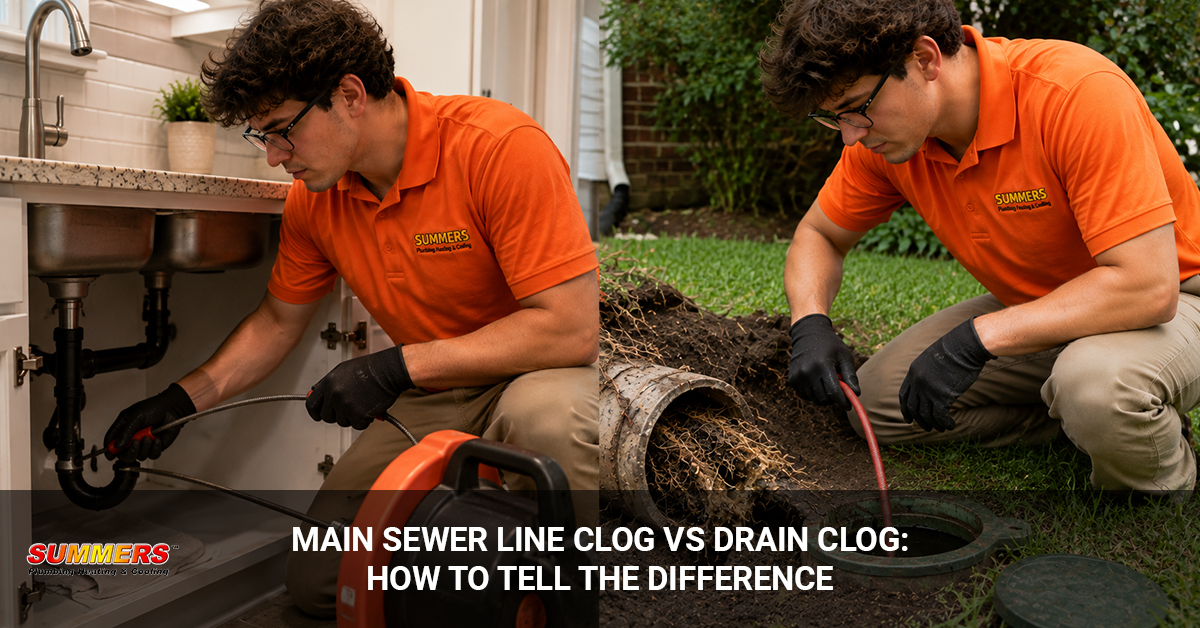
A drain clog usually affects a single plumbing fixture, while a main sewer line clog impacts multiple drains throughout your home. Although both problems can cause slow drainage and backups, they occur in different parts of the plumbing system and often require different repair methods. Knowing the difference can help you identify the problem early and avoid more serious plumbing damage.
A localized drain clog often develops from hair, soap scum, grease, or food debris blocking one sink, shower, or bathtub. A main sewer line clog, on the other hand, restricts wastewater from leaving your home. As the blockage worsens, you may notice several slow drains, gurgling toilets, sewer odors, or sewage backing up through the lowest drains in the house.
In this guide, you’ll learn the differences between a drain clog and a main sewer line clog, the warning signs of each, the most common causes, how plumbers diagnose the problem, and when it’s time to call a licensed plumber before a minor blockage turns into an expensive sewer repair.
Main Sewer Line Clog vs Drain Clog: What’s the Difference?
The biggest difference is that a drain clog affects one plumbing fixture, while a main sewer line clog affects multiple fixtures throughout the house. A localized clog blocks wastewater from a single sink, shower, bathtub, or toilet. A main sewer line clog blocks the pipe that carries wastewater from your entire home to the municipal sewer system or septic tank.
| Drain Clog | Main Sewer Line Clog |
| Affects one plumbing fixture | Affects multiple fixtures throughout the home |
| Localized blockage | Blockage in the main sewer line |
| Usually caused by hair, soap, grease, or food debris | Often caused by tree roots, grease buildup, wipes, or pipe damage |
| May be cleared with basic tools | Usually requires professional equipment |
| Limited impact on the plumbing system | Can cause whole-house drainage problems and sewage backups |
In many cases, you can identify the problem by observing how many fixtures are affected. If only one sink or shower drains slowly, the clog is likely close to that fixture. However, if sinks, toilets, showers, and floor drains all begin draining slowly or backing up at the same time, the blockage is usually located in the main sewer line.
Recognizing this difference early is important because a main sewer line clog can quickly develop into a sewage backup if it’s not repaired promptly.
Signs You Have a Drain Clog
A drain clog usually affects only one plumbing fixture and doesn’t cause problems elsewhere in the house. These clogs are typically located close to the affected drain and are often caused by everyday debris such as hair, soap scum, grease, or food waste.
One Slow Drain
A single slow drain is the most common sign of a localized clog. If only one sink, shower, bathtub, or floor drain empties slowly while the rest of your plumbing works normally, the blockage is likely limited to that drain.
Water Stays in One Sink or Tub
Standing water in one sink or bathtub usually indicates a clog near that fixture. The blockage prevents water from flowing through the drain pipe, causing it to collect until it drains slowly or not at all.
Localized Gurgling
Gurgling sounds from one drain often occur when air moves through a partially blocked pipe. You may hear bubbling or gurgling as water passes the clog, but the noise is generally limited to the affected fixture.
No Problems Elsewhere in the House
A localized drain clog doesn’t usually affect the rest of your plumbing system. Toilets flush normally, other sinks drain properly, and you won’t typically notice sewer odors or wastewater backing up into multiple fixtures.
If the problem remains limited to one fixture, a localized drain clog is the most likely cause. However, if additional drains begin slowing down or backing up, the blockage may have reached the main sewer line and should be inspected by a plumber.
Signs You Have a Main Sewer Line Clog
A main sewer line clog usually affects several plumbing fixtures at the same time because it blocks the pipe that carries wastewater out of your home. As the blockage grows, you’ll often notice problems throughout the plumbing system rather than at a single drain.
Multiple Slow Drains
Several slow drains are one of the earliest signs of a main sewer line clog. If sinks, showers, bathtubs, and floor drains all begin draining slowly, the blockage is likely located in the main sewer line.
Toilets Gurgle
A gurgling toilet often indicates trapped air caused by a sewer line blockage. When wastewater can’t flow freely, air is forced back through the plumbing system, creating bubbling or gurgling sounds after flushing.
Sewage Backing Up
Sewage backing up into your home is a strong sign of a serious main sewer line blockage. Wastewater may overflow through toilets, showers, bathtubs, or basement floor drains because it has nowhere else to go.
Water Coming Up Through Floor Drains
Water backing up through a basement floor drain often points to a blocked main sewer line. Floor drains are usually the lowest plumbing fixtures in the home, making them the first place wastewater appears during a sewer backup.
Sewer Odors
Persistent sewer odors can develop when wastewater becomes trapped inside a blocked or damaged sewer line. The smell may come from multiple drains, the basement, crawl space, or outside near the sewer pipe. For more serious sewer problems, learn the warning signs of a collapsing sewer line before the damage becomes more extensive.
Wet Areas in the Yard
Wet soil or unusually green patches of grass above the sewer line may indicate an underground sewer leak. Tree root intrusion, cracked pipes, or collapsed sewer lines can allow wastewater to escape into the surrounding soil.
If you notice several of these warning signs together, don’t ignore them. A main sewer line clog can quickly lead to extensive water damage and costly repairs if wastewater begins backing up into your home.
What Causes Each Type of Clog?
Drain clogs and main sewer line clogs have different causes because they occur in different parts of your plumbing system. Understanding what causes each type of blockage can help you choose the right solution and reduce the risk of future plumbing problems.
Common Causes of Drain Clogs
Most drain clogs develop when everyday debris builds up inside a single drain pipe. These blockages are usually located close to the affected plumbing fixture.
Common causes include:
- Hair: A leading cause of bathroom sink, shower, and bathtub clogs.
- Soap scum: Soap residue sticks to pipe walls and gradually reduces water flow.
- Grease: Cooking grease hardens as it cools, restricting kitchen drain pipes.
- Food waste: Coffee grounds, eggshells, pasta, rice, and other food scraps can clog kitchen drains, especially if they bypass the garbage disposal.
Common Causes of Main Sewer Line Clogs
Main sewer line clogs usually develop deeper in the plumbing system and affect the entire home. These blockages are often more difficult to remove and typically require professional equipment.
Common causes include:
- Tree roots: Roots enter cracked or aging sewer pipes and continue growing until they restrict wastewater flow.
- Grease buildup: Large amounts of grease can accumulate inside the main sewer line over time.
- Flushed wipes and hygiene products: Even products labeled “flushable” can collect inside the sewer line and create stubborn blockages.
- Pipe collapse or shifting: Aging pipes, ground movement, or heavy loads above the sewer line can cause sections of the pipe to collapse or become misaligned.
- Sewer line damage: Cracks, corrosion, separated joints, and broken pipes can trap debris and reduce the pipe’s capacity.
While localized drain clogs are often simple to clear, main sewer line clogs usually require professional diagnosis to identify the underlying cause and prevent the problem from returning.
How Plumbers Diagnose the Problem
Professional plumbers use specialized equipment to determine whether the blockage is in a single drain or the main sewer line. Accurate diagnosis helps ensure the right repair method is used and prevents unnecessary work.
Drain Snaking
Drain snaking is commonly used to clear localized drain clogs. For stubborn buildup caused by grease, soap scum, or debris, professional drain cleaning can fully restore proper water flow and help prevent recurring clogs. A flexible cable with a cutting or boring head is inserted into the drain to break apart or remove hair, grease, soap buildup, and other blockages close to the affected fixture.
Sewer Camera Inspection
A sewer camera inspection is one of the most reliable ways to diagnose a main sewer line clog. A waterproof camera is fed through the sewer pipe, allowing the plumber to locate tree roots, grease buildup, cracked pipes, separated joints, or collapsed sections without digging.
Hydro Jetting
Hydro jetting removes stubborn blockages by cleaning the inside of the sewer pipe with high-pressure water. It effectively clears grease, sludge, soap residue, mineral buildup, and small tree roots while also washing debris from the pipe walls. Plumbers often perform a camera inspection before hydro jetting to confirm the sewer line is in good condition.
If you want to understand how hydro jetting works and when it is needed, see our guide on what hydro jetting is and when you need it.
Sewer Line Inspection
A complete sewer line inspection determines whether structural damage is contributing to the blockage. If cracked, collapsed, or misaligned pipes are found, sewer line repair may be necessary to restore proper drainage and prevent future backups. If the sewer camera reveals cracks, pipe misalignment, corrosion, or a collapsed section, the plumber can recommend the most appropriate repair, such as spot repair, trenchless sewer repair, or full sewer line replacement.
Using the right diagnostic tools allows plumbers to identify the exact cause of the problem, eliminate recurring clogs, and recommend a long-term solution instead of a temporary fix.
Can You Fix It Yourself?
You can often clear a localized drain clog yourself, but a main sewer line clog usually requires professional equipment and expertise. The key is identifying whether the problem affects one fixture or your entire plumbing system.
For a single drain clog, you can safely try:
- Remove visible debris from the drain opening.
- Use a plunger to loosen the blockage.
- Try a hand-operated drain snake for clogs close to the fixture.
- Flush the drain with hot water if grease or soap buildup is suspected.
These methods often work for minor clogs in sinks, showers, and bathtubs.
However, DIY solutions are rarely effective for a main sewer line clog. Blockages caused by tree roots, heavy grease buildup, pipe damage, or collapsed sewer lines are usually too deep or too severe for household tools to reach.
Avoid using chemical drain cleaners, especially if you suspect a sewer line clog. These products often fail to remove deep blockages and can damage older plumbing pipes when used repeatedly.
If multiple drains are slow, toilets are gurgling, or wastewater backs up into your home, stop using the plumbing system and call a licensed plumber. Professional equipment such as sewer cameras, drain snakes, and hydro jetting machines can safely diagnose and remove the blockage before it causes more extensive damage.
When Should You Call a Plumber?
You should call a plumber as soon as you suspect a main sewer line clog or your plumbing problem affects more than one fixture. Prompt professional service can prevent sewage backups, water damage, and more expensive repairs.
Contact a licensed plumber if you notice any of the following:
- Multiple drains are clogged or draining slowly. When several fixtures are affected, the blockage is usually in the main sewer line.
- Sewage backs up into your home. Wastewater coming up through toilets, showers, bathtubs, or basement floor drains requires immediate professional attention.
- Clogs keep coming back. Recurring blockages often indicate a deeper problem, such as tree root intrusion or a damaged sewer pipe.
- Strong sewer odors are present. Persistent sewer smells may signal a blocked or leaking sewer line.
- You suspect tree root intrusion. Homes with large trees and older sewer pipes are especially vulnerable to root-related blockages.
- Water damage or wet spots appear. Standing water inside the home or soggy areas in the yard can indicate a damaged sewer line that needs prompt repair.
A licensed plumber can use sewer camera inspections, drain snaking, and hydro jetting to identify the exact cause of the problem and recommend the most effective solution. Acting early can help you avoid a complete sewer backup and extend the life of your plumbing system.
How to Prevent Future Clogs
Good plumbing habits and routine maintenance are the best ways to prevent both drain clogs and main sewer line clogs. Taking a few preventive steps can keep wastewater flowing properly and reduce the risk of costly plumbing repairs.
To help prevent future clogs:
- Never pour grease down the drain. Grease hardens as it cools and gradually builds up inside drain and sewer pipes.
- Use drain strainers. Drain screens catch hair, food scraps, soap residue, and other debris before they enter the plumbing system.
- Avoid flushing wipes and other non-flushable items. Even products labeled “flushable” can create stubborn blockages inside the main sewer line.
- Schedule periodic sewer camera inspections. Homes with older plumbing or large trees nearby benefit from routine inspections that can identify root intrusion and pipe damage early.
- Address tree roots promptly. Removing roots before they completely block the sewer line can prevent major pipe damage and expensive repairs.
- Repair slow drains early. A slow drain is often an early warning sign of a developing blockage. Fixing it promptly can help prevent a localized clog from becoming a larger plumbing problem.
Preventive maintenance is far less expensive than repairing a damaged sewer line or cleaning up a sewage backup. A few simple habits can help protect your plumbing system and keep your drains flowing smoothly for years.
Frequently Asked Questions
How do I know if I have a drain clog or a sewer line clog?
A drain clog usually affects one plumbing fixture, while a sewer line clog affects multiple fixtures throughout the house. If only one sink, shower, or bathtub drains slowly, the blockage is likely localized. If several drains slow down, toilets gurgle, or wastewater backs up, the problem is usually in the main sewer line.
Can one clogged drain affect the whole house?
In most cases, no. A clog in a single drain usually affects only that fixture. Whole-house drainage problems typically indicate a blockage in the main sewer line.
Can tree roots cause a sewer line clog?
Yes, tree roots are one of the most common causes of main sewer line clogs. They enter through small cracks or loose joints, then grow inside the pipe and trap debris until wastewater flow becomes restricted.
Is hydro jetting better than drain snaking?
It depends on the type of blockage. Drain snaking is effective for many localized clogs, while hydro jetting provides a more thorough cleaning by removing grease, sludge, and small tree roots from the entire pipe. A plumber can recommend the best option after inspecting the sewer line.
Can I use a drain cleaner?
Chemical drain cleaners aren’t recommended for main sewer line clogs. They rarely remove deep blockages and can damage older plumbing pipes. Mechanical drain cleaning methods are generally safer and more effective.
How much does it cost to clear a sewer line?
The cost depends on the cause of the blockage and the repair method. Removing a simple blockage usually costs less than repairing a damaged sewer pipe or removing tree roots. A professional inspection is the best way to determine the required repair and provide an accurate estimate.
When is a sewer clog an emergency?
A sewer clog becomes an emergency when wastewater backs up into your home or multiple plumbing fixtures stop draining. Immediate professional service can help prevent water damage, health hazards, and more extensive sewer repairs.
Final Thoughts
Knowing the difference between a drain clog and a main sewer line clog can help you respond quickly and avoid costly plumbing damage. A localized drain clog usually affects one fixture and is often easier to clear, while a main sewer line clog impacts multiple drains and typically requires professional equipment.
If your home has several slow drains, gurgling toilets, sewer odors, or sewage backups, don’t ignore the warning signs. A licensed plumber can identify the source of the problem, restore proper drainage, and help prevent more serious sewer line issues in the future.