
Furnace Repair Cost in Bloomington, Indiana (2026 Breakdown)
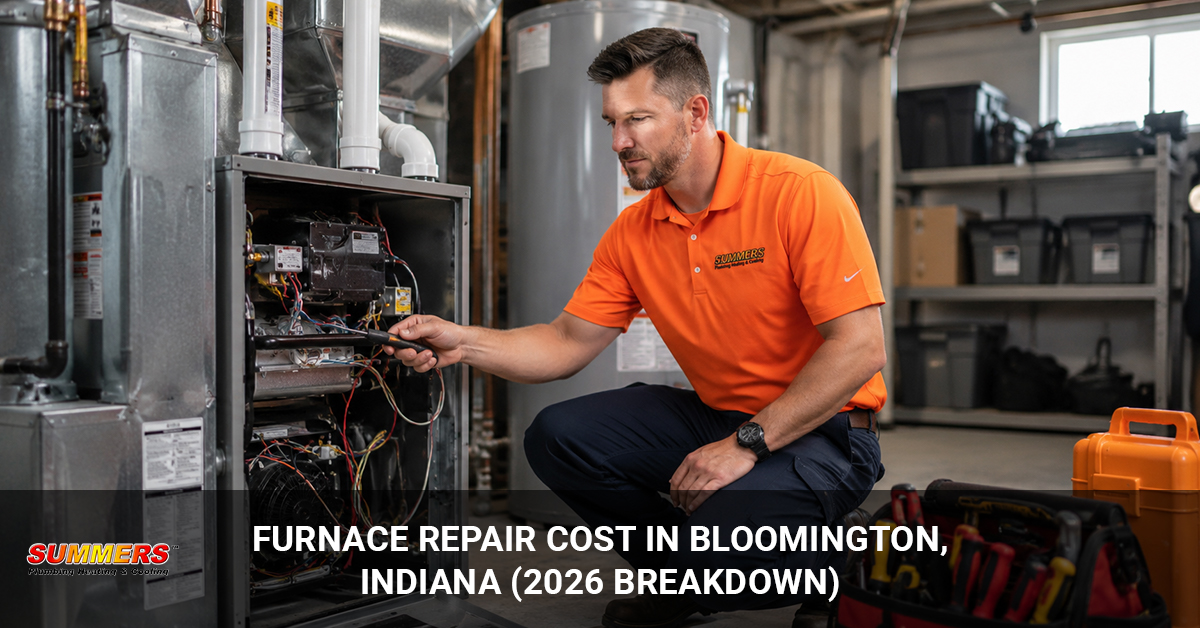
The average furnace repair cost in Bloomington, Indiana, ranges from $150 to $1,500+ in 2026, with most homeowners paying between $300 and $800 for common repairs. The final cost depends on the problem, the furnace type, replacement parts, labor rates, and whether you need emergency service.
If your furnace stops working during a cold Indiana winter, getting it repaired quickly is a priority. Some repairs, such as replacing a flame sensor or ignitor, are relatively inexpensive and can often be completed during a single service visit. More complex repairs involving a blower motor, control board, or heat exchanger typically cost more because they require additional labor and higher-priced parts.
Several factors can affect what you’ll pay for furnace repair in Bloomington. These include the age of your furnace, the availability of replacement parts, the severity of the issue, and whether the repair is performed during regular business hours or after hours.
Understanding average furnace repair costs can help you make informed decisions, avoid unexpected expenses, and determine whether repairing your current system or replacing it makes the most financial sense.
In this guide, you’ll learn the average furnace repair costs in Bloomington, common repair prices by component, factors that affect pricing, and when it may be better to replace your furnace instead of repairing it.
Average Furnace Repair Cost in Bloomington, Indiana
The average furnace repair cost in Bloomington, Indiana, ranges from $300 to $800, with most homeowners paying somewhere within that range for common heating system repairs. Minor fixes can cost as little as $150 to $400, while major repairs involving critical components may exceed $1,500 or even $2,000.
The exact cost depends on what’s wrong with your furnace, the type of system you have, the replacement parts needed, and the amount of labor required to complete the repair. Emergency repairs performed after hours, on weekends, or during peak winter months typically cost more than standard service appointments.
Here is a general breakdown of furnace repair costs in Bloomington for 2026:
| Repair Level | Typical Cost Range |
| Minor Repairs | $150–$400 |
| Moderate Repairs | $400–$900 |
| Major Repairs | $900–$2,000+ |
| Average Repair Cost | $300–$800 |
Most repair bills include several cost factors, such as the diagnostic fee, labor charges, replacement parts, and any additional testing needed to ensure the system is operating safely and efficiently.
Service Call and Diagnostic Fees
Most HVAC companies in Bloomington charge a service call or diagnostic fee of $75 to $200 to inspect your furnace and identify the problem. This fee typically covers the technician’s travel time, system inspection, troubleshooting, and a detailed explanation of the recommended repairs.
In many cases, the diagnostic fee is credited toward the total repair cost if you approve the repair during the visit. This can help reduce your overall out-of-pocket expense.
Labor Costs for Furnace Repairs
Labor is often one of the biggest factors affecting the final repair bill. Most HVAC contractors in Bloomington charge between $75 and $150 per hour for furnace repair services.
Simple repairs may take less than an hour to complete, while more complex repairs involving electrical components, motors, or major parts can require several hours of labor. Emergency service calls, weekend appointments, and holiday repairs generally come with higher labor rates.
What Affects Furnace Repair Costs?
Several factors can influence how much you’ll pay for furnace repair in Bloomington, including:
- The type and age of the furnace
- The specific component that needs repair or replacement
- The availability and cost of replacement parts
- Labor time required to complete the repair
- Emergency or after-hours service fees
- Warranty coverage on parts or equipment
Because every repair situation is different, the best way to determine the exact cost is to have a licensed HVAC technician inspect your system and provide a detailed estimate.
Furnace Repair Cost by Repair Type
Furnace repair costs vary based on the component that needs to be repaired or replaced. Simple repairs involving sensors or ignition components are usually affordable, while major repairs involving motors, control boards, or heat exchangers can cost significantly more. Knowing the average cost of common furnace repairs can help you understand what to expect before scheduling service.
Ignitor Replacement Cost
The average cost to replace a furnace ignitor ranges from $150 to $300. The ignitor is responsible for lighting the burners in a modern gas furnace. When it fails, your furnace may not produce heat at all.
Common signs of a bad ignitor include:
- Furnace won’t start
- Clicking sounds during startup
- No heat coming from vents
- Frequent ignition failures
Because ignitors are relatively inexpensive parts and quick to replace, this is one of the more affordable furnace repairs.
Flame Sensor Cleaning or Replacement Cost
The cost to clean or replace a furnace flame sensor typically ranges from $75 to $250. The flame sensor is a safety device that confirms the burners have ignited properly. If it becomes dirty or damaged, the furnace may shut down shortly after starting.
Common signs of a flame sensor issue include:
- The furnace starts and shuts off quickly
- Short cycling
- No heat despite the furnace attempting to start
In many cases, cleaning the flame sensor restores proper operation, making this one of the least expensive furnace repairs.
Thermostat Repair or Replacement Cost
The average thermostat repair or replacement cost ranges from $150 to $500, depending on the type of thermostat and the complexity of the installation.
A faulty thermostat can cause:
- Incorrect temperature readings
- Uneven heating
- Constant cycling
- A furnace that won’t turn on
Smart thermostats typically cost more to install than traditional programmable models due to additional wiring and setup requirements.
Blower Motor Repair Cost
Blower motor repairs generally cost between $300 and $900, while full replacement can exceed $1,000. The blower motor is responsible for moving heated air through your ductwork and into your living spaces.
Signs of a failing blower motor include:
- Weak airflow from vents
- Unusual squealing or grinding noises
- Overheating furnace components
- Furnace shutting down unexpectedly
Because the blower motor plays a critical role in system performance, repairs should be addressed quickly to prevent additional damage.
Control Board Replacement Cost
Replacing a furnace control board typically costs between $275 and $770. The control board acts as the furnace’s command center, coordinating ignition, blower operation, and safety controls.
A failing control board can cause:
- Intermittent furnace operation
- Ignition problems
- Error codes on the furnace display
- Complete system shutdown
Diagnosing a control board issue often requires professional testing because several furnace problems can produce similar symptoms.
Draft Inducer Motor Replacement Cost
The average cost to replace a draft inducer motor ranges from $725 to $1,500. This component helps remove combustion gases from the furnace and ensures safe operation.
Common signs of a failing draft inducer motor include:
- Loud rattling or humming noises
- Furnace startup problems
- Pressure switch errors
- System shutdowns
Because replacement often requires extensive labor and specialized parts, draft inducer motor repairs tend to be among the more expensive furnace repairs.
Heat Exchanger Replacement Cost
Heat exchanger replacement typically costs between $500 and $2,000+, making it one of the most expensive furnace repairs. The heat exchanger transfers heat from the combustion process to the air that circulates throughout your home.
Signs of a damaged heat exchanger may include:
- Cracks in the heat exchanger
- Unusual odors
- Reduced heating performance
- Frequent system shutdowns
A cracked heat exchanger can create serious safety concerns and should be inspected immediately by a qualified HVAC technician. If the furnace is older, replacing the entire system may be more cost-effective than investing in a heat exchanger replacement.
Common Furnace Repair Costs at a Glance
| Repair Type | Typical Cost |
| Flame Sensor Cleaning/Replacement | $75–$250 |
| Ignitor Replacement | $150–$300 |
| Thermostat Repair/Replacement | $150–$500 |
| Control Board Replacement | $275–$770 |
| Blower Motor Repair | $300–$900 |
| Draft Inducer Motor Replacement | $725–$1,500 |
| Heat Exchanger Replacement | $500–$2,000+ |
The best way to determine your exact repair cost is to have a licensed HVAC technician inspect the furnace and identify the root cause of the problem. Early repairs can often prevent more expensive breakdowns and help extend the life of your heating system.
Factors That Affect Furnace Repair Costs in Bloomington
Several factors can affect how much you’ll pay for furnace repair in Bloomington, Indiana. While some repairs are quick and inexpensive, others require specialized parts, additional labor, or emergency service, which can significantly increase the final cost.
Understanding these cost factors can help you better estimate your repair bill and avoid surprises when scheduling service.
Type of Furnace
The type of furnace you own plays a major role in repair costs. Different heating systems use different components, and some parts are more expensive or harder to replace than others.
Common furnace types include:
- Gas furnaces
- Electric furnaces
- Oil furnaces
- Propane furnaces
Gas furnaces are the most common heating systems in Bloomington and typically have the best availability of replacement parts. Oil and propane furnaces may require specialized components that can increase repair costs and lead times.
Furnace Age
Older furnaces generally cost more to repair than newer systems. As furnaces age, parts become more difficult to find, and wear and tear can affect multiple components at the same time.
Older systems often require more extensive repairs because:
- Replacement parts may be discontinued
- Components experience greater wear
- Multiple repairs may be needed during the same visit
- Efficiency declines over time
If your furnace is more than 15 years old, it may be worth comparing repair costs against the cost of replacing the system.
Labor Rates
Labor is one of the largest factors affecting furnace repair costs. HVAC contractors in Bloomington typically charge hourly rates based on the complexity of the repair and the technician’s experience.
Labor costs can vary based on:
- Technician expertise and certifications
- Complexity of the repair
- Time required to complete the work
- Seasonal demand for HVAC services
Repairs that involve electrical troubleshooting, motor replacements, or extensive system disassembly generally require more labor and result in higher costs.
Emergency Service
Emergency furnace repairs almost always cost more than scheduled service appointments. If your furnace stops working during a cold winter night, weekend, or holiday, you may pay additional fees for priority service.
Emergency repair costs may include:
- Emergency service fees
- Overtime labor charges
- After-hours dispatch fees
- Holiday or weekend surcharges
Depending on the timing and severity of the repair, emergency service can increase your total bill by 25% to 100% compared to standard service rates.
Warranty Coverage
Warranty coverage can significantly reduce out-of-pocket repair costs. Many furnace manufacturers offer warranties that cover specific parts for several years after installation.
If your furnace is still under warranty, you may receive coverage for:
- Ignitors
- Blower motors
- Control boards
- Heat exchangers
- Other manufacturer-approved components
In many cases, homeowners are only responsible for labor charges and diagnostic fees when replacement parts are covered under warranty.
Availability of Replacement Parts
The availability of replacement parts can also affect repair costs. Furnaces from older models or less common brands may require special-order parts that take longer to obtain and cost more to install.
Parts availability can impact:
- Total repair cost
- Repair completion time
- Labor charges
- Emergency repair options
Systems with readily available parts are often less expensive and faster to repair.
Severity of the Problem
Minor repairs are naturally less expensive than major component failures. A simple flame sensor cleaning may cost less than $250, while replacing a blower motor or heat exchanger can cost thousands.
Generally, repair costs increase when:
- Multiple components fail
- Safety-related issues are present
- Extensive diagnostics are required
- Major system components need replacement
Addressing small problems early can often prevent larger and more expensive repairs later.
Seasonal Demand
Heating repair costs can rise during Bloomington’s coldest months when HVAC companies experience higher service demand. During peak winter periods, scheduling may be limited, and emergency services may come at a premium.
Homeowners who schedule annual furnace maintenance before winter often avoid many of the costly breakdowns that occur during the busiest season.
By understanding these factors, you can better estimate furnace repair costs and make informed decisions about maintaining, repairing, or replacing your heating system.
Furnace Repair Cost by Furnace Brand
Furnace repair costs can vary depending on the brand of your heating system. While many furnace repairs involve similar components, some manufacturers use proprietary parts or specialized technology that can affect replacement part costs and labor requirements.
In general, premium furnace brands tend to have higher repair costs, while brands with widely available parts are often more affordable to service.
Carrier Furnace Repair Cost
Carrier furnace repair costs typically range from $150 to $1,500+, depending on the component being repaired or replaced. Carrier is one of the most popular furnace brands in the United States and offers good availability of replacement parts.
Because Carrier parts are widely available, most common repairs remain reasonably priced. However, repairs involving major components such as blower motors, control boards, or heat exchangers can significantly increase costs.
Trane Furnace Repair Cost
Trane furnace repairs generally cost between $200 and $1,800+. Trane systems are known for their durability and long lifespan, but some replacement parts can be more expensive than those used in standard furnace models.
Homeowners may pay more for repairs involving:
- Variable-speed blower motors
- Control boards
- Ignition systems
- High-efficiency furnace components
Although repair costs can be higher, Trane furnaces often require fewer repairs over their lifetime.
Lennox Furnace Repair Cost
Lennox furnace repair costs usually range from $200 to $2,000+, depending on the issue. Lennox manufactures high-efficiency heating systems, but some components are proprietary and can be more expensive to replace.
Common factors that increase Lennox repair costs include:
- Specialized replacement parts
- Limited compatibility with third-party components
- Advanced control systems
For this reason, Lennox repairs may cost more than repairs for some other furnace brands.
Goodman Furnace Repair Cost
Goodman furnace repair costs typically range from $150 to $1,200+. Goodman is known for offering affordable heating systems with readily available replacement parts.
Many Goodman repairs are less expensive because:
- Parts are widely stocked
- Components are relatively affordable
- Repairs are straightforward for most HVAC technicians
This makes Goodman one of the more budget-friendly furnace brands when repair issues arise.
Bryant Furnace Repair Cost
Bryant furnace repair costs generally range from $150 to $1,500+. Bryant and Carrier share many of the same components because both brands are manufactured by the same parent company.
As a result, homeowners can expect:
- Similar repair pricing to Carrier systems
- Good parts availability
- Comparable labor requirements
Most common Bryant furnace repairs fall within the average industry price range.
Rheem Furnace Repair Cost
Rheem furnace repair costs typically range from $150 to $1,500+, depending on the repair needed. Rheem systems are known for reliability and moderate maintenance costs.
Many Rheem replacement parts are easy to source, helping keep repair expenses reasonable. However, major repairs involving motors, control boards, or heat exchangers can still be costly.
Does Furnace Brand Affect Repair Costs?
Yes, the furnace brand can impact repair costs, but the specific component being repaired usually has a greater effect on the final bill. Factors that influence brand-specific repair costs include:
- Availability of replacement parts
- Whether parts are proprietary
- Furnace efficiency level
- System age
- Complexity of the repair
Regardless of the brand you own, regular maintenance can help reduce breakdowns, extend equipment life, and minimize long-term repair expenses.
Signs Your Furnace Needs Repair
The most common signs your furnace needs repair include a furnace that won’t turn on, cold air coming from vents, unusual noises, frequent cycling, rising energy bills, and uneven heating throughout your home. Identifying these warning signs early can help prevent a minor issue from turning into a costly furnace breakdown.
If you notice any of the following problems, it’s a good idea to schedule a professional furnace inspection as soon as possible.
Furnace Won’t Turn On
A furnace that won’t start is one of the clearest signs that something is wrong with your heating system. While the issue could be something simple, such as a thermostat setting, it may also indicate a more serious mechanical or electrical problem.
Common causes include:
- Faulty ignitor
- Thermostat malfunction
- Tripped circuit breaker
- Electrical wiring issues
- Failed control board
If your furnace doesn’t respond when the thermostat calls for heat, professional troubleshooting is often necessary to identify the exact cause.
Cold Air Coming from Vents
If your furnace is running but blowing cold air, the system is not heating properly. This issue can reduce comfort and increase energy costs if left unresolved.
Possible causes include:
- Dirty or damaged flame sensor
- Ignition problems
- Burner malfunction
- Gas supply issues
- Thermostat settings
A furnace that consistently blows cool air should be inspected before the problem worsens.
Strange Noises
Unusual furnace noises often indicate worn or failing components. While furnaces naturally make some sound during operation, loud or sudden noises should never be ignored.
Listen for sounds such as:
- Banging
- Grinding
- Squealing
- Rattling
- Screeching
- Vibrating
These noises may point to issues with the blower motor, bearings, belts, burners, or other internal components.
Frequent Cycling
A furnace that turns on and off repeatedly may be experiencing short cycling. This problem places additional stress on the system and can shorten the lifespan of critical components.
Common causes of short cycling include:
- Thermostat problems
- Restricted airflow
- Dirty air filters
- Overheating furnace components
- Improper furnace sizing
Addressing short cycling early can help improve efficiency and prevent unnecessary wear and tear.
Rising Utility Bills
An unexpected increase in your heating bills is often a sign that your furnace is working harder than it should. As components wear out, the system may lose efficiency and consume more energy to maintain the same indoor temperature.
Higher energy bills can be caused by:
- Dirty components
- Airflow restrictions
- Aging equipment
- Failing motors
- Burner issues
If your energy costs continue to climb without a change in usage habits, your furnace may need professional attention.
Uneven Heating Throughout Your Home
Uneven heating is a common sign that your furnace or airflow system is not operating properly. If some rooms feel warm while others remain cold, there may be an issue affecting heat distribution.
Possible causes include:
- Blower motor problems
- Blocked air vents
- Dirty air filters
- Leaky ductwork
- Airflow restrictions
A properly functioning furnace should provide consistent heating throughout your home. In some cases, restricted airflow caused by dirty ductwork may also contribute to uneven temperatures and reduced system performance, making professional duct cleaning worth considering.
Unusual Burning Smells
A brief burning smell when you first turn on your furnace for the season is normal. However, persistent odors can indicate a problem that requires professional inspection.
Potential causes include:
- Dust buildup inside the furnace
- Electrical issues
- Overheating components
- Motor problems
If you notice a strong burning smell that doesn’t go away, turn off the furnace and contact an HVAC professional.
Yellow Pilot Light
A healthy gas furnace pilot light should burn blue. A yellow or flickering flame may indicate combustion issues that can affect furnace performance and safety.
This issue may be caused by:
- Dirty burners
- Improper gas-to-air ratio
- Ventilation problems
Because combustion issues can create safety concerns, they should be addressed promptly.
When to Call a Furnace Repair Professional
You should call a furnace repair professional if your furnace stops producing heat, makes unusual noises, cycles frequently, or causes a noticeable increase in energy bills. Prompt repairs can prevent further damage, improve efficiency, and help keep your home comfortable during Bloomington’s cold winter months.
Ignoring early warning signs often leads to more expensive repairs later, so it’s always best to address furnace issues as soon as they appear.
Repair or Replace Your Furnace?
The decision to repair or replace your furnace depends on its age, condition, repair history, and the cost of the current repair. If you’re unsure which option makes the most financial sense, comparing the long-term costs of furnace repair vs. replacement can help you make an informed decision.
In general, repairing makes sense for newer furnaces with minor issues, while replacement is often the better long-term investment for older systems with frequent breakdowns or major component failures.
Making the right choice can save you money, improve energy efficiency, and help avoid unexpected heating emergencies during Bloomington’s cold winters.
When Repairing Your Furnace Makes Sense
Repairing your furnace is usually the most cost-effective option when the system is relatively new and the repair is minor. A well-maintained furnace can often provide reliable performance for many years after a repair.
Repairing is typically the better choice when:
- The furnace is less than 10 years old
- The repair cost is relatively low
- The system has a history of reliable performance
- The furnace is still under warranty
- The repair involves a minor component such as an ignitor, flame sensor, or thermostat
- Energy efficiency remains good
For many homeowners, investing a few hundred dollars in repairs is worthwhile if the furnace still has plenty of useful life remaining.
When Replacing Your Furnace Is the Better Choice
Replacing your furnace may be the smarter financial decision when repair costs continue to add up or the system is nearing the end of its lifespan.
Replacement is often recommended when:
- The furnace is more than 15 years old
- Repairs are becoming more frequent
- Energy bills continue to increase
- Major components have failed
- The system struggles to heat your home evenly
- Replacement parts are difficult to find
Older furnaces are typically less energy-efficient than newer models, which means a replacement may lower monthly heating costs while improving comfort.
The 50% Rule for Furnace Repairs
A good rule of thumb is to consider replacement when the repair cost approaches 50% of the cost of a new furnace. For example, if a new furnace installation costs $8,000 and the repair estimate is $4,000 or more, replacement may provide better long-term value.
While this rule isn’t perfect for every situation, it can help homeowners make a more informed decision when facing expensive repairs.
Consider the Age of Your Furnace
The age of your furnace is one of the most important factors when deciding whether to repair or replace it.
| Furnace Age | Recommendation |
| Under 10 Years | Repair is usually the best option |
| 10–15 Years | Compare repair costs and efficiency |
| Over 15 Years | Replacement is often worth considering |
Most furnaces last between 15 and 20 years with proper maintenance. If your system is approaching the end of its expected lifespan, investing in a replacement may help you avoid ongoing repair expenses.
Signs It’s Time for a New Furnace
Several warning signs may indicate that replacement is the better choice.
Look for:
- Frequent breakdowns
- Rising heating costs
- Uneven temperatures throughout the home
- Excessive dust or poor indoor air quality
- Loud operation
- Cracked heat exchanger
- Expensive repair estimates
If your furnace is showing multiple signs from this list, replacing the system may provide greater reliability and efficiency.
Talk to an HVAC Professional Before Deciding
The best way to determine whether you should repair or replace your furnace is to have it evaluated by a qualified HVAC technician. A professional can assess the condition of the system, estimate repair costs, and help you compare the long-term benefits of repair versus replacement.
In many cases, a simple repair can restore reliable performance. However, if your furnace is older, inefficient, or facing a major component failure, replacing it may save you money over the long run.
How to Reduce Furnace Repair Costs
The best way to reduce furnace repair costs is to keep your heating system properly maintained and address small issues before they become major problems. Regular maintenance helps your furnace run more efficiently, reduces wear and tear on components, and lowers the risk of unexpected breakdowns.
A proactive approach can save homeowners hundreds—or even thousands—of dollars in repair costs over the life of the system.
Schedule Annual Furnace Tune-Ups
Annual furnace maintenance is one of the most effective ways to prevent costly repairs. During a professional tune-up, an HVAC technician inspects, cleans, and tests key components to ensure everything is operating safely and efficiently.
A furnace tune-up typically includes:
- Checking electrical connections
- Inspecting the heat exchanger
- Testing safety controls
- Cleaning burners and sensors
- Lubricating moving parts
- Measuring system performance
By identifying small problems early, annual maintenance can help prevent unexpected breakdowns and extend the lifespan of your furnace. Homeowners can further reduce winter breakdowns by taking steps to prepare their heater for the holidays before temperatures drop.
Replace Air Filters Regularly
Replacing your furnace filter is one of the easiest and most affordable ways to protect your heating system. A dirty air filter restricts airflow, forcing the furnace to work harder to heat your home.
This added strain can lead to:
- Reduced efficiency
- Higher energy bills
- Overheating issues
- Increased wear on components
- Premature system failure
Most homeowners should replace their furnace filter every 1 to 3 months, depending on filter type, household size, and indoor air quality conditions.
Address Small Problems Early
Minor furnace issues rarely fix themselves. In fact, small problems often become more expensive repairs when ignored.
For example:
- A dirty flame sensor can lead to ignition problems.
- Weak airflow can damage the blower motor.
- Unusual noises may indicate worn components that need attention.
If you notice any changes in your furnace’s performance, schedule an inspection before the issue worsens. Early repairs are almost always less expensive than emergency breakdowns.
Consider a Furnace Maintenance Plan
Many HVAC companies offer maintenance plans designed to help homeowners reduce repair costs and keep their systems running efficiently year-round.
Maintenance plans often include benefits such as:
- Annual furnace inspections
- Priority scheduling
- Discounts on repairs
- Reduced diagnostic fees
- Seasonal tune-ups
- Extended equipment life
For homeowners who want predictable maintenance costs and fewer unexpected repairs, a service agreement can be a worthwhile investment.
Keep Vents and Registers Clear
Blocked vents can restrict airflow and force your furnace to work harder than necessary. Make sure furniture, rugs, curtains, and other household items are not covering supply or return vents.
Proper airflow helps:
- Improve system efficiency
- Reduce strain on the blower motor
- Maintain consistent indoor temperatures
- Lower energy consumption
A simple walk-through of your home each season can help identify airflow restrictions before they become a problem.
Monitor Your Energy Bills
An unexpected increase in heating costs is often one of the first signs that your furnace isn’t operating efficiently. Tracking your monthly energy bills can help you spot problems before they lead to a breakdown.
If you notice a sudden spike in heating costs, it may indicate:
- A dirty filter
- Airflow restrictions
- Failing components
- Reduced furnace efficiency
Addressing these issues early can prevent more expensive repairs later.
Don’t Skip Professional Inspections
Even if your furnace appears to be working properly, regular professional inspections are still important. Many furnace problems develop gradually and may not show obvious symptoms until significant damage has already occurred.
A qualified HVAC technician can identify:
- Worn components
- Safety concerns
- Efficiency issues
- Potential future failures
Routine inspections provide peace of mind and help ensure your furnace is ready for Bloomington’s cold winter weather.
Investing in Prevention Saves Money
Preventive maintenance is almost always less expensive than emergency repairs. By scheduling annual tune-ups, replacing filters regularly, addressing issues early, and participating in a maintenance plan, homeowners can significantly reduce furnace repair costs and extend the life of their heating system.
A little preventive care today can help you avoid major repair bills tomorrow.
Final Thoughts
The average furnace repair cost in Bloomington, Indiana, ranges from $300 to $800, although actual costs can vary from $150 for minor repairs to more than $2,000 for major component replacements. The final price depends on the type of repair, the age of your furnace, labor costs, and whether emergency service is required.
While some furnace problems are relatively inexpensive to fix, delaying repairs can often lead to more serious and costly issues. Addressing warning signs early can help protect your heating system, improve efficiency, and reduce the risk of a complete breakdown during the winter months.
The best way to keep repair costs under control is through preventive maintenance. Scheduling annual furnace tune-ups, changing air filters regularly, and responding quickly to performance issues can extend the life of your system and help you avoid unexpected repair bills.
If your furnace is no longer heating your home efficiently, making unusual noises, or requiring frequent repairs, it’s a good idea to schedule a professional inspection. An experienced HVAC technician can diagnose the issue, explain your options, and help you determine whether repairing or replacing the system is the better long-term investment.
By understanding typical furnace repair costs and knowing what factors affect pricing, Bloomington homeowners can make informed decisions and keep their homes warm, safe, and comfortable throughout the heating season.