
Well Maintenance Guide: Everything Peru, Indiana Homeowners Need to Know
If your home runs on a private well, your family’s drinking water depends entirely on the health of that system. Unlike city water, there’s no municipal treatment plant monitoring your supply — that responsibility falls on you as the homeowner. The good news is that with routine well maintenance, most problems are preventable and your well can provide safe, clean water for decades.
At Summers of Peru, we help homeowners throughout Peru, Indiana and Miami County protect one of their home’s most essential systems. That’s why we offer a $59 Well Inspection with FREE Water Testing — so you can know exactly where your well stands without breaking the bank.
Here’s everything you need to know about maintaining your private well.
Why Well Maintenance Is Non-Negotiable
The U.S. Environmental Protection Agency estimates that more than 13 million households in the United States rely on private wells for drinking water. Unlike public water systems, private wells are not regulated by the EPA — which means annual testing and maintenance is entirely the homeowner’s responsibility.
Neglecting your well doesn’t just lead to equipment failures. It can mean contaminated water that puts your family’s health at risk. Bacteria, nitrates, heavy metals, and other contaminants can enter a well silently — with no visible change in color, taste, or odor.
Routine well maintenance protects your family, preserves your equipment, and helps you catch small issues before they become costly emergencies.
How a Private Well System Works
Before diving into maintenance, it helps to understand the basic components of your well system:
- Well casing: The vertical pipe that lines the drilled hole and keeps out surface water and debris
- Well cap: The cover at the top of the casing that seals out insects, rodents, and contaminants
- Submersible pump: Located deep inside the well, this pump pushes water up to your home
- Pressure tank: Stores water under pressure so your pump doesn’t have to run every time you turn on a faucet
- Pressure switch: Monitors tank pressure and triggers the pump when levels drop
- Water lines and connections: Carry water from the well into your home’s plumbing
Each of these components requires periodic inspection and maintenance to keep the system running reliably.
Essential Components of Well Maintenance
1. Annual Well Water Testing
Water testing is the single most important thing a well owner can do. Even if your water looks, smells, and tastes fine, harmful contaminants may be present at levels that pose serious health risks.
The EPA recommends testing your well water at least once per year for:
- Coliform bacteria — the most common well water contaminant, often entering through cracks in the casing or surface runoff
- Nitrates — particularly dangerous for infants, often caused by agricultural runoff or septic systems
- pH levels — acidic water can corrode pipes and fixtures, leaching lead and copper into your water
- Hardness — high mineral content damages water heaters, appliances, and plumbing over time
- Local contaminants — depending on your area, testing for pesticides, heavy metals, or VOCs may be warranted
At Summers of Peru, water testing is FREE with every $59 Well Inspection. You’ll receive a clear report of your results and honest recommendations if action is needed.
2. Well Casing and Cap Inspection
The well casing is your first line of defense against surface contamination. Over time, casings can develop cracks, corrosion, or separation at the joints — all of which allow surface water, insects, and bacteria to enter the well.
During a professional well inspection, your technician will:
- Check the casing for cracks, corrosion, or damage above ground
- Inspect the well cap to ensure it’s securely sealed and free of damage
- Look for signs of surface water pooling around the wellhead
- Verify the casing extends at least 12 inches above the ground surface per Indiana standards
A damaged or missing well cap is one of the most common causes of bacterial contamination in private wells — and one of the easiest problems to fix when caught early.
Homeowner tip: Walk out to your wellhead a few times a year. Look for cracks in the casing, a loose or damaged cap, standing water nearby, or any signs of pest activity around the opening.
3. Submersible Pump Inspection
Your submersible pump works hard — running dozens of times per day, every day, submerged in groundwater. Over time, pump components wear down, electrical connections corrode, and performance gradually declines.
Signs your well pump may need attention include:
- Sputtering or air in the water lines
- Reduced water pressure throughout the home
- The pump running constantly or short-cycling rapidly
- Discolored water or sand in the water supply
- Unusually high electric bills
During a well inspection, technicians test pump performance, measure flow rate, and check electrical connections to identify early signs of wear before the pump fails completely. An unexpected pump failure — especially in summer — can leave your household without water for days.
Homeowner tip: Know where your well’s electrical disconnect is located. If your pump ever runs continuously or you lose water pressure suddenly, shutting off the disconnect and calling a professional right away can prevent motor burnout.
4. Pressure Tank Testing
The pressure tank is often the most underappreciated component of a well system. It maintains consistent water pressure throughout your home and protects the pump from short-cycling — turning on and off too rapidly, which is one of the fastest ways to burn out a pump motor.
Inside the pressure tank is an air bladder or diaphragm that separates the air charge from the water. Over time, this bladder can fail, causing the tank to become waterlogged. A waterlogged pressure tank leads to:
- Rapid pump cycling (turning on every few seconds)
- Inconsistent water pressure
- Premature pump failure
Inspecting and maintaining the proper air charge in your pressure tank — typically 2 PSI below the cut-in pressure of the pressure switch — is a standard part of professional well maintenance.
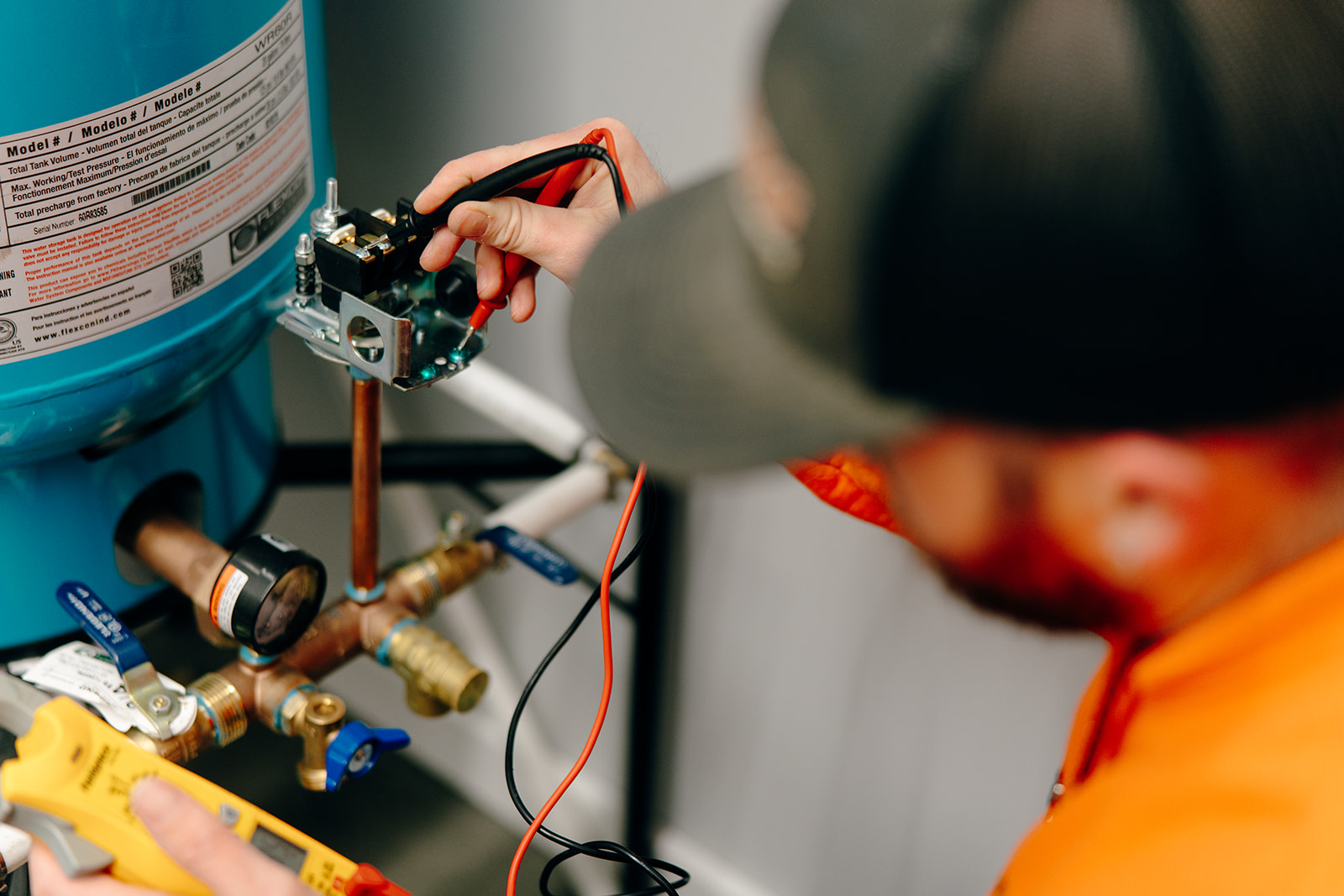
5. Pressure Switch and Electrical Inspection
The pressure switch monitors the pressure in your system and tells the pump when to turn on and off. A faulty pressure switch can cause the pump to run continuously, never turn on, or cycle erratically.
During a well inspection, technicians check:
- Pressure switch contacts for wear, corrosion, or burning
- Cut-in and cut-out pressure settings
- Wiring connections and conduit for damage
- Voltage and amperage draw at the pump
Electrical problems are a leading cause of well pump failures. Catching a failing pressure switch or a corroded connection during routine maintenance is far less expensive than replacing a burned-out pump.
6. Wellhead and Surrounding Area Assessment
The area immediately surrounding your well plays a big role in water quality. Contaminants from the surface — fertilizers, pesticides, motor oil, pet waste, or septic system discharge — can find their way into your well through the soil or directly through a compromised casing.
A thorough well inspection includes evaluating the wellhead environment for:
- Proper grading and drainage away from the casing
- Proximity to potential contamination sources (septic tanks, fuel storage, animal areas)
- Evidence of flooding or surface water intrusion
- Vegetation or tree roots growing too close to the casing
Indiana well regulations require a minimum separation distance between wells and septic systems. If you’re unsure whether your well meets current standards, our inspection will assess compliance and flag any concerns.
7. Shock Chlorination (When Needed)
If your water test reveals the presence of coliform bacteria, shock chlorination is the standard treatment. This process involves introducing a measured concentration of chlorine into the well to disinfect the casing, pump, and water lines.
Shock chlorination is also recommended:
- After any well repair or service work
- After flooding that may have reached the wellhead
- When moving into a home with a well of unknown history
- If the well has been unused for an extended period
After chlorination, the well is flushed and the water is retested to confirm the treatment was effective. This is not a permanent solution for recurring bacterial problems — if bacteria return after treatment, the source of contamination must be identified and corrected.
Warning Signs Your Well Needs Immediate Attention
Don’t wait for your annual inspection if you notice any of the following:
- No water coming from taps — pump failure or a dropped water table
- Sudden drop in water pressure throughout the home
- Cloudy, discolored, or sediment-filled water
- Strong sulfur (rotten egg) odor in the water
- Oily sheen or chemical smell in the water
- Pump running continuously without building pressure
- Rapid clicking from the pressure tank area (short-cycling)
Any of these symptoms warrants a call to a professional well service technician right away.
How Often Should You Schedule Well Maintenance?
| Service | Recommended Frequency |
|---|---|
| Water quality testing | Annually (minimum) |
| Professional well inspection | Annually |
| Pressure tank air charge check | Every 1–2 years |
| Well casing and cap inspection | Annually |
| Pump performance test | Every 2–3 years |
| Shock chlorination (if needed) | As indicated by water test |
Annual professional maintenance is the baseline. If you have young children, elderly family members, or anyone with a compromised immune system in your home, more frequent water testing is strongly recommended.
What’s Included in the Summers of Peru $59 Well Inspection
Our $59 Well Inspection is designed to give you a complete picture of your well system’s health at a price that makes annual service accessible for every homeowner. Here’s what’s included:
- Full visual inspection of the wellhead, casing, and cap
- Pressure tank testing and air charge verification
- Pressure switch and electrical connection check
- Pump performance and flow rate evaluation
- Assessment of the wellhead environment
- FREE comprehensive water testing — bacteria, nitrates, pH, hardness, and more
- Written summary of findings with honest recommendations
No surprises. No pressure. Just straightforward answers about your water.
Protecting Your Family Starts with One Call
Your well is the foundation of your home’s water supply. Whether your system is brand new or has been in the ground for decades, annual maintenance is the best way to ensure your family always has access to safe, clean water.
Summers of Peru is proud to serve homeowners throughout Peru, Indiana and Miami County with honest, professional well service. Our $59 Well Inspection with FREE Water Testing makes it easy to stay on top of your system every year.
Call us today at 765-460-2660 to schedule your well inspection.
Frequently Asked Questions About Well Maintenance
How do I know if my well water is safe?
The only way to know for certain is to have it tested by a professional. Water can contain harmful bacteria, nitrates, or other contaminants with no visible signs. Annual water testing is the only reliable way to verify safety.
How long does a well pump last?
With proper maintenance, a quality submersible pump typically lasts 8–15 years. Pumps that experience frequent short-cycling, power surges, or are never serviced often fail much sooner.
What should I do if I lose water pressure suddenly?
Check your pressure switch and breaker first. If the breaker is tripped, reset it once. If pressure doesn’t return or the breaker trips again, turn off the system and call a professional — do not repeatedly reset a tripping breaker.
Can I test my own well water?
DIY test kits are available, but they test for a limited range of contaminants and are far less accurate than laboratory testing. For reliable results, professional water testing is always recommended. With Summers of Peru’s $59 inspection, professional water testing is included free.
Is my well covered by homeowner’s insurance?
Coverage varies by policy. Some policies cover pump failure or contamination under certain circumstances. Contact your insurance provider to understand your specific coverage, and keep records of all well maintenance and test results.
Summers of Peru | Peru, Indiana | 765-460-2660
Serving Miami County and surrounding areas