
How Much Does a Furnace Tune-Up Cost?
If your furnace has been sitting idle since March, a tune-up is the cheapest insurance you can buy before the first cold snap. But “cheap” is relative, and pricing varies enough between companies that it is hard to know whether a quote is fair.
Here is what a furnace tune-up actually costs, what should be included for that money, and how to tell whether you are looking at a real inspection or a sales call in disguise.
Furnace Tune-Up Cost: The Short Answer
Most homeowners pay $75 to $200 for a standard furnace tune-up, with $100 to $150 being the most common range nationally. Companies running seasonal promotions often price closer to $60 to $90, and maintenance plan members frequently pay nothing at all beyond their membership.
A few things push the number around:
- Timing. Pre-season pricing in late summer and early fall is almost always lower than mid-winter pricing.
- Equipment type. A standard single-stage gas furnace is quicker to service than a high-efficiency modulating unit or a dual-fuel system paired with a heat pump.
- Whether it is a plan or a one-off. Annual maintenance agreements usually bundle heating and cooling visits and work out cheaper per visit.
- After-hours scheduling. Evening and weekend appointments carry a premium at most companies.
$65 Furnace Tune-Up
Summers is offering a complete furnace tune-up for $65 in Marion and the surrounding communities. Full multi-point inspection, safety check, and performance test by a licensed technician.
What Should Be Included in a Furnace Tune-Up
This is where price differences usually make sense. A $200 tune-up and a $65 tune-up can be the same visit, or they can be very different visits. Ask what the technician actually does.
A legitimate furnace maintenance checklist covers three categories: safety, performance, and wear.
Safety Checks
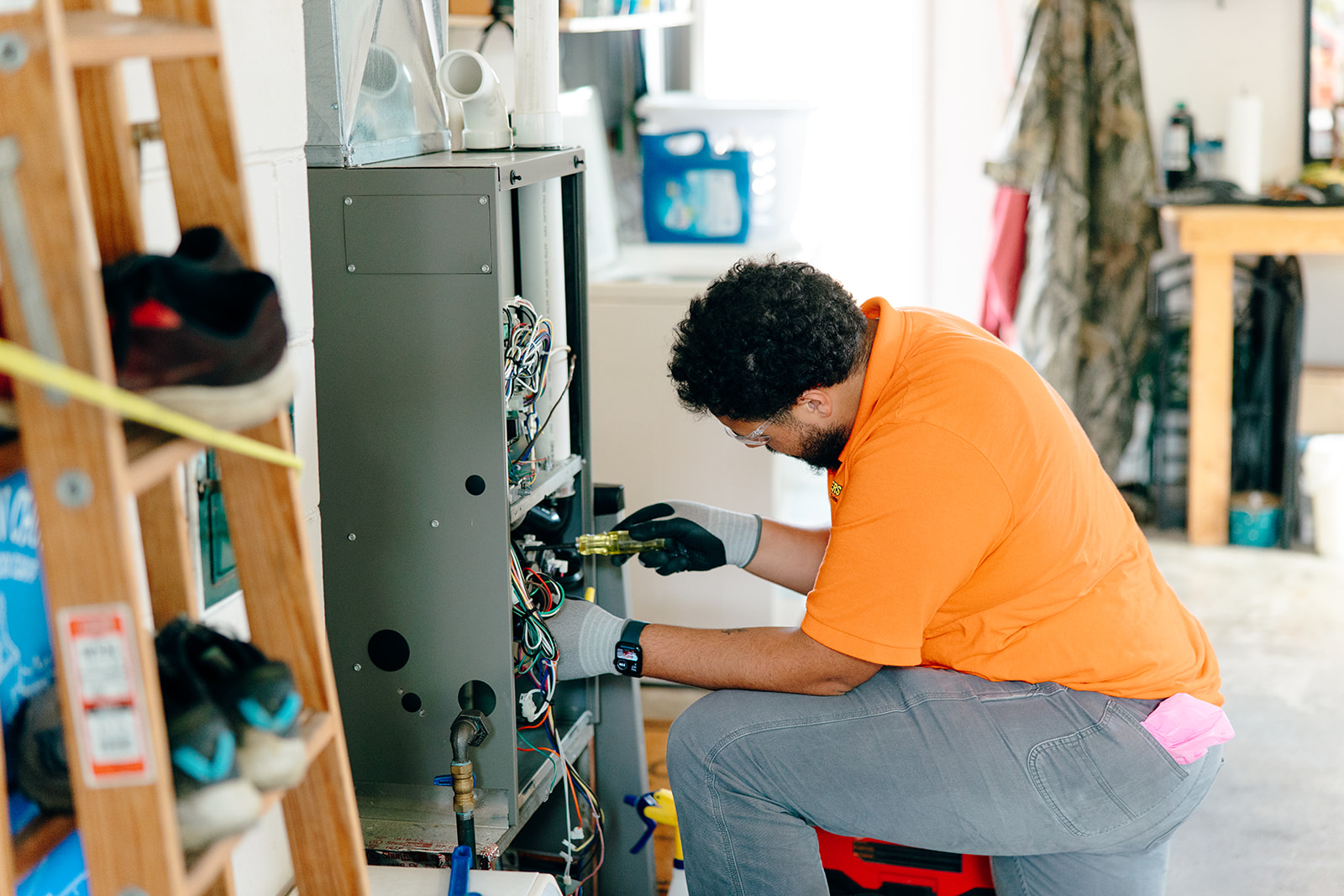
- Inspect the heat exchanger for cracks, corrosion, or separation
- Test for carbon monoxide at the supply plenum and around the cabinet
- Verify flue and venting are intact, properly pitched, and clear of obstruction
- Check gas line connections and shutoff valve for leaks
- Confirm the limit switch and flame rollout switches function correctly
- Test the flame sensor and verify proper flame characteristics
Performance Checks
- Measure gas pressure and adjust to manufacturer specification
- Check temperature rise across the heat exchanger against the nameplate range
- Test ignition sequence and burner operation through a full cycle
- Verify blower motor amp draw and static pressure
- Calibrate the thermostat and confirm accurate cycling
- Inspect ductwork connections at the unit for leaks
Wear and Cleaning
- Clean burners and the burner compartment
- Clean or replace the flame sensor
- Inspect and clean the blower wheel and housing
- Check and replace the air filter
- Lubricate moving parts where applicable
- Clear the condensate drain and trap on high-efficiency units
- Tighten electrical connections and check capacitor readings
If a company cannot tell you which of these they perform, that is a useful signal. A tune-up that skips the heat exchanger inspection and combustion testing is a filter change with a service fee attached.
Why a Tune-Up Costs Less Than What It Prevents
The case for annual maintenance is not sentimental. It is arithmetic.
Repairs cost more than prevention. A failed inducer motor, a cracked heat exchanger, or a burned-out control board runs several hundred to well over a thousand dollars. Most of those failures give warning signs a technician can catch during a routine inspection.
Efficiency drifts. Dirty burners, a clogged filter, and a gas pressure that has wandered out of spec all quietly raise your gas bill. A furnace running outside its designed temperature rise burns more fuel for the same amount of heat.
Warranties often require it. Most manufacturers include a documented annual maintenance requirement in their parts warranty terms. If a major component fails and you cannot show service records, the claim can be denied. That is the single most expensive way to save $65.
Carbon monoxide is a real risk. Cracked heat exchangers do not announce themselves. Combustion testing during a tune-up is how they get caught before they become dangerous.
How Often Should You Get Your Furnace Serviced?
Once a year, before the heating season begins. That is the standard recommendation from equipment manufacturers and it holds up well in practice.
In Indiana, the right window is late August through October. Schedule earlier and you get better availability, pre-season pricing, and time to address anything the technician finds before you actually need heat. Wait until the first hard freeze and you are competing with everyone else who waited.
A few situations call for more attention than the annual visit:
- Furnaces over 12 years old. Wear accelerates, and a mid-season check is reasonable insurance.
- Homes with pets or heavy dust. Blower wheels and filters load up faster.
- After any major home renovation. Construction dust is hard on furnace components.
- Dual-fuel and heat pump systems. These need both a heating and a cooling check each year.
When a Tune-Up Is Not the Answer
Sometimes the honest recommendation after an inspection is that the furnace is near the end of its life. Knowing the signs ahead of time helps you plan instead of react.
How Long Does a Furnace Last?
A well-maintained gas furnace typically lasts 15 to 20 years. Units that have gone without regular service often fall short of that, and units past 20 years are running on borrowed time regardless of how well they have been cared for.
Signs You Need a New Furnace
- Age past 15 years combined with a significant repair quote. The rule of thumb: if the repair costs more than a third of a replacement and the unit is past 15 years, replacement usually wins.
- Rising gas bills with no change in usage. Efficiency loss that a tune-up does not correct means internal wear.
- Uneven heating between rooms. Often a sign the blower or heat exchanger is no longer performing to spec.
- Frequent repairs. Two or more service calls in a single season is a pattern, not bad luck.
- A cracked heat exchanger. This is not a repair on most units. It is a replacement.
- Yellow or flickering burner flame. Indicates incomplete combustion and needs immediate attention.
If your furnace is showing several of these, a tune-up is still worth doing. It gives you documented information about the system’s condition rather than a guess, and it buys you time to plan a furnace replacement on your schedule instead of during a January emergency.
Furnace Tune-Up Cost in Marion, Indiana
Summers has been servicing furnaces in Grant County and across north central Indiana since 1969. Our pre-season furnace tune-up is $65 and includes the full inspection outlined above, performed by a licensed, background-checked technician.
What that includes:
- Complete multi-point safety and performance inspection
- Combustion analysis and carbon monoxide testing
- Heat exchanger inspection
- Burner and flame sensor cleaning
- Written report on system condition, with photos of anything that needs attention
- Backed by our Worry-Free Guarantee
If you would rather not think about scheduling it every year, our maintenance agreement covers both your heating and cooling visits, includes priority scheduling, and applies a discount to any repairs you do need.
We serve Marion, Gas City, Fairmount, Upland, Jonesboro, Van Buren, Sweetser, and the surrounding communities. Phones are answered 24/7, and after-hours emergency service is available when you need it.
Book Your $65 Furnace Tune-Up
Beat the fall rush. Pre-season appointments fill quickly once temperatures drop.
Schedule Online
or call 765-664-4328
Frequently Asked Questions
How much does a furnace tune-up cost?
Most furnace tune-ups cost between $75 and $200, with $100 to $150 being the most common range. Seasonal promotions and maintenance plan pricing often come in lower. Summers offers a complete furnace tune-up for $65 in the Marion area.
Is a furnace tune-up worth the money?
Yes, for three reasons: it catches component failures before they become expensive emergency repairs, it keeps the furnace running at its designed efficiency so you are not overpaying on gas, and most manufacturer parts warranties require documented annual maintenance to stay valid.
How long does a furnace tune-up take?
A thorough tune-up takes roughly 60 to 90 minutes. Visits significantly shorter than that usually mean the technician skipped combustion testing or the heat exchanger inspection, which are the two most important safety checks.
How often should a furnace be serviced?
Once per year, ideally before the heating season starts. In Indiana that means scheduling between late August and October. Furnaces older than 12 years or homes with pets and heavy dust may benefit from an additional mid-season check.
What is included in a furnace tune-up?
A complete tune-up includes a heat exchanger inspection, carbon monoxide and combustion testing, gas pressure measurement and adjustment, temperature rise verification, burner and flame sensor cleaning, blower inspection, thermostat calibration, electrical connection tightening, and a filter check or replacement.
Can I do a furnace tune-up myself?
You can handle the basics: replacing the filter, keeping the area around the unit clear, and checking that vents are unobstructed. The safety-critical work, including combustion testing, gas pressure adjustment, and heat exchanger inspection, requires specialized instruments and a licensed technician.
What happens if I never tune up my furnace?
The furnace will still run, but it will run less efficiently, wear out faster, and is more likely to fail during cold weather. You also risk voiding the manufacturer’s parts warranty and missing early signs of a cracked heat exchanger, which can allow carbon monoxide into the home.
When is the best time to schedule a furnace tune-up?
Late summer through early fall. You get better appointment availability, pre-season pricing, and enough lead time to address any problems the technician finds before you actually depend on the heat.