

Lead Service Lines in Marion, IN: How to Check Your Line and What Replacing Your Side Involves
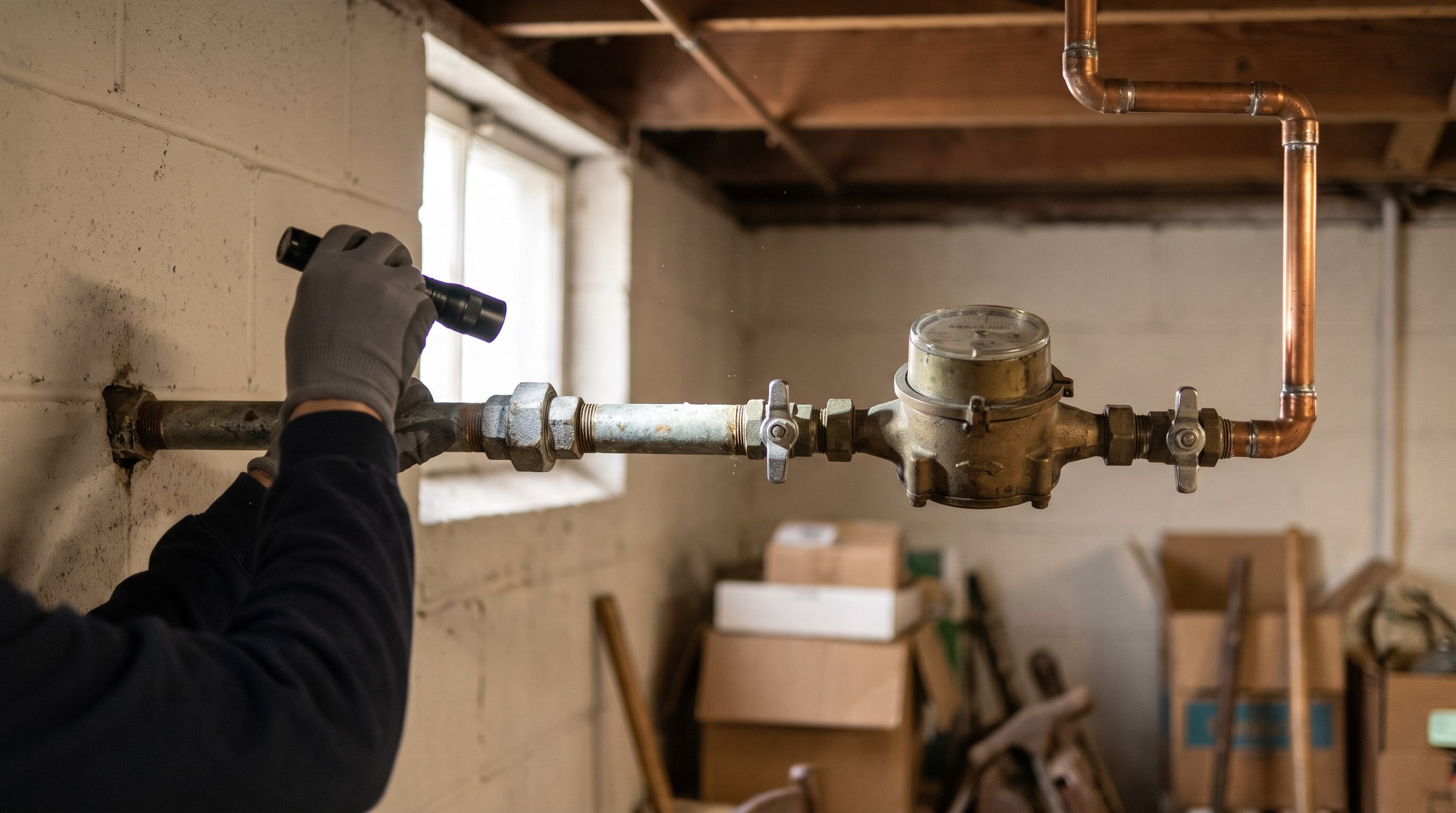
If you live in an older Marion home, there is a fair chance a letter from Marion Utilities has already shown up in your mailbox telling you that your water service line contains lead, or is presumed to. It is an unsettling thing to read over coffee. The good news is that the steps to figure out what you actually have, and what to do about it, are pretty straightforward. This guide walks through them in plain terms.
What a service line is, and which part is yours
Your service line is the pipe that carries water from the main under the street into your house. It usually comes through the basement wall or up through the floor near the water meter. In most homes it is split into two pieces: the public side, from the main to the property line, and the private side, from the property line into your house.
That split matters because Marion Utilities handles its side, and the homeowner is responsible for the rest. According to the utility’s lead service line replacement page, if you plan to replace the portion you own, you should call them first so they can coordinate replacing their portion at the same time. That is worth doing. Replacing only half of a lead line leaves lead in the ground on the other half.
What Marion Utilities is doing right now
Here is what the utility says about its own program:
- It built a Lead Service Line Inventory in 2024 and keeps updating it as lines are identified.
- It has not used lead in its distribution system since 1985, if not earlier.
- It schedules lead line replacements alongside water main replacement, rehab and relocation projects, using a priority list.
- When crews replace the public side, water to the home is typically shut off for about 4 to 6 hours. Crews dig holes about 4 feet by 6 feet in the street, the tree lawn and the yard at the property line, and most of the work is finished in one day.
The utility also says it continues to meet state and federal lead requirements. The inventory is about removing lead from the system over time, not an emergency notice.
Step 1: Look up your address in the inventory
You can see what the utility has on file for your address through the state’s lead transparency dashboard at idem.120water-ptd.com, which is run with the Indiana Department of Environmental Management. Your line may be listed as lead, galvanized, non-lead, or “unknown.” Unknown simply means nobody has confirmed the material yet, which is common in older neighborhoods.
Step 2: Check the pipe yourself at the meter
Head to the spot where the water line comes into your basement or crawlspace, just before the meter. You are looking at the few inches of pipe on the street side of the meter. EPA’s Protect Your Tap guide walks through this, but the basics are:
- Lead: dull gray, soft enough that a key or coin scratch shows shiny silver, and it will not stick to a magnet. Lead lines often have a bulging, rounded joint where they connect.
- Galvanized steel: gray and hard, a magnet will stick to it, and scratching does not leave a bright silver mark.
- Copper: the color of a penny where you scratch it, and a magnet will not stick.
- Plastic: usually white, blue or black and obviously not metal.
If you can confirm the material, Marion Utilities asks homeowners to fill out its service line survey (linked from the same page) so the inventory can be updated. If you are not sure what you are looking at, a licensed plumber can tell you in a few minutes.
Step 3: Don’t forget the pipes inside the house
The service line is not the only possible source. Marion Utilities points out that since 1991, new homes connecting to public water had to be certified lead-free, and that copper plumbing installed before January 1991 likely used lead solder at the joints. Plenty of houses in Marion, Gas City and the surrounding Grant County towns were plumbed well before that. Older faucets and fittings can also contain lead.
So if your home was built or replumbed before 1991, it is reasonable to look at the interior plumbing too, especially if you have young children or someone pregnant in the house. A plumbing inspection is a simple way to get a clear picture of what is behind your walls.
What you can do while you wait
Replacement takes time to schedule. In the meantime, Marion Utilities recommends a few everyday habits:
- Use a filter certified to remove lead, and replace the cartridge on schedule. Don’t run hot water through it.
- Use cold water for drinking, cooking and baby formula. Lead dissolves more easily in hot water, and boiling does not remove it.
- Run the water after it has been sitting, for example first thing in the morning. A shower or a load of laundry flushes the line too.
- Clean your faucet aerators regularly, since particles can collect in the screen.
- Ask about construction nearby. Digging near a lead line can stir up more lead for a while.
The utility can help with water testing (there is a customer cost for the lab analysis), and the Grant County Health Department is the place to ask about health questions or blood lead testing for kids. For a permanent fix at the tap, a whole-home or point-of-use water filtration system certified for lead reduction is another option.
What replacing the private side involves
Every property is a little different, but a private-side replacement generally looks like this:
- Confirm the material and route. Find out where the line runs from the property line to the house and how deep it is.
- Coordinate with Marion Utilities. Call them before work starts so their side can be replaced at the same time if possible, and ask about financing options they mention for property owners.
- Locate utilities. Indiana requires a call to 811 before digging.
- Replace the line with modern pipe, either by trenching or, where conditions allow, by pulling new pipe through with less digging.
- Reconnect at the meter and flush the plumbing thoroughly afterward.
If the interior plumbing has lead solder or old galvanized pipe too, this is often a good time to talk about repiping so you are not opening walls twice.
Frequently Asked Questions
How do I find out if my Marion home has a lead service line?
Start with the state’s lead dashboard at idem.120water-ptd.com, which shows what Marion Utilities has on file for your address. Then check the pipe where it enters the house before the meter: lead is dull gray, scratches to shiny silver and won’t hold a magnet. If you’re unsure, Marion Utilities (765-664-2391) or a licensed plumber can confirm the material.
Who pays to replace the service line in Marion?
Marion Utilities replaces the public side of the line, and the homeowner is responsible for the private side that runs from the property line into the house. If you plan to replace your side, call Marion Utilities first so they can coordinate replacing their portion at the same time, and ask about the financing options they mention for property owners.
What happens on the day Marion Utilities replaces its side?
According to Marion Utilities, water to the home is usually off for about 4 to 6 hours. Crews dig holes roughly 4 feet by 6 feet in the street, the tree lawn and the yard at the property line, and most of the work is done in one day. It schedules lead line replacements alongside water main projects using a priority list, so ask when your street is expected.
Is it safe to drink Marion’s water if I have a lead line?
Marion Utilities says it continues to meet all state and federal lead requirements. Until a lead or unknown line is replaced, sensible precautions are a filter certified to remove lead, cold water for drinking and cooking, running the tap after water has been sitting, and cleaning faucet aerators. The Grant County Health Department can answer health and blood lead testing questions.
My house was built before 1991. Should I check the plumbing inside too?
Yes, it’s worth a look. Marion Utilities notes that copper plumbing installed before January 1991 likely used lead solder at the joints, and that new homes have had to be certified lead-free since 1991. A plumbing inspection can show whether old solder, galvanized pipe or older fixtures are part of the picture before you decide what to replace.
The inventory lists my line as unknown. What should I do?
Unknown simply means nobody has confirmed the material yet, which is common in older neighborhoods. Check the pipe at the meter yourself or have a plumber check it, then report what you find through the service line survey linked on Marion Utilities’ lead service line page so the inventory can be updated.
Need a hand figuring out your line?
If you are in Marion, Gas City or anywhere nearby (see our Gas City page), Summers of Marion can check your service line material, inspect your interior plumbing and walk you through replacement options. We have been serving Marion since 1969. Call (765) 664-4328 to schedule a visit.