
Well Maintenance Checklist: What Every Indiana Homeowner Should Do Each Year
If your home runs on a private well, you’re your own water utility — which means the safety, pressure, and reliability of your water are in your hands. The good news? A little routine well maintenance goes a long way. Staying ahead of problems protects your water quality, extends the life of your equipment, and helps you avoid the worst-case scenario: turning on the tap and getting nothing.
At Summers Plumbing Heating & Cooling in Marion, IN, we service wells across Grant County and the surrounding rural communities. Below is a year-by-year well maintenance checklist every Indiana homeowner should follow — plus the warning signs that mean it’s time to call a professional.
Why Annual Well Maintenance Matters
Unlike city water, private well water isn’t tested or treated by a municipality — that responsibility falls entirely on you. A neglected well can develop bacterial contamination, pump failure, pressure problems, and sediment buildup, often with no obvious warning until something breaks. Routine well maintenance catches these issues early, when they’re cheap and easy to fix.
Your Yearly Well Maintenance Checklist
1. Test Your Well Water
Test at least once a year for bacteria (coliform and E. coli) and nitrates. Test more often if you notice changes in taste, smell, or color, after flooding, or if there’s a pregnancy or new baby in the home. Water testing is the single most important thing you can do for your family’s health.
2. Inspect the Well Pump
Your well pump is the heart of the system. During an annual service, a technician checks that it’s drawing properly, cycling correctly, and not showing signs of wear. Catching a struggling pump early prevents a sudden, complete loss of water.
3. Check the Pressure Tank
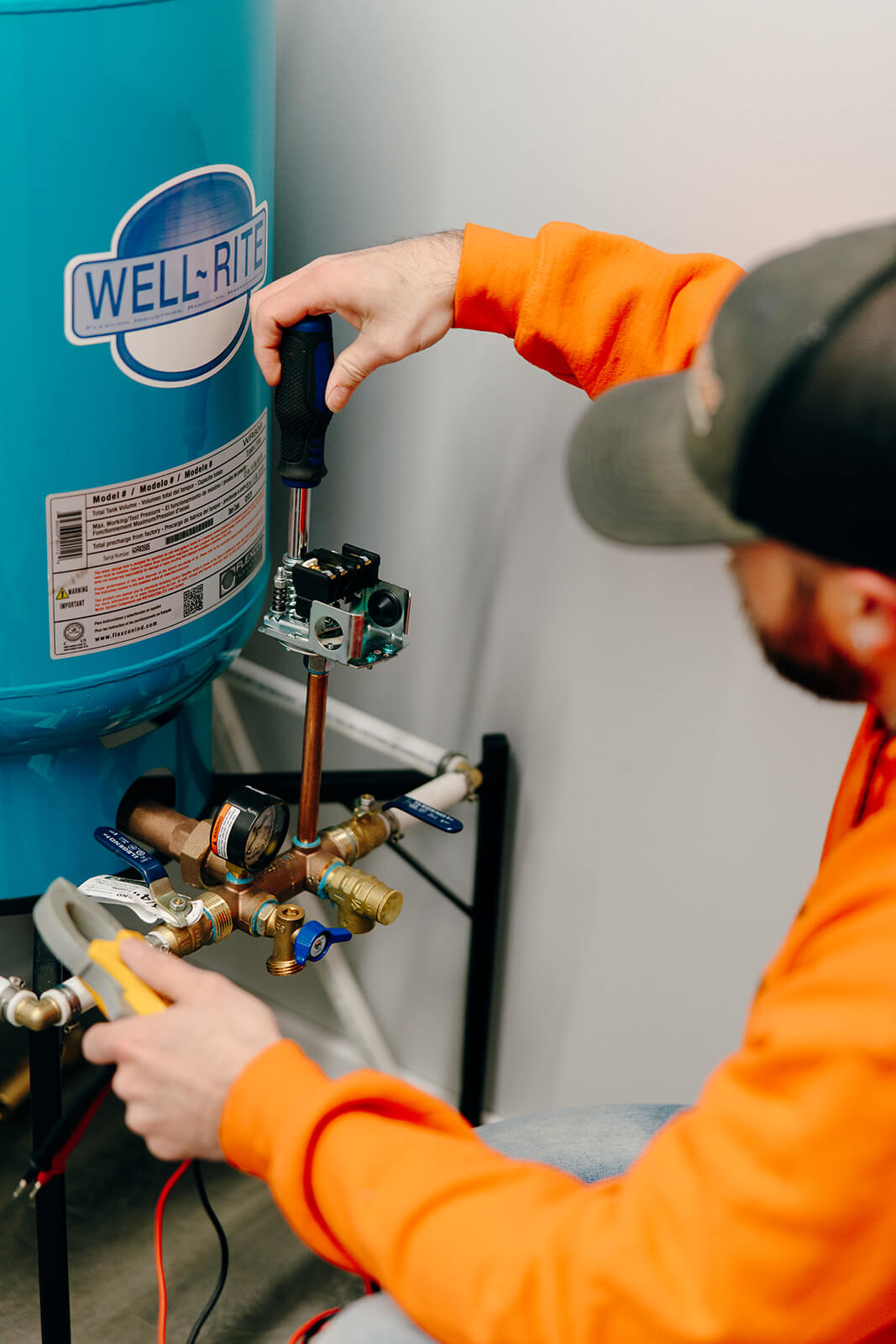
The pressure tank keeps your water pressure steady and stops your pump from short-cycling. Check the air charge (pre-charge pressure) and watch for rapid on/off cycling, which is a classic sign the tank is waterlogged or failing. A bad pressure tank burns out pumps fast.
4. Test Water Pressure and Flow
Note whether your pressure has dropped over the year or whether faucets sputter or spit air. These are early indicators of a pump, pressure tank, or pressure-switch problem worth investigating before it worsens.
5. Inspect the Wellhead and Cap
Walk out to your wellhead. The cap should be secure and at least 12 inches above the ground, with no cracks or gaps where insects, surface water, or debris could get in. Keep the area around it clear and never store chemicals, fertilizer, or fuel nearby.
6. Evaluate Water Quality and Treatment
Indiana well water is often hard and may carry iron, sulfur, or sediment. If you’re seeing staining, scale buildup, rotten-egg odor, or cloudy water, your treatment system may need attention — or you may benefit from a water softener or filtration upgrade. Hard water quietly shortens the life of every appliance in your home.
7. Sanitize When Needed
If a water test comes back positive for bacteria, or after any pump or plumbing repair, your well should be professionally sanitized. Well sanitization (shocking) disinfects the system and is then thoroughly flushed before the water is used.
8. Prepare for Indiana Winters
Before the first hard freeze, make sure the wellhead, pressure tank, and any exposed piping are protected from freezing. A frozen well line can crack pipes and leave you without water in the coldest part of the year.
Warning Signs You Shouldn’t Ignore
Between annual services, call a professional right away if you notice:
- A sudden or gradual drop in water pressure
- Air sputtering or spitting from your faucets
- The pump running constantly or cycling on and off rapidly
- Cloudy, sandy, discolored, or foul-smelling water
- A spike in your electric bill with no other explanation
- Strange noises from the pump or pressure tank
These often point to a failing pump, a waterlogged pressure tank, or a developing water-quality issue. Addressing them early is far less expensive than an emergency repair or full well repair.
Keep Your Well Running Strong All Year
Don’t wait for a dry tap or a failed pump. Schedule professional well maintenance with the trusted local team at Summers and protect your home’s water supply.
Call Now: 765-664-4328Phones Answered 24/7 • Serving Marion & Surrounding Areas
Frequently Asked Questions
How often should I service my well?
Have your well professionally inspected once a year. An annual service checks the pump, pressure tank, electrical components, and water quality so small issues are caught before they become costly failures. You should also test your water at least annually.
How often should I test my well water in Indiana?
Test at least once a year for bacteria and nitrates — and more often if you notice changes in taste, color, or odor, after flooding, or if there’s a new baby or pregnancy in the home. Private wells aren’t regulated like city water, so testing is the homeowner’s responsibility.
What are the signs my well pump is failing?
Watch for dropping water pressure, sputtering or air from faucets, a pump that runs constantly or cycles rapidly, strange noises, higher electric bills, and sediment or cloudy water. Any of these warrant a professional inspection before the pump fails completely.
What is well shocking or sanitization?
Well sanitization (shocking) disinfects your well with chlorine to eliminate bacteria. It’s recommended after a positive bacteria test, after pump or plumbing repairs, after flooding, or when water develops an off taste or smell. A professional sanitizes the well safely and flushes it properly afterward.
How long does a well pump last?
A well pump typically lasts 8 to 15 years, depending on pump type, water quality, usage, and maintenance. Annual service, a healthy pressure tank, and treating hard or sediment-heavy water all help extend its lifespan.