

How Tree Roots Damage Sewer Pipes & How to Stop Them
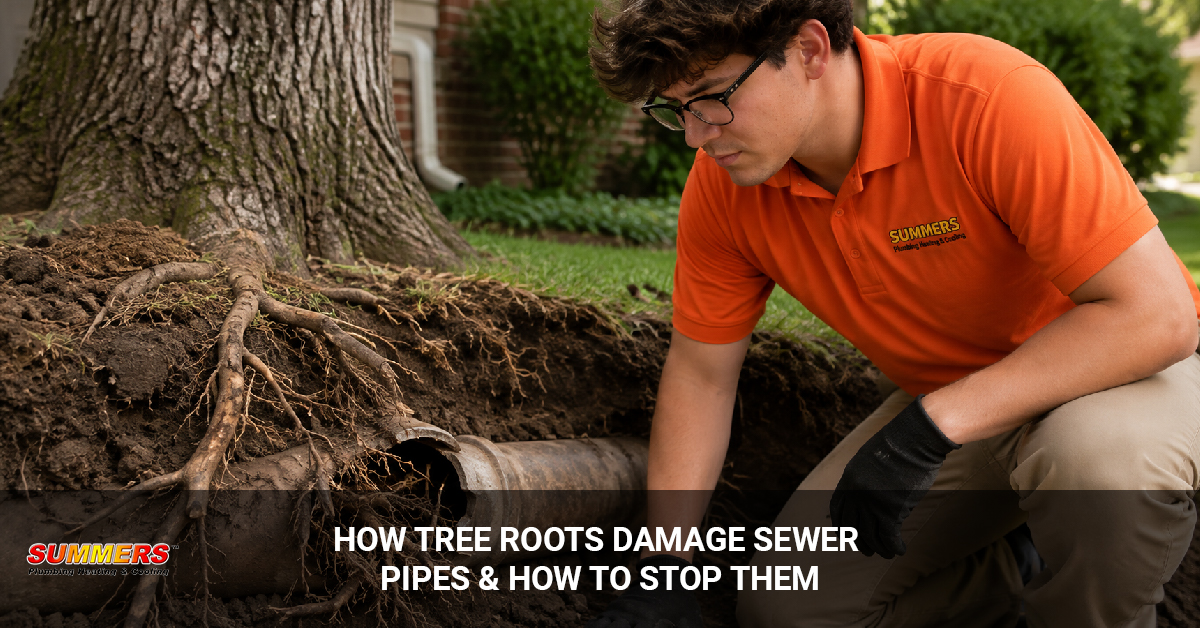
Tree roots damage sewer pipes by growing into small cracks, loose joints, and weak sections of underground sewer lines. Once inside the pipe, the roots continue to grow, trapping toilet paper, grease, and other debris until they create a blockage or cause the pipe to crack, collapse, or separate. Tree root intrusion is one of the most common causes of sewer line repairs, especially in older homes with aging plumbing systems.
Although healthy tree roots rarely break through an undamaged sewer pipe, they naturally seek out moisture and nutrients. Even a tiny opening in the pipe can attract roots, which gradually expand and place pressure on the surrounding plumbing. If left untreated, the damage can lead to recurring drain clogs, sewage backups, unpleasant odors, and expensive sewer line repairs.
In this guide, you’ll learn how tree roots damage sewer pipes, the warning signs of root intrusion, which types of sewer pipes are most vulnerable, the repair methods plumbers use, and how to prevent tree roots from damaging your plumbing system.
How Do Tree Roots Damage Sewer Pipes?
Tree roots damage sewer pipes by entering small cracks, loose joints, or weak spots and continuing to grow inside the pipe. As the roots expand, they catch toilet paper, grease, and other debris flowing through the sewer line. Over time, the blockage becomes larger, restricting wastewater flow and placing additional pressure on the pipe until it cracks, separates, or collapses.
Contrary to popular belief, tree roots rarely break through a healthy sewer pipe. Instead, they take advantage of existing openings caused by age, corrosion, ground movement, or deteriorating pipe joints. Once roots reach the moisture and nutrients inside the sewer line, they grow rapidly and become increasingly difficult to remove.
| Stage | What Happens |
| Roots detect moisture | Tree roots naturally grow toward the moisture surrounding the sewer pipe. |
| Roots enter a small opening | Tiny cracks, loose joints, or damaged pipe sections allow roots to enter. |
| Roots expand inside the pipe | The roots grow thicker and spread through the sewer line. |
| Blockages develop | Roots trap grease, paper, wipes, and other debris, restricting wastewater flow. |
| Pipe damage worsens | Continued root growth widens cracks, separates pipe joints, or eventually causes the pipe to collapse. |
Because tree roots continue growing until the source of moisture is removed, the problem rarely goes away on its own. Early detection and professional sewer line inspections can prevent a minor root intrusion from becoming a major sewer repair.
Signs Tree Roots May Be Damaging Your Sewer Line
Recurring drain problems, sewage odors, and slow drainage throughout your home are some of the most common signs that tree roots have entered your sewer line. These symptoms usually become more noticeable as the roots continue to grow and restrict wastewater flow.
Frequent Drain Clogs
Recurring drain clogs are one of the earliest signs of tree root intrusion. If you repeatedly clear the same sink, toilet, or floor drain but the clog keeps coming back, roots may be blocking the main sewer line rather than a single drain.
Slow Drains Throughout the House
Multiple slow drains often indicate a blockage in the main sewer line. When tree roots partially block the pipe, wastewater can’t flow freely, causing sinks, bathtubs, showers, and toilets to drain more slowly than normal.
Gurgling Toilets
A toilet that gurgles after flushing may signal a blocked sewer line. As wastewater struggles to move past the roots, trapped air escapes through nearby plumbing fixtures, creating bubbling or gurgling sounds.
Sewage Backups
Sewage backing up into your home is a strong sign of a severe sewer line blockage. Because basement floor drains, showers, or toilets are often the lowest fixtures in the house, wastewater may back up through them first when roots significantly restrict the sewer line.
Bad Sewer Odors
Persistent sewer odors can develop when tree roots block wastewater flow or damage the sewer pipe. The smell may come from drains, the basement, crawl spaces, or even outside near the sewer line.
Wet Spots or Extra Green Grass in the Yard
Unusually wet areas or patches of bright green grass above the sewer line may indicate an underground leak caused by root damage. Escaping wastewater adds moisture and nutrients to the surrounding soil, causing grass and plants to grow faster than the rest of the yard.
If you notice several of these warning signs at the same time, schedule a professional sewer camera inspection. Identifying tree root intrusion early can help prevent extensive pipe damage and more expensive sewer line repairs.
Why Tree Roots Grow Into Sewer Pipes
Tree roots grow into sewer pipes because they naturally seek moisture, nutrients, and oxygen. Even a tiny crack or loose pipe joint can release enough moisture to attract nearby roots. Once they find an opening, the roots continue growing inside the pipe where water and nutrients are readily available.
Moisture
Moisture is the primary reason tree roots grow toward sewer pipes. Underground sewer lines often release small amounts of water through cracked pipes or deteriorated joints. Tree roots detect this moisture and naturally grow toward its source.
Nutrients Inside Sewer Lines
Wastewater contains nutrients that encourage root growth. Once roots enter the sewer pipe, they have access to a steady supply of water and organic material, allowing them to grow quickly and spread throughout the line.
Small Cracks and Loose Pipe Joints
Tree roots don’t usually penetrate a healthy sewer pipe. Instead, they enter through existing cracks, separated joints, or other weak points caused by aging pipes, ground movement, corrosion, or previous damage. Even a very small opening is enough for fine roots to enter.
Older Clay and Cast Iron Pipes
Older sewer pipes are much more vulnerable to root intrusion than modern piping materials. Clay pipes often develop separated joints over time, while cast iron pipes can corrode and crack as they age. These openings provide easy entry points for nearby tree roots.
Understanding why tree roots target sewer pipes can help homeowners take preventive measures before serious damage occurs. Routine inspections and early repairs can stop small root intrusions from developing into costly sewer line replacements.
Which Types of Sewer Pipes Are Most Vulnerable?
Older sewer pipe materials are much more vulnerable to tree root damage than modern PVC pipes. Aging pipes often develop cracks, corrosion, or loose joints that allow roots to enter and grow inside the sewer line.
| Pipe Material | Root Damage Risk |
| Clay | High |
| Cast Iron | Moderate to High |
| Orangeburg | High |
| PVC | Low |
Clay Sewer Pipes
Clay sewer pipes have the highest risk of tree root intrusion. Many older homes have clay sewer lines with multiple pipe joints. As these joints age, they can separate or crack, creating easy entry points for tree roots.
Cast Iron Sewer Pipes
Cast iron sewer pipes are also vulnerable, especially as they age. Over time, corrosion weakens the pipe walls and joints, allowing roots to enter through small cracks or deteriorated connections.
Orangeburg Sewer Pipes
Orangeburg sewer pipes are highly susceptible to root damage and structural failure. Made from layers of wood pulp and asphalt, these pipes can soften, deform, and collapse as they age, making them an easy target for root intrusion.
PVC Sewer Pipes
PVC sewer pipes offer the best resistance to tree root intrusion. Their smooth interior walls and tightly sealed joints make it much more difficult for roots to enter. While PVC pipes can still be damaged by shifting soil or improper installation, they are far less likely to develop the cracks and joint failures commonly found in older sewer systems.
How Plumbers Remove Tree Roots From Sewer Pipes
Professional plumbers use specialized equipment to remove tree roots and restore proper wastewater flow without causing unnecessary damage to the sewer line. The best repair method depends on the amount of root growth, the condition of the pipe, and whether the sewer line has suffered structural damage.
Mechanical Root Cutting
Mechanical root cutting removes roots with a rotating cutting blade attached to a specialized drain machine. The blade cuts through root masses inside the sewer pipe, restoring water flow. This method works well for moderate root intrusions but doesn’t prevent roots from growing back if the pipe isn’t repaired.
Hydro Jetting
Hydro jetting uses high-pressure water to cut through roots and clean the inside of the sewer pipe. Combined with professional drain cleaning, it removes grease, sludge, and other debris that can contribute to recurring sewer line blockages. In addition to removing small roots, hydro jetting flushes away grease, sludge, and debris that have collected around the blockage. Plumbers often recommend a camera inspection before hydro jetting to confirm the pipe is strong enough to withstand the water pressure.
Sewer Camera Inspection
A sewer camera inspection helps plumbers locate tree roots and assess the condition of the pipe. A waterproof camera travels through the sewer line, allowing the plumber to identify root intrusion, cracks, separated joints, or collapsed sections before recommending the most effective repair.
Trenchless Sewer Repair
Trenchless sewer repair restores damaged sewer pipes with minimal excavation. If tree roots have cracked the pipe but the overall structure remains intact, plumbers may install a cured-in-place pipe liner or use another trenchless repair method to seal the damage and help prevent future root intrusion.
Sewer Line Replacement
Sewer line replacement is sometimes necessary when tree roots have caused extensive damage. If the pipe has collapsed, shifted significantly, or suffered repeated root intrusion over many years, replacing the damaged sewer line often provides the most reliable long-term solution.
If you’re noticing these problems, learn more about the warning signs that you may need sewer line replacement.
Can You Prevent Tree Root Damage?
Yes, you can reduce the risk of tree root damage by protecting your sewer line and addressing small plumbing problems before roots find a way inside. While you can’t stop tree roots from searching for water, you can make your sewer pipes much less vulnerable to intrusion.
To help prevent tree root damage:
- Plant trees away from sewer lines. Before planting new trees, locate your underground sewer line and choose planting locations that keep large root systems a safe distance away.
- Schedule periodic sewer camera inspections. Camera inspections can detect small root intrusions, cracked pipes, or loose joints before they develop into major sewer line problems.
- Repair damaged pipes promptly. Even small cracks or separated pipe joints can attract tree roots. Fixing these issues early helps prevent roots from entering the sewer line.
- Keep your sewer line maintained. If your plumber recommends periodic drain cleaning or hydro jetting because of recurring root problems, following that maintenance schedule can help keep the pipe clear.
- Replace aging sewer pipes when necessary. Older clay, cast iron, and Orangeburg pipes are more susceptible to root intrusion. Replacing deteriorated sewer lines with modern PVC piping provides better long-term protection.
Preventive maintenance is almost always less expensive than repairing a collapsed sewer line. Regular inspections and timely repairs can help extend the life of your plumbing system and reduce the risk of emergency sewer repairs.
When Should You Call a Plumber?
You should call a plumber as soon as you suspect tree roots are blocking or damaging your sewer line. Early diagnosis can prevent recurring clogs, sewage backups, and costly sewer line repairs.
Contact a licensed plumber if you notice any of these warning signs:
- Recurring drain clogs: If the same drains keep clogging after you’ve cleared them, tree roots may be blocking the main sewer line.
- Multiple slow drains: Slow drainage throughout the house often indicates a blockage deeper in the sewer system rather than a problem with a single fixture.
- Sewage backups: Wastewater backing up into toilets, showers, bathtubs, or basement floor drains is a plumbing emergency that requires immediate attention.
- Persistent sewer odors: Strong sewer smells inside or outside your home may indicate root intrusion or damage to the sewer pipe.
- Wet spots or sinkholes in the yard: Unusually wet soil, lush patches of grass, or sinking ground above the sewer line can signal an underground leak caused by tree root damage.
- Suspected root intrusion: If you have large trees near an older sewer line and you’re experiencing repeated plumbing problems, a sewer camera inspection can confirm whether tree roots are the cause.
Professional plumbers have the equipment to diagnose and remove tree roots without unnecessary digging. Prompt repairs can restore proper drainage, prevent additional pipe damage, and help you avoid a complete sewer line replacement.
Frequently Asked Questions
Can tree roots really break sewer pipes?
Tree roots rarely break healthy sewer pipes, but they can cause serious damage to pipes that already have small cracks, loose joints, or weak spots. Once roots enter the pipe, they continue growing and place pressure on the surrounding plumbing, eventually widening cracks or causing sections of the pipe to separate or collapse.
How do tree roots get inside sewer pipes?
Tree roots enter sewer pipes through existing openings such as cracks, loose joints, and damaged pipe connections. Even a tiny gap can allow fine roots to enter. Once inside, they expand as they search for water and nutrients.
Can hydro jetting remove tree roots?
Yes, hydro jetting can remove small tree roots and clear debris from inside sewer pipes. High-pressure water cuts through root masses and flushes away grease, sludge, and other buildup. However, hydro jetting doesn’t repair damaged pipes, so roots may return if cracks or loose joints remain.
Will root killer solve the problem?
Root killer may slow root growth, but it won’t permanently solve a tree root problem. Chemical root treatments can help control small root intrusions, but they can’t repair cracked pipes or remove large root masses. Professional repairs are often needed for a long-term solution.
How much does it cost to remove tree roots from sewer pipes?
The cost depends on the severity of the root intrusion and the repair method used. Simple root removal typically costs much less than repairing or replacing a damaged sewer line. A professional inspection can provide an accurate estimate based on the condition of your pipes.
How can I tell if tree roots are blocking my sewer line?
Recurring drain clogs, multiple slow drains, gurgling toilets, sewage backups, persistent sewer odors, and wet spots in the yard are common signs of tree root intrusion. A sewer camera inspection is the most reliable way to confirm whether roots are blocking the pipe.
Should I replace my sewer line after root damage?
Not always. If plumbers remove the roots before they cause significant structural damage, repairing the affected section may be enough. However, if the pipe has collapsed, cracked extensively, or experiences repeated root intrusion, replacing the sewer line may be the most cost-effective long-term solution.
Final Thoughts
Tree roots are one of the leading causes of sewer pipe damage, especially in older homes with aging underground plumbing. While roots usually enter through existing cracks or loose joints, they can quickly grow into major blockages that lead to recurring clogs, sewage backups, and costly repairs.
The good news is that early detection can prevent extensive damage. If you notice slow drains, frequent clogs, sewer odors, or wet spots in your yard, schedule a professional sewer camera inspection. Identifying and repairing root intrusion early can protect your plumbing system, extend the life of your sewer line, and help you avoid more expensive repairs in the future.