

Sump Pump Installation Columbus, Indiana Basement Protection
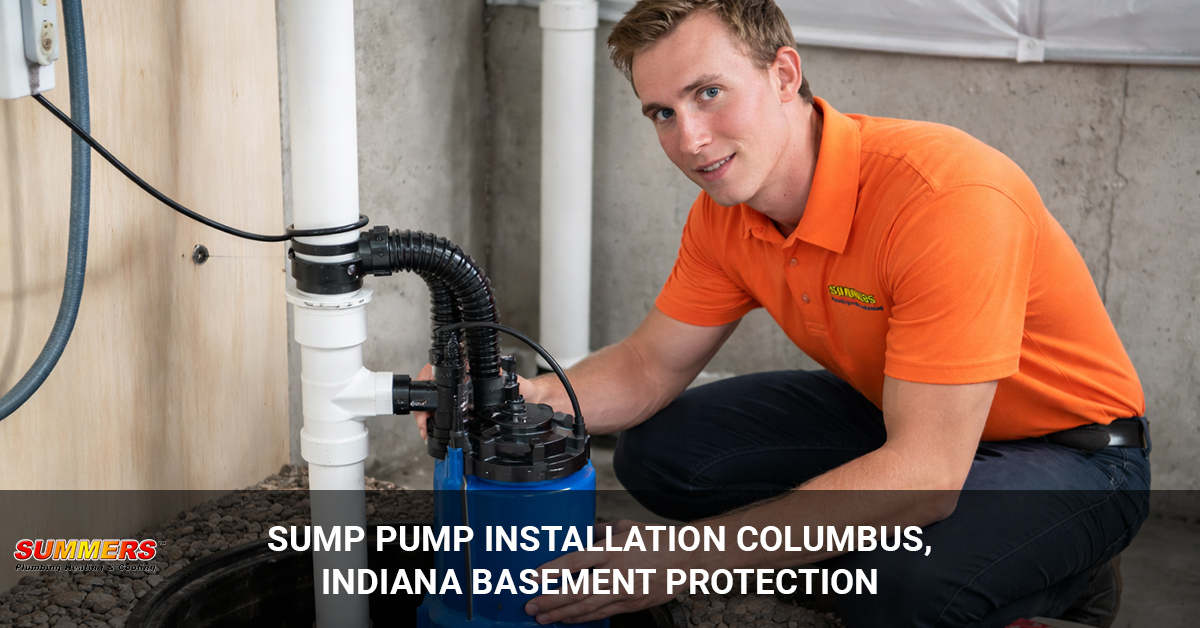
Sump pump installation in Columbus, Indiana, helps homeowners prevent basement flooding by removing excess groundwater before it enters the home. A sump pump collects water that gathers around the foundation and pumps it safely away from the house.
Basement flooding can happen after heavy rain or when groundwater levels rise. In areas like Columbus, this can be a common issue, especially for homes with basements. Even a small amount of water can damage floors, walls, furniture, and items stored in the basement.
Installing a sump pump is one of the most reliable ways to keep a basement dry. The system works automatically, removing water as soon as it begins to collect. This helps prevent water damage and protects the home’s foundation.
With a properly installed sump pump system, homeowners can reduce the risk of flooding, avoid expensive repairs, and maintain a safer and healthier living environment.
What Is a Sump Pump and How Does It Work?
A sump pump is a device installed in a pit at the lowest point of a basement that removes collected water and pumps it away from the home. It helps prevent basement flooding by moving groundwater away before it can cause damage.
When rainwater or groundwater enters the sump pit, the water level begins to rise. A float switch inside the pump detects the rising water and automatically turns the pump on. The pump then pushes the water through a discharge pipe that carries it safely away from the house.
Components of a Sump Pump System
- Sump Pit: The sump pit, also called a basin, is a hole installed in the basement floor. Water naturally flows into this pit and collects there before the pump removes it.
- Pump Motor: The motor powers the sump pump and pushes water out of the pit through the discharge pipe.
- Float Switch: The float switch monitors the water level inside the pit. When the water rises to a certain level, the switch activates the pump automatically.
- Discharge Pipe: The discharge pipe carries water from the sump pump to a drainage area outside the home, keeping it away from the foundation.
Together, these parts work as a system to remove excess water and help keep the basement dry.
Why Homes in Columbus, Indiana Need a Sump Pump
Homes in Columbus, Indiana often need sump pumps because rain and groundwater can build up around the foundation and enter the basement. A sump pump removes this water before it has a chance to cause flooding or moisture damage.
Several local factors increase the risk of basement water problems.
- Heavy Rainfall: Seasonal storms and heavy rain can cause water to collect around a home’s foundation. If the soil becomes saturated, water may seep through the basement walls or floors.
- Groundwater Pressure: When groundwater levels rise, pressure builds against the foundation. This pressure can force moisture through small cracks or gaps in basement walls.
- Older Foundations: Older homes may have foundations that are more vulnerable to water intrusion. Over time, materials can weaken, and drainage systems may become less effective.
Installing a sump pump helps control these risks by collecting and pumping water away from the home. This simple system can help keep the basement dry and protect the structure from water damage.
If drainage systems are not working properly, water can build up around the foundation and increase the risk of flooding. In some cases, issues with underground lines may require sewer line repair in Columbus to improve drainage and prevent water from backing up.
Signs Your Home May Need a Sump Pump
Your home may need a sump pump if you notice moisture, water buildup, or signs of flooding in the basement. These warning signs often indicate that groundwater or rainwater is entering the basement area.
- Water Pooling in the Basement: Standing water on the basement floor after rain is a clear sign that water is entering the space. This usually happens when drainage around the foundation is not enough to keep water away.
- Damp Walls or Musty Odors: Moisture in the basement can leave walls feeling damp and create a musty smell. This often means water is slowly seeping through the foundation.
- Mold or Mildew Growth: Excess moisture can lead to mold or mildew in the basement. These growths thrive in damp environments and can affect indoor air quality.
- Cracks in the Foundation: Small cracks in basement walls or floors can allow water to enter during storms or when groundwater levels rise.
- Frequent Basement Flooding: If your basement floods during heavy rain, installing a sump pump can help remove water quickly and prevent future damage.
Recognizing these signs early allows homeowners to address water problems before they lead to major repairs or structural damage.
Benefits of Sump Pump Installation
Sump pump installation protects your home by removing excess water and keeping the basement dry. By controlling water around the foundation, a sump pump helps prevent flooding and moisture-related problems.
- Prevents Basement Flooding: A sump pump removes water from the sump pit before it can spread across the basement floor. This helps prevent flooding during heavy rain or when groundwater levels rise.
- Protects the Home’s Foundation: Controlling water around the foundation reduces pressure on basement walls and floors. This helps protect the structure of the home from water damage.
- Prevents Mold and Mildew Growth: A dry basement makes it harder for mold and mildew to grow. Reducing moisture helps improve the overall environment inside the home.
- Protects Belongings: Furniture, appliances, and storage items kept in the basement are less likely to be damaged when water is properly removed.
- Improves Indoor Air Quality: Keeping the basement dry helps reduce musty odors and moisture in the air, which can improve indoor air quality throughout the home.
A sump pump removes water from the sump pit before it can spread across the basement floor. This helps prevent flooding during heavy rain or when groundwater levels rise. It also plays an important role in preventing water damage in Columbus homes by protecting your basement and foundation.
Types of Sump Pumps for Homes
Different types of sump pumps are designed to handle different basement water problems. The right sump pump for your home depends on the size of your basement, the amount of water buildup, and the level of protection you need.
- Submersible Sump Pumps: Submersible sump pumps sit inside the sump pit and operate underwater. These pumps are powerful and quiet because the motor is sealed and placed below the water level. Many homeowners choose this type because it handles large amounts of water efficiently.
- Pedestal Sump Pumps: Pedestal sump pumps have a motor positioned above the sump pit, while the pump sits inside the basin. This design makes the motor easier to access for maintenance and repairs. Pedestal pumps often last longer because the motor stays dry.
- Battery Backup Sump Pumps: Battery backup sump pumps continue working during power outages. If the main pump stops running due to a power failure, the backup system automatically activates to remove water and prevent flooding.
- Combination Sump Pump Systems: Combination systems include a primary pump and a battery backup pump in one setup. This provides extra protection and helps ensure the basement stays dry even during heavy storms or electrical outages.
Choosing the right sump pump system depends on your home’s water conditions, basement size, and the amount of protection needed to prevent flooding.
How Sump Pump Installation Works
Choosing the Installation Location
The sump pump is installed at the lowest point of the basement where water naturally collects.
Installing the Sump Pit
A pit is dug into the basement floor to collect water before it reaches the living space.
Connecting the Pump and Discharge Pipe
The pump is placed inside the pit and connected to a discharge pipe that carries water outside the home.
Testing the System
After installation, the system is tested to ensure the pump activates correctly and removes water efficiently.
Proper installation ensures the sump pump works reliably when heavy rain or groundwater levels rise.
Maintenance Tips for Sump Pumps
Regular sump pump maintenance helps ensure the system works properly when heavy rain or rising groundwater threatens your basement. Simple checks can keep the pump reliable and reduce the risk of unexpected failure.
- Test the Pump Regularly: Testing the sump pump helps confirm it turns on and removes water correctly. Pour a bucket of water into the sump pit to make sure the float switch activates the pump.
- Clean the Sump Pit: Keeping the sump pit clean prevents debris and sediment from blocking the pump. Removing dirt and buildup helps the system run smoothly.
- Inspect the Discharge Pipe: Check the discharge pipe to ensure it is clear and properly directing water away from the home. A blocked pipe can prevent the pump from draining water effectively.
- Replace Aging Pumps: Most sump pumps last about 7 to 10 years. Replacing an older pump before it fails can help avoid sudden basement flooding.
Routine maintenance keeps the sump pump system working efficiently and provides dependable protection against basement water problems.
When to Call a Professional for Sump Pump Installation
You should call a professional for sump pump installation to ensure the system is installed correctly and works reliably. Proper installation helps prevent drainage problems, pump failure, and basement flooding.
A professional plumber can assist with several important steps.
- Evaluating Basement Drainage Conditions: A plumber can inspect the basement and surrounding area to understand how water enters the space and where the sump pump should be installed.
- Selecting the Correct Sump Pump Size: Choosing the right pump size is important for effective water removal. A professional can recommend a pump that matches the size of your basement and the amount of water expected.
- Installing the Sump Pit and Pump System: Professionals have the tools and experience needed to safely install the sump pit and pump in the correct location.
- Setting Up Proper Discharge Lines: A plumber will install discharge pipes that direct water safely away from the foundation to prevent it from returning to the basement.
- Installing Backup Pump Systems: Backup pumps, including battery-powered systems, provide protection during power outages or when the main pump fails.
Professional installation helps ensure the sump pump system works efficiently and provides dependable protection against basement flooding.
protecting your home, belongings, and indoor environment.
Final Thoughts
Sump pump installation in Columbus, Indiana, helps prevent basement flooding and protects your home from water damage. By removing excess groundwater before it enters the basement, a sump pump helps keep the foundation dry and reduces the risk of costly repairs.
A reliable sump pump system can make a big difference during heavy rain and storms. When installed correctly, it automatically removes water and helps keep the basement safe and dry.
With the right system and regular maintenance, homeowners can reduce the chances of flooding and protect their property. Installing a sump pump is a practical step toward keeping your home, belongings, and indoor environment safe.