

Drain Replacement in Columbus, Indiana: When Is It Necessary for Your Home?
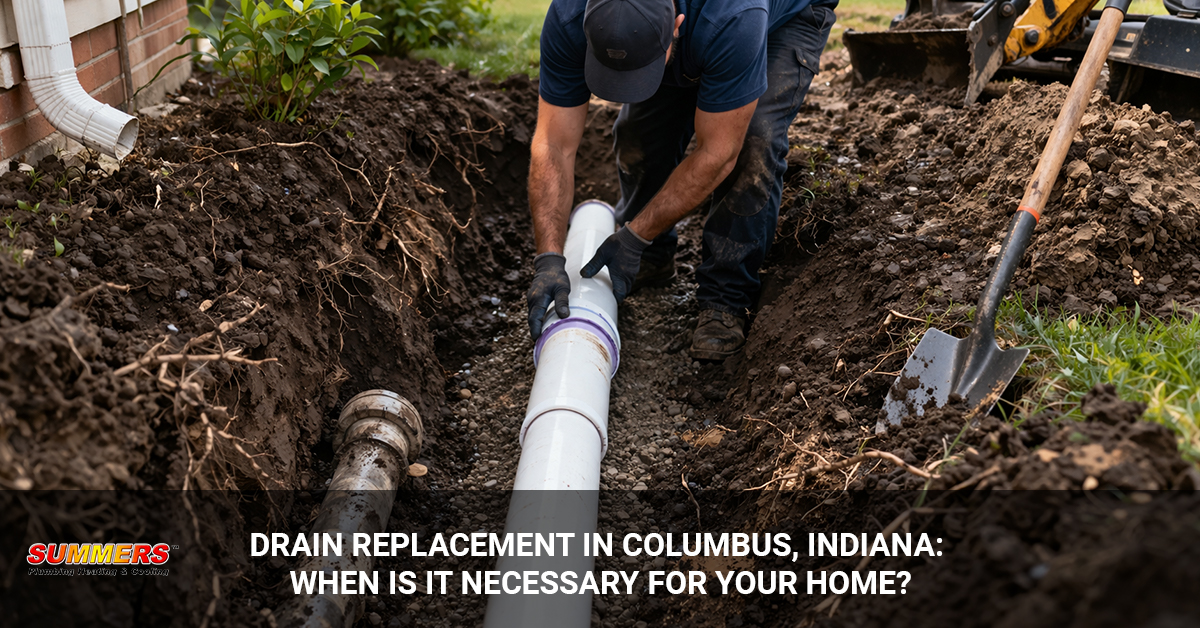
Drain replacement is necessary when your pipes are too damaged, too old, or are causing repeated problems that repairs can’t fix.
Drain issues don’t always mean you need a full replacement. Sometimes a simple repair is enough. But in many cases, the problem keeps coming back because the pipe itself is failing.
That’s where many homeowners get stuck. They keep fixing the same issue again and again, thinking it will solve the problem. Over time, those repeated repairs cost more than replacing the pipe.
If you live in Columbus, Indiana, knowing when to replace your drain pipes can save you money, time, and stress. It can also protect your home from serious damage.
In this guide, you’ll learn when drain replacement is necessary, the warning signs to watch for, and what to expect during the process.
When Is Drain Replacement Necessary?
Drain replacement is necessary when your pipes are too damaged, too old, or are causing repeated problems that repairs can’t fix.
If the pipe has cracks, breaks, or has collapsed, a simple repair won’t hold for long. The issue will keep coming back because the pipe itself is failing.
Replacement is also the better option when damage shows up in multiple areas. Fixing one spot won’t solve the overall problem.
In these cases, replacing the pipe gives you a long-term solution and helps prevent ongoing repairs and future damage.
How Do You Know If You Need Drain Replacement?
You need a drain replacement when problems keep coming back, affect multiple areas, or get worse over time.
It’s usually not just one issue. You might notice frequent clogs, water backing up, or slow drains in different parts of your home. These signs often point to a bigger problem in the pipe itself.
Visible damage is another clear warning. Cracks, leaks, or sinking areas in your yard can mean the pipe is failing underground.
If repairs only fix the problem for a short time, it’s a strong sign that replacement is the better option.
9 Signs You Need Drain Replacement
1. Frequent or Recurring Drain Problems
Frequent or recurring drain problems usually mean your pipes are failing and need to be replaced.
If you keep dealing with the same clog or backup, it’s not just a one-time issue. The pipe itself is likely damaged or worn out.
Temporary fixes may work for a short time, but the problem keeps coming back because the root cause isn’t solved and may require professional drain cleaning in Columbus, IN.
If this keeps happening, replacement is often the better long-term solution.
2. Severe Pipe Damage or Collapse
Severe pipe damage or a collapsed pipe means the line can’t be repaired and needs full replacement.
When a pipe is cracked, crushed, or caved in, water can’t flow properly. You may notice constant backups or no drainage at all.
In these cases, patching the pipe won’t work. The structure of the pipe is already compromised.
Replacing the damaged section is the only reliable way to restore proper flow and prevent ongoing problems.
3. Old or Aging Pipes
Old or aging pipes are more likely to fail and often need to be replaced.
Over time, pipes wear down from constant use. They can corrode, weaken, and develop cracks or leaks.
Even if they seem fine now, older pipes are more prone to sudden problems. Repairs may only delay the issue.
If your plumbing system is aging, replacement is often the safer and more reliable long-term solution.
4. Multiple Leaks in Different Areas
Multiple leaks in different areas usually mean your entire pipe system is wearing out and may need replacement.
If you keep finding leaks in different spots, it’s not just a one-time issue. It’s a sign the pipes are weakening throughout the system.
Fixing each leak separately may work for a while, but new leaks can keep appearing.
In this situation, replacing the pipes is often more cost-effective and prevents ongoing problems.
5. Constant Sewer Backups
Constant sewer backups usually mean your main pipe is severely damaged or failing and needs replacement.
If wastewater keeps coming back into your sinks, tubs, or toilets, the system isn’t draining properly. This is often caused by a major blockage or a broken pipe.
When backups happen repeatedly, it’s a sign the problem is deeper than a simple clog.
In most cases, replacing the damaged pipe is the only way to fully fix the issue, though some situations may require sewer line repair in Columbus, Indiana, before full replacement.
6. Rusty or Discolored Water
Rusty or discolored water usually means your pipes are corroding from the inside and may need replacement.
You might notice brown, yellow, or cloudy water coming from your taps. This often happens when older pipes start breaking down.
Corrosion weakens the pipe over time. It can lead to leaks, reduced water quality, and eventual pipe failure.
If the problem keeps coming back, replacing the pipes is often the safest and most reliable solution.
7. Foul Odors That Don’t Go Away
Foul odors that don’t go away usually mean there’s a serious issue in your pipes that may require replacement.
If you keep smelling sewage inside your home or around your yard, it’s often a sign of cracks, leaks, or buildup in the pipe.
Temporary fixes may reduce the smell for a short time, but if it keeps coming back, the underlying problem is still there.
In many cases, replacing the damaged section of pipe is the best way to fully eliminate the issue.
8. Wet or Soggy Areas in Your Yard
Wet or soggy areas in your yard often mean there’s a leaking underground pipe that may need replacement.
You might notice soft ground, muddy spots, or water pooling even when it hasn’t rained. These are signs that water is escaping from a damaged pipe below.
Over time, this can lead to soil erosion and bigger structural issues around your home.
If the problem continues, replacing the damaged pipe is usually the best way to stop the leak and prevent further damage.
9. Foundation Cracks or Sinkholes
Foundation cracks or sinkholes can be a sign of severe underground pipe damage that may require replacement.
When a pipe leaks below the ground, it slowly washes away the soil that supports your home. Over time, this can create empty spaces and weaken the structure.
You may notice cracks in your foundation, uneven flooring, or sinking areas in your yard.
This is a serious issue that shouldn’t be ignored. Replacing the damaged pipe is often necessary to stop the leak and protect your home from further structural damage.
Why Drain Replacement Is Sometimes Better Than Repair
Drain replacement is better than repair when you want a long-term fix instead of dealing with the same problem again and again.
Repairs can solve small issues, but they don’t always fix the root cause, especially if the pipe is old or damaged in multiple places.
If you keep repairing the same line, the costs can add up quickly. What seems cheaper at first can become more expensive over time.
Replacement solves the problem completely. It gives you a fresh, reliable pipe and helps prevent future leaks, clogs, and damage.
Common Causes of Pipe Failure in Columbus, Indiana
Pipe failure is usually caused by natural wear, ground movement, and buildup inside your pipes over time.
These problems develop slowly, but they can lead to serious damage if not addressed early.
Here are the most common causes:
- Tree root intrusion
Roots grow toward moisture and can break into pipes, causing cracks and blockages - Corrosion from aging pipes
Older pipes weaken over time, leading to rust, leaks, and eventual failure - Soil movement and weather changes
Ground shifting and seasonal changes in Columbus can stress and crack underground pipes - Grease and debris buildup
Grease, soap, and waste build up inside pipes, restricting flow and increasing pressure
Most pipe failures happen due to a combination of these factors, which is why regular inspection and maintenance are so important.
Drain Replacement Options
Drain replacement can be done with minimal digging or full excavation, depending on the condition of your pipes.
The right option depends on how damaged the pipe is and where it’s located.
Trenchless Pipe Replacement
Trenchless pipe replacement replaces your pipes with little to no digging.
This method installs a new pipe underground while keeping your yard, driveway, and landscaping mostly untouched. It’s faster, cleaner, and less disruptive than traditional methods.
It’s a great option when you want a long-term solution without tearing up your property.
Traditional Excavation
Traditional excavation replaces your pipes by completely digging them up.
This method is used when the pipe is severely damaged, or trenchless repair isn’t possible. The ground is opened to access the pipe, and the damaged section is removed and replaced.
It takes more time and can disturb your yard, driveway, or landscaping. But it provides a full and reliable solution for major pipe problems.
In cases of serious damage, this method is often the most effective way to restore your plumbing system.
How Much Does Drain Replacement Cost in Columbus, Indiana?
Drain replacement in Columbus, Indiana, typically costs between $2,500 and $5,500 on average, but the total can vary based on several factors.
Most homeowners spend around $3,000 to $4,000 for a standard sewer line replacement, though smaller jobs may cost less, and complex projects can go much higher.
Here’s what affects the final cost:
- Extent of damage
Minor replacements cost less, while severe damage or full system replacement costs more - Pipe location and depth
Deeper or hard-to-reach pipes require more labor and increase the price - Length of the pipe
Costs often range from about $50 to $250 per linear foot, depending on materials and complexity - Replacement method used
- Trenchless methods: Higher upfront cost, but less damage to your yard
- Traditional excavation: May cost less initially, but includes extra costs for digging and cleanup
- Labor and permits
Local labor rates and permit fees can also add to the total cost
In simple terms, drain replacement is a bigger investment upfront, but it can save money in the long run by preventing repeated repairs and ongoing issues.
What to Expect During Drain Replacement
Drain replacement starts with a full inspection to find the exact problem and plan the best solution.
A professional will first check your pipes using the right tools, often including a camera inspection. This helps identify the damage and decide whether trenchless or traditional replacement is needed.
Once the issue is confirmed, the damaged pipe is repaired or replaced using the chosen method. The work is done carefully to restore proper flow and prevent future problems.
The process can take a few hours to a few days, depending on how severe the damage is and how complex the job is.
When Should You Call a Professional?
You should call a professional as soon as you notice serious or recurring drain problems.
If the same issue keeps coming back, it’s usually a sign that something deeper is wrong. Simple fixes won’t solve the root cause.
Common warning signs include backups, multiple clogs at the same time, strong odors, or visible damage around your home. These problems often mean the pipe is blocked, leaking, or failing.
Calling a professional early can help you fix the issue before it turns into a bigger and more expensive repair.
How to Prevent Future Drain Replacement
You can prevent future drain replacement by taking care of your pipes and following simple maintenance habits.
Most major pipe problems build up over time, so small changes can make a big difference.
Avoid pouring grease down drains because it hardens inside pipes and causes blockages. Use strainers to catch hair, food, and debris before they enter your plumbing system. Schedule regular inspections so small issues can be found early. Also, be mindful of what you flush, and avoid items that can clog or damage your pipes.
These simple habits can help your pipes last longer and reduce the risk of costly replacement.
Final Thoughts
Drain replacement is necessary when repairs can no longer fix the problem for good.
If your pipes are old, damaged, or causing the same issues again and again, replacing them is often the smarter choice. It saves you from repeated repairs and ongoing stress.
Waiting too long can make the problem worse and more expensive.
A professional inspection can help you make the right decision at the right time and protect your home from bigger damage.