

Central Air vs Mini Split in Columbus, Indiana: Which Cooling System Is Better for Your Home?
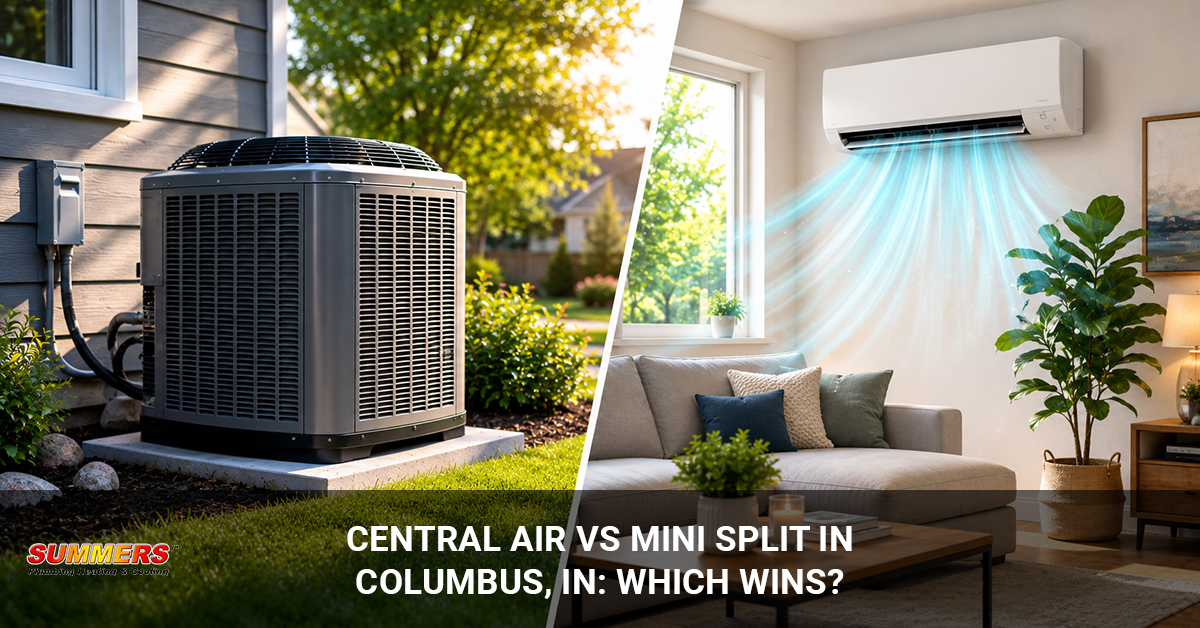
The best cooling system for your home depends on your home’s layout, whether you already have ductwork, and how you want to manage energy costs and comfort. In most Columbus homes with existing ductwork, central air is often the most practical choice. For homes without ducts or homeowners who want room-by-room temperature control, a mini split system is often the better option.
Both systems can keep your home cool and comfortable during Columbus’s hot and humid summers. However, they work differently, have different installation requirements, and offer unique benefits.
If you’re trying to decide between central air and a mini split, understanding the pros, cons, costs, and efficiency of each system can help you make a confident decision.
In this guide, you’ll learn:
- The difference between central air and mini split systems
- Which system is more energy efficient
- Installation and operating cost differences
- Which option provides better comfort
- The best choice for different types of homes
- How does Columbus’s climate affect your decision
By the end, you’ll have a clear understanding of which cooling system is the best fit for your home and budget.
Central Air vs Mini Split: Quick Comparison
The main difference between central air and a mini split is how they deliver cooled air throughout your home. Central air uses ductwork to distribute cool air to every room, while mini-splits send cooled air directly into individual rooms or zones without using ducts.
Both systems can effectively cool your home, but each is designed for different needs. Central air is often preferred for whole-home comfort, while mini-splits are known for their energy efficiency and room-by-room temperature control.
| Feature | Central Air | Mini Split |
|---|---|---|
| Whole-Home Cooling | Excellent | Good with Multiple Zones |
| Requires Ductwork | Yes | No |
| Energy Efficiency | High | Very High |
| Zoned Cooling | Limited | Excellent |
| Installation Cost | Lower if Ducts Exist | Lower Without Ducts |
| Indoor Appearance | Hidden | Visible Indoor Units |
| Maintenance | Moderate | Moderate |
| Best For | Homes With Existing Ductwork | Homes Without Ductwork or Room Additions |
What Is the Difference Between Central Air and a Mini Split?
Central air cools your entire home through a single system that uses ductwork to distribute conditioned air to every room. A mini split cools individual rooms or zones using separate indoor units connected to an outdoor unit, allowing for independent temperature control.
In simple terms, central air is designed to cool the entire house at once, while mini-splits allow you to cool specific areas only when needed.
For example, if every room in your home needs cooling throughout the day, central air may be the more practical option. If you want different temperatures in different rooms or only use certain areas regularly, a mini split system can offer greater flexibility and energy savings.
Understanding this fundamental difference makes it easier to compare efficiency, installation costs, comfort, and long-term value as you evaluate which system is right for your Columbus home.
What Is a Central Air Conditioning System?
A central air conditioning system cools your entire home through a network of ducts and vents. It uses a single system to remove heat from indoor air and distribute cooled air evenly throughout the house.
Central air is one of the most popular cooling options for homeowners in Columbus, Indiana, because it provides reliable, whole-home comfort and works seamlessly with existing ductwork.
How Central Air Works
A central air conditioning system works by removing heat from your home and circulating cool air through ducts connected to vents in each room.
A typical central AC system includes:
- An outdoor condenser unit
- An indoor evaporator coil
- A blower or air handler
- A network of ducts and vents
- A thermostat for temperature control
As warm air is pulled from your home, the system removes heat and humidity before sending cooled air back through the ductwork. This process continues until your desired temperature is reached.
Benefits of Central Air
Central air is a popular choice because it delivers consistent cooling throughout the entire home. If your house already has ductwork, installation is often straightforward and cost-effective.
Benefits of central air include:
- Consistent whole-home cooling
- Even temperatures throughout most rooms
- Quiet indoor operation
- Hidden equipment and ductwork
- Compatibility with smart thermostats
- Improved home value and buyer appeal
Many homeowners prefer central air because it provides a clean appearance with no visible indoor units mounted on walls or ceilings.
Potential Drawbacks
While central air works well for many homes, it may not be the best solution in every situation.
Potential drawbacks include:
- Requires existing ductwork or new duct installation
- Energy losses can occur through leaky ducts
- Limited room-by-room temperature control
- Higher installation costs in homes without ducts
- Cooling unused rooms can increase energy consumption
For homeowners who want independent temperature control in different areas of the home, a mini split system may offer greater flexibility.
Is Central Air Right for Your Home?
Central air is often the best choice for homeowners who already have ductwork and want efficient, whole-home cooling. It provides consistent comfort, a clean appearance, and reliable performance during Columbus’s hot summer months.
However, if your home lacks ductwork or you want more control over individual room temperatures, it may be worth comparing central air with a mini split system before making a final decision.
What Is a Mini Split System?
A mini split system is a ductless heating and cooling system that delivers conditioned air directly into individual rooms or areas of your home. Unlike central air, mini-splits do not rely on ductwork, making them a popular option for homes where installing ducts would be difficult or expensive.
Mini-splits have become increasingly popular among Columbus homeowners because they offer excellent energy efficiency, flexible installation options, and personalized comfort control.
Homeowners considering this option can learn more about the benefits of mini split installation in Columbus and where these systems work best.
How Mini Splits Work
A mini split system cools your home by transferring heat from inside your home to the outdoors. Instead of using ducts, it sends conditioned air directly into the room through an indoor air handler.
A typical mini split system includes:
- An outdoor condenser unit
- One or more indoor air handlers
- Refrigerant lines connecting the units
- A remote control or wall-mounted thermostat
Each indoor unit operates independently, allowing you to set different temperatures in different areas of your home.
For example, you can keep your bedroom cooler at night while using less cooling in guest rooms or other unused spaces.
Benefits of Mini Splits
Mini-splits are known for their efficiency and flexibility. Because they deliver air directly into a room, they avoid the energy losses commonly associated with ductwork.
Benefits of mini split systems include:
- High energy efficiency
- No ductwork required
- Individual room temperature control
- Lower energy consumption in many homes
- Quiet operation
- Flexible installation options
- Improved comfort in hard-to-cool spaces
Many homeowners appreciate the ability to cool only the rooms they are using, which can help reduce monthly energy costs.
Mini-splits are especially useful for:
- Older homes without ducts
- Home additions
- Finished basements
- Sunrooms
- Garages
- Home offices
Potential Drawbacks
Although mini-splits offer many advantages, they may not be the perfect solution for every home.
Potential drawbacks include:
- Visible indoor wall-mounted units
- Higher upfront costs for multiple zones
- More indoor components to maintain
- Different aesthetic preferences among homeowners
For larger homes requiring several indoor units, installation costs can sometimes exceed the cost of a traditional central air system.
Is a Mini Split Right for Your Home?
A mini split is often the best choice if your home doesn’t have ductwork or if you want greater control over individual room temperatures. It can also be an excellent solution for additions, converted spaces, and areas that are difficult to cool with a traditional HVAC system.
If energy efficiency and zoned comfort are top priorities, a mini split system may provide significant long-term benefits for your Columbus home.
Which System Is More Energy Efficient?
Mini-splits are generally more energy-efficient than central air systems because they eliminate duct losses and allow you to cool only the rooms you use. However, a modern high-efficiency central air system can still deliver excellent energy savings, especially in homes with properly sealed and insulated ductwork.
If reducing monthly utility bills is one of your top priorities, energy efficiency should play a major role in your decision.
Understanding SEER Ratings
The energy efficiency of an air conditioning system is measured by its SEER (Seasonal Energy Efficiency Ratio) rating. A higher SEER rating means the system uses less electricity to produce the same amount of cooling.
Most modern systems fall within these ranges:
- Central Air: 14–18 SEER (some premium models exceed 20 SEER)
- Mini Splits: 18–30+ SEER
In general, mini-splits offer some of the highest efficiency ratings available in residential cooling systems.
While higher-SEER systems usually cost more upfront, they often reduce energy consumption and operating costs over time.
Duct Losses and Energy Waste
One of the biggest reasons mini splits are more efficient is that they don’t use ductwork.
In many homes, conditioned air can be lost before it ever reaches the living space due to:
- Leaky duct connections
- Poor duct insulation
- Aging duct systems
- Improper installation
These losses force the HVAC system to work harder, which increases energy use and utility costs.
Because mini-splits deliver cooled air directly into a room, they avoid these duct-related losses entirely.
How Zoned Cooling Saves Energy
Mini-splits save energy by allowing homeowners to cool only the spaces they are actively using.
Instead of cooling an entire home with one thermostat setting, you can adjust temperatures independently in different rooms.
For example, you can:
- Keep bedrooms cooler at night
- Reduce cooling in unused guest rooms
- Set different temperatures for different family members
- Cool a home office during the day without cooling the entire house
This zoned approach often results in lower energy consumption and better overall efficiency.
Estimated Energy Savings for Columbus Homeowners
The amount of energy you save depends on several factors, including your home’s size, insulation, cooling habits, and the efficiency of the equipment you choose.
Mini-splits often provide the greatest savings when:
- The home doesn’t have ductwork
- Only certain rooms are used regularly
- Homeowners want zoned temperature control
- Older duct systems are inefficient
However, central air can still be highly efficient when:
- Ductwork is properly sealed
- The system is correctly sized
- A high-SEER model is installed
- Regular maintenance is performed
Which System Wins on Efficiency?
If energy efficiency alone is your primary concern, mini splits typically have the advantage. Their ductless design and zoned cooling capabilities allow many homeowners to use less energy while maintaining excellent comfort.
That said, the difference may be smaller than expected in homes with modern ductwork and a high-efficiency central air system. The most efficient choice ultimately depends on your home’s layout, cooling needs, and how you use each space throughout the day.
Installation Costs: Central Air vs Mini-Split
The cost of installing central air or a mini split depends on your home’s size, existing ductwork, system efficiency, and installation requirements. In general, central air is often more affordable when ductwork is already in place, while mini-splits can be more cost-effective for homes without ducts.
Understanding the factors that influence installation costs can help you choose the system that offers the best value for your budget. Reviewing the average AC installation cost in Columbus can help homeowners better compare central air and mini-split investments.
Average Central Air Installation Cost
Central air installation is typically the more economical option for homeowners who already have a functional duct system. Because the ductwork is already in place, the installation process is usually simpler and less labor-intensive.
Several factors affect the cost of central air installation, including:
- System size and cooling capacity
- SEER efficiency rating
- Existing HVAC equipment
- Condition of ductwork
- Thermostat upgrades
- Installation complexity
If your home requires new ductwork, the overall project cost can increase significantly because duct installation is often one of the most expensive parts of the job.
Average Mini-Split Installation Cost
Mini split installation costs vary based on the number of indoor units, also known as zones, that are required.
A single-zone mini split is often an affordable solution for:
- Home additions
- Garages
- Sunrooms
- Finished basements
- Older homes without ducts
However, a whole-home mini split system with multiple indoor units can cost more than a traditional central air system.
The more zones you add, the higher the installation cost becomes.
Factors That Affect Pricing
Whether you choose central air or a mini split, several factors influence the final installation cost.
These include:
- Home square footage
- Existing ductwork condition
- Number of rooms being cooled
- System efficiency rating
- Electrical upgrades
- Indoor unit quantity
- Labor requirements
- Indoor air quality add-ons
- Smart thermostat upgrades
Because every home is unique, pricing can vary significantly from one project to another.
Why a Professional Load Calculation Matters
The most accurate way to determine installation costs is through a professional HVAC evaluation.
An HVAC contractor will perform a load calculation that considers:
- Home size
- Insulation levels
- Window placement
- Ceiling height
- Air leakage
- Occupancy patterns
This ensures the system is properly sized for maximum comfort and efficiency.
Choosing equipment based solely on square footage can lead to higher energy bills, uneven cooling, and reduced system lifespan.
Which Option Offers Better Long-Term Value?
The better long-term value depends on your home’s design and how you plan to use the system.
Central Air Often Provides Better Value When:
- Ductwork already exists
- Whole-home cooling is the goal
- You prefer a traditional HVAC system
- You want hidden indoor equipment
- You plan to cool every room consistently
In these situations, central air often offers lower installation costs and reliable long-term performance.
Mini-Splits Often Provide Better Value When:
- Your home does not have ductwork
- You want room-by-room temperature control
- Energy efficiency is a priority
- Only certain rooms need cooling
- You’re adding cooling to a new space or addition
The ability to cool specific areas instead of the entire home can lead to lower operating costs over time.
Which System Is the Better Investment?
If your home already has ductwork in good condition, central air is often the more cost-effective investment. However, if installing ductwork would be expensive or disruptive, a mini split system may deliver better value and efficiency.
The best investment isn’t always the system with the lowest upfront cost. Comparing installation expenses with potential AC repair costs in Columbus can help homeowners make a more informed long-term decision. It’s the one that provides the right balance of comfort, efficiency, and operating costs for your specific home and lifestyle.
Which System Provides Better Comfort?
Both central air and mini-splits can keep your home comfortable, but the better choice depends on your comfort preferences and how you use different areas of your home. Central air is typically best for consistent whole-home cooling, while mini-splits offer greater flexibility through room-by-room temperature control.
If comfort is your top priority, it’s important to understand how each system performs in real-world situations.
Whole-Home Cooling Performance
Central air generally provides the best whole-home cooling experience. Because cool air is distributed through a network of ducts, the system can maintain a consistent temperature throughout most areas of the house.
Benefits of central air for whole-home comfort include:
- Even cooling across multiple rooms
- Single thermostat operation
- Consistent indoor temperatures
- Seamless cooling throughout the home
For families who want every room cooled at the same temperature, central air is often the simplest and most convenient solution.
Room-by-Room Temperature Control
Mini-splits provide superior room-by-room comfort because each indoor unit operates independently. This allows homeowners to customize temperatures in different areas of the home.
This feature is especially beneficial for:
- Multi-story homes
- Families with different comfort preferences
- Home offices
- Guest bedrooms
- Finished basements
- Home additions
For example, one family member can keep a bedroom cooler while another prefers a warmer temperature in a different room.
Hot and Cold Spot Reduction
Mini-splits are often better at eliminating hot and cold spots because they provide dedicated cooling directly where it’s needed.
Many homes experience temperature imbalances due to:
- Sun exposure
- Poor airflow
- Long duct runs
- Multi-story layouts
A mini split can target these problem areas without affecting the rest of the home.
Central air can also reduce hot and cold spots when the duct system is properly designed, balanced, and maintained. However, achieving perfect temperature consistency can sometimes be more challenging in larger or older homes.
Noise Levels
Both systems operate much more quietly than older air conditioning systems, but mini-splits typically have a slight advantage when it comes to noise.
Mini-splits are known for:
- Extremely quiet indoor operation
- Minimal vibration
- Quiet variable-speed technology
Because the compressor remains outside, indoor units often produce very little sound.
Central air systems are also relatively quiet, but homeowners may occasionally hear:
- Air moving through ducts
- Vent airflow
- Blower operation
For most households, the difference is minor, but homeowners seeking the quietest possible operation often prefer mini-splits.
Which System Offers Better Comfort?
If you want consistent temperatures throughout your entire home, central air is often the better choice. If you want personalized comfort and the ability to control temperatures in individual rooms, mini-splits usually provide greater flexibility.
For many Columbus homeowners, the decision comes down to how they use their living spaces. Families that spend time in multiple rooms throughout the day may appreciate the simplicity of central air, while homeowners who want customized comfort and energy savings often prefer the zoning capabilities of a mini split system.
Best System for Different Types of Columbus Homes
The best cooling system for your home depends on factors such as its age, layout, existing ductwork, and how you use the space. While both central air and mini-splits can provide reliable cooling, certain home types are better suited to one system than the other.
Choosing the right system for your home’s design can improve comfort, increase efficiency, and help you get the most value from your investment.
Homes With Existing Ductwork
Central air is usually the best option for homes that already have ductwork in good condition. Because the infrastructure is already in place, installation is often simpler and more affordable.
Benefits of choosing central air include:
- Lower installation costs
- Consistent whole-home cooling
- Familiar operation
- Hidden equipment and vents
- Easy integration with existing HVAC systems
For many newer homes in Columbus, central air remains the most practical and cost-effective solution.
Older Homes Without Ductwork
Mini-splits are often the preferred choice for older homes that were built before central HVAC systems became common.
Adding ductwork to an older home can involve:
- Opening walls and ceilings
- Extensive remodeling
- Higher labor costs
- Longer installation times
Because mini-splits don’t require ducts, they can provide efficient cooling with minimal disruption to the home’s structure and appearance.
Home Additions and Renovations
Mini-splits are one of the best cooling solutions for home additions and renovated spaces. They provide independent temperature control without requiring major changes to your existing HVAC system.
Mini-splits work especially well in:
- Sunrooms
- Home additions
- Converted attics
- Garage apartments
- Finished garages
- Detached living spaces
Instead of extending ductwork, homeowners can install a dedicated mini-split system to cool the new area efficiently.
Finished Basements
Finished basements often have different cooling needs than the rest of the house. Because basements are partially below ground, they can retain moisture and maintain different temperatures from upper floors.
A mini split allows homeowners to:
- Control basement temperatures independently
- Improve comfort year-round
- Avoid overcooling the rest of the home
- Reduce humidity levels
This makes mini-splits a popular choice for finished basement living areas, home theaters, and recreation rooms.
Multi-Story Homes
Both central air and mini-splits can work well in multi-story homes, but mini-splits often provide greater flexibility for managing temperature differences between floors.
Many homeowners experience:
- Warmer upstairs bedrooms
- Uneven temperatures between floors
- Hot spots in upper-level rooms
Mini-splits can target these problem areas directly and provide independent temperature control where it’s needed most.
In some cases, homeowners combine both systems by using central air for the main living areas and mini-splits to supplement cooling in second-story rooms that stay warmer during summer.
Which System Is Right for Your Home?
As a general rule:
- Choose Central Air if your home already has ductwork and you want consistent whole-home cooling.
- Choose a mini-split if your home lacks ductwork, has temperature imbalances, or requires cooling for specific rooms or additions.
A professional HVAC assessment can help determine which system will provide the best comfort, efficiency, and long-term value for your specific Columbus home.
How Columbus’s Climate Impacts Your Decision
Columbus’s hot, humid summers and changing seasonal temperatures make energy efficiency, humidity control, and reliable cooling important factors when choosing between central air and a mini split. While both systems can keep your home comfortable, the local climate may make one option a better fit for your specific needs.
Understanding how each system performs in Columbus weather can help you make a smarter long-term investment.
Hot, Humid Summers
Both central air and mini-splits can effectively cool homes during Columbus’s hot summer months. However, humidity often plays just as important a role in comfort as temperature.
When temperatures rise and humidity levels increase, your air conditioning system must:
- Remove heat from the home
- Reduce indoor humidity
- Maintain consistent comfort
Mini-splits can be particularly effective because they allow homeowners to cool specific areas without wasting energy on unused rooms. Central air systems also perform well when properly sized and maintained.
Seasonal Temperature Changes
Indiana experiences a wide range of temperatures throughout the year, from hot summers to cold winters. Many homeowners prefer HVAC solutions that provide flexibility as the seasons change.
Some mini split systems function as heat pumps, meaning they can provide both cooling and heating from the same equipment.
This can offer benefits such as:
- Year-round comfort
- Improved energy efficiency
- Reduced reliance on separate heating equipment
- Lower operating costs during mild weather
Central air systems can also be paired with high-efficiency furnaces or heat pumps to create a complete home comfort solution.
Humidity Control Considerations
Humidity control is essential for maintaining comfort and indoor air quality in Columbus homes. Excess humidity can make indoor temperatures feel warmer than they actually are and may contribute to mold growth and moisture-related problems.
High indoor humidity can lead to:
- Sticky indoor conditions
- Mold and mildew growth
- Increased allergy symptoms
- Reduced indoor air quality
Both central air and mini-splits remove moisture while cooling. However, proper system sizing is critical. An oversized system may cool the home too quickly without removing enough humidity.
A properly designed HVAC system should provide both temperature control and effective moisture removal.
Energy Costs in Southern Indiana
Energy efficiency is becoming increasingly important as utility costs continue to rise. Choosing an efficient cooling system can help lower monthly operating expenses while maintaining comfort.
Features that help improve efficiency include:
- High SEER ratings
- Variable-speed compressors
- Zoned cooling capabilities
- Smart thermostat integration
- Advanced inverter technology
Mini-splits often have an advantage in homes where only certain rooms need cooling because they allow homeowners to avoid conditioning unused spaces.
However, modern central air systems can also deliver excellent energy performance when paired with sealed ductwork, proper insulation, and high-efficiency equipment.
Which System Handles Columbus’s Climate Better?
Both systems perform well in Columbus’s climate, but the best choice depends on your home’s layout and how you use your living spaces.
- Central air is often ideal for homeowners who want consistent whole-home cooling and already have ductwork.
- Mini-splits are often the better choice for homeowners seeking maximum efficiency, zoned comfort, or cooling in homes without ducts.
The most effective system is one that is properly sized, professionally installed, and designed around your home’s specific cooling needs.
Central Air vs Mini Split: Pros and Cons
Both central air and mini split systems can provide reliable cooling, but each has advantages and disadvantages. The right choice depends on your home’s layout, existing ductwork, energy-efficiency goals, and comfort preferences.
Central Air Pros and Cons
Central air is often the best option for homeowners who want consistent whole-home cooling. It distributes conditioned air evenly throughout the house, keeps indoor equipment hidden from view, and works well in homes with existing ductwork. Many homeowners also appreciate its simple operation and the potential value it can add to a property.
However, central air requires ductwork to function. If your home doesn’t already have ducts, installation costs can increase significantly. Duct systems can also lose conditioned air through leaks or poor insulation, reducing overall efficiency. Compared to mini-splits, central air offers less flexibility for controlling temperatures in individual rooms.
Pros:
- Even whole-home cooling
- Hidden indoor components
- Works well with existing ductwork
- Familiar and easy operation
- Can increase home value
Cons:
- Requires ductwork
- Potential energy loss through ducts
- Limited zoning capabilities
- Higher installation costs when ducts are needed
Mini Split Pros and Cons
Mini-splits are known for their high energy efficiency and flexible installation options. Because they don’t require ductwork, they are an excellent solution for older homes, home additions, garages, finished basements, and other spaces where installing ducts would be difficult. They also allow homeowners to control temperatures independently in different rooms, helping improve comfort and reduce energy waste.
The main drawback is that indoor air handlers remain visible inside the home. Whole-home mini split systems can also become more expensive when multiple indoor units are required. In addition, each indoor unit requires periodic cleaning and maintenance.
Pros:
- Highly energy efficient
- No ductwork required
- Excellent zoned cooling
- Flexible installation options
- Great for additions and older homes
Cons:
- Visible indoor units
- Higher costs for whole-home systems
- More indoor components to maintain
- Appearance may not appeal to all homeowners
Which System Is Better for Your Home?
The best system for your home depends on your existing ductwork, comfort preferences, energy-efficiency goals, and budget. If your current cooling equipment is aging, recognizing the signs you need AC replacement can help determine whether upgrading makes sense.
Central air is usually the better choice for homes with ductwork that need consistent whole-home cooling, while mini splits are often ideal for homes without ducts or homeowners who want room-by-room temperature control.
There’s no one-size-fits-all answer. The right system is the one that matches how you live and how your home is designed.
Choose Central Air If
Central air is typically the better option if your home already has ductwork and you want a simple, whole-home cooling solution.
You may benefit most from central air if:
- Your home already has ductwork in good condition
- You want consistent temperatures throughout the house
- You prefer hidden vents instead of visible indoor units
- You’re replacing an older central air system
- You want a traditional HVAC setup that’s easy to operate
For many Columbus homeowners, central air offers reliable comfort and a lower installation cost when ductwork is already in place.
Choose a Mini Split If
A mini split is often the better choice if your home doesn’t have ductwork or if you want more control over temperatures in different rooms.
A mini split may be the right fit if:
- Your home doesn’t have existing ductwork
- You want room-by-room temperature control
- Energy efficiency is a top priority
- You’re cooling a home addition, garage, or finished basement
- You want to avoid cooling unused rooms
Mini splits are especially popular in older homes and spaces where extending ductwork would be expensive or impractical.
Can You Use Both Systems Together?
Yes, many homeowners successfully use both systems in the same home. Combining central air and mini-splits can provide the best balance of comfort, efficiency, and flexibility.
A common approach is to use central air for the main living areas while installing a mini-split in spaces that are difficult to cool with the existing system.
Examples include:
- Finished basements
- Sunrooms
- Home offices
- Bonus rooms
- Garage conversions
- Home additions
This hybrid solution allows you to improve comfort in specific areas without replacing your entire HVAC system. It can also help reduce energy waste by providing targeted cooling where it’s needed most.
For many Columbus homeowners, combining central air and mini-splits offers a practical way to solve temperature issues while improving overall efficiency and comfort.
Frequently Asked Questions
Is a Mini Split Cheaper to Run Than Central Air?
In many cases, yes. Mini splits are often cheaper to operate because they are highly energy-efficient and allow you to cool only the rooms you’re using. Since they don’t use ductwork, they also avoid the energy losses that can occur in traditional duct systems.
Does a Mini Split Increase Home Value?
Yes, a professionally installed mini split can add value to a home. Many buyers appreciate the energy savings, improved comfort, and zoned temperature control that mini split systems provide. They can be especially attractive in older homes that do not have existing ductwork.
Can a Mini Split Cool an Entire House?
Yes, a properly designed multi-zone mini split system can cool an entire home. Multiple indoor units can be installed throughout the house to provide consistent comfort in different rooms. The number of units needed depends on the size and layout of the home.
How Long Do Mini Splits Last?
Most mini split systems last between 15 and 20 years with proper maintenance. Regular filter cleaning, annual professional service, and proper installation can help maximize the lifespan of the system.
How Long Does Central Air Last?
A central air conditioning system typically lasts between 12 and 20 years. Factors such as maintenance, usage patterns, installation quality, and local climate conditions all affect how long the system will perform efficiently.
Which System Is Better for Older Homes?
Mini splits are often the better choice for older homes because they do not require ductwork. They can be installed with minimal disruption and provide efficient cooling without the expense of adding a complete duct system.
Are Mini Splits Worth the Investment?
For many homeowners, yes. Mini splits offer excellent energy efficiency, flexible temperature control, and lower operating costs. They can be particularly valuable in homes without ductwork, room additions, and spaces that are difficult to cool with a traditional system.
Final Thoughts
The best cooling system for your home depends on your specific needs, budget, and existing HVAC setup. Central air is often the best choice for homes with ductwork that need reliable whole-home cooling, while mini-splits excel in homes that require zoned comfort, higher efficiency, or cooling without ducts.
If you’re looking for a simple, traditional cooling solution, central air is hard to beat. If you want greater control over individual room temperatures and maximum energy efficiency, a mini split system may be the better investment.
Ultimately, there is no universal winner. The right choice is the system that fits your home’s layout, delivers the comfort you want, and provides the best long-term value for your household.
Before making a decision, consider scheduling a professional HVAC evaluation. An expert can assess your home’s cooling needs, compare installation options, and recommend the most efficient solution for your situation.