

Repiping in Franklin, Indiana: Cost and Timeline Explained
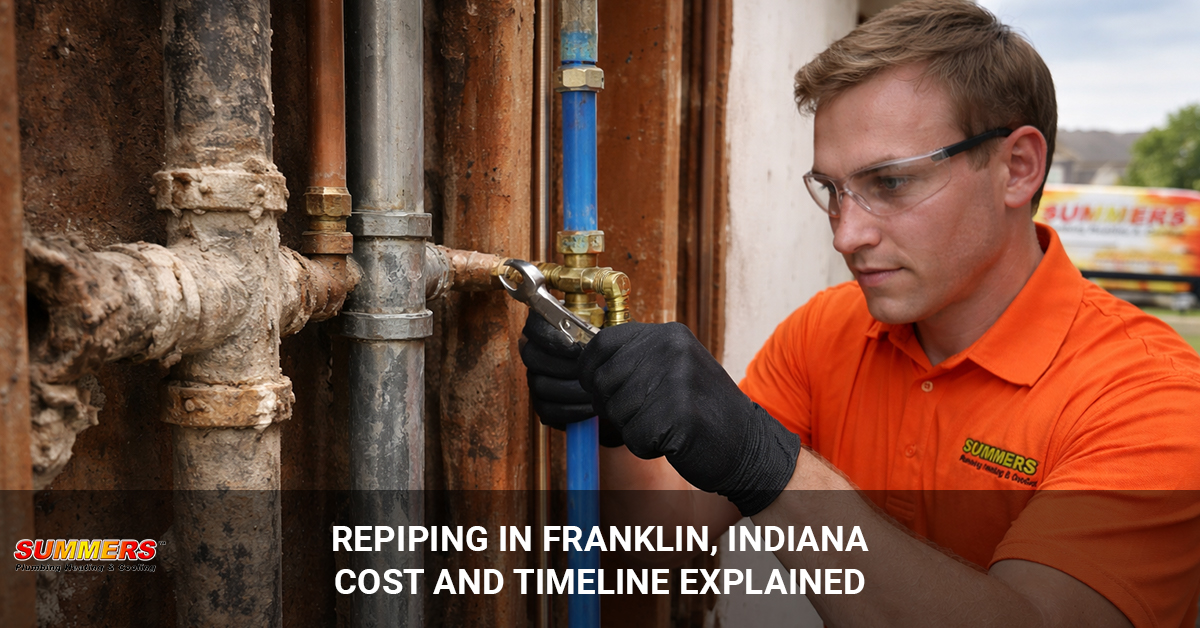
Repiping in Franklin, Indiana: Cost and Timeline Explained
Repiping in Franklin, Indiana, means replacing old plumbing pipes with new ones so water can flow properly throughout your home. Over time, plumbing pipes wear out due to corrosion, mineral buildup, or aging materials. When pipes begin to fail, homeowners may notice leaks, weak water pressure, or discolored water coming from faucets.
Many homes in Franklin were built decades ago and still have aging plumbing systems. As pipes get older, they become more likely to corrode, crack, or leak. Repiping replaces these outdated pipes with modern materials that are stronger and more reliable.
Understanding the cost and timeline of repiping helps homeowners prepare for the project. While repiping is a major plumbing upgrade, it can greatly improve water pressure, reduce plumbing problems, and protect the home from future water damage.
What Is Repiping
Repiping is the process of replacing old or damaged plumbing pipes in a home with new ones. Instead of fixing small pipe sections again and again, plumbers replace most or all of the plumbing pipes to solve the problem for the long term.
Over time, pipes can weaken because of corrosion, rust, or mineral buildup inside the pipe. As these problems grow, water flow becomes restricted, and the chances of leaks increase.
Repiping fixes these issues by installing new pipes that allow water to move smoothly through the plumbing system. Modern piping materials are built to resist corrosion and last for many years.
Once repiping is completed, homeowners usually notice stronger water pressure, more reliable plumbing, and fewer plumbing repairs.
Signs Your Home May Need Repiping
Your home may need repiping if the plumbing pipes are old, damaged, or starting to fail. Certain warning signs often appear when pipes can no longer work properly, and the plumbing system begins to weaken.
Frequent Pipe Leaks
Frequent pipe leaks are one of the clearest signs that plumbing pipes are deteriorating. If you continue repairing leaks in different areas of the home, the entire plumbing system may be wearing out.
Low Water Pressure
Low water pressure can occur when corrosion or mineral buildup forms inside the pipes. As the inside of the pipes becomes narrower, less water is able to flow through the system.
Rusty or Discolored Water
Brown, yellow, or rusty water from faucets may indicate corrosion inside older metal pipes. This problem is common in homes with aging galvanized steel plumbing systems.
Noisy Pipes
Banging, knocking, or rattling sounds inside pipes may signal pressure problems or loose plumbing components. These noises often appear when pipes begin to wear out.
Aging Plumbing System
Homes with plumbing systems that are several decades old are more likely to experience corrosion, leaks, and reduced water flow. In many cases, repiping provides a long-term solution for these aging systems.
Common Plumbing Problems Caused by Old Pipes
Old plumbing pipes can create several problems that affect water flow, water quality, and the overall performance of your plumbing system. As pipes age, they begin to weaken and may no longer work as efficiently as they once did.
Pipe Corrosion
Pipe corrosion happens when metal pipes slowly break down due to chemical reactions with water or soil. As corrosion spreads, the pipe walls become thinner and weaker, which can eventually lead to leaks.
Mineral Buildup Inside Pipes
Hard water minerals can gradually build up inside plumbing pipes. Over time, this buildup reduces the space inside the pipe, making it harder for water to pass through and lowering water pressure.
Hidden Water Leaks
Old pipes may develop small leaks behind walls, under floors, or inside ceilings. These leaks can remain unnoticed for a long time and may cause water damage before they are discovered. In more serious cases, underground pipe damage may require professional sewer line repair in Franklin, Indiana, to prevent long-term structural issues and water damage.
Reduced Water Flow
As corrosion and mineral buildup increase, the amount of water that can move through the pipes becomes smaller. This results in weaker and less consistent water flow throughout the home.
Average Cost of Repiping in Franklin, Indiana
The cost of repiping in Franklin, Indiana, usually depends on the size of the home, the number of plumbing fixtures, and the type of pipe material used. Because every plumbing system is different, the final price can vary from one home to another.
Typical Cost Range
Most residential repiping projects typically cost between $4,000 and $15,000. Smaller homes with fewer plumbing fixtures often fall on the lower end of this range, while larger homes with multiple bathrooms may cost more because they require additional materials and labor.
Homes with simple plumbing layouts are usually quicker and less expensive to repipe. Larger homes with more complex plumbing systems may require more work.
Factors That Affect Repiping Cost
Several factors influence the final cost of a repiping project:
- Size of the home: Larger homes require more pipe and installation work.
- Number of bathrooms and fixtures: More fixtures mean more plumbing connections.
- Type of pipe material used: Materials like copper usually cost more than PEX or CPVC.
- Accessibility of plumbing lines: Pipes located behind walls, under floors, or in tight spaces can require more labor to replace.
- Labor requirements: More complex installations require additional time and skilled work.
Homes with complicated plumbing layouts or difficult pipe access may require extra labor, which can increase the total project cost.
Cost by Pipe Material
The type of pipe material used during repiping can affect the total cost of the project. Each material has different installation costs, durability levels, and long-term performance benefits.
PEX Pipes
PEX pipes are usually the most affordable option for repiping. This material is flexible, resistant to corrosion, and easier for plumbers to install. Because PEX can bend around corners, it often requires fewer connections, which can help reduce labor costs.
Copper Pipes
Copper pipes are known for their strength and long lifespan. They are more expensive than most other plumbing materials, but many homeowners choose copper because it is durable and has a long history of reliable performance.
CPVC Pipes
CPVC pipes are another common option for residential repiping. They are resistant to corrosion and mineral buildup, which helps maintain steady water flow. CPVC is lightweight and relatively easy to install, making it a practical choice for many homes.
How Long Does Repiping Take?
Most residential repiping projects take one to five days to complete, depending on the size of the home and the complexity of the plumbing system. The timeline can vary based on how many pipes need to be replaced and how easily plumbers can access the plumbing lines.
Smaller Homes
Repiping smaller homes often takes one to two days. These homes usually have fewer plumbing fixtures and simpler pipe layouts, which allows plumbers to complete the work more quickly.
Larger Homes
Larger homes with multiple bathrooms or more complex plumbing systems may require three to five days. Additional pipes, fixtures, and connections increase the amount of installation work required.
Professional plumbers plan the project carefully to minimize disruption inside the home. In many cases, homeowners can still use parts of the plumbing system while the work is being completed.
What Happens During a Repiping Project
A repiping project replaces the old plumbing system with new pipes so water can flow properly throughout the home. Professional plumbers follow several steps to ensure the installation is done safely and the plumbing system works correctly.
Plumbing Inspection
The process begins with a detailed inspection of the existing plumbing system. The plumber checks the pipes for corrosion, leaks, and signs of aging to determine which sections need to be replaced.
Planning the Pipe Layout
After the inspection, the plumber plans the new pipe layout. This step includes choosing the right pipe materials and deciding the best route for the new plumbing lines throughout the home.
Removing Old Pipes
Next, the old pipes are disconnected or removed. This step clears space for the installation of the new piping system.
Installing New Pipes
The plumber installs the new pipes and connects them to plumbing fixtures such as sinks, showers, toilets, and appliances. Each connection is secured to ensure proper water flow.
Testing the Plumbing System
Once installation is complete, the plumbing system is tested. The plumber checks water pressure and inspects the connections to make sure there are no leaks and that the system is working properly.
Benefits of Repiping Your Home
Repiping your home improves the performance, reliability, and efficiency of your plumbing system. When old pipes are replaced with new materials, water flows more smoothly and many common plumbing problems are reduced.
Improved Water Pressure
Repiping improves water pressure by removing restrictions inside old pipes. New pipes allow water to move freely through the plumbing system, which helps restore strong and steady water pressure throughout the home.
Cleaner Water Quality
Replacing corroded or rusty pipes helps improve water quality. New pipes prevent rust and other contaminants from entering the water supply, helping keep household water cleaner.
Fewer Plumbing Repairs
Modern piping materials are designed to resist corrosion and wear. Installing new pipes reduces the chances of leaks and helps prevent frequent plumbing repairs.
Increased Home Value
Homes with updated plumbing systems are often more appealing to buyers. Repiping can increase the overall value of the property by improving the reliability of the plumbing system.
Repiping vs Pipe Repair
Repiping and pipe repair both fix plumbing problems, but they solve different types of issues. Pipe repair fixes a specific damaged section of pipe, while repiping replaces most or all of the plumbing pipes in the home.
When Pipe Repair Is Enough
Pipe repair works well when the problem is small and limited to one area. For example, a single leak or a short damaged pipe section can often be repaired without replacing the entire system.
In these cases, fixing the damaged pipe can restore normal water flow and solve the problem quickly.
When Repiping Is the Better Option
Repiping is usually the better option when pipes are old, corroded, or leaking in multiple areas. If plumbing problems keep returning, repairing one section at a time may only provide temporary results.
Replacing the aging pipes with new materials provides a long-term solution. Repiping helps improve water pressure, reduce leaks, and make the plumbing system more reliable.
Why Choose Professional Repiping in Franklin, Indiana
Professional repiping in Franklin, Indiana, ensures that your new plumbing pipes are installed safely and correctly. Experienced plumbers have the training and tools needed to replace old pipes without damaging walls, floors, or other parts of the home.
Repiping requires careful planning and proper installation. Professional plumbers inspect the plumbing system, select the right pipe materials, and install the new pipes so water flows properly throughout the house.
Professional service also ensures that the plumbing work meets local building codes and safety standards. This helps protect your home and ensures the plumbing system operates safely for many years.
Working with skilled plumbing technicians helps ensure the repiping project is completed efficiently and provides long-term reliability for your home’s plumbing system.
Tips to Maintain New Plumbing Pipes
You can keep your new plumbing pipes in good condition by following a few simple maintenance habits. Regular care helps prevent damage and keeps your plumbing system working properly for many years.
Schedule Regular Plumbing Inspections
Regular plumbing inspections help identify small problems before they become serious issues. A plumber can check pipes, fittings, and fixtures to ensure everything is working correctly.
Maintain Safe Water Pressure
Keeping water pressure at a safe level helps protect your plumbing system. High water pressure can place stress on pipes and increase the risk of leaks over time.
Avoid Harsh Chemical Cleaners
Strong chemical drain cleaners can slowly damage plumbing pipes. Using safer drain cleaning methods helps protect the pipes and extend the life of your plumbing system.
Repair Small Leaks Quickly
Fixing small leaks as soon as they appear helps prevent larger plumbing problems. Early repairs protect the pipes and reduce the risk of water damage in the home.
Final Thoughts
Repiping in Franklin, Indiana, helps homeowners replace aging plumbing systems and improve water flow throughout the home. While the project may take several days and require an investment, it provides long-term benefits for your plumbing system.
Installing new pipes can restore water pressure, improve water quality, and reduce the risk of future leaks. Repiping also helps protect your home from water damage that can occur when old pipes begin to fail.
If your home has frequent leaks, rusty water, or weak water pressure, repiping may be the best long-term solution. A professional plumber can inspect your plumbing system and determine whether replacing the pipes will improve the reliability and performance of your home.