


Reverse Osmosis Systems in Tipton, IN
If you’re buying cases of bottled water or filling jugs at the store, a reverse osmosis system can replace all of that with a faucet at your kitchen sink. Summers Plumbing Heating & Cooling, family-owned since 1969, installs reverse osmosis systems in homes across Tipton and Tipton County, on city water and on private wells.
Book Online or call (765) 450-9040.
What a Reverse Osmosis System Does
Reverse osmosis, or RO, pushes water through a very fine membrane that lets water through and holds back most dissolved minerals and many other contaminants. A typical under-sink system has several stages:
1. Sediment filter to catch grit and rust 2. Carbon filter to reduce chlorine, taste and odor 3. RO membrane to remove dissolved solids 4. Storage tank that holds filtered water so it’s ready when you open the faucet 5. Final carbon polishing filter for taste
The result is clean-tasting water for drinking, cooking, coffee, ice and baby formula.
Why Reverse Osmosis Systems Are Popular in Tipton
Mineral scale is common in this part of Indiana, on town water and on private wells. Hardness isn’t a health issue, but it affects taste and leaves scale in kettles and coffee makers. Town water also often carries chlorine from disinfection. And many homes outside the city run on private wells, which can have iron, sulfur or other issues and aren’t covered by a city water report.
RO handles a lot of that at the one tap where it matters most, the one you drink from.
Reverse Osmosis Systems and Water Softeners
A water softener treats all the water in the house for hardness. Softened water contains some added sodium. Many families use a softener for the whole house and RO at the kitchen sink, which removes most of that sodium and gives you softened, filtered drinking water. The two work well together, and softened water is easier on the RO membrane.
If your well has heavy iron or sulfur, you’ll want whole-home filtration first, since those can foul an RO membrane.
Reverse Osmosis System Installation
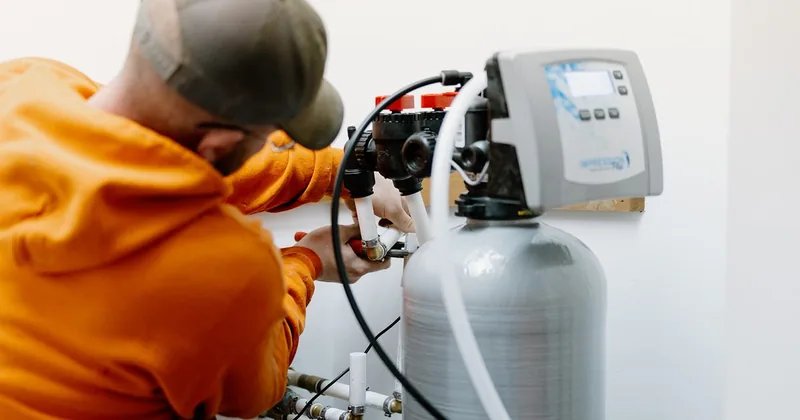
Most RO systems mount under the kitchen sink. We install a dedicated faucet on the sink or countertop, connect the system to the cold water line, run the drain connection, set the storage tank and flush the filters. If you want RO water at the refrigerator for ice and water, we can run a line there too.
Before installing, we check the water pressure. RO works best with decent pressure, and some well systems need a booster pump for good output.
Water Pressure and Reverse Osmosis Systems
On city water in town, pressure is usually fine. On a well, it depends on the pressure switch setting. If the RO faucet fills slowly, a booster pump or a tank adjustment often fixes it.
Reverse Osmosis System Maintenance
RO systems are low maintenance, but filters do need changing:
- Sediment and carbon pre-filters: usually every 6 to 12 months
- RO membrane: often every 2 to 3 years, depending on water quality
- Polishing filter: about once a year
We’ll give you a schedule for your system and can handle filter changes for you.
Testing Your Water Before an RO System
If you’re on a well and have health concerns, we recommend testing through a certified lab. RO removes many contaminants, but it’s important to know what’s actually in your water. We’ll help you read the results.
Water Treatment Services Related to Reverse Osmosis
Old pipes can affect water quality before it ever reaches the filter. If rust shows up after the water sits, see repiping. Want a new kitchen faucet while we’re under the sink? See faucet installation. See all plumbing services in Tipton and current specials. You get the price before any work starts.
We install reverse osmosis systems in Tipton, Windfall, Sharpsville, Kempton, Goldsmith, Hobbs, Tetersburg, Groomsville, Ekin, Curtisville and Normanda.
Book Online or call (765) 450-9040.
Reverse Osmosis Systems FAQs in Tipton, IN
Usually under the kitchen sink, with its own faucet on the sink or countertop. We can also run a line to your refrigerator’s ice maker and water dispenser.
RO systems send some water down the drain to flush away what the membrane removes. Newer systems are more efficient than older ones, and we can explain the options.
RO only treats water at one tap. A softener protects the rest of the house, including the water heater and fixtures, from hard water. Many homes use both.
Pre-filters usually every 6 to 12 months, the membrane every 2 to 3 years, and the polishing filter about once a year, depending on your water.
Yes. Wells with heavy iron or sulfur should have whole-home filtration first to protect the membrane, and low well pressure may call for a booster pump.