

Water Softeners & Reverse Osmosis: A Complete Solution for Better Water Quality
If you notice white mineral buildup on faucets and fixtures, spots on washed dishes, or stiff, dull-looking laundry, your Bloomington area home may have a hard water supply. Installing a water softener can help reduce residual problems caused by these minerals. But if you need water that is not just free from hard water minerals, but also safe and refreshing to taste, you need a combination of water softener and Reverse Osmosis (RO) filtration system.
This article discusses the benefits of water softeners and reverse osmosis filtration, and how they work together to enhance the quality of your home’s water supply.
| Say goodbye to hard water problems and bring in clean, crystal-clear drinking water into your home. Contact Summers PHC to choose the right water softener for your home, and check out our specials. |
Benefits of Installing a Water Softener
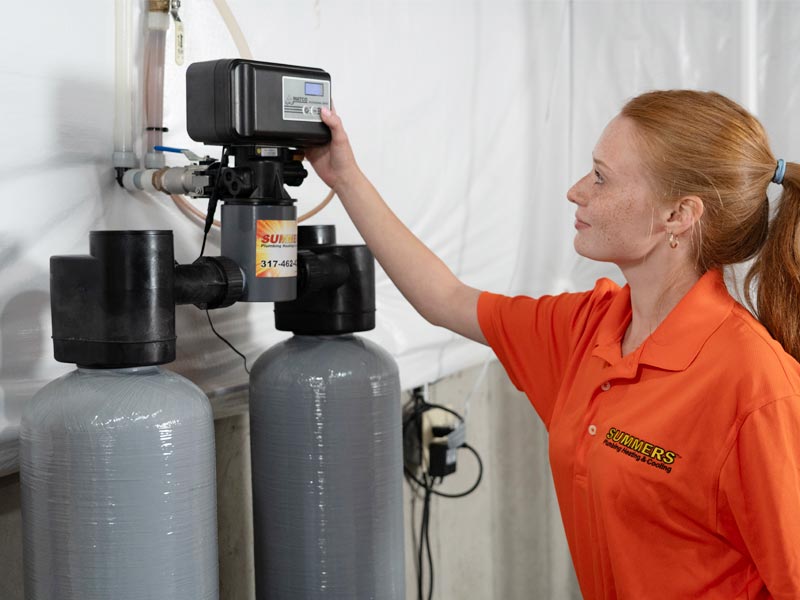
A water softener is a unit connected to your home water supply system that removes calcium and magnesium ions from the water. Not all homes need water softeners, but if your water supply has a considerable amount of calcium and magnesium particles in it, using a water softener can help in many ways.
Protects Skin & Hair
Hard water minerals react with soap to leave a film-like residue on skin and scalp. This affects the skin’s natural lubrication process, dries out skin and may worsen certain skin conditions and dandruff symptoms. Water softeners remove these minerals to protect your skin and hair.
Prevents Plumbing & Appliance Damage
Over time, hard water calcium and magnesium particles accumulate inside plumbing pipes and appliances that are connected to your home’s water supply. Installing water softeners can prevent mineral buildup in pipes, thus reducing the need for expensive repairs or replacements, and helping appliances last longer.
Eases Cleanup
Water softeners remove the minerals that cause buildup, making faucets and other surfaces easier to clean. Improved water quality also helps laundered clothes look cleaner and feel softer while leaving dishes spot- and streak-free after washing.
Cost Savings
Soaps and detergents work more effectively with soft water, so installing a water softener can help reduce the amount of these products you need. A 2010 Water Quality Research Foundation study found that softened water could reduce laundry detergent use by 50% while maintaining or improving cleaning performance.
Water Softeners: Types & How They Work
Water softeners, sometimes referred to as water conditioners, are available in two types: saltwater softener, and salt-free water conditioner.
A salt-based water softener uses salt-charged resin beads. As hard water passes through the softener, calcium and magnesium ions attach to the resin beads, and sodium ions are released to replace them and soften the water. As the beads get saturated with minerals, the system begins a regeneration process, where brine solution flows through the tank to flush out the minerals and recharge the beads for the next water softening cycle.
Salt-free water conditioners, on the other hand, do not replace hard water minerals. Instead, they use a process called the Template-Assisted Crystallization (TAC) to change the physical structure of these mineral ions and prevent them from sticking onto surfaces. This prevents mineral buildup on pipes, as the ions simply float and are eventually flushed out.
How To Choose a Water Softener for Your Home
While choosing water softeners, there are a few things you may want to consider if you want to avoid wasting resources and make the best choice for your home.
Water Hardness Level: Water hardness depends on your home’s surroundings, topography, and water bodies that your water supply comes from. How soft you want your water to be is a personal choice, but it is important to choose a water softener depending on your water supply hardness level, since not all water softeners can treat all levels of hardness. So, before you buy a water softener, it’s a good idea to schedule a free water quality test with your local Summers location.
Water Consumption: Since how much water you use will affect the amount of softening required, it is important that you factor in this before choosing a water softener for your home. Households with higher water consumption may benefit from using water softeners with a larger capacity, a dual-tank system, or additional features for optimal performance.
Local Area Restrictions: The regeneration cycle in salt-based water softeners uses a lot of water to flush the system, and releases wastewater containing high levels of sodium and chloride into the sewage system. As a result, many drought-prone areas and those with wastewater treatment plants that cannot effectively remove these minerals, may have restrictions on the type of water softeners residents can use, to prevent environmental damage.
Cost & Maintenance: Installing a water softener offers many benefits, but it also requires initial investment and an occasional expense. Maintenance costs may include salt refills, periodic tank cleaning, and the replacement of worn-out parts, depending on the type of water softener you choose.
Advanced Features: Many modern water softeners come with advanced features such as monitoring water consumption and setting up conservation goals, getting automatic updates for salt refills and maintenance, and integrating the device with your home’s smart devices for more control and flexibility. Knowing what you want from your water softener could help you make the right choice. If you need help deciding, you can schedule a consultation with your local Summers PHC.
What Is Reverse Osmosis Filtration System?
Reverse Osmosis (RO) is a water filtration system that uses an ultra-thin membrane to trap up to 99% of harmful contaminants, including hard to break down per- and polyfluoroalkyl substances (PFAS), lead, nitrates, arsenic, chlorine, microplastics and heavy metals. The membrane pores (approximately 100,000 times smaller than human hair) filter out impurities to give crystal clear drinking water.
Why Pair RO Filtration with Water Softener?
Installing a water softener removes hard water minerals, but it does not filter impurities. As a result, softened water may still contain toxins, chemicals, heavy metals, or viruses that could make it unsafe for drinking. Similarly, if you install an RO filtration system without installing water softeners, the unit may be easily damaged due to mineral buildup on its internal components and filtration membrane.
As for functionality, along with other water impurities, the RO filtration system also helps reduce the sodium that your softener adds to the water. This makes your drinking water suitable for everyone, including people with low sodium dietary restrictions. Moreover, using clean RO water in small kitchen appliances can help them perform better and last longer.
Water softeners, on the other hand, protect the RO system’s internal components (such as filters and RO membrane) from clogging, reduce repair costs, and increase the unit’s lifespan.
Hence, installing a water softener for whole house water supply, and an RO system for your drinking water can be a complete solution to enhance the water quality for your entire home. If you are considering installing these systems for your home, schedule a consultation with Summers.