

No Water on a Cold Morning? How to Tell if Your Well or Your Pipes Are Frozen
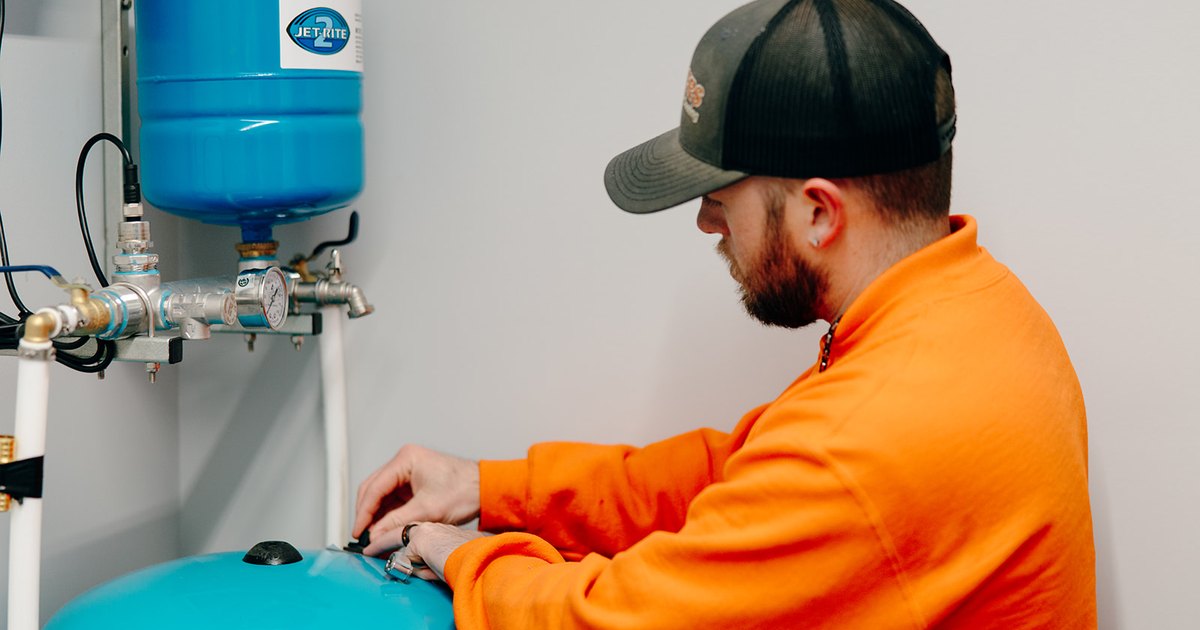
If you’re on city water and a faucet goes dry on a January morning, a frozen pipe is the likely cause. If you’re on a well, as many homes around Huntington, Roanoke, Markle, and Warren are, there’s a second possibility: part of the well system itself has frozen. The fix is different, so it helps to know which one you’re dealing with.
Frozen Pipe or Frozen Well? How to Tell
- One faucet is out, the rest work. That’s a frozen pipe inside the house, usually on an outside wall.
- Every faucet is out, hot and cold. The problem is at the well system or the main line coming into the house.
- The pressure gauge on your tank reads zero or keeps falling. Water isn’t making it from the well to the tank.
- The pump clicks on and off rapidly, or never comes on at all. That often points to a frozen pressure switch.
Before assuming ice is the cause, check the well pump breaker. A tripped breaker looks exactly like a frozen system from the kitchen sink.
Which Parts of a Well System Freeze?
The pump in most modern wells sits deep underground, well below the frost line, so the pump itself rarely freezes. The trouble is almost always in the parts that are above ground or in an unheated space.
- The pressure switch. It senses pressure through a small tube, and that tube holds very little water. It’s usually the first thing to freeze, and when it does, the pump gets no signal to run.
- The pressure tank and nearby piping. Tanks in a garage, crawl space, pump house, or unheated basement corner are exposed.
- Above-ground jet pumps. Older shallow-well systems have the pump at the surface, often in a well pit or shed.
- The line where it enters the house. The short stretch between the ground and the foundation is a common weak point, especially in a drafty crawl space.
- Shallow buried lines. A supply line that wasn’t buried deep enough can freeze during a long cold spell, particularly under a driveway or path where snow gets cleared and the ground loses its insulation.
What to Do if You Think Your Well Is Frozen
- Turn off the pump at the breaker. A pump that keeps trying to push water against ice can overheat and burn out.
- Open a faucet inside the house. It gives melting ice a place to go and tells you when water is back.
- Find the cold spot. Start at the pressure switch and tank, then follow the pipe back to where it enters the building. Look for frost.
- Warm the space, gently. Use a space heater set a safe distance from anything flammable, or a hair dryer on the pressure switch and exposed pipe. Wrapping the pipe in towels soaked in hot water also works.
- Turn the breaker back on once things have warmed up, and watch the pressure gauge. It should climb and the pump should shut off on its own.
- Check every exposed fitting for leaks. Cracks often show up only after the thaw.
Never use a torch or open flame. You’re working near electrical controls and often near insulation, and overheating a pipe or tank fitting can ruin it.
When to Call a Well Technician
- You have warmed everything you can reach and still have no water
- The pump runs but pressure never builds
- The pump keeps cycling on and off after the thaw
- You find a cracked fitting, tank, or pump housing
- You suspect the buried line is frozen, which isn’t a do-it-yourself job
Our team handles well repair, well pump service, and pressure tank replacement. Call 260-200-4011 or book an appointment online.
How to Keep Your Well From Freezing
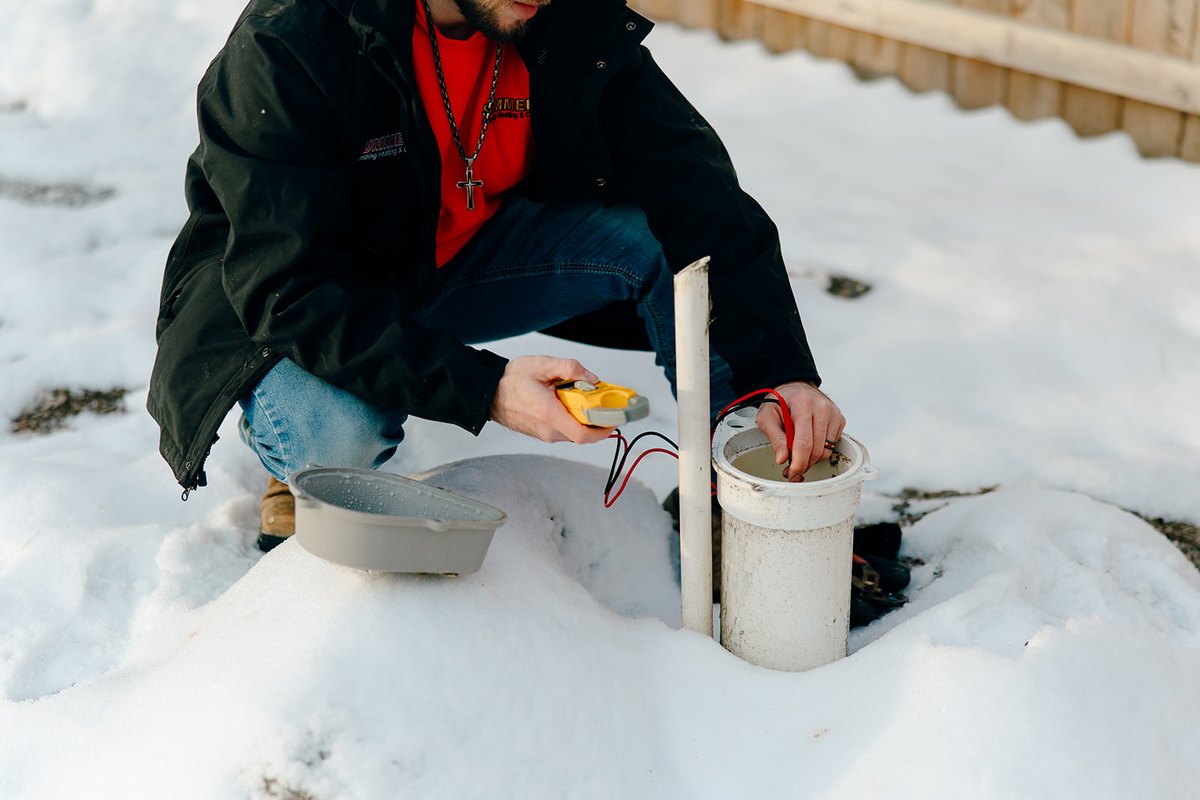
- Insulate the pump house or well pit. Rigid foam on the walls and lid goes a long way.
- Add a safe heat source. A small thermostat-controlled heater made for the purpose is better than a bare heat lamp.
- Put heat cable and insulation on exposed pipe, including the small tube leading to the pressure switch.
- Seal drafts in the crawl space or wherever the line enters the house.
- Don’t block the vent on the well cap. The well needs to breathe. Insulate around the casing, not over the vent.
- Have the system checked before winter. A weak pressure switch or a waterlogged tank is more likely to fail in the cold. Our well maintenance checklist covers what to look at.
If It Is a Pipe and Not the Well
When only one fixture is out, the freeze is in the house plumbing. Leave that faucet open, warm the area, and call us for pipe thawing or frozen pipe repair if it doesn’t clear.
Well and Plumbing Service in Huntington, Roanoke, Markle, and Bluffton
Summers Plumbing Heating & Cooling has been family-owned since 1969, and we handle both sides of the problem: the plumbing in your home and the well system that feeds it.
Call 260-200-4011 or schedule service online.
Frequently Asked Questions
Can a well pump freeze?
A submersible pump deep in the well rarely freezes because it sits below the frost line. Above-ground jet pumps, pressure switches, pressure tanks, and exposed pipe in unheated spaces freeze much more often.
How do I know if my well line is frozen?
Every faucet in the house loses water at once, the pressure gauge on the tank reads low or zero, and the pump either doesn’t run or runs without building pressure. Frost on exposed pipe is another sign.
What should I do first if my well is frozen?
Turn off the well pump at the breaker so it doesn’t run against ice and overheat. Then open a faucet and gently warm the pressure switch, tank piping, and any exposed line.
How long does it take a frozen well line to thaw?
Exposed pipe and a frozen pressure switch often thaw within an hour or two once the space is warmed. A frozen buried line can take far longer and usually needs a professional.
Will my well pump be damaged if the line freezes?
It can be if it keeps running with nowhere to send water. Shutting off the breaker as soon as you suspect a freeze protects the pump.
Who repairs frozen wells near Huntington, Indiana?
Call Summers Plumbing Heating & Cooling at 260-200-4011. We service wells and plumbing in Huntington, Roanoke, Markle, Warren, Bluffton, and the rest of Huntington and Wells counties.