

Why Is My AC Blowing Warm Air? Coming Cause for Huntington Homeowners
There are few things more frustrating on a hot Huntington afternoon than walking past a vent expecting a rush of cool air—and feeling warm air instead. If your air conditioner is running but blowing warm air, something in the system has stopped doing its job. The good news is that the causes are usually identifiable, and many of them are preventable with routine maintenance.
Below, the team at Summers Plumbing, Heating & Cooling walks through the most common reasons an AC blows warm air in Huntington-area homes, what you can check yourself, and when it’s time to call in a professional.
First, Check the Simple Stuff
Before assuming the worst, rule out the easy fixes. A surprising number of “warm air” service calls come down to a setting or a simple oversight.
1. Your Thermostat Is Set Wrong
It happens more often than you’d think. Make sure your thermostat is set to COOL, not just “on” or “fan.” When the fan is set to ON instead of AUTO, the blower runs continuously—even when the system isn’t actively cooling—so you feel room-temperature air between cooling cycles. Switch the fan to AUTO and set the temperature a few degrees below the current room temperature to confirm the system kicks on.
2. A Dirty or Clogged Air Filter
A clogged filter is one of the most common culprits behind poor cooling. When the filter is packed with dust and debris, it chokes off airflow across the system, which can cause weak cooling and even lead to a frozen evaporator coil. Check your filter—if it looks gray and matted, replace it. During peak summer use, filters often need changing every 30 to 60 days.
3. A Tripped Breaker
Your AC system actually has two main components: the indoor unit and the outdoor condenser. If the outdoor unit loses power—from a tripped breaker or a blown fuse—the indoor blower can keep running and push warm, uncooled air through your vents. Check your electrical panel for a tripped breaker and reset it once. If it trips again, stop and call a professional, as repeated tripping signals a deeper electrical issue.
When It’s a Bigger Problem
If the basics check out and you’re still getting warm air, the issue is likely inside the system and will usually require a licensed technician.
4. Low Refrigerant or a Refrigerant Leak
Refrigerant is the substance that absorbs heat from inside your home and carries it outside. If your system is low on refrigerant—almost always because of a leak—it simply can’t remove heat effectively, and the air coming from your vents will feel warm. A refrigerant leak is not a DIY fix; it requires a professional to locate the leak, repair it, and properly recharge the system to manufacturer specifications. You may also notice hissing sounds, ice on the refrigerant lines, or a hard-working system that never quite cools the house.
5. A Frozen Evaporator Coil
Restricted airflow (from that dirty filter) or low refrigerant can cause the evaporator coil to freeze over. When ice forms on the coil, it can’t absorb heat, and your AC blows warm air as a result. If you spot ice on your indoor unit or refrigerant lines, turn the system off and let it thaw completely, then call for service to address the underlying cause.
6. A Dirty Outdoor Condenser Unit
Your outdoor condenser releases the heat pulled from your home. When it’s caked in grass clippings, leaves, dirt, or blocked by overgrown landscaping, it can’t shed heat efficiently—so that heat gets recirculated instead of released, and your home stays warm. Keep at least two feet of clearance around the outdoor unit and gently rinse off debris.
7. Leaky or Disconnected Ductwork
Sometimes the AC is cooling just fine, but the cooled air is escaping before it reaches your rooms. Leaks or disconnected sections in your ductwork—often in attics or crawl spaces—let conditioned air leak out and pull warm air in. This is a common and easily overlooked cause of uneven or weak cooling.
Why Professional Diagnosis Matters
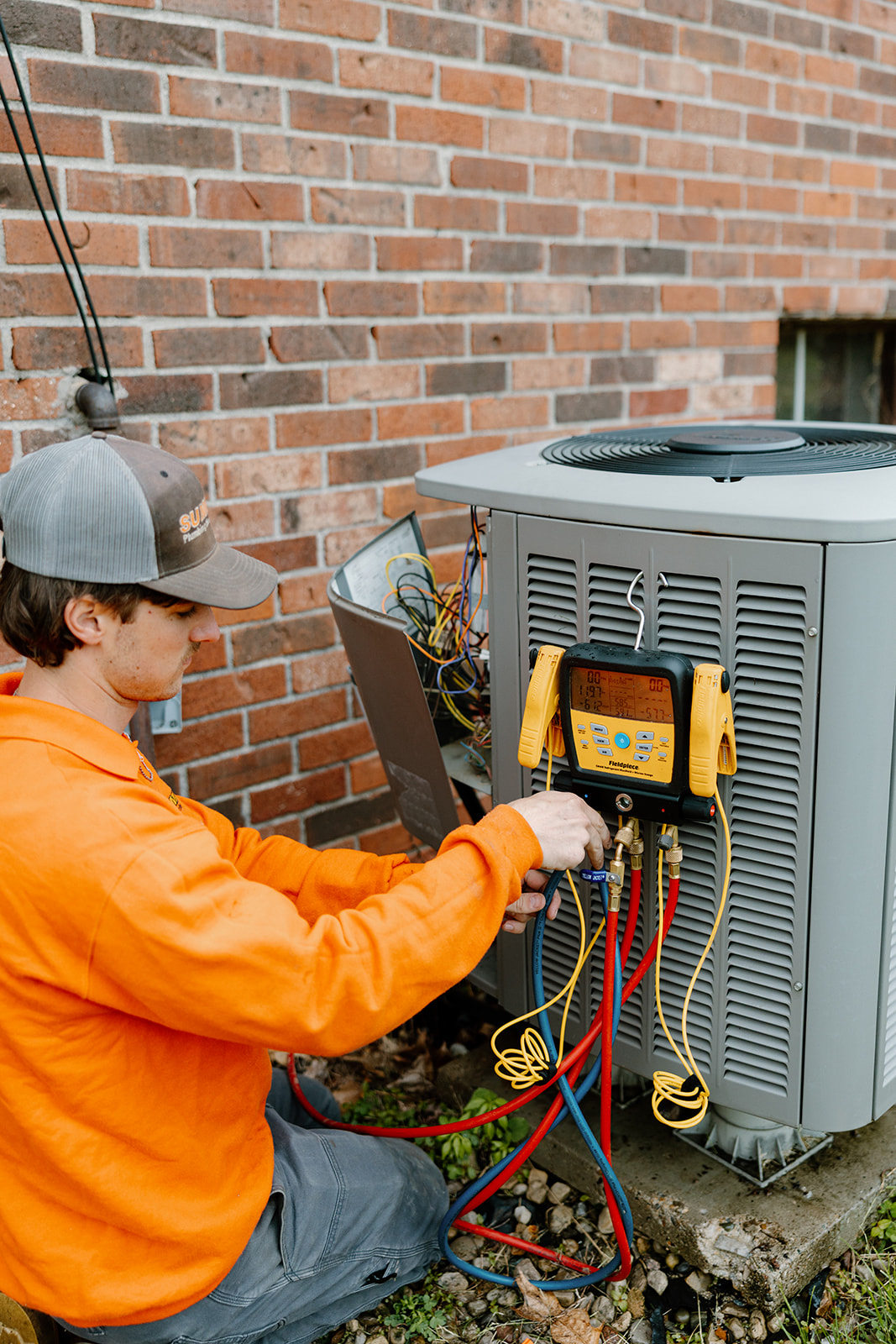
Warm air is a symptom, not a diagnosis. The same complaint can point to a $20 filter or a refrigerant leak that, left unaddressed, damages your compressor—the most expensive component in the system. A trained technician uses proper gauges and tools to measure system pressures, check refrigerant levels, and pinpoint the real cause rather than guessing. Catching a small issue early is almost always cheaper than replacing a failed compressor later.
At Summers Plumbing, Heating & Cooling, we’ve been keeping Indiana families comfortable since 1969. Our Worry-Free Guarantee means we stand behind our work, and our phones are answered 24/7—so you’re never left sweating it out alone.
AC Blowing Warm Air in Huntington? We Can Help.
Don’t sweat through another hot day. The comfort experts at Summers are ready to diagnose and fix the problem fast. Schedule your service today.
Call now: (260) 200-4011
Frequently Asked Questions
Why is my AC running but blowing warm air?
The most common causes are a thermostat set to the wrong mode, a dirty air filter, a tripped breaker on the outdoor unit, low refrigerant from a leak, a frozen evaporator coil, or a dirty outdoor condenser. Start by checking your thermostat settings and filter; if those are fine, it’s best to have a technician inspect the system.
Can I fix warm air coming from my AC myself?
You can safely check a few things yourself: confirm the thermostat is set to COOL and the fan to AUTO, replace a dirty filter, reset a tripped breaker once, and clear debris from the outdoor unit. Refrigerant issues, frozen coils, and electrical problems should always be handled by a licensed professional.
Does low refrigerant mean I have a leak?
Almost always, yes. Refrigerant isn’t “used up” like fuel—it circulates in a sealed system. If your levels are low, there’s a leak somewhere that needs to be found and repaired before the system is recharged. Simply adding more refrigerant without fixing the leak is a temporary and costly band-aid.
How often should I have my AC serviced?
We recommend a professional tune-up once a year, ideally in spring before the cooling season begins. Regular maintenance catches small issues—like low refrigerant or a dirty coil—before they leave you with warm air on the hottest day of the year.
Is it safe to keep running my AC if it’s blowing warm air?
It’s best not to. Running a system that isn’t cooling properly can worsen the underlying problem—for example, if a coil is frozen or the compressor is straining—and lead to more expensive repairs. Turn the system off and call for service if simple checks don’t resolve the issue.